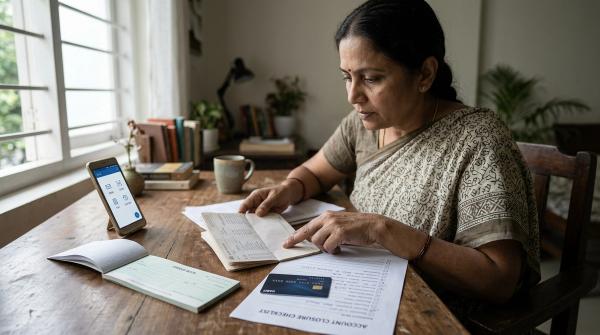
A bank account you haven’t used in years can feel like a small loose end. Maybe it was an old salary account. Maybe you opened it in another city. Maybe there’s only a small balance left, so you kept postponing it.
But if a savings or current account has had no customer-induced transaction for more than two years, RBI rules generally classify it as an inoperative account. Most people simply call it a dormant bank account.
The good news: reactivating it is usually straightforward. You’ll generally need to update your KYC, submit a reactivation request, and verify your account details through official bank channels. As per RBI’s 2025 amendment to its inoperative-account instructions, banks must make KYC updation available at all branches, including non-home branches.
This guide explains what “dormant” really means, how RBI rules work, what documents to carry, what proof to keep, and how to avoid fraud while reactivating your account.
Why you should not ignore an old unused account
#Most people in India have at least one forgotten bank account: a salary account from an old job, a savings account opened during college, a joint account nobody uses anymore, a current account from a closed business, or an account opened in a city where you no longer live.
At first, it may not seem urgent. The balance may be small. The passbook may be sitting in a drawer. The mobile number linked to the account may no longer work.
But leaving an account unused for years can create trouble later. You may suddenly need the balance, old statements, or proof of transactions. You may also face issues if your old mobile number, email ID, cheque book, debit card, or banking details are misused.
So it is better to either reactivate the account and monitor it properly, or close it through the bank’s official process.
Dormant account vs inoperative account: what is the correct term?
#In everyday language, people say dormant bank account.
RBI usually uses the term inoperative account for savings and current accounts where there have been no customer-induced transactions for more than two years.
So if your bank says your account is “inoperative”, it is basically what many customers call “dormant”.
Simple way to remember it: Dormant is the common word. Inoperative is the RBI term.
Banks may use either term in SMS alerts, letters, emails, net banking screens, or branch communication. What matters is the account status and the steps needed to make it active again.
RBI rule for inoperative bank accounts, in simple words
#Under RBI’s instructions, a savings or current account becomes inoperative when there are no customer-induced transactions for more than two years.
A customer-induced transaction is an action started by you, the account holder, or by someone authorised by you. It may be a financial transaction, or in some cases, a recognised non-financial request made through official banking channels.
What counts as a customer-induced transaction?
#Financial transactions may include:
- Cash deposit
- Cash withdrawal
- Fund transfer
- Cheque issued by you and cleared through the account
- Payment made through approved banking channels
- Any other transaction initiated by you through the bank’s recognised channels
Non-financial transactions may include:
- Formal balance enquiry through a recognised channel
- Cheque book request
- Service request made through official banking channels
- Updating account details through a verified process
The exact treatment can vary depending on the bank’s system and policy. If you are unsure, ask your bank what it considers a valid customer-induced transaction.
What usually does not keep the account active?
#Bank-initiated entries generally do not count as customer-induced transactions.
For example:
- Interest credited by the bank
- Bank charges debited automatically
- System-generated entries
- Automatic internal adjustments
These entries may appear in your statement, but they are not the same as a transaction initiated by you.
Account status comparison
#How to reactivate a dormant bank account safely
#If your account has become inoperative, don’t panic. Also, don’t rush into clicking links or sharing documents with strangers.
Start with the bank’s official channels only.
Use:
- The bank’s official website
- The bank’s official mobile app
- A branch of the same bank
- Official customer care numbers listed on the bank’s website
- Secure communication inside net banking or mobile banking
Avoid random phone numbers found through search ads, social media comments, or forwarded messages. Fraudsters often create fake customer care numbers that look convincing.
Dormant bank account reactivation checklist
#1. Collect whatever account details you have
#Before visiting the bank or starting the process, gather old records.
Useful documents include account number, customer ID, old passbook, old cheque book, debit card, old account statement, branch name, and the registered mobile number or email ID if you remember it.
Don’t worry if you don’t have everything. The bank can still help you identify the account, but old records usually make the process faster.
2. Contact the bank through official channels
#Tell the bank clearly: “I want to reactivate my inoperative account.”
Then ask:
- Which KYC documents are required?
- Can I update KYC at a non-home branch?
- Is video KYC available?
- Is a business correspondent option available, if applicable?
- Is there a specific reactivation form?
- Will any additional verification be required?
If the matter is complicated, don’t rely only on verbal instructions. Ask for the official checklist, form, or written confirmation.
3. Complete KYC updation
#KYC updation is usually the most important part of reactivating a dormant or inoperative account.
As per RBI’s 2025 amendment, KYC updation for inoperative accounts and unclaimed deposits must be available at all branches of the bank, including non-home branches.
This is helpful if you opened the account in one city but now live somewhere else.
Depending on the bank’s process, KYC updation may be available through any branch of your bank, including a non-home branch, video KYC, if offered and applicable, or business correspondents, where allowed.
The bank may ask for identity proof, address proof, PAN details, Aadhaar details where applicable, a recent photograph, updated mobile number, updated email ID, and account-related information. Requirements may differ based on your bank and your existing KYC status.
4. Submit the reactivation request
#Do not assume that KYC update alone will automatically reactivate the account in every case.
Ask the bank whether you need to submit a written reactivation request, KYC update form, customer declaration, updated contact details form, signature update form, or any additional account operation request.
Fill the forms carefully. Check your name, account number, PAN, mobile number, email ID, address, and signature before submitting.
If your signature has changed over the years, ask the bank for the proper signature update process.
5. Update your mobile number and email ID
#This step is easy to overlook, but it is very important.
If your old mobile number is no longer active, update it through the bank’s official process. Do the same for your email ID and address.
Why it matters:
- OTPs may go to your old number
- Account alerts may not reach you
- Fraud warnings may be missed
- Future account recovery may become difficult
- Someone else may now be using your old mobile number
Once the account is active again, make sure alerts are coming to your current phone and email.
6. Make a transaction if the bank asks you to
#After completing KYC and verification, the bank may ask you to make a customer-induced transaction.
This could be cash deposit, cash withdrawal, fund transfer, or another recognised transaction through official channels.
Use a safe method. Do not send money to unknown accounts just to “test” whether the account is active.
7. Check everything after reactivation
#Once your account is active again, review it properly.
Check:
- Recent account statement
- Balance
- Any unusual entries
- ATM/debit card status
- Net banking status
- Mobile banking status
- UPI linking, if used
- Cheque book status
- Nominee details
- Registered mobile number
- Registered email ID
- Address in bank records
If you see any suspicious transaction, report it to the bank immediately.
KYC update steps for a dormant bank account
#Step 1: Keep identity and address proof ready
#Carry current and valid documents as required by your bank. Commonly requested documents may include PAN, Aadhaar where used as per applicable process, passport, voter ID, driving licence, address proof, and a recent photograph.
Your bank will confirm what is acceptable in your case.
Step 2: Carry account proof, if available
#Take at least one old account document if you have it. This may include a passbook, old statement, cheque leaf, debit card, account opening document, or customer ID details.
These records help the bank trace your account faster.
Step 3: Choose your KYC route
#Depending on availability and eligibility, you may be able to update KYC through any branch of the same bank, a non-home branch, video KYC, or a business correspondent.
The key point from the 2025 RBI amendment is that KYC updation must be available at all branches, including non-home branches.
Step 4: Fill and submit the forms
#Before submission, check name spelling, account number, PAN, mobile number, email ID, current address, signature, and nominee details if updating.
Never leave blank signed forms with anyone. Even if someone says, “We will fill it later,” avoid it.
Step 5: Take acknowledgment
#Always keep proof of submission.
This may be a stamped acknowledgment, service request number, email confirmation, SMS confirmation, digital ticket number, or copy of submitted form with bank stamp.
Keep this until the account is active and you have checked your updated statement.
Fraud safety checklist
#Dormant account reactivation is a time when many customers become vulnerable. You may be worried, confused, or in a hurry. Fraudsters know this.
Stay alert.
- Do not click random SMS links saying “KYC expired” or “account blocked.”
- Do not share OTPs with anyone.
- Do not share PIN, password, CVV, debit card number, or net banking login details.
- Do not install screen-sharing apps on the instruction of a caller.
- Do not call customer care numbers found in random search ads.
- Do not send Aadhaar, PAN, passbook copies, or cheque photos to unknown people on WhatsApp.
- Do not trust callers who pressure you by saying your account will be closed immediately.
- Use only the bank’s official app, website, branch, or verified customer support.
- If using video KYC, access it only through the bank’s official channel.
- If something feels rushed, threatening, or unusual, stop and verify directly with the bank.
A genuine bank employee does not need your OTP, PIN, password, or full card details to reactivate an account.
Proof you should keep
#Keep records of every step.
Save:
- KYC submission acknowledgment
- Reactivation request acknowledgment
- Service request number
- Date of submission
- Branch where documents were submitted
- Email confirmation from the bank
- SMS confirmation from the bank
- Copy of submitted forms, if provided
- Updated account statement after reactivation
- Complaint or escalation number, if there is a delay
This proof can help if there is a processing delay, mismatch, or dispute later.
What happens to unclaimed deposits after 10 years?
#If a deposit account has not been operated for 10 years or more, or an amount has remained unclaimed for 10 years or more, banks are required to transfer the credit balance to the Depositor Education and Awareness Fund, also called the DEA Fund, maintained by the Reserve Bank of India.
This does not mean the money is lost forever.
RBI provides the UDGAM portal, which helps people search for unclaimed deposits across participating banks. UDGAM stands for Unclaimed Deposits, Gateway to Access inforMation.
If you find a possible match, you still need to approach the relevant bank and follow its claim process.
Keep ready identity proof, address proof, account proof if available, claimant documents if you are claiming on behalf of someone else, and any documents requested by the bank.
Why dormant account reactivation may get delayed
#Reactivation is usually manageable, but delays can happen when old records do not match current details.
Name mismatch
#Your old bank record may have initials, spelling differences, maiden name, or a shortened version of your name. Carry supporting documents if your name has changed.
Old mobile number
#If the registered mobile number is no longer with you, the bank may need extra verification. Update your mobile number officially.
Address mismatch
#If you have moved to another city, carry current address proof. The 2025 RBI amendment helps because KYC updation must be available at non-home branches too.
Signature mismatch
#Signatures change over time. If your current signature does not match the old bank record, ask for the official signature update process.
Joint account issues
#For joint accounts, the bank may require documents or consent from other account holders, depending on the mode of operation.
Missing old records
#If you do not have the passbook, account number, or old statement, the bank may take more time to identify the account.
Carry PAN, Aadhaar or other accepted identity proof, and any customer ID or linked information you have.
Should you reactivate the account or close it?
#You do not always need to keep every old account active.
Consider reactivating it if salary, pension, rent, or other payments may still come to this account; the account is linked to investments, insurance, loans, or services; you need old statements; you want to claim the balance; or you want to update records before deciding what to do.
Consider closing it if you no longer need the account, you already have too many bank accounts, you cannot monitor it regularly, you want to reduce fraud risk, or the balance is small and the account has no practical use.
Do not reactivate the account and then forget about it again. Either use it occasionally through safe banking channels or close it properly.
Quick checklist before visiting the bank
#Before you go to the branch or start video KYC, keep this ready:
- Account number or old account proof
- PAN or required identity proof
- Current address proof
- Recent photograph, if required
- Old passbook, statement, cheque book, or debit card, if available
- Current mobile number
- Current email ID
- Written reactivation request, if required
- KYC update form
- Nominee details, if you want to update them
- Acknowledgment or service request number after submission
- Updated statement review after account becomes active
Final word
#A dormant bank account in India is usually not a serious problem if you handle it properly.
The basic steps are simple:
- Confirm the account details
- Contact the bank through official channels
- Update KYC
- Submit the reactivation request
- Keep proof
- Check your statement after activation
Most importantly, do not let urgency make you careless. No genuine bank employee needs your OTP, PIN, password, or full card details to reactivate an inoperative bank account.
Disclaimer: This article is for general informational and educational purposes only. It is not investment, loan, tax, financial, or legal advice. RBI instructions and bank procedures may change, so always verify the current process directly with your bank or official RBI sources.