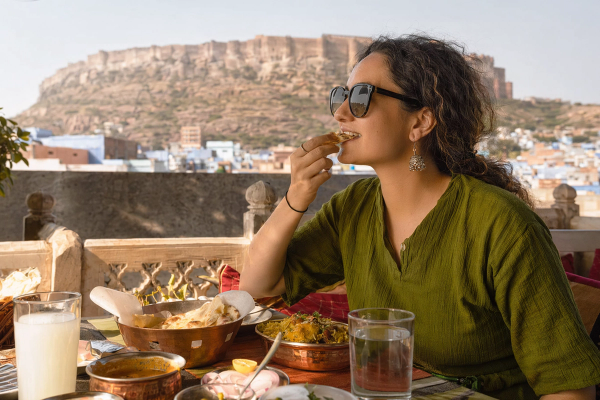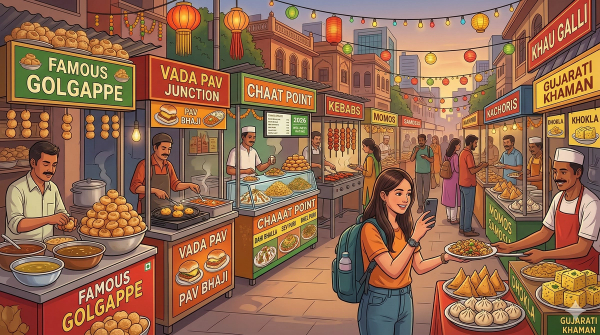
The first time I realised travel style can make or break a trip
#I used to think the big question was always where to go. Goa or Gokarna, Jaipur or Jodhpur, Thailand or Vietnam, Europe if salary and leave both behave. But after a few trips, I honestly feel the bigger question is how you travel. Guided tour vs self-guided travel sounds like one of those boring planning topics people discuss in WhatsApp groups, but trust me, it decides your mood, your budget, your safety, your food, and sometimes even whether you come back loving a place or feeling like you only saw it through a bus window.
As an Indian traveller, I’ve done both. Proper package tours where the guide is holding a flag and saying “please come fast fast, photo later”. And also totally self-guided trips where I’m standing outside a railway station at 5:40 am, half asleep, bargaining with an auto guy while Google Maps is spinning like it has given up on life. Both have their charm. Both can go wrong also. There is no one perfect answer, and anyone saying “guided tours are for boring people” or “self-guided is always better” is being too filmy.
So this is not some textbook comparison. This is what I’ve felt after travelling with parents, cousins, friends, and sometimes alone. From Rajasthan forts to Himalayan roads, from South Indian temple towns to Southeast Asian street markets, the same confusion keeps coming back: should you pay someone to handle everything, or should you figure it out yourself and keep freedom in your own hands?
What a guided tour actually gives you, apart from the obvious sightseeing
#A guided tour is not just “bus, hotel, guide, lunch included”. At least not always. These days guided travel has become quite varied. You have big group tours, small-group curated tours, food walks, heritage walks, wildlife safaris with naturalists, women-only tours, senior citizen packages, adventure operators, photography tours, and those very Instagram-looking experiences where someone takes you to hidden cafes and sunset points. In India, guided tours are especially common for places like Rajasthan, Kashmir, Ladakh, Varanasi, Sikkim, Rann of Kutch, Kerala, Andaman, and wildlife parks like Ranthambore or Jim Corbett.
The biggest benefit is mental peace. That is underrated. You don’t have to wake up and think, okay, how far is the fort, is the ticket counter open, where to park, is this driver overcharging me, will I get lunch nearby, and why is my hotel 14 km away from everything. Someone else has already done that headache. When I travelled with my parents, this mattered a lot. My father enjoys travel but he does not enjoy “uncertainty”. If the driver is late by 12 minutes, he starts checking his watch like he is running the Indian Railways control room. For family trips, guided tours can save your sanity.
- Transport is usually sorted, which is a big relief in places with weak public transport or confusing taxi systems.
- Local guides explain history, legends, food habits, temple rules, wildlife behaviour and small cultural things that you might miss alone.
- You often get safer access to remote or difficult areas, like high-altitude routes, forest zones, border regions, or early morning safari gates.
- For first-time international travellers, language and ticketing stress reduces a lot. Especially if you’re travelling with older parents or kids.
But guided tours also have that school picnic feeling sometimes
#Now let’s be honest. Guided tours can become tiring in a very specific way. The timing is not yours. You may want to sit quietly at a ghat in Varanasi, but the group has to move because next is silk shop visit. You may want one more plate of kachori, but lunch is fixed at some buffet restaurant where everything tastes like it was cooked for people who are scared of spice. This happens, ya. Not always, but enough times.
My biggest problem with some guided tours is the shopping stop. You know that “authentic local handicraft emporium” where the guide says just 20 minutes and suddenly everyone is trapped inside for one hour? I have bought things in such places and later found similar items cheaper in the local market. Not every operator does this, and good guides are very transparent, but you need to ask beforehand if shopping stops are included. Especially in tourist-heavy circuits like Jaipur-Agra-Delhi, Kashmir, Bali, Bangkok, Istanbul, etc.
Also, group chemistry matters. One late person can delay 20 people. One uncle will ask the guide 47 questions about the king’s cousin’s property dispute. One aunty will complain there is no proper chai. Sometimes that aunty is me, honestly, if the tea is bad. So yes, guided travel gives structure, but it also takes away your personal rhythm.
Self-guided travel feels more alive, but only if you plan the boring bits
#Self-guided travel is when you book your own transport, hotels, sightseeing, food, local movement, everything. Some people call it independent travel. It sounds romantic. Wake up late, wander in old lanes, eat where locals eat, change plans if it rains, take a random bus to a beach village, sit in a cafe for three hours without anyone shouting “come come”. And honestly, these are the moments I remember most from trips.
In Pondicherry, I skipped the usual checklist one evening and just walked from White Town towards the Tamil Quarter, ending up at a tiny tiffin place where the dosa was better than the popular cafe breakfast I had paid double for. In Udaipur, I took a wrong turn near the lake and found a quiet stepwell-like corner where there were no reels being shot, thank god. In Chiang Mai, I spent half a day at a local market because the smell of grilled banana and coffee was better than any monument that day. This kind of travel is hard to do in a strict tour schedule.
But self-guided also means you are the operations manager. You need to check airport transfers, local transport, opening hours, neighbourhood safety, hotel location, scams, weather, entry tickets, and how much walking is actually involved. A cheap hotel can become expensive twice a day if it is far from metro, food, or the main area. I learnt this in a painful way in Delhi once, when a “great deal” hotel meant spending more on cabs than the room saving itself. If you are planning independently, this Hotel Location Checklist: How to Choose Where to Stay Before You Book AllBlogs category. Travel & Adventure Region scope: Global evergreen / Region-neutral / India-specific / Destination-specific. Global evergreen Why this scope was chosen. Hotel-location decisions apply globally and should not be narrowed to India. Search intent. Informational / travel planning Primary keyword. how to choose hotel location Natural search queries people may use. how to choose where to stay what to check before booking a hotel best hotel location for tourists Long-tail keywords. hotel location checklist before booking how to choose a hotel near public transport hotel area safety and convenience checklist SEO meta title. Hotel Location Checklist: Choose Where to Stay Smartly SEO meta description. Learn how to choose the best hotel location by checking transport, safety, noise, food access, airport transfers and total trip cost. Suggested URL slug. hotel-location-checklist-choose-where-to-stay Short description. A decision checklist that helps travelers avoid cheap hotels that cost more in time, taxis, stress, and poor sleep. Why this topic today. GSC shows travel planning and hotel/stay-related pages getting traction; Sanity has sleep/quiet hotel guides but not a full location decision checklist. GSC signal or adjacent GSC signal. Adjacent to hotel breakfast, refundable hotel booking, sleep tourism, quiet travel, and airport-to-city transfer signals. Why this fits AllBlogs. It is evergreen, practical, and useful for broad modern-living travel planning. Why this is not duplicate or cannibalizing. Existing hotel posts focus on sleep, food, refunds, or safety; this focuses on location choice before booking. Adjacent expansion reason. Expands from hotel comfort to pre-booking trip-friction prevention. Novelty score: High Cannibalization risk: Low AI SEO / AEO / GEO angle. Can win AI answers with a “map-check framework” and “central to your trip, not central to the city” decision model. CTR hook. “A cheap hotel can become expensive twice a day.” Demand signal. Web validation shows recent and evergreen search coverage for hotel-location decision checklists, and travel sites advise checking maps, walkability, transit, and points of interest before booking. is actually worth reading before booking anything blindly.
Cost comparison: where your money really goes
#People assume self-guided travel is always cheaper. Mostly yes, but not always. If you are good at planning, flexible with dates, okay with public transport, and not fussy about hotels, independent travel can save a lot. In India, a budget traveller can manage many cities with hostel beds around ₹500 to ₹1,200 per night, basic guesthouses roughly ₹1,200 to ₹3,000, and decent mid-range hotels around ₹3,000 to ₹7,000 depending on city, season and location. Heritage stays, boutique resorts, beach properties, and hill hotels can jump to ₹8,000 and above very easily during peak dates.
Guided tours bundle things. So the upfront price looks high, but it may include transfers, breakfast, entry arrangements, permits, guide fee, driver allowance, parking, tolls, and sometimes meals. For places like Ladakh, Spiti, Sikkim, Bhutan-style circuits, wildlife safaris, or multi-city Rajasthan trips, a guided or semi-guided package can actually be practical because private transport cost gets shared. If four friends hire a cab for the whole route, cost per person drops. If you are solo, guided group tours may be cheaper than arranging everything alone.
Where guided tours become expensive is when the itinerary includes hotels you don’t care about, fixed meals you don’t enjoy, and activities you would’ve skipped. Where self-guided becomes expensive is bad planning. Last-minute flights, surge cabs, wrong hotel area, missed buses, overpriced local taxis, and “arre let’s just book whatever is available” moments. I have done that also. Painful.
| Travel style | Usually saves money on | Can become costly because |
|---|---|---|
| Guided tour | Shared transport, permits, guide fee, group hotel rates | Fixed itinerary, shopping stops, single supplement, less flexibility |
| Self-guided travel | Food choices, budget stays, public transport, flexible route | Wrong location, last-minute bookings, taxi dependence, planning mistakes |
| Hybrid travel | Main logistics plus free time | You still need to research what is not included |
Safety: the part we Indians discuss after booking, but should discuss before
#Safety is where the answer changes depending on who is travelling. Solo woman traveller, senior parents, first international trip, remote mountains, night arrivals, language barrier, medical concerns, political unrest, monsoon landslides, high altitude, wildlife zones, nightlife-heavy cities, all of these matter. Guided tours can give an extra layer of safety because someone knows the route, the hotel, the driver, and what to avoid. It’s not a magic shield, but it helps.
For self-guided travel, I follow a few non-negotiables now. I don’t arrive in a new hill town after dark if I can avoid it. I check recent road conditions for mountain routes, especially during monsoon and winter. I share cab numbers with family, even if they don’t ask. I avoid deserted shortcuts at night. I check if the hotel lane is accessible by car, because dragging luggage through a dark narrow lane is not an “authentic local experience”, it is just annoying and sometimes unsafe.
For India specifically, safety conditions vary a lot by region and season. Himalayan routes can face landslides or snowfall closures. Forest safaris have strict gate rules and you can’t just turn up casually. Border areas may need permits. Big cities are easier now with metro, app cabs, UPI, online maps and digital tickets, but petty scams still exist around stations, tourist monuments, and taxi stands. Abroad, add passport safety, travel insurance, emergency numbers, local SIM or eSIM, and embassy contact details. Sounds boring, but it saves you when things go sideways.
Planning time: guided tour wins if your brain is already tired
#This is something working Indians will understand. Sometimes we are not short of money, we are short of brain space. Office deadlines, family functions, leave approvals, train waitlists, school holidays, and then someone says “make a full itinerary na”. Guided tours win here. You pay partly for convenience. The airport pickup, hotel check-in, early breakfast, vehicle, sightseeing order, local guide, all handled. If you have only 4 or 5 days and you want to cover a difficult circuit, this can be totally worth it.
Self-guided planning takes time, especially for airport-to-city transfer, local passes, intercity buses, and figuring out whether a taxi, train or bus makes sense. The first hour after landing can decide the mood of the whole trip. If you are doing things yourself, keep this Airport-to-City Transfer Checklist: Train, Taxi or Bus? handy because transfers are exactly the kind of tiny detail people ignore and then pay double for.
But planning can also be fun. I like looking at maps, saving food places, checking walking routes, reading random reviews where someone complains “room was good but dog barking”. Those reviews are gold sometimes. Self-guided travel makes you understand a destination before you reach. You know neighbourhood names, transport options, local timings, food areas, and backup plans. Guided tours may make you comfortable, but self-planning makes you more aware.
Best months and seasons: guided or self-guided changes with weather
#Season can decide whether guided tour or self-guided travel is better. In India, October to March is generally comfortable for many plains and heritage destinations like Rajasthan, Delhi, Agra, Gujarat, Madhya Pradesh and South Indian temple circuits, though December holidays can be crowded and costly. April to June is hill-station season, but places like Manali, Shimla, Mussoorie, Ooty and Munnar can feel more traffic jam than holiday if you pick peak weekends. Monsoon is beautiful in Western Ghats, Goa, Kerala, Meghalaya and parts of Maharashtra, but landslides, slippery roads, ferry changes and delays are real possibilities.
In tricky weather, guided tours feel safer because operators usually know alternate routes and local conditions. For example, in Ladakh or Spiti, sudden road changes can disturb plans. In Northeast India, weather and road timings matter. In wildlife parks, safari zones and gate rules are not something you want to guess. On the other hand, in easy-weather cities like Kochi, Mysuru, Jaipur, Singapore, Bangkok, or Kuala Lumpur, self-guided travel is very doable because public transport, food, stay options and day tours are all accessible.
Shoulder seasons are my favourite for self-guided trips. Just before or after peak season, you usually get better hotel rates, fewer crowds, and enough services still running. Like September after monsoon in some regions, or February before summer heat arrives in North India. Not a fixed rule, but it works often. If you are taking older parents or small kids, avoid experimenting too much with harsh weather just to save money. That saving may vanish in one doctor visit or one cancelled road day.
Food, culture and local life: self-guided usually tastes better
#This is my biased opinion, but food is where self-guided travel beats most standard guided tours. Group meals are safe and convenient, yes, but they often play it too neutral. Less chilli, less oil, same buffet, North Indian options everywhere, and one sweet dish sitting sadly in the corner. Real travel food is elsewhere. Morning poha in Indore, filter coffee in Madurai, thukpa in Sikkim, appam-stew in Kerala, litti chokha in Bihar, misal in Maharashtra, fish thali in Goa, kachori in Jodhpur, roadside momos after a long walk, temple prasadam eaten quietly without taking 100 photos.
Self-guided travel gives you space to follow smells and crowds. If a place is full of local families, office people, college students, or truck drivers, chances are food is good and turnover is fast. Guided tours do include local food sometimes, especially curated food walks, but mass tours keep things safe for everyone’s stomach. Fair enough. Nobody wants 30 travellers falling sick on day two.
Culture also needs time. A guide can explain history beautifully, but sitting in a local bus, watching evening aarti without rushing, chatting with a shopkeeper about his city, attending a small music performance, visiting a weekly haat, or walking in an old neighbourhood slowly, these things need open time. Btw, curated guided walks are a nice middle path here. I’ve done heritage walks where the guide showed carvings, community stories, old trade routes, and food corners I would have missed completely. So not all guided means touristy. Some guided experiences are actually deeper than wandering alone.
When a guided tour is clearly the better choice
#There are times when I would choose guided without acting brave for no reason. Remote mountains, wildlife safaris, dense historical sites, religious circuits with complicated logistics, countries with language barriers, and trips with seniors are top of that list. A good guide doesn’t only show you places, they reduce friction. In places like Hampi, Ajanta-Ellora, Khajuraho, Fatehpur Sikri, or old city walks, a knowledgeable guide can make stones and ruins feel alive. Without context, you might just take photos and leave.
- Choose guided if you have very limited time and want to cover many places efficiently.
- Choose guided if transport is difficult, expensive, or not reliable in that region.
- Choose guided if you are travelling with parents, kids, or a mixed-age family group where comfort matters more than adventure.
- Choose guided if permits, local rules, safari bookings, trek support, or safety conditions are complicated.
- Choose guided if you want expert stories, not just sightseeing. This matters a lot in historical and wildlife places.
One more thing: don’t judge all guided tours by cheap packages. A bad cheap tour can ruin a destination. Look for group size, hotel names, actual route, inclusion list, cancellation rules, guide quality, reviews that sound real, and whether there is free time. Small-group tours cost more, but the experience is usually better. Private guides for one day can also be excellent if you don’t want a full package.
When self-guided travel is honestly more rewarding
#If the destination has good public transport, plenty of stay options, safe central areas, easy food access, and clear online information, go self-guided. Cities like Mumbai, Delhi, Bengaluru, Kochi, Jaipur, Mysuru, Ahmedabad, Pondicherry, and many parts of Goa are manageable if you plan sensibly. Internationally, places with strong metro or bus systems are also easier for Indian travellers who are used to navigating chaos anyway. We have survived railway platforms during festival season, so a metro map is not going to defeat us.
Self-guided is best when you don’t want to “cover” a place, you want to feel it. Slow mornings, random cafes, local markets, sunrise walks, street food, changing plans because weather looks nice, staying one extra night because the town feels good. These are not checklist experiences. They are the reason travel gets addictive.
It also works well for repeat travellers. First trip to Rajasthan with family? Guided may help. Second trip to just Bundi, Pushkar, or Bikaner? Self-guided will be more fun. First time abroad? Maybe guided or semi-guided. Later, when confidence builds, independent travel feels natural. Confidence is like a muscle. First you book your own hotel. Then local train. Then cross-country bus. Then one day you’re explaining SIM card options to your cousin like you are some travel guru.
The hybrid style is my personal favourite now
#After trying both extremes, I mostly prefer hybrid travel. Book your own flights and hotels, keep the main trip self-guided, but add guided experiences where they actually add value. Like a food walk in Old Delhi, a naturalist-led safari, a one-day guide in Hampi, a local cooking class in Kochi, a monastery circuit guide in Ladakh, a cycling tour in a heritage town, or a walking tour in a new international city. This gives freedom plus depth.
Hybrid also works nicely for flight planning. If you are building your own itinerary, sometimes you can use a longer connection smartly instead of treating it like a punishment. A stopover can become one extra mini-destination if visas, baggage and timing make sense. This Layover vs Stopover: Choose the Smarter Flight Plan is useful if you like squeezing more value from flights without making the trip too hectic.
For example, you can do a self-guided Kerala trip but take a guided backwater village walk. Or stay independently in Jaipur but hire a guide for Amer Fort and old city bazaars. Or do Goa on your own but join a local food trail instead of only beach hopping. That way you are not stuck in a bus all day, but you are also not missing the stories behind what you’re seeing.
Accommodation and transport choices change the whole equation
#In guided tours, accommodation is usually pre-decided. Please check names before paying. “3-star hotel” can mean many things in India, from perfectly decent to why is the bedsheet looking so philosophical. Ask for hotel names or similar category examples, distance from main attractions, lift availability for seniors, breakfast timing, and whether rooms are in the main building or some annex far away. Also ask if early check-in is included, because overnight trains and morning flights create this problem often.
For self-guided travel, location matters more than star rating. A simple guesthouse near the old town, metro, beach road, or main market may be better than a fancy hotel far outside. Typical transport options in India include trains, state buses, private Volvo buses, metros in big cities, app cabs, autos, rented scooters in tourist places, ferries in coastal regions, shared jeeps in hills, and private taxis for circuits. Each has its own drama. Trains are great if booked early. Buses are flexible but can be tiring. Scooters are fun until parking, rain, or bad roads enter the scene. Private taxis are comfortable but costlier.
In guided travel, transport comfort is one of the main things you’re paying for. Check vehicle type, AC or non-AC, road distance per day, luggage space, driver accommodation, and whether the same vehicle stays throughout. Long driving days can look easy on paper and feel brutal in real life. Especially mountain roads. Don’t plan like Google Maps is your personal astrologer. It lies sometimes, or maybe it is too optimistic.
Lesser-known experiences are easier to find when you slow down
#The best travel memories are often not the main attractions. In India, every popular destination has a second layer. Near Jaipur, people rush forts but miss smaller stepwells, block printing villages, or quiet sunrise points. In Kerala, everyone wants houseboats, but village canoe rides and toddy shop meals can feel more local. In Goa, the beach party image is loud, but old Latin quarters, island villages, local bakeries, spice farms, and monsoon greenery are lovely. In Himachal, beyond the famous towns, short village walks and local dhabas can be more peaceful than crowded viewpoints.
Guided tours can show hidden places if they are designed that way. Standard packages usually won’t. Self-guided travel gives you the freedom to follow a local suggestion, but you must also be careful not to trespass, disturb communities, or treat someone’s home like a photo set. This is happening a lot now with reels culture. Some places are getting overcrowded because one viewpoint went viral. Travel should not become invasion, no?
Popular experiences right now, generally speaking, include food walks, craft workshops, homestays, slow travel weekends, wellness retreats, wildlife safaris, heritage walks, cycling tours, farm stays, coffee estate stays, and local festival trips. If you are booking any festival or event-based travel, do it early and confirm local transport. Prices jump fast during long weekends, school holidays, Christmas-New Year period, and major regional festivals.
My simple decision rule, after enough mistakes
#If I have to put it simply, guided tour is better when the destination is logistically difficult, historically deep, safety-sensitive, or when the group needs comfort. Self-guided travel is better when the place is easy to navigate, you have time, you enjoy planning, and you want freedom more than coverage. Hybrid is best when you want both independence and local expertise.
Don’t choose guided or self-guided because it sounds cooler. Choose the style that protects your time, money, energy, and curiosity.
Also, be honest about your own personality. Some people love uncertainty. Some people get stressed if lunch place is not decided. Some people can walk 15,000 steps happily. Some people need AC cab and clean washrooms at regular intervals. None of this is wrong. Travel is not a competition. Instagram has made us feel like unless we are backpacking with one rucksack and eating unknown street food in a hidden lane, we are not “real travellers”. Rubbish. If a guided tour helps your mother see Kashmir comfortably, that is real travel. If self-guided wandering helps you understand Varanasi slowly, that is also real travel.
Final thought: the better trip is the one that matches your season of life
#There was a time I wanted every trip to be fully independent because I thought that made me more adventurous. Then I travelled with family and realised convenience is not a crime. Later I joined a few guided walks and realised a good guide can open up a city like a storybook. Now I don’t argue with myself so much. I mix things. I plan what I enjoy planning, outsource what I don’t, and leave enough empty space for surprises.
So, guided tour vs self-guided travel, which is better? For first-timers, seniors, tight schedules, remote routes, and history-heavy places, guided often wins. For food, local life, budget flexibility, slow travel, and personal freedom, self-guided is hard to beat. And for most Indian travellers like us, juggling budget, leave days, family expectations, safety, and that deep need for good chai, the hybrid way may be the sweet spot.
Plan smart, don’t overpack the itinerary, check your hotel location properly, and keep some money aside for unexpected cabs and extra snacks. Always extra snacks. If you like these practical, slightly real-life travel breakdowns, you’ll find more such guides and trip ideas on AllBlogs.in.