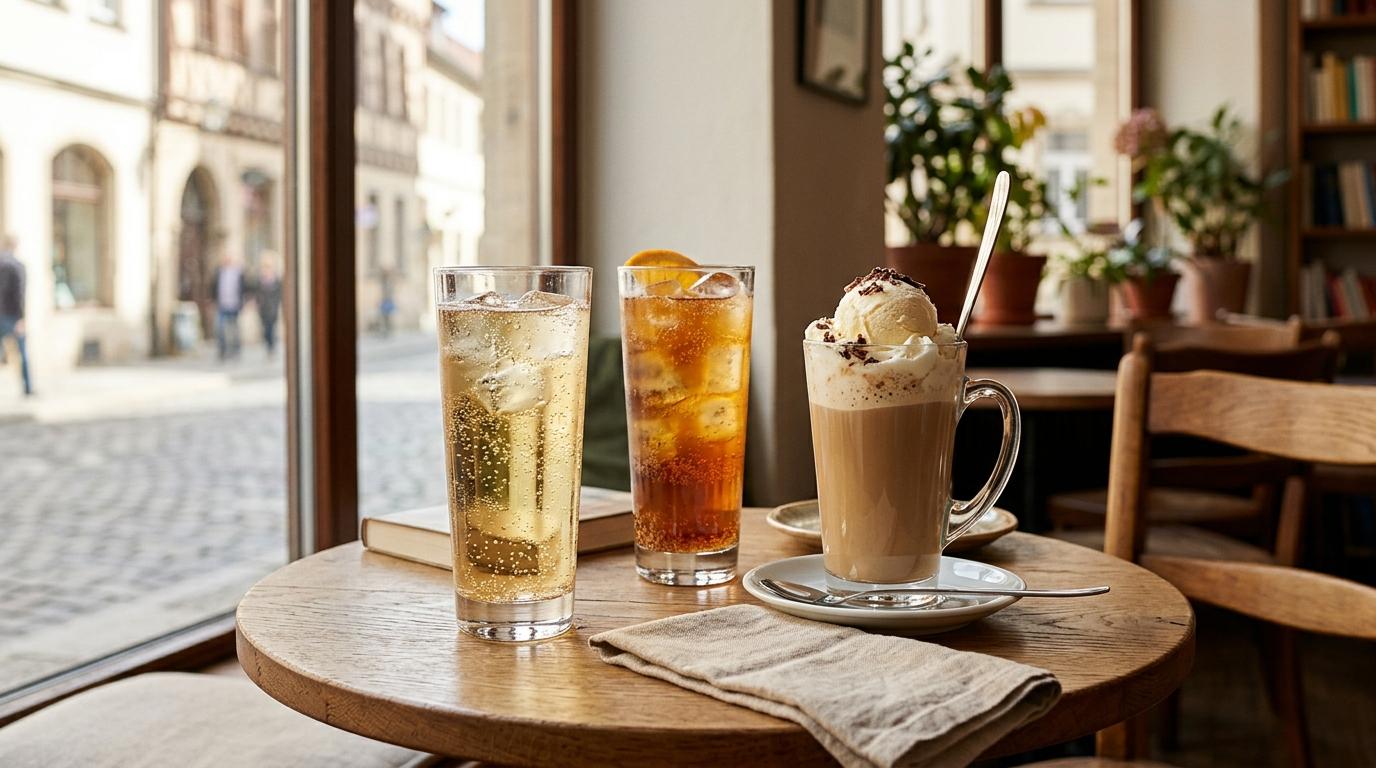
Traveling in Germany and not drinking alcohol? You’re not doomed to a week of plain water.
Germany may be famous for beer, but everyday German drink culture has plenty of alcohol-free options: fizzy apple spritzers, cola-orange soda, bottled soft drinks, strong coffee, dessert-like café drinks, and more kinds of mineral water than you may have expected.
The only catch is that some drink names are not obvious if you’re visiting for the first time. Eiskaffee sounds like iced coffee, but it’s usually closer to dessert. Schorle can be alcohol-free, but not always. And if you ask for water, you may need to specify whether you want it still or sparkling.
This guide keeps things practical. Here’s what to order in Germany when you want something non-alcoholic, refreshing, and easy.
Quick answer: what should travelers order in Germany?
#If you only remember a few things, make it these:
- Apfelschorle is apple juice mixed with sparkling water. It’s alcohol-free, fizzy, and usually lighter than straight apple juice.
- Schorle means a spritzer-style mixed drink. It can be made with juice or wine, so don’t order just “Schorle” if you’re avoiding alcohol.
- Spezi is a cola-orange soda mix. It’s sweet, fizzy, and usually contains caffeine.
- Eiskaffee in Germany is not plain iced coffee. It usually comes with cold coffee, vanilla ice cream, and whipped cream.
- Bionade is a popular bottled soft drink, often fruity, fizzy, and a little tangy.
- For still water, ask for stilles Wasser. Sparkling water is very common in Germany.
- For long travel days, still water or Apfelschorle are usually better bets than very sweet, creamy, or caffeinated drinks.
German drinks without alcohol: what you’ll actually see
#Yes, Germany has beer everywhere. But that doesn’t mean every drink menu revolves around alcohol.
On a normal travel day, you’ll find non-alcoholic drinks in cafés, bakeries, restaurants, supermarkets, train stations, kiosks, vending machines and hotel mini-fridges.
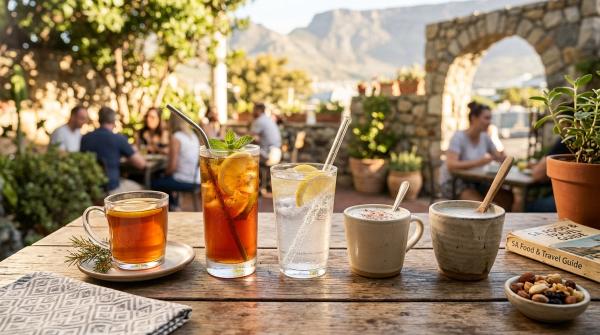
The most useful options for visitors are usually fruit spritzers, especially Apfelschorle; bottled soft drinks like Spezi and Bionade; coffee and café drinks; mineral water, still or sparkling; and sweet treats like Eiskaffee.
Some are perfect for walking around all day. Some are better as a sit-down treat. And a few are worth trying once, but maybe not right before a long train ride.
Apfelschorle: the easiest German apple spritzer
#Apfelschorle is one of the best non-alcoholic drinks to know in Germany.
It’s simply apple juice mixed with sparkling mineral water. That’s it. But it’s popular for a reason: it’s refreshing, easy to find, and feels a little more interesting than plain water without being as heavy as soda.
You can find Apfelschorle almost anywhere: restaurants, cafés, bakeries, supermarkets, train-station shops, vending machines and casual lunch spots.
If you want one reliable, low-stress drink order in Germany, this is it.
What does Apfelschorle taste like?
#Apfelschorle tastes crisp, fizzy, and lightly apple-y.
It’s usually less sweet than straight apple juice because the juice is mixed with sparkling water. Some bottled versions are sweeter than others, and restaurants may mix it a little differently depending on the place.
Most of the time, it hits a nice middle ground: more flavorful than water, less intense than soda, and refreshing enough for a warm afternoon or a long sightseeing day.
It’s especially good with heavier food. If you’re eating potatoes, sausages, fried food, creamy sauces, or anything rich, the bubbles and apple flavor can feel really nice.
Is Apfelschorle alcoholic?
#No. Apfelschorle is non-alcoholic.
The only confusing part is the word Schorle.
A Schorle is a spritzer-style drink, usually something mixed with sparkling water. It can be made with fruit juice, but it can also be made with wine.
So the important difference is:
- Apfelschorle = apple juice and sparkling water, alcohol-free
- Saftschorle = fruit juice and sparkling water, alcohol-free
- Weinschorle = wine and sparkling water, alcoholic
To order, say:
Eine Apfelschorle, bitte.An apple spritzer, please.
If you want to ask about alcohol-free drinks in general, say:
Haben Sie alkoholfreie Getränke?Do you have alcohol-free drinks?
When is Apfelschorle a good choice?
#Apfelschorle is great when you want something cold, fizzy, and not too heavy.
It’s a good choice for walking days, lunch with heavier German food, train-station drink runs, travelers who want something local but easy, and people who want flavor without ordering a full soda.
You may want to skip or limit it if you want something completely unsweetened, carbonation bothers your stomach, or fruit juice acidity doesn’t sit well with you.
It still contains sugar because apple juice contains sugar. So it’s not the same as drinking water. But compared with many sodas, it often feels lighter and more refreshing.
Schorle: the little word that helps a lot
#Once you know the word Schorle, German drink menus become much easier.
A Schorle is usually a drink mixed with sparkling water. For non-alcoholic drinks, look for juice-based Schorlen.
Useful words to know:
- Apfelschorle: apple juice with sparkling water
- Saftschorle: fruit juice spritzer
- Rhabarberschorle: rhubarb spritzer
- Johannisbeerschorle: currant spritzer
- Weinschorle: wine spritzer, contains alcohol
Rhubarb and currant spritzers are especially nice if you like tart drinks. They can feel less candy-like than soda, though some bottled versions are still fairly sweet.
You might also hear süß and sauer in some drink contexts. Süß means sweet, and sauer means sour. With some mixed drinks, süß can mean mixed with lemonade or sweet soda, while sauer often means mixed with sparkling water.
For basic travel ordering, though, you don’t need to overthink it. If you want the apple one, just ask for Apfelschorle.
Spezi: Germany’s cola-orange soda
#Spezi is a cola-orange soda mix. Think cola plus orange soda in one bottle or glass.
It’s sweet, fizzy, citrusy, and very easy to like if you enjoy soda. It’s also one of those drinks that feels completely normal in Germany but a little unusual if you’re visiting from somewhere else.
You may see it sold as Spezi, Mezzo Mix, Paulaner Spezi or other cola-orange mixes. People often use “Spezi” as the general name for this kind of drink, even when the exact brand is different.
What does Spezi taste like?
#Spezi tastes like cola with orange soda mixed in.
You get the caramel flavor from the cola and the bright citrus flavor from the orange. It is not subtle, and it is not trying to be. It’s sweet, bubbly, and fun.
If you like soda, it’s worth trying at least once while you’re in Germany.
Does Spezi have caffeine?
#Usually, yes.
Because Spezi contains cola, Spezi usually has caffeine. Don’t treat it like regular orange soda if caffeine affects you.
If you’re not sure, you can ask:
Ist das mit Koffein?Is that with caffeine?
This is useful for Spezi, cola drinks, bottled teas, and energy-style drinks.
When is Spezi a good choice?
#Spezi is a good choice for a sweet afternoon pick-me-up, soda fans, trying something local from a supermarket, or a quick caffeine boost.
You may want to skip or limit it if you’re avoiding caffeine, sugar makes you crash, you have a long train ride coming up, it’s late in the evening, or you haven’t eaten much.
Spezi is tasty, but it can feel a bit much on an empty stomach or right before a long journey.
Eiskaffee in Germany: not just iced coffee
#This is one of the biggest drink surprises for travelers.
In many countries, iced coffee means coffee served cold or over ice. In Germany, Eiskaffee usually means cold coffee with vanilla ice cream, often topped with whipped cream.
So if you order Eiskaffee expecting a simple iced coffee, you may be handed a tall dessert glass instead.
Not a bad surprise, necessarily. Just a very different one.
What is in German Eiskaffee?
#A traditional German Eiskaffee often includes cold coffee, vanilla ice cream, whipped cream and sometimes chocolate powder or sauce.
It’s closer to a coffee float than a regular iced coffee.
What does Eiskaffee taste like?
#Eiskaffee is sweet, creamy, cold, and filling.
If you want dessert, it’s lovely. If you want a quick caffeine hit before sightseeing, it may be more than you bargained for.
It’s best as a slow café break on a warm afternoon, especially if you actually want ice cream. It’s less ideal if you’re about to haul luggage through a train station.
When should you order Eiskaffee?
#Eiskaffee is good for a relaxed café break, dessert, warm afternoons, and when you want ice cream and coffee together.
You may want to skip or limit it if you’re lactose intolerant, you don’t want whipped cream, you expected plain iced coffee, you need something light before traveling, or dairy and caffeine together don’t agree with you.
If you want iced coffee without ice cream, try asking:
Haben Sie kalten Kaffee oder Iced Coffee ohne Eiscreme?Do you have cold coffee or iced coffee without ice cream?
In a traditional café, this might still cause a little confusion. Modern coffee shops and specialty cafés are more likely to understand what you mean.
If you don’t want whipped cream, say:
Ohne Sahne, bitte.Without whipped cream, please.
Just remember: ohne Sahne means without whipped cream. It does not mean without ice cream.
Bionade: a bottled soft drink to look for
#Bionade is a bottled soft drink you’ll often see in supermarkets, cafés, and casual restaurants.
It comes in flavors like Holunder — elderberry — along with other fruity or floral flavors depending on what’s available.
Bionade is usually less aggressively sweet than standard soda, though it’s still a sweet drink. The flavor can be fruity, lightly tangy, and sometimes a little herbal.
It’s a nice option when you want something bottled and non-alcoholic, but you’re tired of cola and plain water.
Water in Germany: still, sparkling, and slightly confusing
#Water should be simple. In Germany, it mostly is — once you know the words.
Sparkling mineral water is extremely common. If you ask for water vaguely, you may get sparkling water, or the server may ask what kind you want.
If you want flat water, ask for:
Ein stilles Wasser, bitte.A still water, please.
If you want sparkling water, ask for:
Ein Wasser mit Kohlensäure, bitte.A sparkling water, please.
Or simply:
Mit Kohlensäure, bitte.With carbonation, please.
If you do not want bubbles:
Ohne Kohlensäure, bitte.Without carbonation, please.
What about tap water?
#Tap water in Germany is generally safe to drink.
The restaurant culture around it, however, may be different from what you’re used to. Tap water is not always brought automatically, and free refills are not something to assume.
If you want tap water, ask politely:
Kann ich ein Leitungswasser bekommen, bitte?Could I get a tap water, please?
Some restaurants will bring it. Others may prefer to sell bottled water. Don’t be too surprised either way.
How to ask for non-alcoholic drinks in Germany
#You don’t need perfect German. Short, polite phrases will get you very far.
Useful phrases:
Ich hätte gerne eine Apfelschorle, bitte.I would like an apple spritzer, please.
Ich hätte gerne ein stilles Wasser, bitte.I would like a still water, please.
Haben Sie alkoholfreie Getränke?Do you have alcohol-free drinks?
Was haben Sie ohne Alkohol?What do you have without alcohol?
Ist das alkoholfrei?Is that alcohol-free?
Ohne Alkohol, bitte.Without alcohol, please.
If you are avoiding caffeine, ask:
Ist das mit Koffein?Is that with caffeine?
If you are avoiding dairy, ask:
Ist da Milch drin?Is there milk in it?
For Eiskaffee, be extra careful. Even without whipped cream, it probably still contains vanilla ice cream.
Café ordering tips: avoid surprises
#German cafés are great for resting during a trip. Just know that some drink names may not mean what you expect.
A few easy tips:
- If you order Eiskaffee, expect ice cream.
- If you want something light, choose coffee, tea, water, or Apfelschorle.
- If you avoid dairy, ask before ordering creamy coffee drinks.
- If you want international-style iced coffee, look for a modern café.
- If you do not want whipped cream, say ohne Sahne.
Simple café order:
Einen Kaffee und ein stilles Wasser, bitte.A coffee and a still water, please.
For more general language help while traveling, you may also like: How to Order Non-Alcoholic Drinks Abroad.
Supermarket tips: what to buy for your bag
#Supermarkets are one of the best places to buy drinks in Germany. You’ll usually get more choice, better prices, and easy options for train rides or hotel rooms.
Look for chains like REWE, Edeka, Aldi, Lidl and local neighborhood markets.
Good supermarket buys include Apfelschorle for a fizzy apple drink, still water for walking days, sparkling water if you like bubbles, Bionade for something fruity and bottled, Spezi if you want to try the cola-orange mix, and other juice spritzers like rhubarb or currant.
Don’t forget Pfand
#Many bottles in Germany have a Pfand, which is a deposit.
You pay the deposit when you buy the drink, then get it back when you return the empty bottle.
Bottle return machines are usually near supermarket entrances. Put the bottle in, take the receipt, and use it at checkout.
You don’t need to understand the whole system perfectly on day one. Just don’t throw every bottle away automatically, especially bottles bought at supermarkets.
Train-station drink tips
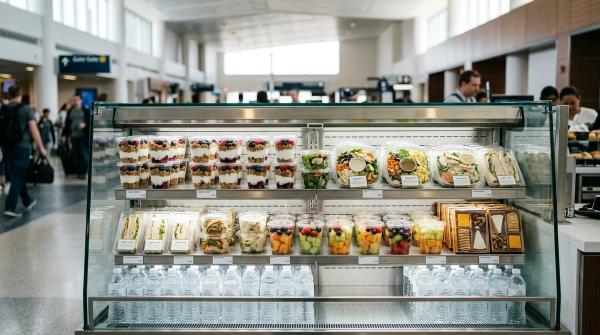
#German train stations, especially big Hauptbahnhof stations, usually have bakeries, kiosks, cafés, and small shops. They’re useful when you need a drink before boarding.
For train days, comfort matters more than novelty.
Better choices before a long ride include still water, Apfelschorle, light juice spritzers, and unsweetened or lightly sweet drinks when available.
Be more careful with Spezi because of the sugar and caffeine, Eiskaffee because it’s rich and dairy-heavy, very fizzy drinks if your stomach is sensitive, and anything very sweet if you haven’t eaten.
If you’re pairing a drink with a quick bakery breakfast, this guide may help too: European Bakery Breakfast Guide for Budget Travelers.
Restaurant ordering tips
#At restaurants, drinks are often ordered early, sometimes before you’ve fully decided what to eat. It helps to have one easy order ready.
Simple restaurant orders:
Eine Apfelschorle, bitte.An apple spritzer, please.
Ein stilles Wasser, bitte.A still water, please.
Ein Wasser mit Kohlensäure, bitte.A sparkling water, please.
Apfelschorle works especially well with heavier meals. If you’re eating potatoes, fried food, sausages, creamy sauces, or anything rich, the fizz and apple acidity can feel refreshing.
A few things to remember:
- Don’t assume free refills.
- Don’t assume tap water comes automatically.
- If avoiding alcohol, check anything called Schorle before ordering.
- If avoiding caffeine, be careful with Spezi and cola-based drinks.
Sugar, caffeine, dairy, and travel-day comfort
#This may sound boring, but it can make a real difference in how your day feels.
When you’re sightseeing, catching trains, walking more than usual, and eating on a weird schedule, the wrong drink can leave you feeling sluggish, restless, or uncomfortable.
Apfelschorle, Bionade, Spezi, and Eiskaffee all contain sugar. Still water, sparkling water, Apfelschorle instead of straight juice or soda, and tea or coffee without sugar are lighter choices.
Caffeine is most common in coffee, Eiskaffee, cola, Spezi, some bottled teas, and energy-style drinks. If caffeine affects you, don’t drink Spezi late in the day.
Dairy is most relevant with Eiskaffee, creamy coffee drinks, and drinks topped with Sahne, or whipped cream. If you’re lactose intolerant, traditional Eiskaffee is usually not the safest order.
Many German drinks are fizzy, including Apfelschorle, sparkling water, Spezi, Bionade, and many juice spritzers. If carbonation bothers your stomach, keep it simple and ask for stilles Wasser.
What to buy, sip, or skip
#Sip Apfelschorle when you want something local, refreshing, and easy. It’s probably the best first non-alcoholic drink to try in Germany.
Buy Bionade or Apfelschorle from a supermarket for train rides, day bags, and hotel fridges. Supermarkets also give you more choice than most restaurant menus.
Try Spezi once if you like soda. It’s sweet, very German, and easy to find. Just remember it usually has caffeine.
Enjoy Eiskaffee slowly when you want dessert, not when you want plain iced coffee. It’s best as a sit-down treat.
Skip vague water orders if you care whether your water is still or sparkling. Say stilles Wasser or mit Kohlensäure.
Check anything called Schorle carefully. Apfelschorle and Saftschorle are alcohol-free. Weinschorle is not. The word Schorle alone doesn’t tell you enough.
Final thought
#You don’t need to drink beer to enjoy German drink culture.
Start with Apfelschorle, learn how to ask for still or sparkling water, treat Spezi like a sweet caffeinated soda, and remember that Eiskaffee is usually dessert in a glass.
Once you know those few things, ordering non-alcoholic drinks in Germany gets much easier. And honestly, your travel days will probably feel better too.