The slice on the counter at midnight
#I have a confession that will make food safety people clutch their clipboards: I used to eat counter pizza the next morning. Like, no hesitation. Cold, slightly stiff, sitting in the cardboard box like it had survived a tiny cheese apocalypse. College me thought this was normal. My roommates thought it was normal. The guy across the hall once ate a pepperoni slice that had been out since, honestly, maybe lunch the day before, and he acted like he had discovered some ancient Italian breakfast ritual.
But food has a way of humbling you. One bad stomach night after a party pizza situation changed me. I won’t get graphic because we’re talking about pizza and I still want us to enjoy ourselves here, but let’s just say I became extremely interested in what happens when cheese, sauce, meat, and room temperature hang out too long. Now I’m still a leftover pizza lover. Deeply. Passionately. I think reheated pizza can be better than fresh pizza if you do it right, which is a controversial opinion in my friend group. But I’m also a lot less reckless than I used to be.
So this is the real-life pizza question: if it stayed out, do you reheat it, refrigerate it, or toss it? And yeah, sometimes the answer hurts a little.
The boring rule that actually saves your gut
#Here’s the food safety rule I wish someone had taped to our dorm fridge: perishable food should not sit at room temperature for more than 2 hours. If the room or outdoor temperature is above 90°F, that window drops to 1 hour. That’s the general USDA-style guidance for cooked foods, leftovers, dairy, meat, and all the cozy little toppings we like on pizza.
Pizza feels casual because it comes in a box and gets eaten on couches, in cars, on moving-day floors, and at birthday parties where somebody’s uncle is arguing about pineapple. But pizza is not magically shelf-stable. Cheese is perishable. Cooked tomato sauce can support bacterial growth. Meat toppings like sausage, pepperoni, bacon, chicken, ham, and meatballs absolutely count. Cooked vegetables, especially mushrooms, peppers, spinach, onions, and eggplant, are not some safety loophole either. Once that pizza cools into the temperature “danger zone,” which food safety guidance generally describes as 40°F to 140°F, bacteria can multiply fast enough to matter.
And the annoying part? You can’t always smell danger. A slice can look fine, smell fine, taste fine, and still be a bad idea. I know, I hate that too. I want food to give me obvious clues like a dramatic villain in a movie. But it doesn’t always.
My personal pizza decision chart, because I need rules when I’m hungry
#| Pizza situation | What I do now | Why |
|---|---|---|
| Out less than 2 hours | Refrigerate or eat it | Still within the usual safe window if it wasn’t sitting in heat |
| Out more than 2 hours | Toss it | Reheating doesn’t reliably undo time spent in the danger zone |
| Outdoors, hot car, picnic, beach, over 90°F | Toss after 1 hour | Heat makes the safety window shorter |
| Overnight on the counter | Toss it, sadly | This is the classic risky leftover pizza move |
| In the fridge within 2 hours | Keep 3 to 4 days | That’s the common leftover guidance |
| Frozen soon after cooling | Keep for longer, best quality maybe 1 to 2 months | Freezing keeps it safe longer, though texture gets weird eventually |
I don’t always love living by a chart. I’m more of a “sniff it, trust the ancestors, heat it in a skillet” person by nature. But leftover pizza has taught me that vibes are not a food safety plan. Vibes are what get you eating lukewarm chicken Alfredo pizza at 11 a.m. and wondering why your abdomen is composing jazz.
But what if I reheat it really hot?
#This is the part where people start bargaining. I’ve done it too. “Okay but what if I put it in a 500°F oven?” “What if I air fry it until the crust is basically a cracker?” “What if the pepperoni curls up and gets those crispy little grease cups, doesn’t that mean it’s safe?” I understand the emotional negotiation, because tossing pizza feels like throwing away joy and money at the same time.
For pizza that was stored safely, reheating is great. The usual recommendation for leftovers is to reheat them to 165°F. That means properly hot all the way through, not just cheese bubbling on top while the middle is still sleepy and cold. A food thermometer is the grown-up tool here, though I admit I don’t use one every single time for a slice. I probably should. I do use one for thicker pan pizza, deep dish, or anything with chicken because those slices can hide cold spots like little cheesy caves.
But, and this is a big but, reheating does not reset unsafe time. Some bacteria can leave behind toxins that heat may not reliably destroy. Staphylococcus aureus is one of the famous troublemakers in this area, and no, I don’t think about that name when I’m standing in the kitchen in socks eating a corner slice. But I think about the principle: if pizza sat out too long, don’t try to cook your way out of it. Toss it.
The overnight pizza myth I personally had to break up with
#Overnight pizza is probably the most romanticized leftover in America. It’s in movies. It’s in college stories. It’s in every shared apartment where the kitchen table also holds mail, hot sauce, and somebody’s keys for no reason. I used to think pepperoni pizza was somehow protected by salt and grease. Like the pepperoni was wearing armor. Ridiculous, but honestly that was my logic.
Plain cheese pizza isn’t safe overnight either, by the way. I hear people say, “It’s just bread and cheese.” But cheese is perishable, and once it’s been baked and handled and left in a warmish room, the clock is running. A veggie slice doesn’t get a free pass. A white pizza with ricotta? Honestly, I’m even more strict with that one because soft cheeses make me nervous when they’ve been sitting around.
If the pizza was out overnight, I toss it. I complain while tossing it, sure. I mourn the crust. But I toss it.
The only exception in my house is pizza that went into the fridge before bed. Even if it was a late night and I’m tired and there’s one sad slice left, I wrap it. Future me deserves breakfast pizza that doesn’t come with regret.
The restaurant box problem nobody wants to talk about
#Takeout pizza is where things get tricky because the timer doesn’t start when you finally notice the box on your counter. It starts when the pizza leaves hot holding, or when it starts cooling down after it comes out of the oven and gets boxed. If you pick up pizza, drive 25 minutes, stop for drinks, chat in the driveway, then leave it on the counter during the game, you might be closer to that 2-hour mark than you think.
I learned this after a Detroit-style pizza night that I still think about because the crust edges were caramelized and almost rude in how good they were. We ordered too much, obviously, because hungry people ordering pizza behave like they’re feeding a construction crew. I left the leftovers in the box while we watched a movie. By the time I remembered them, it had been... I don’t know, 3 hours? Maybe more. I stood there holding the box, smelling buttery crust and brick cheese, and had a full moral crisis.
I tossed it. Then I was mad about it for two days. But I also didn’t get sick, so there’s that.
How toppings change the risk, at least in my kitchen brain
#All pizza should follow the 2-hour rule, but I do rank toppings in my head because I am apparently the kind of person who has a pizza risk hierarchy now. Meat-heavy pizzas make me the most cautious. Chicken bacon ranch, barbecue chicken, sausage and peppers, meat lovers, anything with seafood if you’re into that sort of thing. Those go into the fridge fast.
Then there are the creamy pizzas. Alfredo sauce, ricotta blobs, fresh mozzarella, burrata added after baking, garlic cream sauce. Delicious, yes. Also not something I leave lounging on the counter like a decorative candle. Same goes for pizzas topped after baking with arugula, prosciutto, fresh tomatoes, basil oil, chili crisp, ranch drizzle, hot honey, or whatever fun stuff the shop is doing. I love modern pizza chaos. Truly. But more handling and more moist toppings means I’m less casual with storage.
- Pepperoni isn’t a magical preservative blanket, even if it tastes powerful.
- Veggie pizza still has cooked sauce and cheese, plus those toppings hold moisture.
- White pizza, ricotta pizza, and chicken pizza are “fridge it fast” pizzas for me.
- If someone has already touched slices with their hands a lot at a party, I get stricter. Sorry, but people are gross sometimes.
Pizza at parties: the buffet table danger zone
#Pizza parties are beautiful and chaotic. Kids running around, adults standing in clumps, someone opening the box every 9 seconds to “just check,” and the slices slowly dropping from hot and glorious to lukewarm and suspicious. I’ve hosted enough casual food nights to know that pizza can disappear fast, but it can also sit there because everyone is pretending they’re full while secretly planning a second round.
If I’m serving pizza for a group now, I try not to put all the boxes out at once. I keep some hot if possible, or I bring out smaller batches. After about 2 hours at room temp, I don’t save what’s left. If it’s a backyard thing in hot weather, I’m even more strict and think in that 1-hour range. Hot cars are especially brutal. A pizza box in a car on a warm day is not “storage,” it’s basically a tiny cardboard sauna.
And if you’re packing pizza for later, like for work lunch or a road trip, you need either cold storage with ice packs or a way to keep it hot enough. I wrote about the same safe-temperature logic when talking about thermos meals, and the rules overlap more than people realize: Thermos Lunch Food Safety: What Stays Hot, What to Skip, and the Rules That Really Matter. Pizza in a lunchbox is not complicated, but it does need a plan.
The right way to refrigerate pizza without ruining it completely
#Do not, and I say this with love, just shove the whole cardboard box into the fridge if you can avoid it. I have done it. We have all done it. It feels efficient. But cardboard dries pizza out, takes up half the fridge, and somehow makes the crust taste like refrigerator air and old onions. Not ideal.
My favorite method is simple: let the pizza stop steaming if it’s still very hot, but don’t leave it out forever waiting for the perfect moment. Then put slices in a shallow airtight container, or wrap them tightly in foil and then slide into a bag. If I’m stacking slices, I put parchment or wax paper between them because I don’t want to perform cheese surgery the next day. Refrigerate within 2 hours, sooner if you can.
Once refrigerated, leftover pizza is generally a 3 to 4 day food. I label stuff when I’m feeling organized, which is about 42 percent of the time. Otherwise I do the “what day did we order this?” conversation with my husband, and neither of us has a reliable memory because pizza nights often include wine and a TV show we only half watched.
Freezing pizza, aka saving future you from sad snacks
#Freezing leftover pizza is underrated. I used to think frozen leftover pizza would be depressing, but it’s actually a gift if you wrap it well. The trick is to freeze slices individually first if you have room, then wrap tightly. Foil plus a freezer bag works nicely. Push out as much air as you can. Freezer burn doesn’t make it unsafe, but it does make it taste like crust-flavored cardboard, and nobody needs that.
For best quality, I try to eat frozen leftover pizza within a month or two. It can remain safe longer if frozen solid, but texture is the boss here. Thin crust freezes pretty well. Thick pan pizza can freeze well too, though sometimes the cheese gets a bit grainy. Fresh tomato slices on top? Not my favorite after freezing. They go watery and sad, like they just recieved bad news.
Still, I would rather freeze two good slices than leave them on the counter and play food poisoning roulette. This is personal growth, I guess.
Reheating methods ranked by someone who takes this too seriously
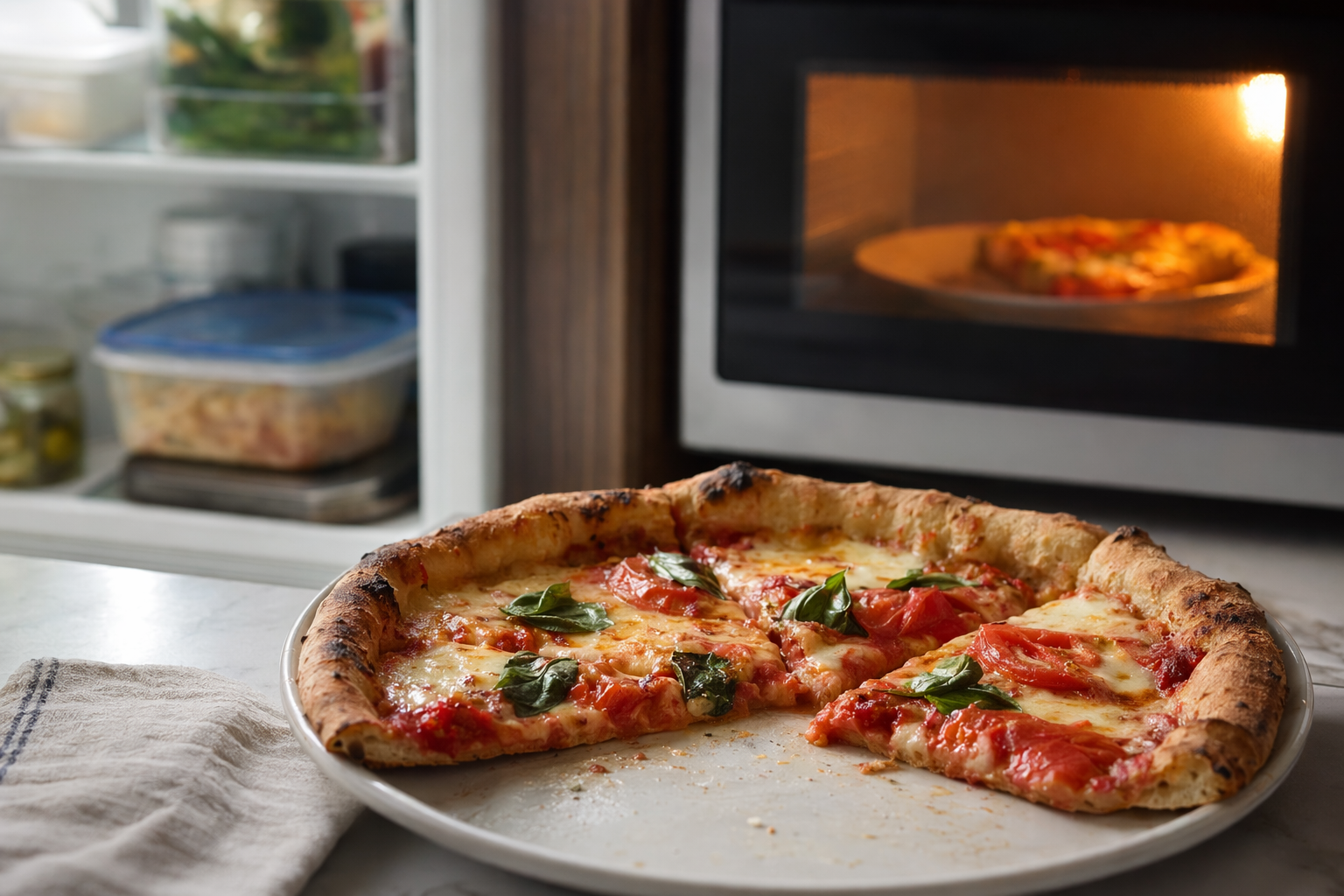
#Reheating leftover pizza is its own tiny cuisine. I know people who microwave slices and call it a day, and I respect their lifestyle even though I don’t understand it emotionally. The microwave is fast, yes. But it can turn crust bendy and cheese weirdly molten in spots while the center stays cold. If you use it, heat until properly hot, and consider finishing the slice in a skillet or toaster oven.
- Skillet with a lid: This is my favorite. Medium-low heat, slice in the pan, lid on for a few minutes so the cheese warms while the bottom crisps. If the crust is thick, add a few drops of water to the pan away from the slice and cover quickly. Steam helps. Don’t drown it, obviously.
- Toaster oven or regular oven: Great for multiple slices. Around 375°F works for me most days, though every oven lies a little. Heat until the cheese is hot and the slice is warmed through. For thicker slices, check the center.
- Air fryer: Crispy and fast, sometimes too fast. I use a lower temp than I think I need because burned cheese happens suddenly and then everyone acts like it was your fault.
- Microwave: Convenient, not glamorous. A mug of water trick helps a bit with texture, but it’s still microwave pizza. Good in an emergency, like when you are starving and wearing one sock.
Again, this is for pizza that was stored safely. If it sat out overnight, the best reheating method is not reheating. It’s goodbye.
Hotel rooms, road trips, and the “no fridge” pizza dilemma
#Travel pizza has gotten me into trouble more than once. There’s something about eating a slice in a hotel room that feels luxurious in the dumbest way. You’re sitting on the bed, the tiny TV is playing a cooking competition, you’ve got paper plates from the lobby breakfast area, and suddenly that local pizzeria you found after walking around all day tastes like the best restaurant on earth.
But hotel leftovers are tricky. If your room has a real fridge, cool, use it. If it has one of those mystery mini-fridges that barely chills anything, be careful. If there’s no fridge, don’t keep the pizza for breakfast unless you can store it safely in a cooler with enough ice or cold packs. Same goes for road trips. Pizza left in the car while you wander around a museum or hike or sit in traffic is not becoming more safe with time.
When I’m traveling without a kitchen, I’ve learned to buy less pizza or choose foods that don’t create stressful leftovers. It’s not as romantic, but it’s smarter. If that’s your life too, this guide has some practical ideas that pair well with the whole “don’t poison yourself in a hotel room” theme: Grocery Store Lunch While Traveling: No-Kitchen Meals That Actually Work.
What about cooked carbs in general?
#Pizza gets special attention because we love it so much, but it’s part of a bigger leftover-food family. Cooked pasta, rice, bread-y casseroles, baked ziti, stromboli, calzones, garlic knots with cheese dip, all those beautiful carb situations need the same basic respect: don’t let cooked food sit around in the danger zone and then pretend heat will fix everything.
Cooked carbs can be sneaky because they look harmless. A plain-looking bowl of pasta or a crusty slice might not scream “perishable,” but once it’s cooked and mixed with sauce, cheese, meat, or oil, it’s a different story. I went deeper into that with pasta here: How Long Can Cooked Pasta Stay Outside? Safety Rules. Honestly, pizza and pasta leftovers are cousins. Delicious, dramatic cousins.
The pattern is simple enough that I repeat it like a little kitchen chant: 2 hours at room temp, 1 hour if it’s hot out, refrigerate 3 to 4 days, reheat safely, toss when in doubt. I know “when in doubt, throw it out” sounds like something printed on a cafeteria poster, but it’s not wrong.
Signs your pizza is definitely done with you
#Even if pizza was refrigerated, it can still go bad. Time does what time does. If you open the container and it smells sour, yeasty in a bad way, rotten, or just off, don’t argue with it. If you see mold, toss the whole slice, not just the fuzzy corner. Mold can spread in ways you don’t see, especially through softer, moist foods. If the cheese has turned slimy or the toppings look wet and weird, that’s also a no from me.
But remember, the absence of these signs does not mean a pizza that sat out too long is safe. This is the part that annoys everyone, including me. Spoilage signs and foodborne illness risks are related but not identical. A slice can be unsafe before it looks spoiled. Which is why timing matters more than sniffing, even though sniffing feels very ancient and chef-y.
- Mold? Toss.
- Slimy cheese or toppings? Toss.
- Sour or rotten smell? Toss.
- Left out overnight? Toss, even if it smells like your favorite Friday night.
My final keep, reheat, or toss rules
#So, here’s where I’ve landed after years of loving pizza, disrespecting pizza, learning from pizza, and occasionally being betrayed by pizza. If leftover pizza has been sitting out less than 2 hours, I either eat it or refrigerate it. If it’s been outside in hot weather, at a picnic, in a car, or in a warm kitchen, I shorten that to about 1 hour. If it went into the fridge on time, I’ll eat it within 3 to 4 days and reheat it until it’s properly hot, ideally 165°F in the thickest part.
If it sat out overnight, I toss it. Every time now. I don’t care if it’s expensive wood-fired pizza with blistered crust and fancy mozzarella. I don’t care if it’s the last slice of the pizza I was emotionally attached to. I might stand there with the trash can open and whisper “I’m sorry,” because I’m dramatic about food, but I still toss it.
The thing is, leftover pizza should be one of life’s great little pleasures. Cold breakfast slice, crispy skillet lunch, midnight snack after a long day, whatever your style. But it’s only fun if it doesn’t wreck you. Respect the clock, store it properly, reheat it like you mean it, and buy an extra slice next time if you must. That’s my solution to most pizza grief, actually: plan for more pizza, just safer pizza.
Anyway, now I’m hungry and thinking about the square pepperoni slice from that tiny shop with the sticky tables and perfect sauce. If you’re also the kind of person who overthinks leftovers because you love food too much to waste it, you’ll probably find more rabbit holes worth reading over on AllBlogs.in.