Restaurant meals are great… until they aren’t.
Maybe your train gets in late. Maybe every cafe near your hotel is wildly overpriced. Maybe you’ve been eating restaurant food for three days straight and all you want is an apple, some crackers, and something with protein that doesn’t come with fries.
That’s where a grocery store lunch while traveling saves the day.
A supermarket lunch gives you control. You can eat when you’re hungry, spend less, avoid waiting for a table, and build something that actually sounds good. It works in hotel rooms, hostels, vacation rentals, train stations, parks, airports, and those awkward travel days where your schedule doesn’t line up with normal mealtimes.
The only catch: don’t walk into a grocery store starving and expect your brain to make good decisions. That’s how you end up with a giant tub of hummus, a loaf of bread you can’t cut, and no spoon.
The goal is simple: buy ready-to-eat foods, avoid anything that needs real kitchen tools, and be smart with perishable items if you don’t have a fridge.
Here’s how to build safe, filling no-kitchen travel meals from a grocery store without making lunch feel like a project.
Quick answer
#If you need a fast supermarket lunch for travelers, use this easy formula:
Ready-to-eat protein + sturdy carb + easy produce + drink
Good combinations include:
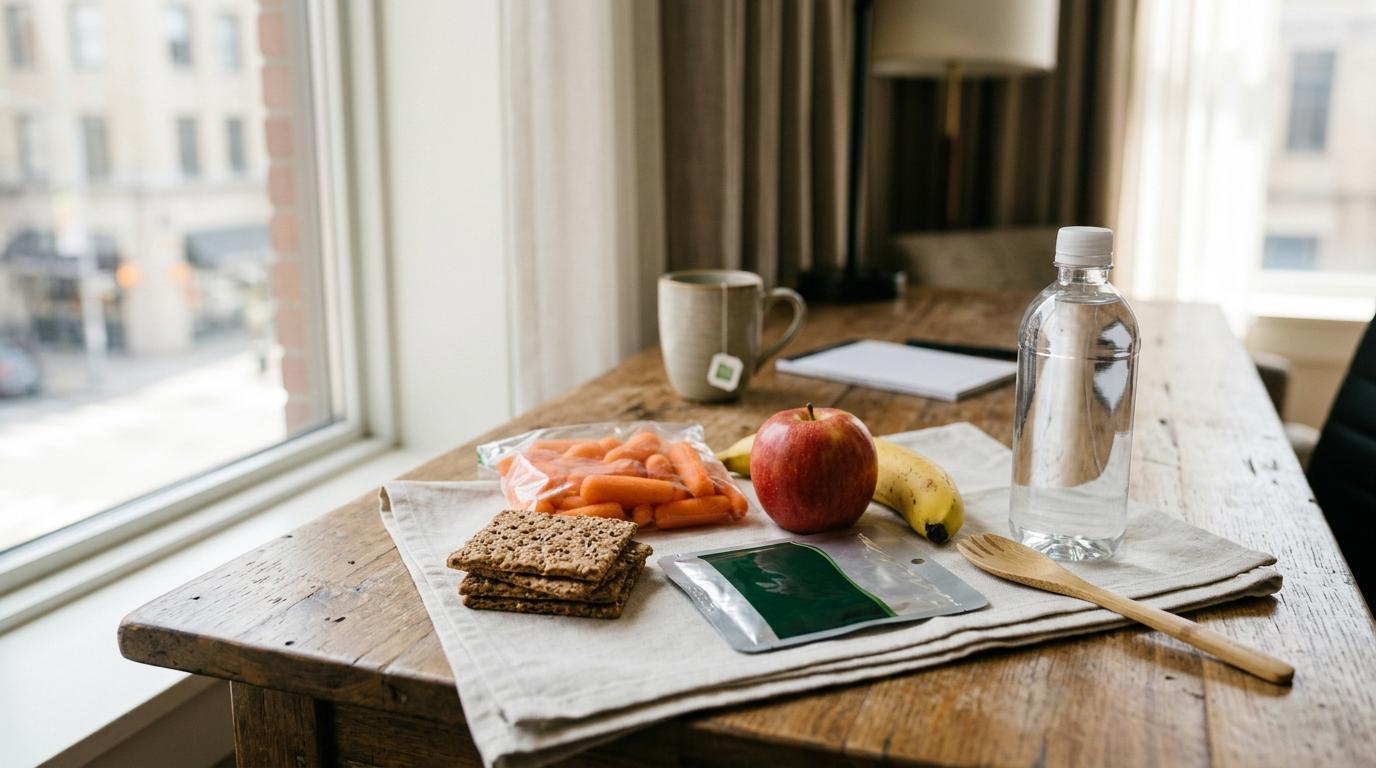
- Pull-tab tuna or chickpea pouch + crackers + banana
- Hard cheese eaten soon + bakery roll + apple
- Nut butter packet + rice cakes + mandarins
- Hummus eaten right away + pita + cherry tomatoes
- Roasted nuts + whole-grain crackers + pear
Buy only what you can finish in one sitting unless you have a fridge you actually trust. Be careful with deli meats, soft cheeses, yogurt, cut fruit, prepared salads, sushi, cooked chicken, and anything from the refrigerated case.
A simple food safety rule: if a perishable food has been sitting at room temperature for more than two hours, or more than one hour in very hot weather, it’s safer to throw it away.
And no, your hotel room desk is not a fridge. Even if the room feels cool.
Why grocery-store lunch works so well
#A grocery store lunch is flexible in a way restaurant meals often aren’t. You can eat on a bench, in your hotel room, outside a museum, at a train station, or between meetings without waiting for service or hoping the only nearby restaurant is decent.
It also helps when travel food starts to feel like too much. Restaurant meals can be heavy, salty, expensive, or just not what your body wants after a long morning. Sometimes lunch really can be bread, fruit, nuts, and a protein pouch — and honestly, that can feel great.
For travelers without kitchens, the key is to think of lunch as assembly, not cooking. You’re not buying ingredients for a recipe. You’re putting together a meal from things that are already edible.
If you already have a simple morning routine, like a convenience store breakfast, this is the lunch version of that same idea. And once you get used to it, the same approach works for grocery store dinner ideas while traveling with no kitchen, especially on nights when you’re too tired to go back out.
What to buy
#Think in pieces, not recipes. The best hotel room lunch ideas usually come from four basic categories.
1. Ready-to-eat protein
#Protein is what turns “random snacks from a grocery bag” into an actual lunch. Look for foods that are sealed, easy to open, and realistic for wherever you’ll be eating.
Good options include:
- Pull-tab cans or pouches of tuna, salmon, sardines, or chicken
- Seasoned chickpeas, lentils, or beans in pull-tab cans or pouches
- Roasted chickpeas
- Roasted edamame
- Nuts and seeds
- Nut butter packets or small jars
- Hard-boiled eggs, if bought cold and eaten soon
- Hummus, if bought cold and eaten soon
- Hard cheese, if you can eat it soon or keep it cold
- Cured meat, if you can eat it soon or store it properly
One thing people forget: shelf-stable foods are only shelf-stable while they’re sealed. Once you open a fish pouch, bean pouch, milk carton, or similar item, the leftovers become perishable.
So if you don’t have a fridge, buy the small one.
2. Sturdy carbohydrates
#You want something that can survive your bag and doesn’t require a plate, toaster, or microwave.
Look for:
- Bakery rolls
- Small baguette pieces
- Crackers
- Oatcakes
- Rice cakes
- Pita bread
- Tortillas
- Breadsticks
- Plain pretzels
- Shelf-stable grain pouches, if the label says they’re ready to eat
Be careful with grain pouches. Some are fine at room temperature, while others are meant to be heated. Check the label before you buy, because discovering that your “easy lunch” needs a microwave when you’re sitting on a park bench is deeply annoying.
3. Travel-friendly produce
#Fresh produce makes a no-kitchen lunch feel much more like a real meal. But not all produce is equally travel-friendly.
Best choices include:
- Bananas
- Apples
- Pears
- Oranges
- Mandarins or clementines
- Avocados, if you can open and eat them neatly
- Cherry tomatoes
- Baby carrots
- Snap peas
- Small cucumbers you can eat whole
If you’re somewhere the tap water isn’t safe to drink, stick with thick-skinned fruit you can peel, or wash produce with safe drinking water. It’s a small travel food safety habit, but it matters.
4. Flavor and comfort extras
#These are the little things that keep lunch from feeling like emergency rations.
Useful extras include:
- Single-serve olive packets
- Mustard packets
- Other condiment packets
- Pickles in a small sealed pack
- Dark chocolate
- Dried fruit
- Trail mix
- Shelf-stable drink cartons, finished after opening
- Bottled water or another sealed drink
Don’t underestimate comfort. A roll, cheese, fruit, and something crunchy can feel surprisingly satisfying after days of rushed meals and airport snacks.
What to skip
#A grocery store can make lunch easy, but it can also tempt you into buying things that are messy, awkward, or risky without a kitchen.
Skip foods that need tools you don’t have
#Avoid:
- Standard cans without pull tabs
- Whole melons
- Large unsliced loaves if you don’t have a knife
- Big blocks of cheese if you can’t cut them cleanly
- Jars that need refrigeration after opening
- Anything that requires a cutting board, bowl, or serious cleanup
If you travel with a reusable spoon or spork, great. If not, build lunch around finger foods and packages you can open easily.
Skip fragile foods
#Some foods are lovely in a kitchen and miserable in a backpack.
Be careful with:
- Ripe peaches
- Berries
- Leafy salad boxes
- Flaky pastries
- Overfilled sandwiches
- Anything packed in thin plastic that might leak
Yes, a crushed lunch is still technically lunch. But eating smashed berries and cracker dust out of a tote bag is not the travel memory most of us are aiming for.
Skip risky refrigerated foods if you can’t eat them soon
#Refrigerated foods can be useful, but they come with a timer.
If you’re buying yogurt, deli meat, soft cheese, prepared salads, cut fruit, sushi, cooked chicken, or creamy dips, plan to eat them soon after purchase.
Be extra cautious with deli counters and salad bars. If the food doesn’t look properly chilled, the area looks messy, or you’re not confident about how it’s been handled, choose something sealed instead. For more on that specific situation, see deli salad bar meals.
Skip “leftover plans” without a fridge
#It’s tempting to buy the bigger container because it’s cheaper. A large tub of hummus. A family pack of sliced meat. A big yogurt. A giant container of cut fruit.
But if you can’t store it safely afterward, it’s not really a bargain.
Travel lunch works best when you buy smaller portions and finish them. It might cost a little more in the moment, but it’s better than carrying questionable leftovers around all afternoon and trying to convince yourself they’re probably fine.
Fridge and no-fridge rules
#This is the part that matters most. Grocery store lunches are great, but they shouldn’t turn into a food safety gamble later in the day.
If you don’t have a fridge
#Treat perishable foods as “eat soon” foods.
Use these rules:
- Eat refrigerated items soon after buying them.
- Don’t leave deli meats, yogurt, soft cheeses, cut fruit, cooked foods, or prepared salads out for more than two hours.
- In very hot weather, use a one-hour limit for perishables.
- Don’t save half-eaten refrigerated foods on a hotel desk.
- Don’t assume an air-conditioned room is cold enough for food storage.
- When in doubt, throw it out.
Throwing food away can feel wasteful. But feeling sick on a travel day is much, much worse.
If you do have a mini-fridge
#A mini-fridge helps, but only if it’s actually cold and reliable. Some hotel mini-fridges are more like “slightly chilly boxes,” especially if they’re packed tight or turned low.
Use it carefully:
- Put perishables in the fridge as soon as possible.
- Keep food sealed.
- Avoid storing opened foods for long.
- Don’t overpack the fridge.
- Leave room for cold air to move around.
- If something smells off, looks off, or has been sitting warm, toss it.
A fridge gives you more options, but it doesn’t make food safe forever.
If you’re carrying lunch for the day
#For a long sightseeing day, transit day, hike, or museum-heavy itinerary, lean toward shelf-stable foods.
Better choices include:
- Sealed tuna or bean pouches
- Crackers
- Nuts
- Nut butter
- Whole fruit
- Dried fruit
- Shelf-stable drinks
- Bread rolls
Riskier choices include:
- Creamy salads
- Deli sandwiches with mayonnaise
- Yogurt
- Soft cheese
- Cut fruit
- Cooked meats
- Sushi
- Anything that needs to stay cold
If you really want something refrigerated, buy it close to lunchtime and eat it right away.
Easy grocery store lunch ideas
#These are simple combinations you can put together almost anywhere. They’re not recipes. They’re more like reliable templates for when you’re hungry and don’t want to think too hard.
The protein pouch lunch
#Buy:
- Tuna, salmon, chicken, chickpea, or lentil pouch
- Crackers, pita chips, or a bread roll
- Cherry tomatoes or baby carrots
- Fruit
Open the pouch, scoop with crackers or bread, and eat the produce on the side. It’s simple, filling, and you don’t need a plate.
The bread, cheese, and fruit lunch
#Buy:
- Small bakery roll or baguette piece
- Hard cheese, if you can eat it soon or keep it cold
- Apple, pear, or mandarins
- Nuts or olives in a small sealed pack
This is one of those lunches that feels more put-together than it is. Just remember: if the cheese came from the refrigerated case, don’t carry it around all afternoon.
The nut butter lunch
#Buy:
- Nut butter packet or small jar
- Rice cakes, crackers, or bread
- Banana or apple
- Shelf-stable drink, if you want one
Spread it, dip it, or squeeze it straight onto crackers. If you don’t have a knife, use fruit pieces or bread you can tear by hand.
The hummus and pita lunch
#Buy:
- Small hummus container
- Pita bread or crackers
- Baby carrots, cucumber, or cherry tomatoes
- Fruit
This is a great no-cook lunch if you can eat it shortly after buying. Don’t save leftover hummus unless you have reliable refrigeration.
The snack-plate lunch
#Buy:
- Nuts or roasted chickpeas
- Crackers
- Fruit
- Dark chocolate or dried fruit
- Shelf-stable drink
This is perfect for transit days, long bus rides, or times when a full sit-down meal feels like too much. Try to include enough protein and fat so it actually holds you over.
The ready-made sandwich lunch
#A sealed supermarket sandwich can absolutely work when you need speed.
Just treat it as perishable. Buy it cold, keep it cold if you can, and eat it soon. If it has been sitting warm in your bag for hours, don’t try to negotiate with it.
Let it go. Buy something safer.
A simple grocery lunch checklist
#Before you check out, ask yourself:
- Can I open everything without a kitchen?
- Can I eat this without a plate?
- Do I need a spoon, fork, napkins, or hand wipes?
- Is anything perishable?
- If it’s perishable, will I eat it within a safe window?
- Am I buying more than I can finish?
- Will this survive my bag without leaking or getting crushed?
- Do I have water or another drink?
- Do I have somewhere to throw away the packaging?
That last one matters more than you think. A tidy grocery lunch is much easier to deal with on trains, buses, benches, and hotel room desks.
What is the safest grocery store lunch while traveling without a fridge?
#The safest choices are usually sealed, shelf-stable foods plus whole fruit. Good options include tuna or chickpea pouches, crackers, nuts, nut butter, bananas, apples, mandarins, and bottled drinks.
Refrigerated foods can work too, but only if you eat them soon after buying.
How long can deli meat, yogurt, or soft cheese stay out while traveling?
#A cautious rule is no more than two hours at room temperature, or one hour in very hot weather.
If you can’t keep these foods cold, buy small portions and eat them soon. Don’t save leftovers on a hotel desk, in a warm bag, or anywhere else that isn’t a reliable fridge.
What should I pack to make no-kitchen travel meals easier?
#A reusable spoon or spork, napkins, hand wipes, and a small trash bag make grocery lunches much easier.
If you’re flying, be careful with knife rules. Without a knife, choose pull-tab cans, pouches, tearable bread, crackers, nut butter packets, and peelable fruit.
Are supermarket salads a good lunch for travelers?
#They can be, but only if they’re properly chilled and eaten soon.
Be careful with creamy salads, salad bars, cooked toppings, seafood, deli meats, and anything that looks poorly handled. If you need to carry lunch for several hours, shelf-stable foods are usually a better choice.
Can I save leftovers from a grocery store lunch in my hotel room?
#Only if the food is safe to store and you have a reliable fridge.
Opened fish pouches, deli meats, yogurt, soft cheese, prepared salads, cut fruit, cooked foods, and hummus should not be left at room temperature. If you’re not sure how long something has been warm, toss it.