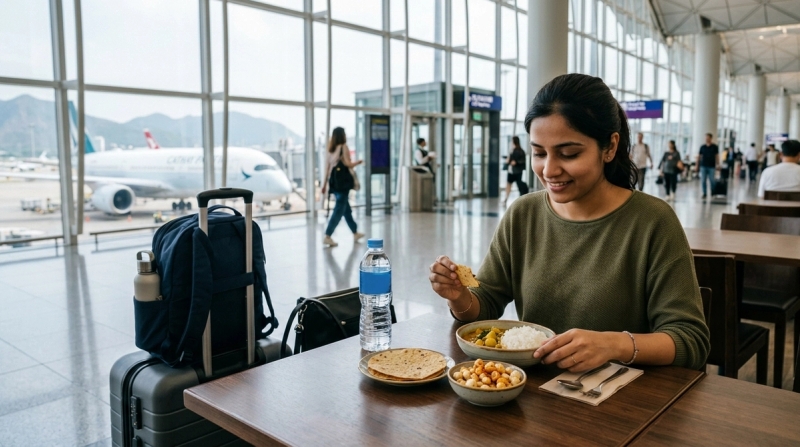
Hong Kong International Airport is usually a dream to transit through. It is clean, efficient, well-signposted, and easy enough to navigate even when you are tired.
But then comes the food question.
You land after a long flight, your next boarding time is creeping closer, and suddenly everyone in the family wants to know: “Khaane mein kya milega?”
If you are Indian or South Asian, this can get complicated very quickly. Maybe your parents want something warm and filling. Maybe your child is refusing anything that does not look familiar. Maybe you are vegetarian, Jain, halal-conscious, vegan, or simply not in the mood to gamble on a random noodle bowl.
So let’s be honest from the start: Hong Kong Airport is not the place where you should expect an easy Indian meal. Do not plan your layover assuming you will find butter chicken, dosa, idli, chole bhature, biryani, pav bhaji, or a proper thali inside the terminal.
This guide is more practical than dreamy. It is for Indian travellers who want to know what they can realistically eat at HKIA, what they should double-check, what is better avoided, and what snacks are worth carrying so the layover does not turn into a hunger emergency.
Quick answer
#If you are looking for Indian food at Hong Kong Airport, keep your expectations low. Dedicated Indian restaurants are not something most transit passengers should depend on, especially inside airside departure or transfer areas.
For most Indian travellers, food at HKIA means making the best of what is available: cafés, bakeries, fast-food outlets, Asian rice and noodle counters, sandwiches, packaged snacks, fruit, chicken, seafood, fried rice, and a few vegetarian-looking options that need careful checking.
If you are vegetarian, vegan, Jain, no-egg, or strict about avoiding seafood sauces, meat stock, pork, or lard, you need to ask properly before ordering. In Hong Kong and many East Asian food settings, a dish that looks “veg” may still contain oyster sauce, fish sauce, shrimp paste, chicken stock, pork broth, egg, or animal fat.
If you eat meat, your layover will be easier. Chicken, seafood, rice bowls, noodles, burgers, wraps, sandwiches, and Western café food are usually easier to find. But if you eat only halal meat, do not assume chicken or beef is halal unless the outlet clearly says so.
The safest strategy is simple: eat something basic, stay hydrated, and carry backup snacks from home. Khakhra, thepla, mathri, roasted makhana, chivda, dry fruits, biscuits, and instant poha or upma cups can genuinely save the day.
Also, before depending on any specific restaurant, check the latest HKIA dining list, airport map, or your airline lounge details. Airport outlets change, opening hours change, and some places may be landside rather than airside.
What Indian travellers can expect at HKIA
#Hong Kong International Airport, or HKIA, is a major international hub with plenty of food options. The only catch is that most of those options lean towards Cantonese, East Asian, bakery-style, café-style, and Western airport food.
So if you are searching for Hong Kong airport food for Indian travelers, think in terms of “what can I manage comfortably?” rather than “where is the Indian restaurant?”
You are more likely to find:
- Asian noodle and rice counters
- Cantonese and regional Chinese food
- Dim sum-style snacks
- Roast meat and seafood dishes
- International cafés
- Bakery counters
- Fast-food outlets
- Coffee chains
- Packaged snacks and convenience-style food
- Airport lounge buffets, if you have access
The biggest thing to remember is location. Many airport food lists include restaurants across the entire airport, but that does not always help if you are a transit passenger. A restaurant may technically be at HKIA but still be useless to you if it is outside security, in arrivals, in a different terminal area, or closed when you land.
If your connection is short, do not build your whole food plan around one specific outlet. If your layover is late at night or overnight, be even more careful. Some cafés and convenience-style shops may stay open, but full-service restaurants often reduce hours or close.
For Indian travellers, HKIA food planning works best in three layers:
- First choice: a fresh, simple airport meal you can verify
- Second choice: café food or packaged food with clear ingredients
- Backup: dry Indian snacks or instant meals from your cabin bag
That way, one closed counter or confusing menu does not ruin your whole transit.
Indian-friendly meal options: vegetarian and non-vegetarian backups
#The best HKIA food guide approach is not “where can I find Indian food?” It is more like, “what can I eat safely and comfortably before my next flight?”
Here is how to think about it.
For non-vegetarian Indian travellers
#If you eat chicken, egg, seafood, or meat, HKIA becomes much easier. You may not get Indian flavours, but you should be able to find something filling.
Look for simple meals like rice bowls, noodles, grilled or fried chicken, seafood dishes, sandwiches, burgers, wraps, or egg items.
If you enjoy Asian food, HKIA can actually be a decent place to eat. But if your body is asking for dal-chawal or something masaledar, the food may feel a little unfamiliar. In that case, go for comfort through simple items: rice, bread, potatoes, eggs, fruit, tea, coffee, or a basic hot meal.
Also, if you have only 40 or 50 minutes, do not order something complicated. A quick sandwich at the gate is better than waiting for a hot meal and then sprinting to boarding with half-packed food leaking in your bag.
For halal-conscious travellers
#Halal food needs extra care at HKIA. Do not assume a dish is halal just because it contains chicken, beef, or seafood. Some kitchens may use pork, lard, alcohol-based sauces, or non-halal meat, and cross-handling may also matter depending on your personal standards.
Your safer approach:
- Look for clearly marked halal-certified outlets or signage
- Ask staff directly whether the meat is halal-certified
- If unsure, choose seafood, vegetarian, egg, or packaged options only if they meet your standards
- Avoid soups and gravies if the stock base is unclear
- Be careful with shared fryers or mixed kitchens if that matters to you
There may be halal-marked options at the airport, but availability and location can change. Always check the latest airport listings before depending on one place.
For vegetarian Indian travellers
#Vegetarian food at HKIA is possible, but it needs attention. The tricky part is that “vegetable” does not always mean vegetarian in the Indian sense.
A vegetable noodle soup may have chicken stock. A tofu dish may contain oyster sauce. Fried rice may include egg, shrimp, or fish sauce. A plain-looking bun may have egg or animal-based ingredients.
For a more detailed vegetarian-only guide, read the AllBlogs Hong Kong Airport Vegetarian Food Guide. If you are also visiting the city, the Hong Kong Vegetarian Food Guide is useful too.
At the airport, these are usually better vegetarian bets:
- Packaged salads with printed ingredients
- Fruit cups
- Plain rice with clearly vegetarian sides
- Cheese or vegetable sandwiches from international cafés
- Bakery items, if egg is okay for you
- Potato chips or simple packaged snacks
- Yogurt, if you eat dairy
- Instant Indian meals you packed yourself
The key is to ask specific questions. Do not just ask, “Is it veg?” because that word may be understood differently.
Ask:
- Does this contain meat stock?
- Does this contain chicken broth?
- Does this contain fish sauce?
- Does this contain oyster sauce?
- Does this contain shrimp paste?
- Is it cooked with pork or lard?
- Does it contain egg?
Yes, it can feel awkward when you are tired and there is a queue behind you. But it is much better than finding out later that your “vegetable” noodles were cooked in chicken broth.
For Jain, vegan, or no-egg travellers
#Jain and strict vegan travellers should be especially careful with airport restaurant food unless ingredients are clearly confirmed. Onion, garlic, egg, dairy, fish sauce, meat stock, and animal-based sauces can all appear in food that looks harmless.
For strict diets, the safest plan is:
- Carry your own dry food
- Pre-book your airline meal before departure
- Use packaged airport food only when ingredients are clearly listed
- Avoid soups, sauces, fried rice, and mixed noodle dishes unless staff can confirm properly
Also check your next flight meal before you travel. If you are vegetarian, the AllBlogs guide to Vegetarian Airline Meal Codes can help you understand codes like AVML and other special meal types. Order special meals well in advance. Airport staff usually cannot fix this properly at the gate.
What to eat based on your layover time
#Your best food choice depends heavily on how much time you have. A 45-minute connection and a 3-hour layover are completely different situations.
If you have under 60 minutes
#Keep it very simple.
Choose:
- Coffee or tea
- Fruit
- Packaged snacks
- A ready sandwich
- A quick burger or wrap
- Your own Indian snacks
Avoid:
- Sit-down meals
- Noodle soups that take time
- Anything that needs a long ingredient discussion
- Searching for a specific restaurant in another zone
This is not the moment to find the perfect meal. This is the moment to stay fed and reach the gate without stress.
If you have 1 to 3 hours
#This is the best window for a proper airport meal.
You can look for:
- Rice or noodle bowls
- Chicken or seafood dishes
- Café sandwiches
- Vegetarian packaged options
- Light bakery items
- Lounge food, if you have access
Still check your gate distance before ordering. HKIA can involve long walks, train transfers, and large terminal areas. It may look simple on the airport map, but with hand baggage, kids, elderly parents, or a tight boarding time, those walks can feel much longer.
If you have an overnight layover
#Pack food. Honestly, just pack food.
Late-night airport dining is never fully predictable. Some outlets may remain open, but many proper restaurants and food court counters can close or switch to limited menus. If you are travelling with kids, elderly parents, strict vegetarians, or halal-conscious family members, do not wait until 2:00 AM to figure out dinner.
Your overnight food kit should include:
- Dry Indian snacks
- One filling packaged snack
- Instant poha, upma, or noodles
- Tea bags or instant chai sachets, if you like your own tea
- A reusable bottle for water refill where available
It may feel like extra packing when you are leaving home. But when you are sitting at the gate at midnight with limited options, you will be very glad you brought it.
What to skip at Hong Kong Airport
#HKIA has plenty of decent food, but not every airport meal is a good layover meal. When you are tired, dehydrated, or about to board another long flight, choose carefully.
Skip mystery broths
#Soups and noodle bowls are common, but the broth may be chicken, pork, seafood, or mixed stock. If staff cannot clearly confirm the base, skip it. This is especially important if you are vegetarian, halal-conscious, or avoid pork and seafood.
Skip “vegetable” dishes without checking
#In many East Asian menus, “vegetable” may only mean the main ingredient is vegetable. It does not automatically mean the dish is vegetarian.
It may still include:
- Oyster sauce
- Fish sauce
- Dried shrimp
- Meat stock
- Egg
- Lard
- Pork bits
- Chicken broth
Skip very heavy meals before a long flight
#A greasy, oversized meal can feel very tempting after hours of airport hunger. But before a long-haul flight, it can sit badly.
Think rice, bread, eggs, fruit, yogurt, a light sandwich, or soup only if the ingredients are verified. Save the fried feast for after you land.
Skip anything you are unsure about if your diet is strict
#This matters for Jain, vegan, halal, and allergy-sensitive travellers. If the ingredient answer is vague, move on. Airports are not the best place for complicated food negotiations, and busy staff may not know every detail.
The packing strategy: be your own backup plan
#Indian travellers are snack-planning experts for a reason. A small food pouch can completely save your layover.
The goal is not to carry a full meal for every hour of travel. It is simply to have enough familiar food so you do not have to compromise when airport options are limited.
Best dry Indian snacks for a layover
#Good cabin-bag snacks include:
- Khakhra
- Thepla, packed dry
- Mathri
- Roasted makhana
- Chivda or poha mix
- Dry fruits and nuts
- Protein bars, if you like them
- Plain biscuits or crackers
- Ready-to-eat namkeen in sealed packs
Choose snacks that are dry, low-mess, and easy to eat at the gate. Avoid oily, leaky, or very strong-smelling food in shared seating areas. Achar with thepla may be emotionally perfect, but the whole boarding gate does not need to experience it with you.
Instant Indian meals
#Instant poha, upma, or cup noodles can be useful during longer layovers. You may be able to get hot water from airport water points, cafés, or lounges, depending on where you are and what is open.
But do not assume hot water will be available exactly when you need it. Always keep at least one snack that needs no water at all.
What not to pack
#Avoid foods that can leak, spoil quickly, or smell too strong in a closed cabin or airport lounge.
Less practical choices include:
- Wet chutneys
- Curd rice for very long journeys
- Oily sabzi in loose containers
- Pickle-heavy food that may leak
- Anything that needs reheating
Dry, sealed, simple food wins every time.
Hydration and drinks at HKIA
#Food gets all the attention, but hydration matters just as much. Flights, air-conditioning, salty snacks, and long walks between gates can leave you feeling dull and tired.
At HKIA, your drink options are usually:
- Water from refill points, where available
- Bottled water from shops or cafés
- Tea or coffee
- Juices or soft drinks
- Lounge beverages, if you have access
If you are someone who needs proper chai, airport tea may not make you very happy. Carry tea sachets or instant premix if that works for you. Just remember that hot water access can vary depending on where you are and what time it is.
Try not to survive only on coffee during a long transit. A bottle of water and a small salty snack can do more for your mood than another rushed cappuccino.
How to order more safely at HKIA
#You do not need perfect Cantonese or Mandarin to manage food at Hong Kong International Airport. English is commonly used in airport settings, and many menus have English descriptions. Still, ingredient clarity can vary from counter to counter.
Use short, specific questions.
Instead of saying:
“Is this pure veg?”
Say:
“Does this contain meat, seafood, fish sauce, oyster sauce, or chicken stock?”
Instead of saying:
“Is this halal?”
Say:
“Is the meat halal-certified?”
Instead of saying:
“No non-veg?”
Say:
“No meat, no seafood, no egg, no meat stock, please.”
If staff seem unsure, choose something else. It is not worth taking a chance, especially before another flight.
Best practical meal combinations
#Here are some realistic food combinations for different types of Indian travellers.
If you eat chicken and egg
#Try:
- Chicken rice or noodles, if the sauce is okay
- Egg sandwich and fruit
- Burger or wrap from a global chain
- Coffee plus a bakery item
- Fried rice, after checking for pork or seafood if you avoid them
If you eat seafood
#Try:
- Seafood noodles
- Fish or prawn rice dishes
- Sushi-style packaged food, if available and suitable
- Café salad with seafood topping
Check sauces and freshness. Also avoid anything that looks like it has been sitting out too long.
If you are lacto-vegetarian
#Try:
- Cheese sandwich
- Fruit and yogurt
- Packaged salad with clear ingredients
- Bakery item, if egg is acceptable or clearly absent
- Your own thepla, khakhra, or instant meal
Ask about stock and sauces before choosing Asian hot dishes. This is where hidden ingredients usually appear.
If you are vegan
#Try:
- Fruit
- Packaged snacks with clear labels
- Plain rice, only if sides and sauces are confirmed
- Your own packed food
- Some salads, if dressing is suitable
Be careful with bread, pastries, dressings, mayonnaise, soups, and sauces. Dairy and egg can be hidden in very normal-looking food.
If you need halal food
#Try:
- Clearly marked halal-certified outlets, if available in your zone
- Seafood dishes, if acceptable to you and cooked in a way that suits your standards
- Vegetarian packaged food with clear labels
- Your own snacks
Do not rely on assumptions. Ask directly and verify.
Airside vs landside: why it matters
#A lot of airport food articles list restaurants across the whole airport. That can be misleading if you are a transit passenger.
If you are connecting internationally and staying airside, you may not be able to access landside restaurants without clearing immigration and security again. Whether that is possible depends on your passport, visa situation, baggage, airline, connection time, and airport procedures.
For most layovers, especially short ones, plan only around airside options near your gate or transfer route.
Before your trip, check:
- Your arrival terminal or gate area
- Your departure gate area, once assigned
- Whether your chosen outlet is airside or landside
- Opening hours
- Walking time to the gate
- Lounge access, if any
This is why a packed snack backup is not overthinking. It is just smart transit planning.
Final food plan for Indian travellers at HKIA
#If you want the simplest possible plan, use this:
- Before flying: Pre-book your airline meal if you need vegetarian, vegan, Jain, halal, or any special meal.
- In your cabin bag: Pack dry Indian snacks and one instant meal if your layover is long.
- At HKIA: Look for simple rice, noodles, sandwiches, fruit, café food, or clearly marked options.
- Before ordering: Ask about broth, sauces, meat, seafood, egg, and halal status if relevant.
- Before boarding: Drink water and avoid very heavy food if you have a long next flight.
Hong Kong Airport may not be an Indian food paradise, but it is manageable if you go in with the right expectations. The trick is to stop searching for the perfect Indian meal and start building a practical layover meal from what is actually available.
And if nothing works? Open the khakhra. That is exactly why you packed it.
Can I find authentic Indian food at Hong Kong airport?
#Do not depend on finding authentic, dedicated Indian food inside the restricted airside areas of HKIA. Availability can change, and many transit passengers will find more realistic options through cafés, fast-food outlets, Asian rice or noodle counters, packaged food, and snacks they brought from home.
Always verify current airport listings before planning around a specific restaurant.
What is the safest option for vegetarian Indian travellers at HKIA?
#Packaged food with clear ingredient labels is often safer than guessing at sauces and broths. Fruit, salads, cheese sandwiches, bakery items, and your own dry snacks can work, depending on your diet.
For hot Asian dishes, ask about fish sauce, oyster sauce, shrimp paste, meat stock, egg, pork, and lard before ordering.
Are halal options available at Hong Kong International Airport?
#There may be halal-marked options at HKIA, but do not assume all chicken, beef, or seafood dishes are halal. Look for clear halal certification or ask staff directly.
If you cannot confirm, choose another option that fits your standards, such as packaged food, seafood, vegetarian food, or snacks you carried with you.
What should Indian travellers pack for a Hong Kong Airport layover?
#Pack dry, low-mess snacks such as khakhra, thepla, mathri, roasted makhana, chivda, dry fruits, biscuits, or sealed namkeen. For long layovers, instant poha, upma, or cup noodles can help if you can access hot water.
Avoid leaky, oily, perishable, or strong-smelling food. Dry snacks are the most reliable backup.