You can reach Mount Fuji and Lake Kawaguchiko from central Tokyo in about two hours, either on the direct Fuji Excursion express train or on a highway bus from Busta Shinjuku. The catch is simple: if you lock in seats weeks ahead without watching morning cloud cover, you can easily spend four hours in transit just to look at fog.
Most day-trippers run into two avoidable problems. Either they book too late and find the direct train sold out, or they miss how rail passes and local transfers split at Otsuki Station. Getting the transport choice and the morning weather check right fixes both.
If you are still organizing your days around top Tokyo sights and neighborhoods, keep two or three city days flexible so you can move your Mount Fuji trip to the clearest morning.
Check Mount Fuji Visibility Before You Leave Tokyo
#Tokyo weather apps do not tell you whether Mount Fuji is visible. Central Tokyo sits near sea level by the bay, while Lake Kawaguchiko lies roughly 100 kilometers west at about 1,000 meters elevation on the northern side of the mountain. A sunny morning in Shinjuku still pairs with heavy cloud bands around the 3,776-meter peak.
Even on clear days, midday heat works against you. As the sun warms the valley floor, moist air rises along the slopes and builds cumulus clouds around the summit from late morning through early afternoon.
Seasonal visibility odds shift dramatically across the year:
- December through February: Cold, dry air from Siberia clears away humidity and limits midday cloud buildup. Winter mornings give the highest clear-peak odds (often 60 to 80 percent on crisp mornings) along with full snow cover.
- October and November: Post-typhoon autumn skies sharpen up nicely, pairing clear morning views with autumn foliage around Lake Kawaguchiko in early to mid-November.
- March through May: Spring brings mid-April cherry blossoms and later pink moss blooms, though rising humidity adds haze and faster afternoon clouds.
- June through August: Summer humidity and Japan's rainy season keep the cone hidden behind thick cloud layers for days at a stretch, often dropping full-peak visibility under 15 percent.
Sunrise through roughly 9:00 AM gives the cleanest window in every season. Open live Mount Fuji webcams pointing across Lake Kawaguchiko and Lake Yamanakako while having breakfast around 6:30 AM. If the feeds show solid cloud blanketing the cone, stay in Tokyo that day and try again the next clear morning.
Express Train vs. Bus from Tokyo: Choosing the Right Ride
#Most travelers depart from Shinjuku, Tokyo Station, or Shibuya. Trains avoid road jams on busy weekends, while highway buses cost about half as much and still drop you directly outside Kawaguchiko Station.
| Route Option | Departure Hub | Typical One-Way Time | Standard Adult Fare | Seat and Pass Rules |
|---|---|---|---|---|
| Fuji Excursion Limited Express | Shinjuku Station | About 1 hr 55 min | About 4,200 yen (4,130 yen to Fujikyu-Highland) | All seats reserved; JR Tokyo Wide Pass covers full ride |
| JR Azusa or Kaiji plus Fujikyu Local | Shinjuku (transfer at Otsuki) | About 2 hr 10 to 35 min | About 3,600 yen total (2,430 yen JR plus 1,170 yen Fujikyu) | Reserved JR seat to Otsuki; IC card works on Fujikyu local |
| JR Chuo Local plus Fujikyu Local | Shinjuku (transfer at Takao or Otsuki) | About 2 hr 35 to 50 min | About 2,580 yen total (1,410 yen JR plus 1,170 yen Fujikyu) | No reservation needed; tap IC card end-to-end |
| Busta Shinjuku Highway Bus | Shinjuku South Exit 4th Floor | About 1 hr 45 min to 2 hr (traffic varies) | 2,000 yen online or 2,200 yen counter | Advance seat booking advised; no JR passes accepted |
| Tokyo Station or Shibuya Highway Bus | Tokyo Yaesu South or Shibuya Mark City | About 2 to 2.5 hr (traffic varies) | 2,300 yen | Advance seat booking advised; no JR passes accepted |
How the Direct Fuji Excursion Train Works (and Why It Sells Out)
#The JR East Fuji Excursion (Fuji Kaiyu) is the only direct train from central Tokyo to Kawaguchiko without a transfer. Usually running four round trips a day plus occasional seasonal extras, it travels west along the JR Chuo Line before climbing the 26.6-kilometer Fujikyu Railway Line from Otsuki up roughly 500 meters in elevation into the Fuji Five Lakes basin.
Three rules catch first-time riders off guard on this service:
- No unreserved cars: Every seat on the Fuji Excursion requires a reservation. You can't walk onto the platform with a bare transit card and stand in an unreserved carriage.
- One-month 10:00 AM JST release: Tickets open on JR East's Eki-net reservation site and at JR ticket offices exactly one month before the travel date at 10:00 AM Japan Standard Time. During April blossom season, November foliage, and sunny winter weekends, morning Shinjuku departures sell out weeks ahead.
- The Otsuki train split: Between Shinjuku and Otsuki, the three-car E353 Fuji Excursion section (Cars 1, 2, and 3) travels coupled to a nine-car Kaiji or Azusa limited express train (Cars 4 through 12). At Otsuki Station, the train uncouples: Cars 1 to 3 turn south toward Mount Fuji, while Cars 4 to 12 keep heading west toward Kofu or Matsumoto. Double-check your car number at Shinjuku so you don't ride away from the mountain.
One detail works in your favor: all standard scheduled Fuji Excursion trains stop at Shimoyoshida before continuing to Fujisan Station, Fujikyu-Highland, and Kawaguchiko. That lets you hop off right away for Chureito Pagoda instead of overshooting to the terminal and riding back.
Backup Rail: Transferring at Otsuki Without Stress
#When the Fuji Excursion shows sold out on Eki-net, skip expensive tour packages and just split the train ride yourself at Otsuki. Ride any JR Chuo Line Limited Express (Kaiji or Azusa) from Shinjuku to Otsuki in about 70 minutes for 2,430 yen, walk across to the Fujikyu Railway tracks, and take a local train up to Shimoyoshida or Kawaguchiko in about 55 minutes for 1,170 yen.
Fujikyu also operates limited express trains between Otsuki and Kawaguchiko, such as the Fujisan View Express and Fujisan Express. They add roughly a 600-yen express surcharge on top of the 1,170-yen base fare (plus a seat fee for special panoramic coaches), though local trains run often enough that taking the next regular departure usually beats waiting for a scenic express.
If you start early on a tight budget, standard JR Chuo rapid or local trains also reach Otsuki in about 100 minutes (usually with one transfer) for 1,410 yen, making the entire local rail trip 2,580 yen one way with zero advance booking.
The Highway Bus Alternative from Busta Shinjuku
#If you're booking close to your travel date or paying cash without a rail pass, the highway bus is the strongest value option. Keio Bus and Fujikyu Bus run roughly two direct coaches per hour from Busta Shinjuku, the highway bus terminal located on the 4th floor directly above Shinjuku Station's New South Exit.
Buying online through official highway bus portals lowers the Shinjuku one-way fare from 2,200 yen at the terminal counter to 2,000 yen. Additional direct buses leave Tokyo Station's Yaesu South Exit (one to two per hour, about 2 hours, 2,300 yen) and Shibuya Mark City (about every two hours, 2 to 2.5 hours, 2,300 yen). Every passenger gets an assigned seat and room for bags in the luggage hold underneath.
The downside is Chuo Expressway traffic. On clear weekday mornings, the Shinjuku bus finishes in about 1 hour 45 minutes to 2 hours. On sunny weekends, national holidays, or Sunday evenings heading back into Tokyo, congestion near Otsuki and western Tokyo can tack on 45 to 90 minutes. Taking a 7:00 AM or 7:30 AM outbound bus beats most morning traffic, and you can switch to the train on the way home if afternoon highway delays stack up.
Rail Passes and IC Card Traps at Otsuki Station
#Otsuki Station isn't just a transfer stop. It is also where JR East's rail network ends and the private Fujikyu Railway begins, so rail pass rules and transit card rules change completely right at that boundary.
JR Tokyo Wide Pass vs. Nationwide Japan Rail Pass
#Travelers frequently assume the big national rail pass covers more than the smaller regional one. On the Mount Fuji route, the reverse is true:
- JR Tokyo Wide Pass (16,000 yen adult / 8,000 yen child for 3 consecutive days): Covers 100 percent of the route between Tokyo and Kawaguchiko, including the private Fujikyu Railway tracks past Otsuki. You pay 0 yen extra for base fares and standard reserved express seats on the Fuji Excursion (only optional special panoramic observation seats cost extra). Note that older guides often still cite the old 15,000-yen rate, so check your 3-day trip math against the 16,000-yen price before buying.
- Nationwide Japan Rail Pass (50,000 yen and up for 7 days): Only covers JR tracks up to Otsuki. It does not cover the private Fujikyu Railway between Otsuki and Kawaguchiko. Pass holders riding through on the Fuji Excursion or transferring at Otsuki have to pay the Fujikyu segment separately: 1,170 yen each way on local trains, or 1,770 yen each way (1,170 yen base plus 600 yen limited express charge) on limited express trains including the Fuji Excursion.
Nationwide JR Pass holders can also run into online booking roadblocks when trying to reserve all the way to Kawaguchiko through pass portals because the train crosses onto private rails. Reserving the JR portion to Otsuki or asking a JR ticket office staffer in Tokyo to issue the full seat and sort out the Otsuki-to-Kawaguchiko fee avoids boarding trouble.
Suica and PASMO Rules on Local vs. Express Trains
#Having Tokyo IC cards like Suica and Pasmo setup ready in your wallet or phone simplifies local hops. Both JR East and the Fujikyu Railway accept Suica, PASMO, and ICOCA on standard local trains.
Just watch the express rule: an IC card tap pays only the base fare on regular trains. Automated ticket gates on the Fujikyu Line cannot deduct limited express surcharges or assign seats.
- Local trains: Tap in at Tokyo, transfer at Otsuki, and tap out at Shimoyoshida or Kawaguchiko with zero paper tickets.
- Fuji Excursion or Fujisan View Express: Don't board with only an IC card tap. Buy your reserved express ticket or separate Fujikyu express supplement at a machine or counter first, or you'll get stopped at the exit gate for fare adjustment.
- Highway buses: JR rail passes don't work on Tokyo-to-Kawaguchiko buses, and walk-up IC taps aren't used for reserved highway coaches. Book a timed seat online or at the terminal.
Timing the Route: Shimoyoshida, Chureito Pagoda, and Lake Kawaguchiko
#Running your stops east-to-west gives you better weather odds and less backtracking. Hit Shimoyoshida first in the morning when the light is clean and the sky hasn't clouded over, then continue ten minutes west to Kawaguchiko Station and Lake Kawaguchiko.
Morning Stop: Shimoyoshida and the 398 Steps to Chureito Pagoda
#Step off at Shimoyoshida Station around 9:00 to 9:30 AM. Walk roughly 10 minutes through town streets to Arakura Fuji Sengen Shrine, then follow the hillside path another 5 minutes to the main climb.
To reach the five-story Chureito Pagoda (built in 1963 as a peace memorial), you climb 398 stone steps up the mountainside. An adjacent paved slope runs up beside the stairs for anyone who prefers a steady incline over tall stone risers. Admission is free and the grounds stay open 24 hours, with a normal visit taking 30 to 45 minutes.
Two real-world cautions help at Shimoyoshida:
- Peak-season observation deck queues: During mid-April cherry blossoms and early-to-mid November autumn colors, staff control crowd flow onto the wooden viewing deck behind the pagoda, adding extra wait time after the climb. Reaching the shrine before 9:30 AM cuts both queue time and afternoon clouds.
- Residential street etiquette: Heavy visitor crowds around Shimoyoshida Station have caused friction with local residents over noise, trespassing, traffic, and litter. Stick to marked pedestrian routes, watch for cars in narrow lanes, keep voices down early, and carry your trash back to station bins.
Moving On to Kawaguchiko Station
#Walk back down to Shimoyoshida Station and take the Fujikyu Railway west for 10 minutes to Kawaguchiko Station (310 yen local fare by IC card, or included on a JR Tokyo Wide Pass).
Keep your bags light. Kawaguchiko Station has coin lockers, but large lockers fill up fast by mid-morning on clear days, and Shimoyoshida has very limited storage. Leaving bulky suitcases at your Tokyo hotel saves you from hauling bags up 398 steps or wasting morning daylight hunting empty lockers.
Getting Around the Lake: Red Line Retro Bus vs. Walking
#Outside Kawaguchiko Station, three tourist Omni Bus routes connect the lakes:
- Red Line (Kawaguchiko Sightseeing Bus): Runs every 15 minutes from Kawaguchiko Station (Stop 1) along the eastern and northern shores to the Kawaguchiko Natural Living Center / Oishi Park (Stop 20), stopping near the Panoramic Ropeway and museums along the way.
- Green Line (Saiko Sightseeing Bus): Runs roughly every 30 minutes along Lake Kawaguchiko's southern shore and around quieter Lake Saiko.
- Blue Line (Narusawa / Shojiko / Motosuko Line): Runs every 1 to 2 hours out to Lakes Shojiko and Motosuko (the remote western lake pictured on Japan's 1,000-yen note).
Stick to the Red Line on a one-day visit. Trying to reach Lake Saiko or Lake Motosuko eats up too much time waiting between infrequent buses.
Check the fare math before buying the Mt. Fuji North Area 1-Day Pass (1,500 yen adults / 750 yen children). Single Red Line rides take Suica and PASMO (tap getting on and tap getting off), with minimum zone fares starting around 180 yen. If you simply ride from Kawaguchiko Station out to Oishi Park, stop once on the way back, and walk a stretch of the shore, paying per IC tap usually beats 1,500 yen. Buy the 1-Day Pass only if you plan four or more separate bus rides across the lake.
Afternoon at Oishi Park and Cloud-Day Backups
#At Stop 20, Oishi Park gives you a flat, wide waterfront view straight across Lake Kawaguchiko toward Mount Fuji, lined with lavender in early summer and bright red kochia bushes in autumn. There are no steep climbs or admission gates here, making it an easy afternoon contrast to Chureito Pagoda.
If clouds wrap Mount Fuji around noon, don't spend two hours shivering by the water waiting for a clearing that might not show up until sunset. Hop back on the Red Line to indoor stops like the Itchiku Kubota Art Museum (known for intricate silk kimono art and quiet woodland gardens) or spend an hour at a lakeside day-use hot spring (onsen).
What to Eat: Yamanashi Houtou Noodles and Fujisan Melonpan
#Yamanashi sits in a high volcanic mountain basin where cold weather and rocky soil historically made wheat dishes far more dependable than rice. Local comfort food reflects that climate.
Yamanashi Houtou Noodles (What Makes Them Different from Udon)
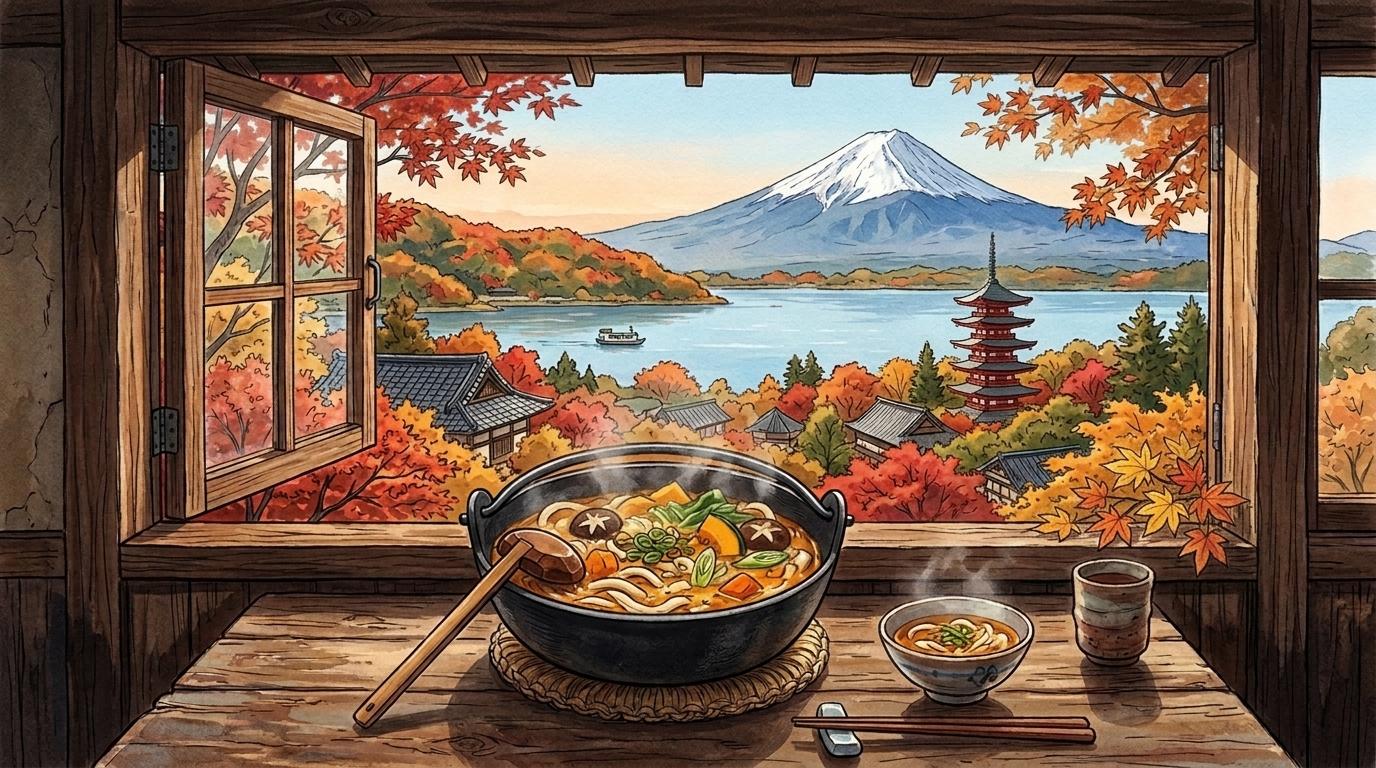
#Houtou (hōtō) is the dish Lake Kawaguchiko is famous for, and locals consider it distinct from ordinary udon. Originally developed in Yamanashi's Gunnai region when silk farming and volcanic soil left rice scarce (and later promoted around 16th-century warlord Takeda Shingen), the flour dough is prepared more like dumpling dough than stretched udon noodles.
Instead of boiling the noodles separately first, kitchens drop the wide, flat, unsalted wheat strips raw straight into simmering miso broth. That extra starch thickens the soup naturally as it cooks inside a heavy individual cast-iron pot (tetsunabe), packed with big sweet chunks of kabocha pumpkin, mushrooms, taro, root vegetables, and greens.
Before grabbing a table at well-known spots like Houtou Fudou or Kosaku, remember two practical details:
- Beat the midday rush and expect huge portions: One iron pot is a big, piping-hot meal that takes time to eat. Between 11:45 AM and 1:30 PM, lines at busy Kawaguchiko branches regularly hit 30 to 45 minutes. Eating slightly early around 11:15 AM or late after 2:00 PM keeps your afternoon open.
- Ask about fish dashi if you're vegetarian: Even when Houtou skips sliced pork, chicken, or duck, traditional miso broths usually start with bonito fish dashi. Strict vegetarians and vegans should confirm kelp (kombu) or mushroom-only broth before ordering.
Fujisan Melonpan vs. Kawaguchiko Station Bakeries
#Many visitors look around Kawaguchiko Station for Fujisan Melonpan—sweet melon bread baked like a little volcano and dusted with cocoa and powdered sugar—only to learn it isn't sold down by the lake. The popular Amanoya bakery behind that pastry sits way up at the Mount Fuji 5th Station on the Fuji Subaru Line, which takes a separate mountain bus and faces road closures during winter snow.
Down near Kawaguchiko Station, check Fujisan Shokupan instead (about a five-minute walk from the station). Their square milk-bread loaves use local Yamanashi Kyoho grape juice to create a blue-and-white snow-capped Mount Fuji shape inside every slice. Up at Oishi Park's Natural Living Center, snack counters also sell Yamanashi peach and grape soft-serve ice cream alongside Fuji-shaped Fujiyama Cookies.
Practical Day-Trip Check and Return Timing
#Before wrapping up your afternoon around the lake, keep three quick ground rules in mind:
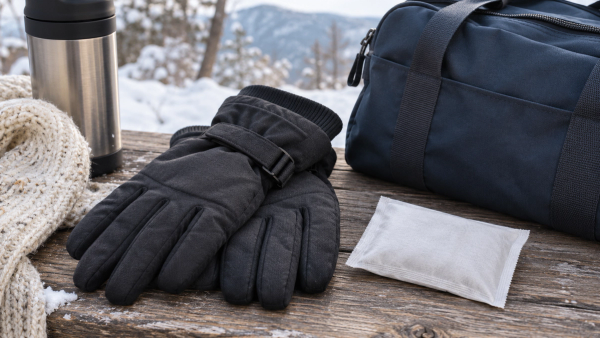
- Pack warmer than Tokyo's forecast: At roughly 1,000 meters above sea level, Lake Kawaguchiko regularly runs 5 to 8 degrees Celsius cooler than central Tokyo, with noticeable wind along the open shoreline. Wear a windproof layer from autumn through spring and shoes with good grip if winter frost sits on Chureito Pagoda's stone stairs.
- Carry spare yen cash: Ticket counters, Kawaguchiko buses, and larger restaurants accept IC cards or credit cards, but smaller noodle spots, coin lockers, shrine stops, and vending stands near Shimoyoshida still run easiest on 100-yen coins and 1,000-yen bills.
- Buffer your return to the station: Red Line sightseeing buses stop running noticeably earlier than Tokyo trains—typically wrapping up late afternoon to early evening. Plan to be back at Kawaguchiko Station 30 to 45 minutes ahead of your reserved train or bus. If your preferred return Fuji Excursion is full or you want out before weekend highway traffic builds, catch a local Fujikyu train down to Otsuki and transfer onto frequent JR Chuo expresses back to Shinjuku.