Some drinks just make sense in summer.
When it’s hot enough that water starts to feel a little boring, but soda sounds too sweet and heavy, mugicha is exactly the kind of drink you want waiting in the fridge.
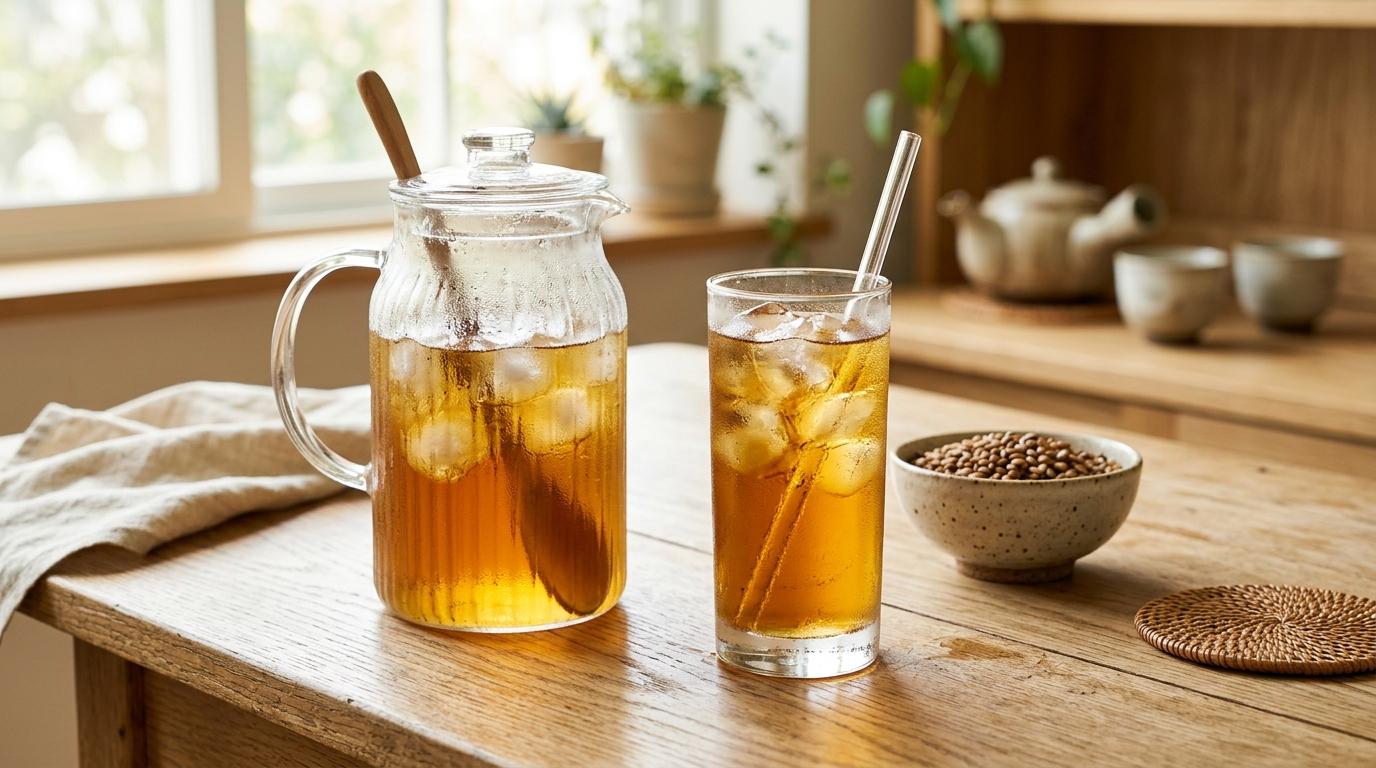
Mugicha, or Japanese barley tea, is made from roasted barley steeped in water. It’s nutty, toasty, unsweetened, and naturally caffeine-free. In Japan, it’s one of those everyday drinks you’ll find everywhere: in family refrigerators, convenience stores, vending machines, school lunch bottles, and big pitchers on kitchen tables.
It isn’t fancy. That’s part of the charm.
This guide covers what mugicha is, how it tastes, how to make cold brew barley tea or hot mugicha at home, what to eat with it, how to store it, and a few little mistakes that can make it taste bitter, stale, or flat.
What is mugicha?
#Mugicha (麦茶) is a Japanese drink made by steeping roasted barley grains in water. In English, it’s usually called Japanese barley tea or roasted barley tea.
Strictly speaking, though, it isn’t “tea” in the same way green tea, black tea, or oolong are tea.
Those drinks come from the leaves of the Camellia sinensis plant. Mugicha does not. It’s more of a roasted grain infusion, kind of like a tisane, but made with barley instead of herbs or flowers.
That difference matters because mugicha is naturally caffeine-free. There are no tea leaves involved, just roasted barley and water.
In Japan, mugicha is especially popular in summer. A lot of households keep a pitcher of it in the fridge and pour it throughout the day. Compared with matcha or sencha, it feels less formal and more practical. It’s the kind of drink you make in a big batch and drink without thinking too hard about it.
You can make mugicha with loose roasted barley, but many people use mugicha tea bags. These are often larger than regular tea bags because they’re designed for pitchers instead of single cups.
Is mugicha caffeine-free?
#Yes. Mugicha is a caffeine-free Japanese tea alternative because it’s made from barley, not tea leaves.
That makes it a great option when you want something more interesting than plain water but don’t want caffeine from iced tea, green tea, coffee, or matcha. You can drink it at lunch, in the afternoon, with dinner, or at night without worrying about it keeping you awake.
A few useful things to know:
- Mugicha is naturally caffeine-free, not decaffeinated.
- It’s usually served unsweetened in Japan.
- It is not green tea, even if it’s sold in the tea aisle.
- It’s made from barley, so it is not gluten-free.
That last point is important. Barley contains gluten, so if you avoid gluten for medical reasons, mugicha is not a safe choice.
Also, while mugicha is refreshing and can be part of your daily fluids, it’s not a magic fix for serious dehydration or heat exhaustion. On very hot days, especially if you’re sweating a lot, you still need enough fluids, food, salt, and electrolytes.
What does mugicha taste like?
#Mugicha tastes roasted, nutty, dry, and mellow.
If you’re expecting green tea, the first sip might surprise you. It doesn’t taste grassy, vegetal, or leafy. Instead, roasted barley tea has a warm grain flavor, a little like toasted bread crust, roasted nuts, or very mild coffee in the background.
It has a clean finish and a slight bitterness, but when brewed well, that bitterness is gentle and refreshing rather than harsh.
Cold mugicha tastes lighter, smoother, and easier to drink by the glass. Hot mugicha tastes deeper and more aromatic, with a stronger roasted flavor.
The simplest way to put it: mugicha is not sweet, fruity, or floral. It’s crisp, toasty, and especially good when you’re thirsty.
Hot brew vs cold brew mugicha
#Mugicha is very easy to make, and both hot brewing and cold brewing work well. The best method depends on how quickly you want it and what kind of flavor you like.
If you’re using mugicha tea bags, check the package instructions first. Brewing time can vary depending on the brand, the size of the bag, and how darkly the barley is roasted.
How to make cold brew barley tea
#Cold brew is the classic summer method. It’s simple, smooth, and almost completely hands-off.
To make cold brew barley tea, place a mugicha tea bag in a pitcher of cold water and refrigerate it. Let it steep until the water turns amber-brown and tastes roasted enough for you.
A general guide:
- Add one mugicha tea bag to a pitcher of cold water.
- Refrigerate for about 1 to 2 hours, or follow the package directions.
- Remove the tea bag once the flavor tastes right.
- Keep the pitcher chilled.
Cold brew mugicha usually tastes softer and cleaner than hot brew. It has less bitterness and a gentler roasted flavor, which makes it perfect for sipping throughout the day.
If you like a stronger taste, steep it a little longer next time or use slightly less water. If it tastes too intense, dilute it with cold water.
How to make hot mugicha
#Hot brewing is faster and gives you a deeper roasted flavor.
You can steep a mugicha tea bag in hot water, or simmer loose roasted barley and strain it afterward. A common brewing time is about 5 to 10 minutes, but again, your package instructions are the best guide.
Hot brewed mugicha usually tastes:
- Darker
- More aromatic
- More deeply roasted
- A little more bitter than cold brew
You can drink it hot, especially in cooler weather, or chill it after brewing.
If you want iced mugicha quickly, brew it stronger than usual, then pour it over plenty of ice. The ice will dilute it as it melts, so starting with a stronger brew helps the flavor stay balanced.
What to eat with mugicha
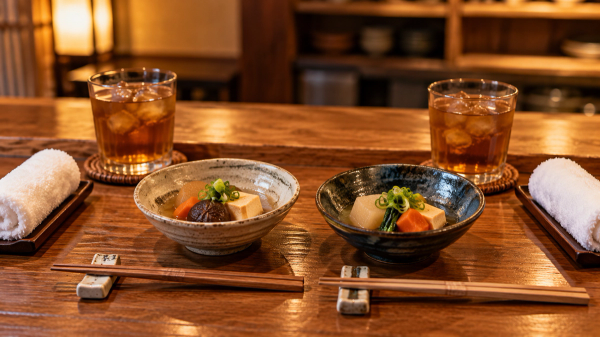
#Mugicha is easy to pair with food because it doesn’t fight for attention. It has enough flavor to be interesting, but it stays clean and dry.
It’s great with Japanese and Korean-style meals, but you don’t need a special menu to enjoy it. It works just as well with a simple lunch, salty snack, or anything grilled.
Try mugicha with:
- Cold noodles, such as somen, zaru soba, or hiyashi chuka
- Rice dishes, like onigiri, rice bowls, or steamed rice meals
- Salty snacks, such as senbei, roasted nuts, edamame, or popcorn
- Grilled foods, where the roasted flavor matches smoky, savory notes
- Fried foods, where the dry finish helps refresh your palate
- Light lunches, especially when you want something cold and unsweetened
Because mugicha is usually served without sugar, it’s a nice non-alcoholic option when you don’t want something sweet. It also doesn’t leave the sticky aftertaste you sometimes get from soda, juice, or sweet bottled teas.
Storage and serving tips
#Mugicha is simple, but it still needs basic care. Once it’s brewed, treat it like any fresh homemade drink.
Keep it refrigerated
#Store brewed mugicha in the fridge. Don’t leave a pitcher sitting out for hours, especially in warm weather.
Drink it within a few days
#For the best flavor, finish homemade mugicha within 2 to 3 days. The roasted aroma fades over time, and old mugicha can start to taste dull or slightly sour.
Use a clean pitcher
#Wash your pitcher between batches. Roasted barley can leave a light residue, and a clean container helps the next batch taste fresh.
Remove the tea bag
#Don’t leave the tea bag in the pitcher forever. Once the mugicha tastes good, take it out. Over-steeping can make the drink too bitter or harsh.
Serve it very cold
#Mugicha is especially good chilled. Keep a pitcher in the fridge, pour it over ice, and drink it when you want something refreshing but not sweet.
Adjust the strength
#If your mugicha tastes too weak, steep it longer next time or use less water. If it tastes too strong or bitter, shorten the steeping time or dilute it with cold water.
Common mugicha mistakes
#Mugicha is forgiving, but a few small things can make a big difference.
Leaving the tea bag in too long
#This is probably the most common mistake. If the tea bag sits in the pitcher too long, the mugicha can become overly bitter.
For cold brew, remove the bag once the color and flavor are where you want them. For hot brew, don’t forget it on the counter while it keeps steeping.
Expecting it to taste like green tea
#Mugicha is not grassy, vegetal, or tannic like green tea. Its flavor is roasted and grain-like. If you expect iced green tea, it may taste unusual at first.
Give it a few sips. It’s the kind of flavor that can grow on you quickly, especially when it’s cold.
Sweetening it automatically
#Mugicha is usually enjoyed unsweetened in Japan. You can drink it however you like, of course, but sugar changes the clean, dry character that makes it so refreshing.
Try it plain first before adding anything.
Using stale barley or old tea bags
#The roasted aroma is a big part of what makes mugicha good. If your tea tastes flat, your roasted barley or tea bags may be old.
Store mugicha tea bags or loose roasted barley in a cool, dry place, and keep the package sealed after opening.
Forgetting food safety
#A big pitcher of mugicha can go quickly in summer, but it still shouldn’t sit out for hours in a hot kitchen. Refrigerate it after brewing and pour only what you plan to drink.
Final sip
#Mugicha isn’t flashy, and that’s exactly why it works.
It’s roasted, clean, caffeine-free, and easy to keep in the fridge for hot days. It gives you more flavor than water without the sweetness of soda or the caffeine of iced tea.
If you want a simple non-alcoholic summer drink that’s crisp, unsweetened, and genuinely refreshing, Japanese barley tea is worth keeping around. Cold brew it for an easy everyday pitcher, brew it hot when you want a deeper roasted flavor, and serve it with anything salty, grilled, cold, or comforting.