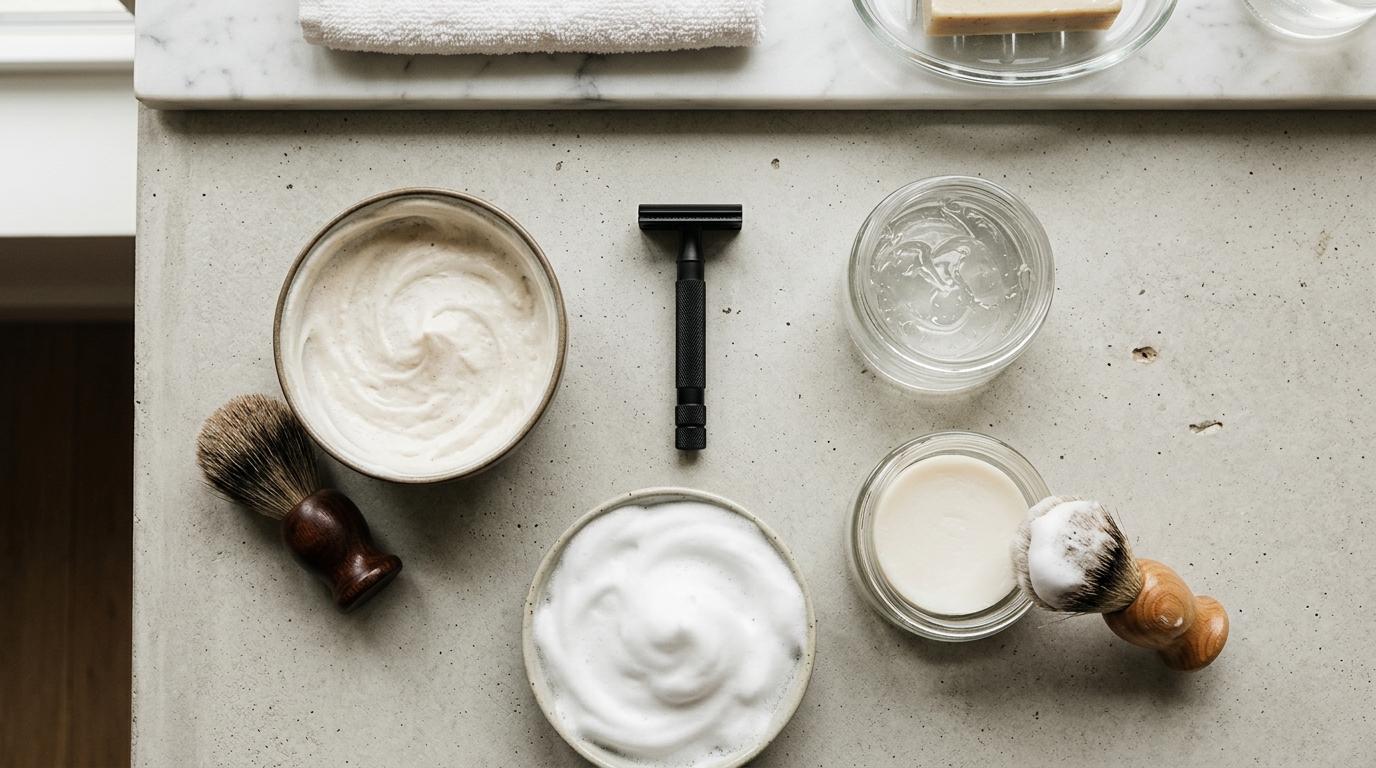
If you’re trying to choose between shaving cream, gel, foam, and soap, here’s the short answer: shaving cream is usually the easiest place to start.
It’s forgiving, easy to spread, and gives your razor a comfortable cushion. Shaving gel is great if you want extra glide or more control. Shaving foam is quick and convenient, but it’s usually lighter on protection. Shaving soap can give an excellent shave, but it takes a brush, water, and a little practice.
None of this needs to be complicated. A good shaving product has one main job: help your razor move smoothly over your skin so it cuts hair without dragging, scraping, or leaving you irritated afterward.
This guide breaks down the real difference between shaving cream, gel, foam, and soap so you can pick what actually makes sense for your skin, hair, and routine.
Quick Answer: What Should Beginners Use?
#For most beginners, shaving cream is the best first choice. It’s easy to apply, easy to see on the skin, and usually gives a comfortable, cushioned shave. It works well for the face, legs, arms, underarms, chest, and most body shaving.
Choose shaving gel if you want more glide, a lighter feel, or better control around tricky areas like beard lines, knees, ankles, or underarms.
Choose shaving foam if you want something fast and simple, especially if your hair is fine or you don’t usually get much irritation.
Choose shaving soap if you like traditional wet shaving and don’t mind taking a little time to learn how to make a proper lather.
What Shaving Products Actually Do
#Shaving products all do roughly the same thing: they reduce friction, soften the hair, and help the razor glide instead of scrape.
The difference is how they feel and how easy they are to use:
- Cream feels thicker, softer, and more cushioned
- Gel feels slick, smooth, and controlled
- Foam feels light, fluffy, and fast
- Soap feels traditional and can work beautifully, but it takes more technique
The most important question isn’t “Which one looks richest in the can?” It’s this: Does it help your razor glide without you needing to press hard?
That’s what makes the biggest difference.
Shaving Cream: The Forgiving All-Rounder
#Shaving cream is usually the most beginner-friendly option. It has a thicker, softer texture that creates a cushioned layer between your skin and the razor.
That cushion is helpful when you’re still figuring out how much pressure to use, which direction your hair grows, and how much product you actually need. Cream also stays visible on the skin, so it’s easier to see where you’ve already shaved.
Best for:
- Beginners
- Dry or normal-feeling skin
- Legs, arms, face, chest, and larger body areas
- Medium to coarse hair
- Anyone who wants a simple routine
Possible downside: Some creams can feel a little heavy, especially in hot or humid bathrooms. Heavily fragranced creams can also bother sensitive skin, even if they smell nice at first.
Shaving Gel: The Slick, Controlled Option
#Shaving gel usually feels slicker than foam and sometimes slicker than cream. Some gels are clear or semi-clear, which is useful when you need to see what you’re doing.
That makes gel a good choice for shaping beard edges, cleaning up sideburns, shaving around a moustache, or working carefully around smaller or curved areas.
For beginners, gel can also make shaving feel easier because the razor glides well. When the razor moves smoothly, you’re less likely to press down too hard, which is one of the biggest causes of irritation.
Best for:
- Sensitive-feeling skin
- Beard lines, sideburns, and moustache edges
- Underarms and curved areas
- Warm or humid climates
- People who prefer a lighter, slicker texture
Possible downside: Some gels become harder to see once they’re spread thin, so you may need to slow down and pay attention to where you’ve already shaved.
Shaving Foam: Fast, Light, and Convenient
#Shaving foam is the classic canned option. It comes out fluffy and ready to use, which makes it quick, easy, and familiar.
The trade-off is that foam can feel airy rather than rich. It may not give as much cushion or slickness as cream or gel, especially if your hair is coarse or your skin gets irritated easily.
That doesn’t mean foam is bad. It just means it’s usually better for quick, low-maintenance shaving than for people who need extra comfort.
Best for:
- Quick shaves
- Touch-ups
- Fine or sparse hair
- People who already shave without much irritation
- Travel or gym bags, depending on the packaging
Possible downside: Foam can dry down pretty quickly. If your skin often feels tight, rough, or scraped after shaving, cream or gel is probably a better fit.
Shaving Soap: Traditional, Effective, but Less Convenient
#Shaving soap usually comes as a puck or solid bar made specifically for shaving. It is not the same as regular bath soap.
To use shaving soap properly, you usually need water and a shaving brush. When you get the lather right, it can feel dense, slick, and very satisfying. But the result depends on technique.
Too little water and the lather can feel dry. Too much water and it can become thin and runny. There’s a learning curve, but some people enjoy that slower, more traditional routine.
Best for:
- Traditional wet shaving
- People who enjoy a slower grooming routine
- Normal to oily-feeling skin
- Buyers who want something long-lasting
- Anyone willing to learn brush technique
Possible downside: It’s not the most beginner-proof option. If you’re shaving legs, underarms, or body hair in a hurry, soap may feel like extra work.
Comparison Table: Cream vs Gel vs Foam vs Soap
#Shaving Cream vs Shaving Gel: Which One Is Better?
#In the shaving cream vs shaving gel debate, there isn’t one winner for everyone. They just suit different preferences.
Choose shaving cream if you want comfort, cushion, and an easy visual guide. It’s usually the better beginner pick for legs, arms, chest, and everyday face shaving.
Choose shaving gel if you want a slicker feel, more control, or something lighter in warm weather. Gel is also helpful for curved areas like underarms because it helps the razor slide without needing a thick layer.
A simple way to decide:
- If comfort is your main concern, start with cream
- If glide and control matter more, try gel
Shaving Foam vs Cream: What’s the Real Difference?
#The main difference between shaving foam and shaving cream is density.
Foam is already whipped and ready to go. That makes it fast and convenient, but it can feel lighter on the skin. Cream is thicker and usually gives more cushion, which is helpful if you’re new to shaving or if your hair is not very fine.
Foam can work perfectly well for some people. But if shaving often leaves your skin feeling dry, tight, or scraped, cream is usually the safer choice.
Shaving Soap vs Cream: Which Should You Buy?
#The choice between shaving soap and shaving cream mostly comes down to patience.
Shaving cream is ready almost immediately. You apply it with your fingers, spread it around, and shave.
Shaving soap takes more effort. You need water control, and you’ll usually need a brush. It can give a great shave once you learn how to use it, but it’s less convenient for rushed mornings or body grooming.
If you’re a beginner, buy cream first. Try soap later if you’re curious about traditional wet shaving.
How to Choose by Skin Feel, Hair Type, and Shaving Area
#If Your Skin Feels Dry
#Start with shaving cream. Its thicker texture gives more cushion and can help reduce that scraped, uncomfortable feeling.
Also, try not to rush. Going over the same area again and again can make dry skin feel worse.
If Your Skin Feels Sensitive
#Try a gentle shaving gel or cream with a simple formula. If fragrance usually bothers your skin, avoid products that are heavily scented.
Also, be careful with products labeled “cooling,” “icy,” or “extra fresh.” They can feel nice for a moment, but some people find them irritating afterward.
If Your Hair Is Coarse
#Use shaving cream or a well-lathered shaving soap. Coarse hair usually needs more warm water and a little more time to soften before shaving.
Avoid dry shaving coarse hair. It’s one of the quickest ways to end up with tugging, razor burn, or discomfort.
If Your Hair Is Fine
#Gel, foam, and cream can all work. If your hair is fine and your skin doesn’t get irritated easily, foam may be enough for quick shaving.
If you still feel friction or dragging, switch to cream or gel.
If You’re Shaving Underarms
#Gel is often practical because it’s slick and easy to spread into curves. Cream also works well if you prefer more cushion.
Use light pressure and short strokes. Underarm skin can get irritated quickly if you rush.
If You’re Shaving Legs
#Cream is a strong beginner choice for legs because it spreads easily over larger areas and helps you see where you’ve already shaved.
Gel is also a good option if you prefer something slicker and lighter, especially in warm weather.
If You’re Shaving the Face
#Cream works well for general face shaving. Gel is useful for shaping beard edges, sideburns, or moustache lines because clear or semi-clear formulas make it easier to see.
Soap is also an option if you enjoy a traditional routine and have time to build the lather properly.
If You Live in a Warm or Humid Climate
#A rich cream may feel like too much for some people, especially if you shave in the shower. Gel can feel lighter while still giving good slip.
If foam dries too quickly on your skin, try switching to gel or cream.
Beginner Shaving Checklist
#Here’s a simple checklist to make shaving easier and more comfortable.
Before Shaving
#- Wet the skin and hair with warm water.
- Give the hair a little time to soften.
- Use a clean razor.
- Make sure the blade is not dull, rusty, or clogged.
- Apply enough shaving cream, gel, foam, or soap to cover the area.
- Let the product sit briefly, especially if your hair is coarse.
During Shaving
#- Shave in the direction the hair grows, especially if you get irritation.
- Use light pressure.
- Take short strokes.
- Rinse the razor often.
- Avoid shaving the same patch over and over.
- Reapply product if you need a second pass.
After Shaving
#- Rinse the skin with cool or comfortable water.
- Pat dry instead of rubbing hard.
- Apply a gentle moisturizer if your skin feels dry.
- Rinse and dry the razor.
- Store the razor somewhere it can air-dry.
AAD Shaving Guidance Source Notes
#The American Academy of Dermatology, or AAD, gives simple shaving advice that’s useful for beginners. Their general guidance includes wetting the skin and hair before shaving, using shaving cream or gel, shaving in the direction hair grows, rinsing the razor after each swipe, and changing blades regularly.
The big takeaway is straightforward: don’t shave dry skin. Warm water and a proper shaving product help soften the hair and reduce friction.
This article is educational grooming guidance only. It does not diagnose skin conditions or prescribe treatment.
Common Beginner Mistakes to Avoid
#1. Shaving Dry
#Dry shaving creates more friction. If you don’t have time to wet the skin and apply product, it’s better to wait.
2. Pressing Too Hard
#A razor should glide. If you feel like you have to push, the blade may be dull, the shaving product may not be slick enough, or the hair may need more time to soften.
3. Using Regular Bar Soap
#Regular bath soap is made for cleansing. It may not give enough slip for shaving and can leave your skin feeling tight or dry.
Shaving soap is different. It’s made to create lather that helps a razor glide.
4. Shaving Over Bare Skin
#If the cream, gel, foam, or soap rinses away, reapply it before shaving that area again.
5. Keeping Blades Too Long
#A dull blade can tug and drag. If shaving starts to feel rough, change the blade or disposable razor.
6. Ignoring Fragrance Sensitivity
#If your skin stings, burns, or looks irritated after shaving, fragrance or strong cooling ingredients could be part of the problem.
Sensitive-Skin and Irritation Cautions
#Sensitive skin doesn’t always need a complicated routine. Most of the time, it needs a gentler one.
Keep these tips in mind:
- Choose a shaving cream or gel that feels comfortable and does not sting.
- Avoid products that feel harsh, overly perfumed, or intensely cooling.
- Do not shave over active irritation, cuts, or painful bumps.
- Use a sharp, clean blade.
- Shave with the grain if irritation is common.
- Moisturize after shaving if your skin feels dry.
- Stop shaving if the area becomes painful, swollen, or rashy.
If you regularly get painful bumps, severe ingrown hairs, bleeding, or a rash that won’t settle, stop shaving that area and speak with a board-certified dermatologist. It may not be serious, but ongoing irritation is worth checking.
Budget and Travel Tips
#You don’t need the most expensive shaving product to get a comfortable shave. Beginners should focus on three things: slickness, comfort, and how the skin feels afterward.
Best Budget Pick for Most Beginners
#Shaving cream is usually the most practical buy because it works for many shaving areas and doesn’t require extra tools.
Best Travel Pick
#Gel or foam can be convenient, depending on the packaging size and travel rules where you’re going. A small tube of shaving cream can also be easy to pack.
Best Long-Lasting Option
#Shaving soap can last a long time, but remember that you may need a brush and some practice.
Best Minimal Routine
#A razor, shaving cream or gel, warm water, and a gentle moisturizer are enough for most beginners.
So, What Should You Buy First?
#If you’re buying your first shaving product, start with shaving cream. It’s forgiving, easy to see, and useful for both face and body shaving.
If your skin feels sensitive, or if you live somewhere humid and dislike heavy textures, try shaving gel.
If you mainly want speed and have fine hair, shaving foam can work, though it may not give the most comfortable shave.
If you enjoy a slower routine and want to learn brush lathering, try shaving soap. Just don’t make it your first choice if convenience matters most.
The best shaving product for beginners is the one that helps your razor glide with the least pressure and leaves your skin feeling calm afterward.