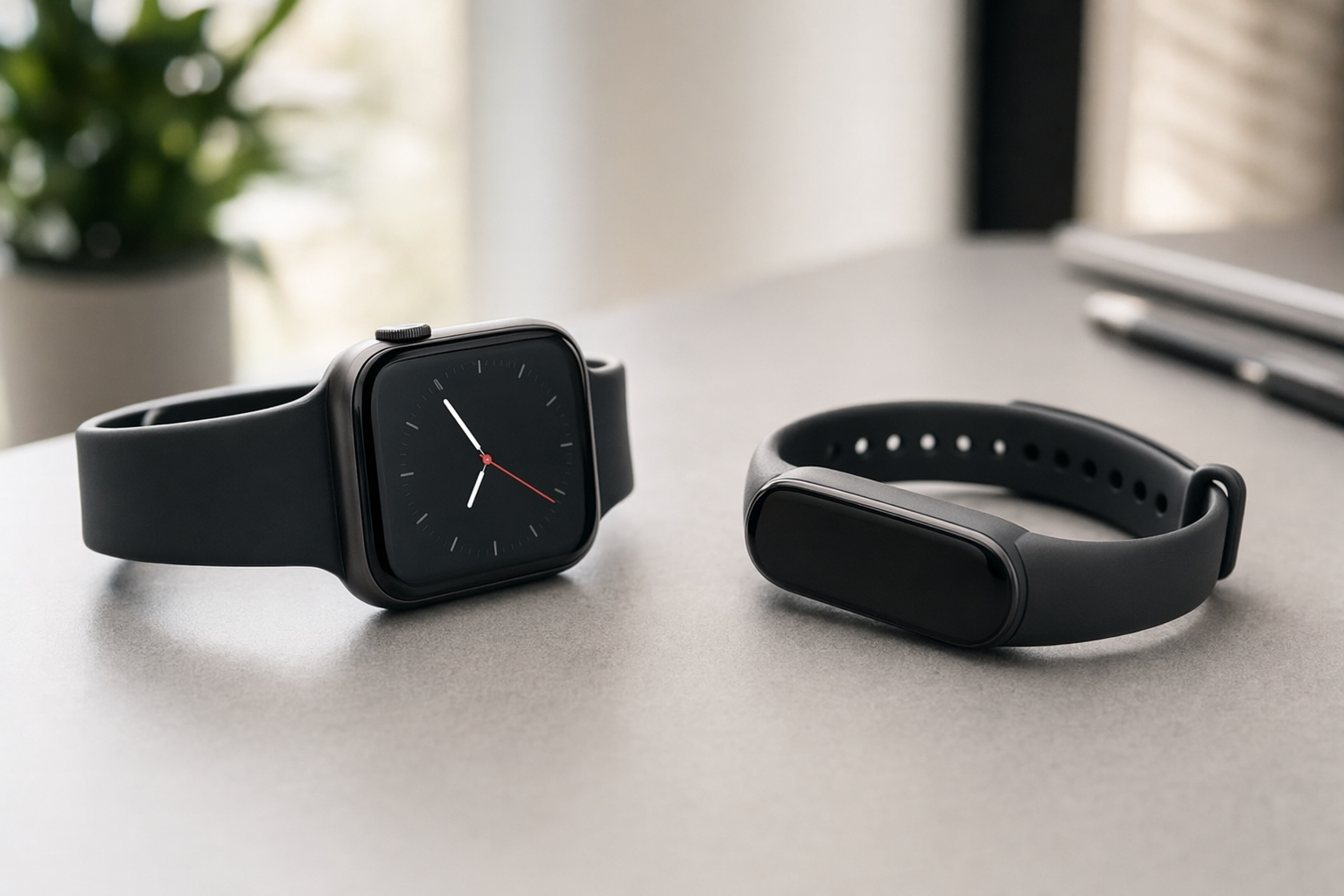
The annoying truth: both are good now
#I used to think this was an easy choice. Fitness band if you’re “just tracking steps”, smartwatch if you want to be fancy and answer calls from your wrist like a tiny spy. That was my whole opinion, basically. Then I spent a few years wearing different ones, charging them at stupid times, forgetting them in hotel rooms, obsessing over sleep scores I probably shouldn’t have trusted that much, and now I’m much less smug about it. The smartwatch vs fitness band thing is not really about which device is better. It’s about which one you’ll actually wear every day, even when the novelty dies and it’s just another gadget needing battery.
And honestly, the line between them has gotten blurry. Some fitness bands now have bright AMOLED screens, built-in GPS in certain models, stress tracking, SpO2 estimates, notifications, contactless payments in some regions, and workout modes for sports I didn’t even know had modes. Meanwhile smartwatches have become better health companions, with ECG on some models, fall detection on some, better sleep tracking, better battery than they used to have, and way more polished apps. So yeah. It’s not simple anymore, which is exactly why people keep asking me this at work, at family dinners, and once in a lift, which was weird.
My first wearable was a fitness band, and I loved that little thing way too much
#My first proper wearable was a cheap fitness band. Not the coolest one, not the newest one, just a black rubbery little thing with a tiny screen that looked like it belonged in a cereal box. But I loved it. I remember walking around the block at 11:40 pm because I was at 9,420 steps and the band was basically bullying me into finishing 10,000. Was that healthy motivation or slightly ridiculous behaviour? Both, maybe.
That’s the magic of fitness bands. They are simple enough that they don’t get in your way. You put it on, it counts steps, buzzes when your phone rings, tracks sleep badly or decently depending on the night, and then you forget it exists. The battery lasts days, sometimes a week or more depending on the model and settings. That alone is huge. I know people with expensive smartwatches who use them like normal watches because they forgot to charge them. A dead smartwatch is just wrist jewellery, and not even the stylish kind sometimes.
The first time I upgraded to a smartwatch, I was impressed for about 48 hours. Big screen! Apps! Maps! Music controls! Replying to messages! Then came the part where it needed charging again. And again. And then I realized I was spending more time managing the watch than the watch was helping manage me. That’s not true for everyone, but for me, at that time, it felt like too much tech for my routine.
Quick comparison, because sometimes a table saves everyone’s brain
#| Feature | Smartwatch | Fitness band |
|---|---|---|
| Best for | People who want apps, calls, rich notifications, maps, payments, music and health features | People who want steps, workouts, sleep, heart rate and long battery without fuss |
| Battery life | Often 1 to 3 days for many mainstream watches, though some sports watches last much longer | Usually several days, often around a week or more depending on settings |
| Screen | Bigger, easier to read, better for interaction | Smaller, lighter, less immersive but good enough for quick checks |
| Comfort | Can feel bulky, especially during sleep | Usually lighter and easier to sleep with |
| Fitness tracking | More advanced on many models, especially GPS, training metrics and app support | Great for basics, sometimes surprisingly good, but less advanced overall |
| Price range | Usually higher, especially Apple, Samsung, Garmin and premium models | Usually cheaper, though premium bands exist too |
| Distraction level | Can be high if you enable every notification like a maniac | Lower, because there’s less to do on it |
| Who should avoid | Anyone who hates charging gadgets or doesn’t need apps | Anyone who needs calling, navigation, advanced training tools or a bigger display |
What a smartwatch does better, like actually better
#A smartwatch is the better gadget if you want your wrist to be a mini phone. I know that sounds obvious, but it matters. On a good smartwatch you can glance at a message and decide if it’s urgent, reject a call when your hands are wet from washing dishes, control music while running, check a map, start a timer, use voice assistants, pay at a store if supported, and sometimes download proper apps. If you’re in the Apple ecosystem, Apple Watch is ridiculously sticky because it works so smoothly with the iPhone. Same thing with Samsung watches and Galaxy phones, although Wear OS watches are more flexible than they used to be.
The health and safety features are also a big reason people pick smartwatches. Some models support ECG, irregular heart rhythm notifications, fall detection, emergency SOS, temperature sensing, blood oxygen estimates, or more detailed workout metrics. Important little disclaimer, because the internet gets silly with this stuff: these are not replacements for doctors or proper medical equipment. They can be useful signals, not final answers. I’ve had a watch tell me my sleep was amazing after I woke up feeling like a microwaved potato, so yeah, trust but verify.
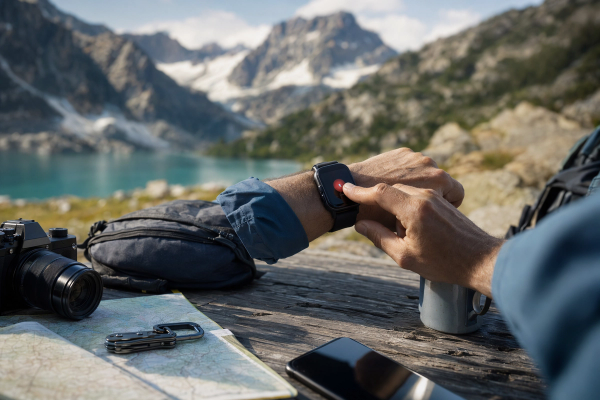
For runners, cyclists, hikers, and people who train seriously, a smartwatch can be a much better buy. Not always a lifestyle smartwatch, though. Sometimes a Garmin, Coros, Polar or Suunto-style sports watch makes more sense than an Apple Watch or Galaxy Watch, depending on battery and training needs. Built-in GPS, route support, heart rate zones, recovery estimates, training load, offline maps on some models, buttons for sweaty hands... those things matter when you’re not just “doing a quick walk” but actually training.
Where fitness bands still win, and I will defend them forever
#Fitness bands win on simplicity. That’s their superpower. They don’t try to be everything. They sit there quietly, count your steps, track workouts, buzz for calls, maybe show notifications, and keep going for days. If your main goals are walking more, sleeping better, noticing your heart rate trends, and staying generally active, a band is probably enough. More than enough, honestly.
I also think fitness bands are underrated for beginners because they don’t make health feel like a software project. A smartwatch can turn your wrist into a dashboard of guilt. Calories, rings, recovery, stress, VO2 max, stand reminders, sleep debt, HRV, badges, streaks, monthly challenges, and then some notification from a food delivery app pops up while you’re trying to be healthy. Great. A band keeps things smaller. Less noise. Less drama.
And comfort matters more than tech reviewers admit. A chunky smartwatch is cool at 2 pm and annoying at 2 am. I’ve slept with big watches and woken up wanting to throw them into the laundry basket. A slim fitness band is easier to forget, especially if you have small wrists or you hate wearing watches. Sleep tracking only works if you actually wear the thing to sleep, which sounds obvious but people miss this all the time.
Battery life is not a small detail, it’s the whole vibe
#People compare screens and sensors and apps, but battery life is where the daily experience gets decided. A smartwatch that lasts a day or two can be fine if you already have a charging routine. Like, maybe you charge it while showering or during dinner. Some people are weirdly disciplined about this. I am not one of those people.
With a fitness band, you can go on a weekend trip and not even pack the charger sometimes. That changes how you feel about the device. It becomes boring in the best way. Reliable. There. I’ve had bands that I charged once and then forgot about for nearly a week. Meanwhile, I’ve had smartwatches die right before a workout because I thought 28% was “probably enough”. It was not enough. It never is.
There are exceptions, of course. Some larger sports smartwatches last much longer, especially with battery-saving modes. But mainstream app-heavy watches with bright screens and always-on display usually ask for more charging. If you hate charging your phone already, adding a wrist phone may not bring peace into your life.
Notifications: helpful, or tiny wrist chaos?
#This is where smartwatches can be amazing and terrible at the same time. Getting notifications on your wrist sounds convenient until every group chat, bank alert, delivery update, newsletter, calendar reminder, and random app decides your wrist is now public property. I made this mistake early on. I enabled everything. My watch buzzed so much it felt like a nervous insect.
A fitness band usually handles notifications in a more limited way, and honestly, that can be a blessing. You see enough to know whether to check your phone, but you’re not tempted to start doing little admin tasks on a 1.5-inch screen. Smartwatches are better if you need quick replies, voice dictation, call handling, or if you work a job where pulling out your phone constantly looks rude. Fitness bands are better if you just want a nudge and nothing more.
My rule now is simple: if a notification does not deserve to interrupt my face, it definately does not deserve to interrupt my wrist.
Fitness accuracy: don’t worship the numbers
#Wearables are great for trends. They are not magic truth machines. Step counts can vary between devices. Wrist-based heart rate can struggle during certain workouts, especially when your wrist is moving a lot or the band is loose. Sleep tracking can be useful for patterns, but it’s still an estimate. Calories burned? Please do not plan your entire diet around that number. It’s more like a rough weather forecast than a receipt.
Smartwatches usually have better sensor packages and software, especially on premium models, but a good fitness band can still be accurate enough for everyday use. If you just want to know whether you walked more this week than last week, you don’t need a supercomputer strapped to your arm. If you’re training for a race and care about pace, GPS accuracy, heart rate zones and recovery, then yes, spend more carefully.
One thing I wish I’d learned earlier: consistency beats precision. Wearing the same device every day gives you a useful baseline. Even if the absolute number isn’t perfect, the trend can still help. If your resting heart rate is usually around one range and then suddenly it’s higher for days, that might be worth noticing. Not panicking. Just noticing.
If your goal is daily movement, don’t overbuy the gadget
#For many people, the real goal is not “own the best wearable.” It’s “move more without hating life.” If that’s you, a fitness band might be the smarter first buy. Spend less, learn your habits, see if step goals motivate you, and then upgrade later if you need more. I’ve seen friends buy expensive smartwatches, use them intensely for two weeks, then slowly stop wearing them because the whole thing felt like homework.
If you’re trying to build a walking habit, a band plus a boring step goal can be powerful. I used to take fake “coffee breaks” just to walk around the building and close my goal, which sounds silly but it worked. And if you’re also thinking about walking while working, the same habit-building logic applies to something like an under-desk treadmill. I wrote about what to check before buying one in this Walking Pad Buying Guide: What to Check Before You Buy an Under-Desk Treadmill, because that’s another gadget people buy with good intentions and then use as a clothes rack if they choose badly.
The boring answer is often the right one: buy the tool that fits your actual routine, not your imaginary future routine where you wake up at 5 am, meditate, run 10K, drink green juice and never scroll in bed. I love that imaginary person too. I am not him.
If you workout seriously, smartwatches start making more sense
#Once workouts become more structured, the smartwatch argument gets stronger. Built-in GPS is a big deal if you run outdoors and don’t want to carry your phone. Larger screens make stats easier to read mid-workout. Physical buttons on sports watches are underrated, especially in rain or when your fingers are sweaty. Advanced metrics can help if you know what to do with them, although they can also make you overthink every single jog.
I went through a phase where I tracked everything. Pace, zones, sleep, strain, recovery, caffeine, water, mood. At some point I had so much data that I stopped listening to my body, which is dumb because my body was the thing doing the running. The best smartwatch is the one that gives you useful feedback without turning you into a spreadsheet goblin.
Also, workouts are only one part of the fitness puzzle. People love buying devices, but sometimes the less glamorous choices matter more: eating enough protein, not skipping meals, sleeping properly, walking daily. If you’re new to the whole health routine thing, you might find this beginner comparison useful too: Protein Powder vs High-Protein Foods: What Should Beginners Choose?. Same principle as wearables, really. Don’t buy the “advanced” thing before you know what problem you’re solving.
Price: the cheapest device isn’t always the best value
#Fitness bands are usually cheaper, and that’s a huge advantage. You can often get a solid band for a fraction of what a flagship smartwatch costs. But value is not just price. If a smartwatch replaces a running watch, helps you leave your phone at home, gives safety features you care about, and you actually wear it every day, then it might be worth the money. If you only check steps and time, then buying a premium smartwatch is like buying a gaming PC to write grocery lists.
Be careful with subscriptions too. Some wearable companies lock deeper insights, readiness scores, coaching or historical data behind paid plans. That’s not automatically bad, but you should know before buying. I personally get annoyed when hardware feels unfinished without a subscription. Like, I already paid for the thing, mate. Don’t make me rent my own sleep score.
Also look at straps and chargers. Proprietary chargers vanish into the same black hole as USB sticks and guitar picks. Replacement straps can be cheap or weirdly expensive. If you have sensitive skin, strap material matters. A device can have the best sensor stack in the world and still be useless if the strap gives you a rash after two sweaty walks.
Ecosystem matters more than specs sometimes
#This is the boring tech truth nobody wants to hear: compatibility can beat raw features. Apple Watch needs an iPhone. Wear OS watches work best with Android, and some features can vary by phone brand and region. Fitbit, Garmin, Huawei, Amazfit, Xiaomi and others all have their own app experiences, strengths, missing bits, and little annoyances. Before you buy, check if the exact feature you want works with your phone in your country. Payments, ECG, LTE, emergency features, and voice assistants can be region-dependent.
I’ve watched people buy a wearable after seeing one feature in a YouTube review, then discover that feature doesn’t work where they live. Pain. So don’t just compare spec sheets. Read the product page for your region, check recent user reviews, and maybe search the support pages if it’s a feature you really care about. Annoying? Yes. Better than regret? Also yes.
App quality matters too. A fitness band with a clean app can be more enjoyable than a feature-packed watch with messy software. I care about little things: how fast it syncs, whether the graphs make sense, whether notifications behave, whether the app nags me to join challenges I never asked for. These details are not sexy, but they decide whether you keep using the device after the honeymoon phase.
Who should buy a fitness band?
#- Buy a fitness band if you mainly want steps, sleep, heart rate trends, basic workouts and reminders to move.
- Buy one if battery life matters more than apps. If you want to charge once and relax for several days, bands are lovely.
- Buy one if you’re new to fitness tracking and don’t know what you need yet. Start simple, then upgrade later if you hit limits.
- Buy one if you sleep track every night and hate bulky watches. Comfort is a feature, even if spec sheets pretend it isn’t.
- Buy one if you’re trying not to overspend on wellness gadgets. Same vibe as choosing between a basic shaker and a fancier portable blender, honestly. If that’s your current rabbit hole, this Portable Blender vs Shaker Bottle: Beginner Buying Guide is the kind of practical comparison I wish more people read before buying stuff.
Who should buy a smartwatch?
#- Buy a smartwatch if you want calls, richer notifications, quick replies, apps, music control, maps, payments, voice assistants or LTE options.
- Buy one if safety features matter to you, like fall detection or emergency SOS on supported models. Again, check your region and device compatibility.
- Buy one if you do serious workouts and want GPS, a bigger display, better training tools, or deeper integration with fitness apps.
- Buy one if you already live inside a phone ecosystem and want the smoothest experience. iPhone users usually get the most seamless experience from Apple Watch. Android users have more variety, but also more homework.
- Buy one if you genuinely enjoy tech. This sounds silly, but it’s valid. Some people like gadgets. I’m some people. If a smartwatch makes you excited to move, tinker, track and improve, that excitement has value.
A few buying mistakes I see all the time
#Mistake one: buying for your fantasy lifestyle. I said this earlier but it deserves repeating because I keep doing it too. If you don’t currently run, you probably don’t need the most advanced running metrics on day one. If you hate notifications, don’t buy a smartwatch because it looks productive in ads. If you never wear watches, maybe start with a light band before dropping serious money.
Mistake two: ignoring size. Wearables look different on different wrists. A watch that looks sleek in product photos can feel like a dinner plate on your arm. If possible, try it in a store. Move your wrist. Pretend to sleep with it, not literally obviously, but imagine it. Weight and thickness matter.
Mistake three: trusting one review. Reviewers test devices for a week or two. Long-term annoyances show up later: battery degradation, strap wear, app bugs, syncing issues, skin irritation, charger weirdness. Read long-term reviews and user comments. Not all comments, because some people are just angry at clouds, but enough to catch patterns.
Mistake four: thinking more data automatically means better health. Nope. Data needs action. If your wearable tells you that you sleep badly and then you keep sleeping at 1:30 am while watching shorts, that’s not the wearable’s fault. Ask me how I know.
My personal recommendation, if you forced me to choose
#If someone is buying their first wearable and they’re not sure what they want, I usually say: get a fitness band first. A decent one. Not the absolute cheapest mystery device with an app that looks like it was translated by a fridge, but a reputable band with good battery and basic tracking. Wear it for two or three months. See what you actually use. Steps? Sleep? Workouts? Notifications? If you hit a wall and think “I wish this had maps or calls or better GPS,” then you know a smartwatch makes sense.
If you already know you want wrist-based phone features, just buy the smartwatch. Don’t torture yourself with a band and complain it can’t do smartwatch things. That’s like buying a bicycle and being upset it’s not a scooter. Different tool.
For me, I rotate depending on life. When I’m in a busy, tech-heavy work phase, I prefer a smartwatch because calendar nudges and quick replies genuinely help. When I’m trying to reduce screen noise and just walk more, I go back to a fitness band. I know that sounds indecisive, but it’s more honest than pretending one category wins forever.
The final answer: buy the one you’ll keep wearing
#Smartwatch vs fitness band is not a battle where one destroys the other. It’s more like shoes. Running shoes, office shoes, sandals, boots. All footwear, totally different jobs. A smartwatch is better if you want a powerful, connected, app-friendly wrist computer with stronger workout and safety features. A fitness band is better if you want low-cost, low-drama health tracking with great battery and comfort.
The best wearable is not the one with the longest spec sheet. It’s the one that disappears into your life and quietly makes you a bit more aware of your habits. Maybe it gets you walking after dinner. Maybe it helps you stop missing calls. Maybe it makes you realize your sleep schedule is a crime scene. That’s useful tech. Not perfect tech, not magic tech, but useful.
So yeah, if you’re a beginner, I’d lean fitness band. If you’re already deep in the ecosystem or training seriously, smartwatch. If you’re a gadget nerd like me, you’ll probably try both eventually and then pretend it was “research.” No judgement. I’ve been there. And if you like these practical tech-and-life buying guides, have a wander through AllBlogs.in sometime. It’s the sort of place I’d check before letting another shiny gadget bully me into clicking buy.