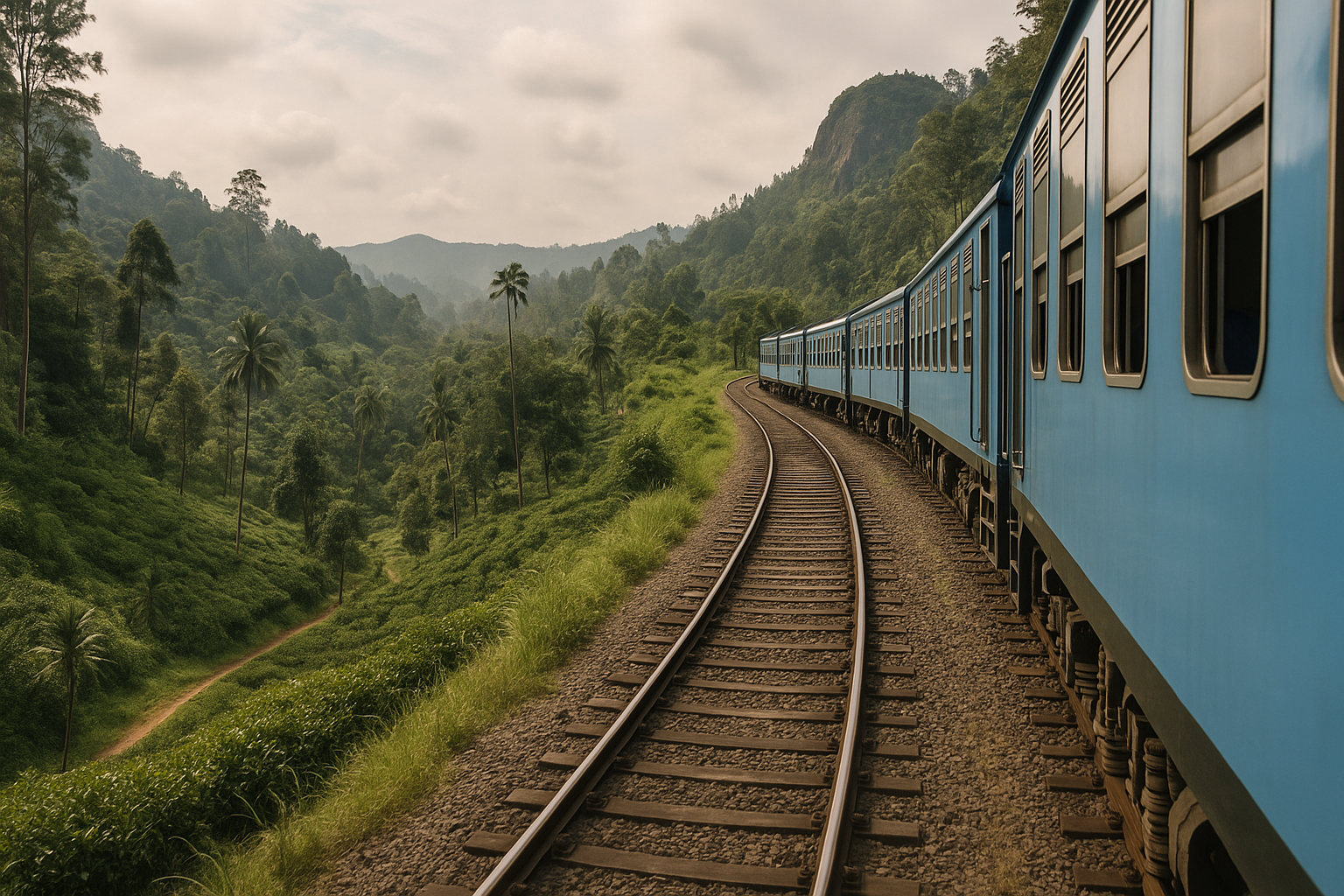
If you’re an Indian planning Sri Lanka, there’s a very high chance somebody has already told you, “Bro, do the Kandy to Ella train, don’t miss it.” I got the exact same advice and at first I thought okay okay, another overhyped Instagram thing. But nope. This one actually lives up to it. The Kandy to Ella train ride is one of those journeys where the travel becomes the main event, not just the way to reach somewhere. You’re not staring at your phone every five mins. You’re glued to the window, then the door, then the other window, then back to the door because suddenly there’s a valley, a tea garden, mist, tiny houses, school kids waving, and that soft green scenery that kind of calms your brain down.
And from an Indian traveler’s perspective, it feels weirdly familiar and foreign at the same time. The station chaos reminded me a little of home, the chai-ish vibe was comforting, but then everything looked neater, greener, cooler. Even the train crowd had that mix of backpackers, families, locals going about their day, and people clearly doing the ride for the views. I did it with all the usual overplanning in my head, and then half of that planning went out the window once I reached Kandy station. So this post is basically what I wish someone had told me clearly, without making it sound too polished.
First things first: is it really Kandy to Ella, or should you start somewhere else?
#So, technically the most scenic stretch many people rave about is often from Nanu Oya to Ella, or even Hatton onward depending on who you ask. But for most Indian tourists doing the classic route, Kandy to Ella is the practical and emotional choice. You start from a proper city stop, settle into the journey, and watch the landscape slowly change from busy town life to tea country to those dramatic hill views. That build-up matters, trust me. It feels like a story, not just a train segment.
That said, this ride is long. Usually around 6.5 to 8 hours depending on train type, delays, weather, crossings, all that normal South Asian railway drama. If you’re expecting Japanese punctuality, uh... don’t. If you’ve survived Indian trains, you’ll be totally fine. Actually, you might find this one less stressful. Fewer announcements screaming into your soul, less platform confusion than some of our bigger junctions, and the scenery keeps you too distracted to complain much.
How I booked it, what classes there are, and the small mistake I made
#Let me save you one headache. Book early. Seriously. Reserved seats on this route get snapped up fast, especially in peak travel months like December to April and again around some holiday periods. There are mainly first class, second class reserved, second class unreserved, and third class options depending on the train. Most Indians I met were aiming for second class reserved because it’s the sweet spot. Windows open, better atmosphere, not too expensive, and you still get a designated seat. First class can be comfortable but sometimes the windows are sealed, and honestly for this route that kind of defeats the point.
I booked later than I should have, classic me, and the ideal train was already full online. Ended up adjusting dates and got second class reserved on another train. No regrets. Prices can change a bit depending on train and booking channel, but in general it’s still affordable by Indian travel standards. Reserved tickets are not crazy expensive, especially when you compare them to what people casually spend on cabs. There are also ticket agents and hotels who help arrange bookings, but they usually charge a markup. Fine if you’re stuck, but if you can book officially, do that first.
- Best balance for most Indian travelers: second class reserved
- For budget and flexibility: second or third class unreserved, but be ready to stand or squeeze in
- Book as early as possible in peak season, ideally weeks ahead
- Morning departures are usually better for views and photos, plus you reach Ella with time left in the day
Current travel updates, safety, and whether the famous door photos are actually safe
#Okay, this matters. Sri Lanka as a destination has bounced back strongly for tourism, and the hill country route is one of the busiest experiences again. For Indian travelers, entry rules and payment systems can change from time to time, so always check the latest official visa and arrival updates before flying. But on-ground, the Kandy to Ella route is generally considered safe for tourists, including solo women travelers, provided you use common sense like anywhere else. Stations are active, trains are public, and towns like Kandy, Nuwara Eliya side, and Ella are very tourist-used now.
Now the train-door thing. You’ve seen the photos. Everyone sitting at the open doorway with legs hanging out like they’re in a music video. I did stand by the door too, not gonna lie, but there’s a huge difference between standing carefully and behaving like an idiot for reels. The train curves sharply, passes close to foliage and sometimes poles, and sudden jerks do happen. Don’t lean out too far. Don’t force a photo if it’s crowded. Don’t block locals just because you want content. Basic decency plus basic survival instinct, bascially.
My honest take: enjoy the doorway, yes. But this is still a moving train in the hills, not a film set. One good photo is not worth a stupid accident.
What the journey actually feels like, hour by hour-ish
#Leaving Kandy, the view doesn’t slap you instantly. It builds. At first it’s town edges, homes, stations, everyday life. Then slowly the hills start coming in. The green gets thicker. Somewhere after that, you start noticing tea estates rolling over slopes in these perfect patterns that don’t even look real. Small stations pop up with old-school signs. Kids wave. Women carrying bags get in and out. Sellers pass through. People shift seats, chat, nap, stare outside. It has movement but not rush. That’s what I loved most.
By the time you pass through places like Hatton and later the Nanu Oya side, the air feels cooler and the scenery really goes into postcard mode. Mist, pine-ish patches, endless tea country. If you’re breaking the journey for Nuwara Eliya, this is where you’d get off at Nanu Oya station and continue by road. If not, stay put and keep your camera ready. The stretch onward toward Haputale and Ella is gorgeous in a quieter way. More valleys, deeper drops, dramatic bends. I honestly stopped trying to take perfect photos after some time and just watched. Sometimes that’s better, yaar.
Best seat, best side, and the truth nobody tells you
#A lot of blogs confidently say left side is best from Kandy to Ella. Others swear by right. My experience? It changes through the ride. Some sections are better on one side, then later the other side wins. If you got a reserved seat on the so-called wrong side, don’t panic. People move around, stand at doors, switch for a bit, and if you’re polite you can still enjoy plenty. I sat, stood, wandered near the door, came back, repeated. The train itself is the viewing platform.
One thing though, if you’re very motion-sensitive, avoid spending all 7 hours near the open door. The constant swaying can hit you later. Carry water, maybe a light snack, and if you need it, motion sickness meds. I was fine for most of it, then somewhere in the hills after too much standing and too little breakfast, I was like hmm maybe I’m not as adventurous as I think.
Food on the train, what to pack, and what Indians will probably like
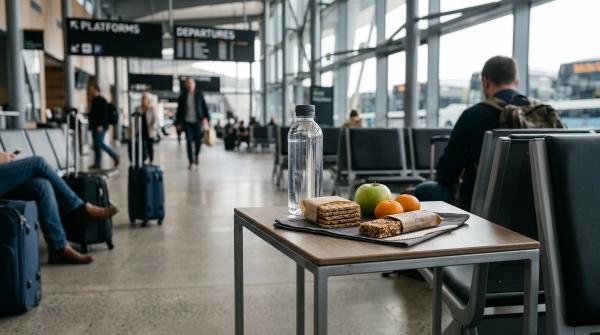
#Food is simple but part of the fun. You may find vendors at stations or on trains selling snacks, tea, sometimes short eats like patties, vadai-type items, cutlets, peanuts, biscuits, maybe fruits depending on the stop. Don’t expect a luxury dining scene. Think practical railway snacking. I carried my own backup stash too, which I highly recommend. Banana chips, biscuits, water, maybe a packed sandwich. If you’re vegetarian, definitely carry something reliable because options can be hit or miss during the longer stretch.
Sri Lankan food feels close enough for Indian comfort but still different enough to be interesting. Before boarding in Kandy, I had hoppers and a curry breakfast, and that was a solid decision. In Ella later, you’ll get everything from rice and curry to kottu roti, string hoppers, fresh juices, cafe food, smoothie bowls, wood-fired pizza, all the backpacker-town stuff. If your stomach is sensitive, go easy on overly spicy sambols at the start of the train ride. Beautiful views become less romantic if your tummy starts a protest, just saying.
Best months to do the Kandy to Ella train ride
#This question is trickier than people make it sound because Sri Lanka has different weather patterns in different parts. But generally, for the hill country train ride, the drier months from around December to April are popular because views tend to be clearer and travel is easier. January to March often feels especially comfortable. Shoulder months can still be lovely though, with greener landscapes and fewer crowds in some cases. Monsoon periods can bring mist and rain, which can either look dreamy or just hide everything depending on your luck.
Honestly, a little fog is not always bad. On my ride, there were moments when the hills were partly covered and it looked unreal, like the whole place was breathing. But if you’re going purely for those long open valley views and bright photos, aim for clearer weather. Also, weekends and holiday periods can be more packed. If possible, take a weekday train. Less elbow-fighting, more peace.
Kandy stay tips before the train, and where to sleep in Ella after
#Most people overnight in Kandy before the train, which is smart. Kandy is not just a transit point anyway, it’s worth a proper half day or full day if you can manage. Around the lake and city center you’ll find budget guesthouses, mid-range hotels, and a few heritage-style stays. Budget rooms can start roughly from LKR 6,000 to 10,000 if booked at the right time, mid-range places often sit around LKR 12,000 to 25,000, and nicer scenic properties can go much higher. Rates jump in peak season, obviously.
In Ella, accommodation ranges from backpacker hostels to boutique stays with balcony views that make you feel richer than you are. Hostels and simple homestays may start around LKR 5,000 to 9,000 per bed or basic room, while comfortable private stays usually fall somewhere around LKR 10,000 to 22,000. View hotels and trendy villas can cross LKR 25,000 to 40,000+ easy. I stayed in a small family-run place slightly uphill from the main strip. Bit of a climb, yes, but the morning view was mad. Worth the sweating.
- If you arrive in Ella by afternoon, choose a hotel close enough to town unless you enjoy dragging bags uphill
- For couples, balcony rooms with valley view are worth the splurge for one night atleast
- For backpackers, hostel scene in Ella is active and pretty social
- In Kandy, staying near the station helps if your train is early
A few lesser-known stops and ideas people rush past
#This is where I think many Indian travelers do the route too fast. They go Kandy, train, Ella, photo, bye. But the hill country deserves pauses. Hatton is useful if you’re heading toward Adam’s Peak or tea estate stays. Nanu Oya is your gateway for Nuwara Eliya, which feels like a weird colonial hill station cousin to places we know in India. Haputale is quieter and has stunning viewpoints nearby like Lipton’s Seat. If you have time, even one break in between changes the whole experience from checklist to actual travel.
Ella itself has gotten busier over the years, no point pretending it’s some secret hidden village anymore. But it still has charm if you do it right. Little Adam’s Peak is easy and popular for sunrise or late afternoon. Nine Arch Bridge is touristy but still fun, especially if you time it with a train passing. Ella Rock is more of a proper hike. There are cafes everywhere now, some very good, some overpriced and average. Same story as any famous hill town, honestly.
For Indians specifically: money, SIMs, language, and general comfort level
#One reason Sri Lanka works so well for Indian travelers is that it doesn’t feel too alien. You can adjust fast. Food has overlap. Climate in the hills is pleasant. English is widely understood in tourist areas, and people are generally helpful. Sinhala and Tamil are the main local languages, and in some areas you’ll hear Tamil enough to catch familiar words. I found communication way easier than I expected. Even when accents differed, people made an effort.
For money, keep some Sri Lankan rupees in cash for stations, tuk-tuks, snacks, and smaller guesthouses, though cards work in many hotels and cafes now. Digital payment habits are growing, but don’t assume UPI-style convenience everywhere. Buy a local SIM at the airport if you want smooth data through the trip, it makes train coordination, maps, and hotel calls much easier. And yes, Indians generally get compared in prices less harshly than some Western tourists in a few places, but not always. Ask rates clearly, especially for tuk-tuks.
What I’d do differently if I take this ride again
#I’d probably start even earlier, stay closer to Kandy station the previous night, pack lighter, and maybe break the route at Haputale or Nuwara Eliya side. I’d also stop trying to film every second. Somewhere in the middle of the ride I realized the best part wasn’t getting proof that I was there. It was just being there, with wind in my face, tea gardens rolling by, random conversations with co-passengers, and that slightly sleepy train rhythm. Sounds cheesy, I know. But it’s true.
Also, small tip that sounds boring but matters a lot: use the washroom before boarding, and don’t expect miracles from train toilets late in the journey. Another thing, carry a light jacket. Even if Kandy feels manageable, the hill sections can get chilly, especially with wind near the door. And keep your day flexible after reaching Ella because trains can run late. Don’t book some impossible sunset plan that requires military timing.
So... is the Kandy to Ella train worth it for Indians? 100% yes, with a little patience
#If you ask me straight, yes, absolutely do it. It’s scenic, affordable, memorable, and one of the easiest ways to feel Sri Lanka beyond beaches and city stops. It works for couples, solo travelers, friend groups, even families if you prepare a bit. Is it crowded sometimes? Yes. Can it be delayed? Also yes. Is it a bit over-photographed online? For sure. But even after all that, the ride still has heart. That’s rare. You can hype a place to death and still not kill what’s special about it.
For Indian travelers especially, this route hits that sweet spot between comfort and adventure. It’s not too expensive, not too complicated, and not so polished that it feels fake. You get beauty, local life, practical travel, and a few chaotically lovely moments all in one day. If you’re planning Sri Lanka soon, keep this train in your itinerary and don’t leave booking till the last minute like I almost did. And if you want more real-world travel stories and guides written in a similarly no-nonsense way, have a look at AllBlogs.in.