If you’ve ever paused halfway through your morning routine and thought, “Wait… does sunscreen go before or after moisturizer?” you’re not alone.
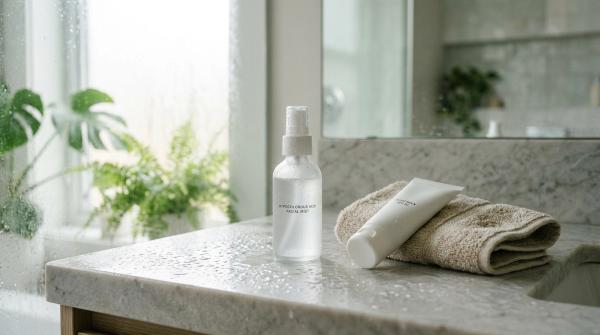
The short answer: moisturizer goes first, sunscreen goes last. Think of sunscreen as the protective top layer of your morning skincare. Moisturizer helps keep your skin comfortable and hydrated. Sunscreen helps protect exposed skin from UV rays. If you put moisturizer on top of sunscreen, you can rub around the SPF layer and make the coverage patchy without meaning to.
For most mornings, the order is simple:
Cleanser → serum, if you use one → moisturizer → sunscreen → makeup
That’s it. No complicated 12-step routine required.
The easy rule: sunscreen is the last skincare step
#Morning skincare can get confusing fast, especially when every product label seems to have its own instructions. But the basic order is straightforward:
- Cleanser
- Serum, if you use one
- Moisturizer
- Sunscreen
- Makeup, if you wear it
The reason sunscreen comes last is because it needs to form an even layer on top of your skin. That layer is what helps protect you from UV exposure.
Moisturizer, on the other hand, is there to help your skin feel soft, hydrated, and less tight. It belongs underneath sunscreen.
A helpful way to remember it:
Hydrate first. Protect last.
Or even simpler:
Skincare first, sunscreen last, makeup after.
Why moisturizer goes before sunscreen
#Moisturizer and sunscreen do different jobs.
Moisturizer helps with dryness, tightness, and that uncomfortable “my skin feels stretched” feeling. It usually works best after cleansing, or after a lightweight serum if that’s part of your routine.
Sunscreen’s main job is protection. Even if your sunscreen feels creamy or hydrating, its most important role is helping protect your skin from UV rays.
For sunscreen to do its job well, you want to apply it evenly and then leave it alone as much as possible. If you rub moisturizer over it afterward, you might move the sunscreen around, thin it out in certain spots, or disturb the coverage.
It’s a little like getting dressed for rain. Your moisturizer is the comfortable layer underneath. Your sunscreen is the raincoat. You wouldn’t put on a raincoat and then pull a sweater over it.
What trusted sunscreen guidance says
#For sunscreen advice, it’s best to stay close to trusted health guidance.
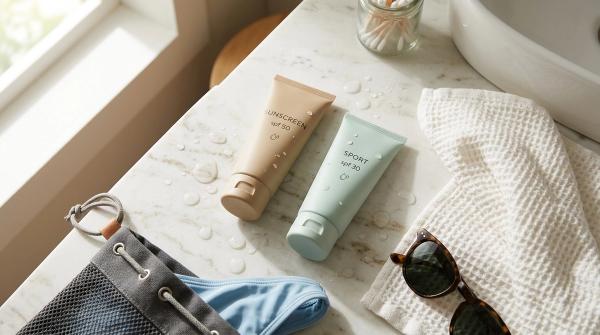
The American Academy of Dermatology recommends choosing sunscreen that is broad-spectrum, SPF 30 or higher, and water-resistant. It also recommends applying sunscreen before going outdoors.
The U.S. Food and Drug Administration advises using broad-spectrum sunscreen with SPF 15 or higher to help protect against sun damage. The FDA also recommends reapplying sunscreen at least every two hours, and more often if you are sweating or swimming.
So the big takeaways are:
- Use broad-spectrum sunscreen.
- Apply enough of it.
- Reapply when needed.
- Don’t assume one morning layer will last all day, especially if you’re outside, sweating, or in humid weather.
A simple morning SPF routine
#You do not need a perfect routine. You need one you’ll actually do.
Here’s a beginner-friendly morning order that works for most people.
Step 1: Cleanse
#Start with clean skin.
If you wake up oily, sweaty, or with leftover product on your face, use a gentle cleanser. This can be especially helpful in hot or humid weather.
If your skin feels dry or sensitive in the morning, you may not need a full cleanse. Some people do fine with a quick rinse of water.
The point is not to scrub your skin into submission. Just start with a fresh base.
Step 2: Use serum, if you have one
#This step is optional.
If you already use a lightweight serum, apply it before moisturizer. If you don’t use serums, skip this step completely.
You do not need a serum for sunscreen to work. You do not need ten products. You do not need to make your morning harder than it needs to be.
Step 3: Apply moisturizer
#Next, apply moisturizer.
Use enough to make your skin feel comfortable, but don’t feel like you have to pile it on. In humid weather, heavy creams can feel sticky or cause products to pill, which is when they roll up into little flakes on your skin.
If your sunscreen is already moisturizing and your skin feels good without a separate moisturizer, it may be fine to skip moisturizer in the morning. This is especially true if you have oily skin or live somewhere hot and humid.
The goal is comfortable, balanced skin — not layers for the sake of layers.
Step 4: Apply sunscreen
#This is the key step.
Sunscreen should be your final skincare layer in the morning. Apply it evenly to your face, neck, ears, and any other exposed skin.
Give it a little time to settle before moving on to makeup. You don’t need to wait forever, but letting it dry down for a minute or two can help prevent smearing or pilling.
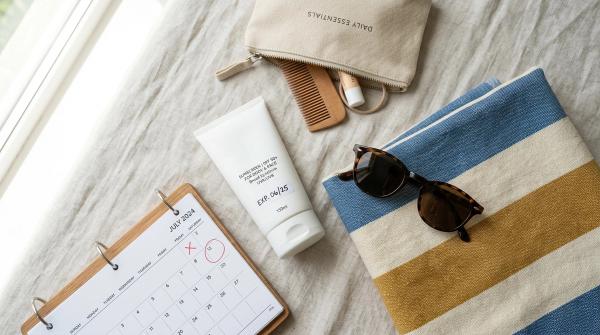
If you’re going outside, apply sunscreen before you leave. If you’ll be outdoors for a while, sweating, swimming, or walking around in the sun, plan for reapplication too.
Step 5: Apply makeup after sunscreen
#Makeup goes on after sunscreen.
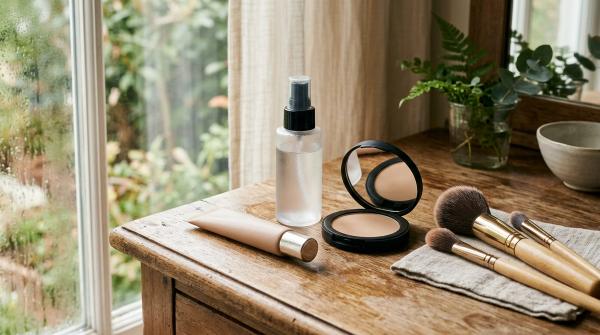
Once your SPF has settled, apply makeup gently. Pressing foundation or concealer into the skin usually works better than rubbing it around aggressively.
You don’t have to be overly precious about it, but try not to disturb the sunscreen layer too much.
Moisturizer vs sunscreen vs SPF moisturizer vs makeup
#Can SPF moisturizer replace sunscreen?
#Sometimes, yes.
An SPF moisturizer can be a good option if you want a simpler routine. It can be especially helpful if you dislike layering products or live somewhere humid where every extra layer feels like too much.
But there’s one catch: you have to apply it like sunscreen.
Most people apply regular moisturizer casually — a small dab here, a quick rub there. That may not be enough to get the SPF protection listed on the label.
If you use an SPF moisturizer, make sure it is broad-spectrum and has an SPF that fits your needs. Then apply it generously and evenly to all exposed areas, including your neck and ears if they’re not covered.
If you only use a pea-sized amount, you probably are not getting the full protection on the bottle.
Common sunscreen mistakes to avoid
#Applying sunscreen before moisturizer
#This is the classic mix-up.
If you put sunscreen on first and then rub moisturizer over it, you can disturb the sunscreen layer. That may make your protection less even.
The better order is simple:
Moisturizer first. Sunscreen second.
Mixing sunscreen with moisturizer or foundation
#It sounds convenient, but it’s not the best idea.
Sunscreen formulas are designed to be applied as directed. When you mix sunscreen in your hand with moisturizer, oil, or foundation, you may dilute it or make it harder to spread evenly.
Layer your products instead:
Moisturizer → sunscreen → makeup
Relying only on SPF in makeup
#Makeup with SPF is nice, but it usually shouldn’t be your only sun protection.
Most people don’t apply foundation, powder, or tinted moisturizer thickly enough to get the full SPF listed on the product. And makeup often doesn’t cover every exposed area evenly.
Use a proper sunscreen or a properly applied SPF moisturizer first. Then SPF makeup can be a bonus.
Forgetting to reapply
#This is where a lot of people slip up.
The FDA recommends reapplying sunscreen at least every two hours, and more often if you are swimming or sweating.
In real life, reapplication depends on your day. If you’re indoors away from windows most of the time, your needs may be different from someone hiking, commuting on foot, or sitting outside for lunch.
But if you’re in direct sun, sweating, swimming, or spending a lot of time outdoors, one morning application is not enough.
How to reapply sunscreen without ruining your makeup
#This is the part that sounds easy in theory and annoying in real life.
If you’re not wearing makeup, reapplication is simple. Blot away sweat or oil if needed, then apply another even layer of sunscreen.
If you are wearing makeup, rubbing a cream sunscreen over your finished face may not feel realistic. That’s where SPF sticks, powders, and sprays can be useful for touch-ups.
They can be especially handy when you’re out, sweaty, or trying not to destroy your makeup halfway through the day.
Just remember: these formats can be harder to apply evenly. They are helpful for reapplication, but they should not replace a solid sunscreen layer in the morning.
Start with a proper sunscreen application. Then use touch-up products to help keep your protection going throughout the day.
Hot and humid weather tips
#Hot, sticky weather can make skincare feel like a chore. But skipping sunscreen is not the answer. The trick is to make the routine lighter.
Try this:
- Use a lightweight moisturizer, or skip it if your sunscreen is moisturizing enough.
- Let each layer settle before applying the next one.
- Avoid heavy creams in the morning if they make your skin feel greasy.
- Choose a sunscreen texture you actually enjoy, like gel, fluid, lotion, or lightweight cream.
- Keep makeup lighter if heavy foundation makes your SPF move around.
- Carry something for reapplication if you’ll be outside or sweating.
The best sunscreen is not always the most expensive one. It’s the one you’ll actually wear consistently.
Easy routine examples
#Minimal morning routine
#- Cleanse
- Moisturizer
- Sunscreen
Best for beginners, busy mornings, or anyone who wants fewer steps.
Hot and humid weather routine
#- Gentle cleanse
- Lightweight moisturizer, or skip if sunscreen feels hydrating enough
- Broad-spectrum sunscreen
- Light makeup, if you want it
Best for warm climates, sweaty commutes, and people who hate heavy layers.
Makeup routine with SPF
#- Cleanse
- Moisturizer
- Sunscreen
- Makeup after sunscreen settles
- Reapply sunscreen when needed
Best if you wear makeup daily but still want reliable sun protection.
Safety note
#This article is for general education only. It is not a diagnosis or personal medical advice.
If a sunscreen or skincare product causes a rash, burning, swelling, ongoing stinging, or any reaction that doesn’t settle, stop using it and speak with a dermatologist or qualified medical professional.