If you have oily skin and live somewhere humid, you already know the struggle. Your makeup looks fresh in the morning, then a few hours later your forehead, nose, and chin are shining like you ran a marathon.
The best fix is usually simple:
Blot first, powder only where you need it, and use setting spray to lock things in or soften a powdery finish.
In the blotting paper vs compact powder debate, blotting paper usually wins for midday shine because it removes oil without adding more product. And in humid weather, fewer layers often look much better.
The main goal is not to keep covering shine with more makeup. It is to remove the extra oil first, then touch up only the areas that actually need help.
Quick Comparison: Blotting Paper vs Compact Powder vs Setting Spray
#The Simple Rule for Oily Skin in Humidity
#If your face is oily or sweaty, do not apply compact powder straight away.
Blot first. Wait a few seconds. Then decide if you still need powder.
This one step makes a huge difference. Powder on top of oil and sweat is usually what creates that thick, patchy, cakey look. Blotting first gives you a cleaner surface to work with.
Blotting Paper for Oily Skin: Best for Midday Shine
#Blotting paper is one of the easiest things to carry if your skin gets oily through the day. It does not add colour, coverage, or another layer of makeup. It simply absorbs extra oil from the skin’s surface.
That makes it especially useful for:
- Humid commutes
- Office touch-ups
- College days
- Weddings and parties
- Travel
- Monsoon weather
- Combination skin with an oily T-zone
The trick is to press, not rub.
Place the blotting sheet on shiny areas, hold it there for a second, then lift it away. Do not wipe it around your face like a tissue.
Rubbing can move your foundation, concealer, blush, and sunscreen. Pressing keeps everything much more intact.
Blotting paper is also the best first step before powder. If you powder before blotting, you are basically trapping oil and sweat under another layer of product, which can make your makeup separate faster.
Compact Powder for Oily Skin: Helpful, But Not Always First
#Compact powder is popular for a reason. It is quick, portable, and instantly makes the skin look less shiny. It can also help when makeup has faded around the nose, mouth, or chin.
But in humid weather, compact powder needs a light hand.
Use compact powder when:
- Makeup has faded around your nose or chin
- Your T-zone still looks shiny after blotting
- You want to look more polished before a meeting
- You need a little coverage on the go
- Your base looks slightly uneven after a long day
Try not to keep layering compact powder again and again over oily skin. That is when makeup can start looking heavy, dry in some places, greasy in others, and generally uncomfortable.
Also, remember that every compact powder is different. Some are translucent, some have coverage, some are very matte, and some can look obvious if you apply too much. Either way, it is still another layer of product, so less is usually better.
Best Way to Apply Compact Powder in Humid Weather
#Use a clean puff, sponge, or small fluffy brush. Press the powder on lightly instead of dragging it across the skin.
Focus only on the areas that need it, such as:
- Sides of the nose
- Centre of the forehead
- Chin
- Around the mouth, if makeup has moved
- Upper lip area, if it gets sweaty
Do not powder your whole face just because the compact is already in your hand. If your cheeks look fine, leave them alone.
Setting Spray for Oily Skin: Best for Prevention
#A setting spray for oily skin works differently from blotting paper and compact powder.
It does not absorb oil like blotting paper. It also does not mattify as directly as powder. Its main job is to help makeup stay in place and make powder layers look smoother and more natural.
For humid weather, look for a setting spray that says:
- Matte
- Oil-control
- Long-wear
- Sweat-resistant, if available
Dewy sprays can look beautiful on dry skin, but on oily skin they may make your face look shinier than you want.
Use setting spray after finishing your makeup in the morning, especially if you know you will be commuting, travelling, or spending time in warm weather.
You can also use a very light mist after powder if your makeup looks too flat, dry, or chalky.
How to Apply Setting Spray
#- Hold the bottle about 6 to 8 inches away from your face.
- Close your eyes and mouth.
- Mist lightly in an X or T motion.
- Let it dry naturally.
- Do not spray too much, or your face may feel damp.
Setting spray can help your makeup last longer, but it is not magic. If your skin gets oily later, blotting paper is still the better quick fix.
Best Choice by Situation
#For a Sweaty Morning Commute
#Use setting spray after finishing your makeup before you leave home. Carry blotting paper for later. If you still look shiny after blotting, use a tiny amount of compact powder only where needed.
For Office or College Touch-Ups
#Blot first. If your skin looks fine after blotting, stop there.
You do not need powder every single time your face gets shiny.
If your nose, chin, or forehead still looks uneven, press on a little compact powder.
For Outdoor Events
#Use setting spray once your makeup is done. Keep blotting paper in your bag. If you are outdoors for a long time, reapply sunscreen as needed, then touch up carefully.
For Monsoon Humidity
#Blotting paper is usually the safest option because it removes oil without adding another layer. Compact powder can help too, but only after blotting.
For Combination Skin
#Blot only the oily parts, usually the T-zone. Powder only where you need it. Leave drier areas alone so they do not look dull, textured, or patchy.
Step-by-Step Touch-Up Routine for Humid Days
#Here is a simple routine that works for most oily or combination skin types in humid weather.
Step 1: Check What Your Skin Actually Needs
#Before reaching for powder, look closely.
Is your makeup actually gone, or is your skin just shiny?
If it is only shine, blotting paper may be enough.
Step 2: Blot Oil and Sweat First
#Take one blotting sheet and press it gently onto oily areas.
Focus on:
- Forehead
- Nose
- Chin
- Upper lip area
- Around the nose
Lift the sheet away. Do not wipe it back and forth.
Step 3: Wait a Few Seconds
#After blotting, pause for a moment.
Your skin may already look much better. This little pause helps you avoid applying powder when you do not really need it.
Step 4: Reapply Sunscreen if You Are Outdoors
#If you are spending time outdoors, sunscreen matters more than having a perfectly matte face.
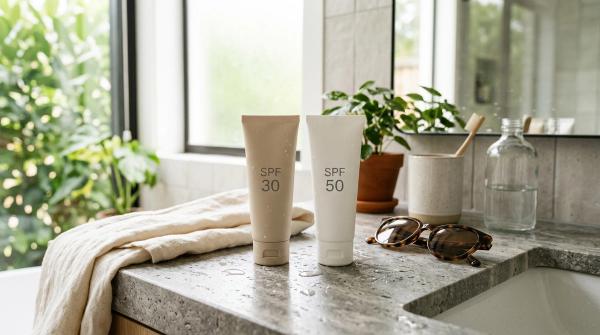
The American Academy of Dermatology recommends using a broad-spectrum sunscreen with SPF 30 or higher and reapplying it when outdoors, especially after sweating.
Makeup touch-ups should not replace sunscreen reapplication.
Step 5: Use Compact Powder Only Where Needed
#If your makeup still looks faded or oily after blotting, apply a small amount of compact powder.
Do not powder your whole face automatically. Press it only onto the areas that need help.
Step 6: Use Setting Spray if the Finish Looks Too Powdery
#If your face looks dry or overly matte after powder, use a very light mist of setting spray.
Let it dry without touching your face.
Step 7: Clean Your Tools Later
#Puffs, sponges, and brushes collect oil, sweat, and product. Clean them regularly, especially in hot or humid weather.
Dirty tools can make makeup look worse, and they may not be great for your skin either.
Sunscreen and Makeup Caution Notes
#It is easy to focus on shine and forget sunscreen, but sun protection is important.
Keep these points in mind:
- Use broad-spectrum sunscreen with SPF 30 or higher.
- Reapply sunscreen when outdoors, especially after sweating.
- Press blotting paper gently instead of rubbing.
- Compact powder is not a full sunscreen replacement unless it is specifically an SPF product and used correctly.
- SPF sprays and powders can be convenient over makeup, but you still need to apply enough.
- Do not rely on morning sunscreen alone if you are outdoors for long periods.
If you are mostly indoors, your sunscreen needs may be different from someone who is walking outside, travelling, or attending an outdoor event. When unsure, follow the sunscreen label and dermatologist guidance.
Buying Checklist for Oily or Combination Skin
#When shopping for blotting paper, compact powder, or setting spray, do not choose only by cute packaging. The product needs to suit your skin, your weather, and your real routine.
For Blotting Paper
#Look for:
- Thin sheets that absorb oil without tearing
- No heavy fragrance, especially if your skin is sensitive
- A small pack that fits in your bag, wallet, or office drawer
- Sheets that do not leave visible powder or residue, unless you want that effect
Best for: quick shine control, travel, office, college, and events.
For Compact Powder
#Look for:
- Lightweight texture
- Matte or natural matte finish
- Oil-free or non-comedogenic labels, especially for oily or acne-prone skin
- A shade that matches your skin tone, if it has coverage
- A translucent option if you do not want extra colour
Be careful with flash photography, especially if the powder is very pale or mineral-heavy. Too much powder can show up in photos.
Best for: small touch-ups after blotting.
For Setting Spray
#Look for:
- Matte or oil-control finish
- Lightweight feel
- Non-sticky dry-down
- Oil-free or non-comedogenic labels, if suitable for your skin
- A fine mist instead of large wet droplets
Best for: setting makeup before leaving home and reducing a powdery finish after touch-ups.
Label Notes to Remember
#- The AAD notes that oil-free and non-comedogenic products can be helpful for oily or acne-prone skin.
- The FDA notes that “hypoallergenic” is not strictly defined, so do not rely on that word alone.
- If your skin is sensitive, fragrance-free may be more useful than vague “gentle” claims.
- No makeup product can guarantee all-day oil control in high humidity.
Blotting Paper vs Compact Powder: Which Is Better?
#For midday shine, blotting paper is usually better than compact powder.
Blotting paper removes oil. Compact powder adds product. That difference matters, especially in humid weather.
If your skin is shiny but your makeup is still in place, blotting paper may be all you need. If your makeup has faded after blotting, compact powder can help bring back a smoother finish.
Think of them as a team:
- Blotting paper removes excess oil.
- Compact powder fixes selected areas.
- Setting spray helps everything look more blended and settled.
You do not have to choose only one forever. You just need to use them in the right order.
Simple Humid Weather Makeup Touch-Up Kit
#You do not need to carry your full makeup bag everywhere. A small kit is enough.
Pack:
- Blotting papers
- Compact powder
- Clean puff or mini brush
- Mini setting spray, if you use one
- Sunscreen suitable for reapplication
- Tissues or cotton buds for small fixes
For most everyday situations, blotting paper and compact powder are enough. Add setting spray if your makeup tends to separate or look too powdery after touch-ups.
Common Mistakes to Avoid
#Applying Powder Directly on Sweat
#This is one of the fastest ways to get cakey makeup. Blot first, always.
Rubbing Blotting Paper
#Press and lift. Rubbing can move your base makeup and sunscreen.
Powdering the Whole Face Every Time
#Only powder the shiny or faded areas. Your cheeks may not need powder at all.
Using a Dewy Setting Spray for Oily Skin
#Dewy sprays can make oily skin look even shinier. If shine is your main concern, choose matte or oil-control.
Forgetting Sunscreen Outdoors
#Makeup touch-ups are not sun protection. Reapply sunscreen as needed when you are outdoors.
Dermatologist and Medical Safety Disclaimer
#This guide is for general cosmetic and makeup touch-up advice. It is not medical advice and does not diagnose, treat, or prevent acne, excessive sweating, irritation, or any skin condition.
If you have persistent acne, irritation, rashes, or skin sensitivity, speak with a board-certified dermatologist.
For oily or acne-prone skin, the American Academy of Dermatology notes that oil-free and non-comedogenic products can help. For sun protection, use broad-spectrum SPF 30 or higher and reapply when outdoors, especially after sweating.