If underarm sweat patches are your main problem, start with an antiperspirant. It helps reduce the amount you sweat in the first place. If you’re wearing something special and your biggest concern is saving the outfit, use underarm sweat pads. And if you need reliable protection for a full office day, travel, weddings, long events, or humid commutes, a sweat-proof undershirt is usually the safest bet.
For body odour alone, deodorant can be enough. But deodorant will not stop wet marks on your clothes, and that’s where a lot of people get confused.
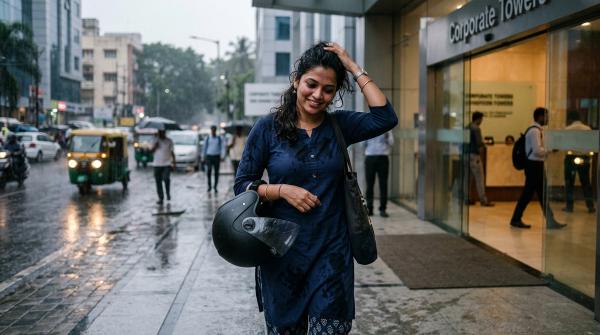
Hot, humid weather makes everything harder. You can shower, dress well, use perfume, and still see underarm patches before you even reach the office, college, a wedding venue, or the airport.
The good news? You don’t need to buy every sweat product on the shelf. You just need to know what each one is actually meant to do.
Here’s the simple version:
- Antiperspirant reduces sweat.
- Deodorant helps with smell.
- Underarm sweat pads protect your clothes.
- Sweat-proof undershirts create a washable barrier between your skin and your outer outfit.
- Fabric, colour, fit, and laundry habits matter more than most people realise.
Let’s break down underarm sweat pads vs antiperspirant, and where deodorants, undershirts, and clothing choices fit in.
First, deodorant and antiperspirant are not the same thing
#This is probably the most common mix-up.
Many people say “deodorant” for any roll-on, spray, stick, or cream used under the arms. But dermatology guidance, including from the American Academy of Dermatology and Cleveland Clinic, makes a clear distinction between the two.
Deodorant helps control body odour. It works by masking smell or reducing odour-causing bacteria. It can help you feel fresher, but it does not stop sweat from reaching your clothes.
Antiperspirant helps reduce sweating. It uses active ingredients, often aluminium-based compounds, to reduce how much sweat reaches the skin’s surface.
So if your shirt is getting wet under the arms, deodorant alone is not really the right product. If your issue is mainly smell and your clothes don’t get visibly wet, deodorant may be enough.
If you want both dryness and odour control, look for a product labelled antiperspirant-deodorant.
A small but useful tip: apply antiperspirant on completely dry skin. Many dermatologists suggest using it at night, when sweating is usually lower, so the product has more time to work before the next day.
Quick comparison: antiperspirant vs underarm sweat pads vs sweat-proof undershirts
#Option 1: Antiperspirant, your daily first step
#Antiperspirant is the most direct option if you want to reduce underarm wetness. It is easy to find, usually affordable, and simple to use.
It works well for:
- Daily office or college routines
- People who get sweat patches in regular clothes
- Anyone who wants a low-effort first step
- Humid-weather grooming before adding other protection
For best results, apply it to clean, dry skin. If you put antiperspirant on damp skin right after a shower, or over already sweaty underarms, it may not work as well. Let your skin dry first, even if it takes a few extra minutes.
The downside is that some people find antiperspirants irritating. They can also leave white marks on dark clothes or create underarm build-up on shirts over time.
If that happens, try using a little less, let it dry before dressing, and wash your clothes properly so residue does not keep building up.
Option 2: Underarm sweat pads, the outfit saver
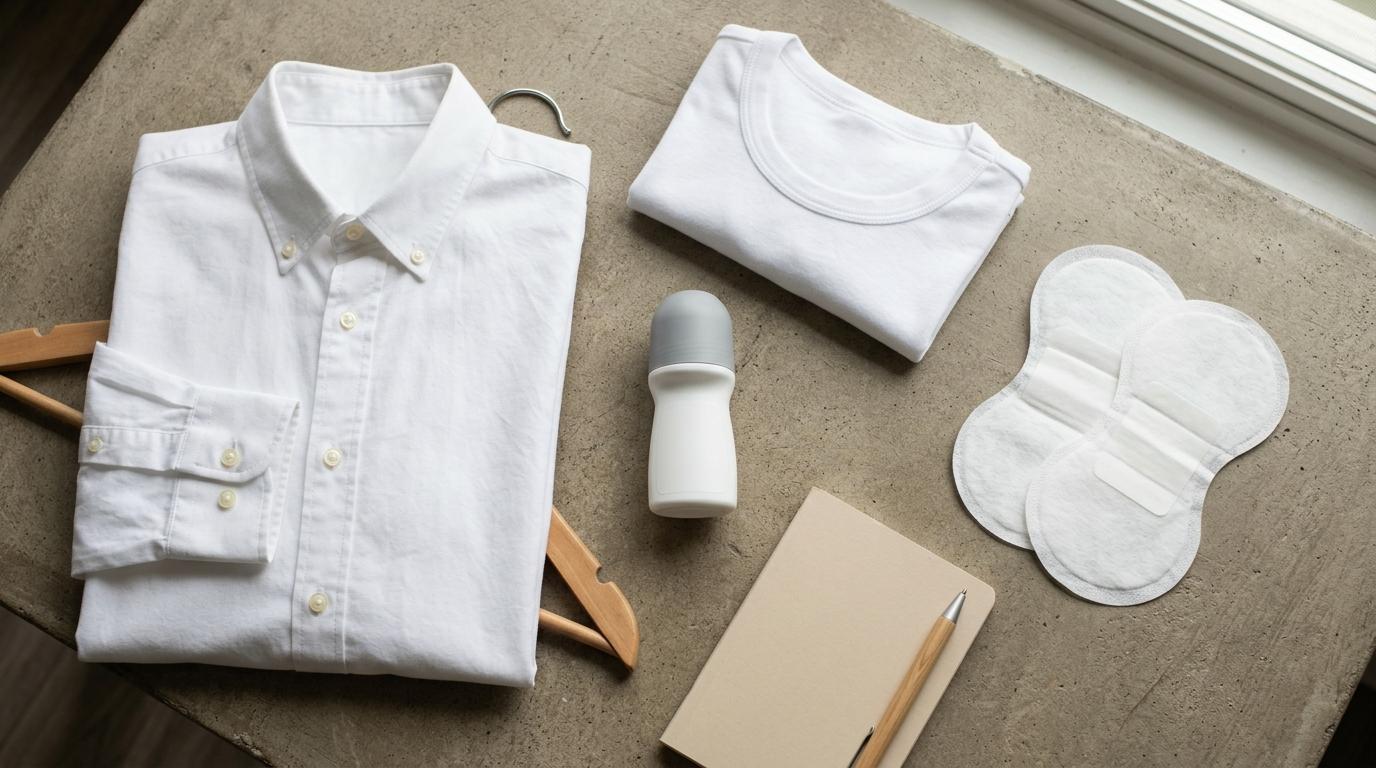
#Underarm sweat pads, also called dress shields or underarm shields, are absorbent pads placed inside the underarm area of your clothing. Most disposable versions have adhesive backing, so you stick them to the garment, not your skin.
They are especially useful when your main goal is protecting the outfit.
Use underarm sweat pads for:
- Wedding blouses
- Silk kurtas
- Formal shirts
- Delicate dresses
- Expensive or hard-to-wash garments
- Short events where you need confidence for a few hours
- Situations where you don’t want extra product on your skin
In hot, humid weather, they work like a physical barrier. Even if you sweat, the pad absorbs moisture before it spreads into a visible patch.
The main issue is placement. If the pad is not sitting exactly where you sweat, it may feel awkward or miss the sweat zone completely.
Adhesive pads can also shift, especially on very soft, sheer, stretchy, or tight fabrics. And because most are single-use, they may not be the best everyday option unless you’re okay with the ongoing cost and waste.
Option 3: Sweat-proof undershirt, the all-day shield
#A sweat-proof undershirt is a base layer designed to protect your outer shirt. It usually has extra absorbent or reinforced underarm areas. You wear it like a normal undershirt, but its job is to stop sweat from showing through your main outfit.
This is often the most practical choice for people dealing with office sweat stains, long commutes, full-day travel, or repeated outfit stress.
A sweat-proof undershirt is useful for:
- Office commuters dealing with heat, traffic, trains, metros, and air conditioning
- People who wear formal shirts often
- Long flights, train journeys, or road trips
- Anyone who wants a reusable alternative to disposable sweat pads
- Moderate to heavy sweating where antiperspirant alone is not enough
The obvious concern is heat. In India, or any humid climate, adding another layer can sound uncomfortable.
The trick is to choose a soft, breathable undershirt that is not bulky. Your outer shirt should also not be too tight. A good sweat-proof undershirt should protect your clothes without making you feel trapped.
It may cost more upfront than sweat pads or a roll-on antiperspirant, but because it is washable and reusable, it makes sense if sweat stains are a regular problem.
What should you use? A practical checklist
#For office
#Choose: Antiperspirant + sweat-proof undershirt
If you leave home fresh but reach work with visible underarm marks, an undershirt is often more reliable than hoping antiperspirant alone will survive the commute.
This combination works well under button-down shirts, polos, and many formal outfits.
Apply antiperspirant on dry skin, let it settle, then wear the undershirt as your protective layer.
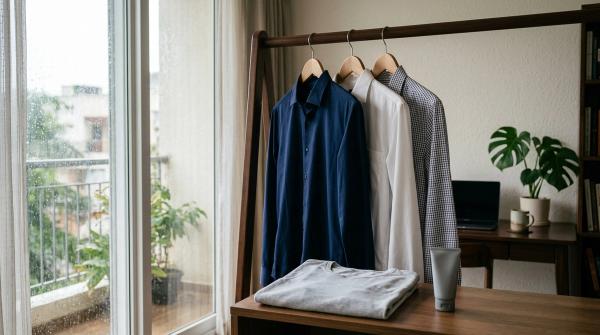
Also, be careful with colours. Medium grey and light blue can reveal sweat very quickly. If you have an important meeting, go for safer options like white, navy, black, prints, or textured fabrics.
For college
#Choose: Antiperspirant + breathable clothing
College usually means walking, public transport, crowded classrooms, canteens, and budget limits. You may not want to spend on sweat-proof undershirts right away, and that’s completely fair.
Start with a good antiperspirant if wetness is the issue.
For clothes, choose looser cotton or linen-blend tops when possible. Dark colours, white, prints, and textured fabrics usually hide sweat marks better than flat mid-tone colours.
If you have a presentation, interview, fest, or college event, keep underarm sweat pads as a backup for that day.
For weddings and formal events
#Choose: Underarm sweat pads
For weddings, festive events, receptions, and formal dinners, the outfit often matters more than everyday convenience. You may be wearing silk, embroidery, a fitted blouse, a jacket, or something difficult to wash.
Underarm sweat pads are useful because they protect the garment directly. They also help you avoid applying extra product near delicate fabric.
But don’t try them for the first time at the event.
Test the pads at home with the actual outfit. Check whether they stay hidden, sit in the right place, and don’t change the shape of the garment. This small trial can save you a lot of stress later.
For travel
#Choose: Sweat-proof undershirt
Travel can mean long hours in the same clothes, humid stations, airports, traffic, and sudden temperature changes. A sweat-proof undershirt helps keep your outer layer fresher for longer.
It is especially useful if you are travelling for work and cannot change before a meeting.
Carrying one spare undershirt is also easier than packing multiple full outfits.
If you’re packing light, choose outer shirts in colours and patterns that do not show sweat easily.
For heavy sweating
#Choose: Antiperspirant + protective layer
If you sweat heavily, don’t rely on just one product. Combine tools.
Use antiperspirant correctly on dry skin, then add a sweat-proof undershirt for daily wear or sweat pads for special outfits.
If sweating is persistent, excessive, sudden, or affecting your daily life, speak to a dermatologist. The same applies if antiperspirants cause burning, rashes, or ongoing irritation.
Heavy sweating can have different causes, and professional advice is better than guessing or repeatedly trying stronger products on your own.
Clothing tips to reduce visible sweat marks
#Even the best sweat product works better with the right clothes. In humid weather, fabric, colour, and fit can decide whether sweat stays hidden or becomes obvious.
Choose colours carefully
#Some colours show sweat almost immediately. Medium grey, light blue, slate, and similar mid-tone colours often show the exact shape of underarm wetness.
Better choices include:
- Black
- White
- Navy
- Busy prints
- Small patterns
- Textured fabrics
Prints and texture break up the wet outline, so sweat marks are less noticeable.
Avoid tight armholes
#Tight armholes press fabric directly against your underarms. That means sweat transfers faster.
A slightly relaxed fit gives your skin more breathing room. It also reduces friction, which can help you feel less sticky through the day.
Pick breathable fabrics
#Cleveland Clinic recommends breathable fabrics for people dealing with heavy sweating.
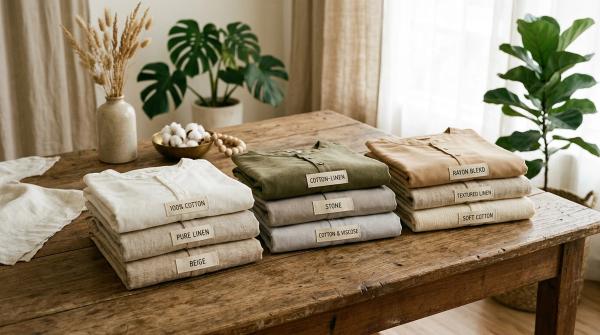
For hot, humid weather, look for clothing that allows airflow. Cotton, linen, and breathable blends are often more comfortable than stiff, heat-trapping fabrics.
Very clingy synthetic fabrics can make sweat feel worse because they sit close to the skin and don’t let moisture move away easily.
Layer smartly
#Layering in heat sounds strange, but a thin, breathable undershirt can protect your visible outer shirt.
The key is to avoid bulky layers. A fitted but not tight base layer works better than a thick vest or heavy T-shirt.
Let products dry before dressing
#If you apply antiperspirant and immediately pull on a dark shirt, white marks are more likely.
Give the product time to dry. Use a thin, even layer instead of applying too much.
More product does not always mean better protection. Sometimes it just means more residue on your clothes.
Laundry tips to reduce sweat stains on clothes
#Sweat stains are not always from sweat alone. Product residue, body oils, and repeated wear can build up in the underarm area.
Try these habits:
- Wash sweaty clothes as soon as practical.
- Don’t leave damp shirts packed in a bag for hours.
- Pre-treat the underarm area before washing if you see build-up.
- Follow the care label, especially for delicate fabrics.
- Avoid overusing antiperspirant, since extra product can transfer to fabric.
- Make sure clothes are fully dry before storing them.
For delicate wedding outfits, silk, embroidery, or structured formalwear, don’t experiment with harsh stain treatments at home. Follow the garment care instructions or use professional cleaning.
So, what should you actually buy?
#If you’re starting from zero, don’t overbuy.
Start simple:
- Buy antiperspirant if your main issue is wetness.
- Use deodorant if your main issue is odour, or choose an antiperspirant-deodorant if you need both.
- Use underarm sweat pads for weddings, formalwear, delicate fabrics, and high-stakes events.
- Invest in a sweat-proof undershirt if sweat stains are a regular office, travel, or daily-life problem.
- Improve your clothing choices with better colours, breathable fabrics, and less clingy fits.
In very humid weather, the best solution is often a combination. Antiperspirant reduces sweat, while a pad or undershirt protects your clothes.
Deodorant helps with smell, but it is not a sweat-stain solution on its own.
Safety note
#Sweating is normal, especially in hot, humid weather.
But if sweating feels excessive, happens even when you are cool and resting, disrupts your daily life, or comes with skin irritation, speak to a dermatologist.
Also stop using any product that causes persistent burning, rash, or discomfort. A dermatologist can help you choose safer and more suitable options.