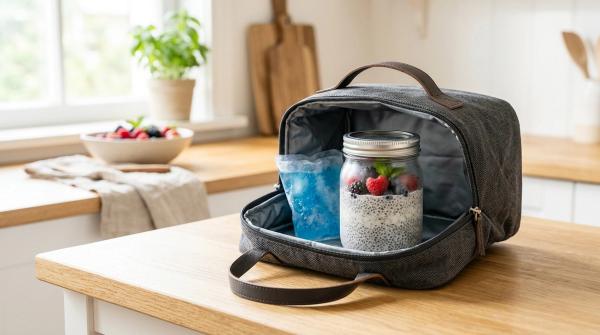
Yogurt is one of those snacks that feels like it should be perfect for travel. It’s already portioned, usually not too messy, easy to toss in a lunch bag, and filling enough to buy you some time when everyone is hungry.
But yogurt is still dairy. And that means it needs more care than crackers, pretzels, granola bars, or fruit snacks.
So if you’re thinking about bringing yogurt cups while traveling, the real question isn’t, “Does it still look okay?” It’s, “Has it stayed cold enough the whole time?”
Whether you’re packing for a road trip, airport day, picnic, school lunch, commute, hotel stay, or a long day of errands, here’s how to know when yogurt is fine to pack, when it needs serious chilling, and when it’s smarter to skip it.
Quick Answer: Can You Travel With Yogurt Cups?
#Yes, you can travel with yogurt cups, but only if you keep them cold.
Here’s the short version:
- Yogurt should not sit out at room temperature for more than 2 hours.
- If it’s 90°F or hotter, that window drops to 1 hour.
- Unopened yogurt still needs refrigeration. A sealed cup is not shelf-stable.
- Opened yogurt needs extra caution. Eat it soon or keep it cold.
- Use an insulated lunch bag, ice packs, or a cooler if yogurt will be out for a while.
- At airports, yogurt is usually treated like a liquid or gel in carry-on bags. In the U.S., that usually means containers must be 3.4 ounces, 100 ml, or smaller.
- Hotel mini-fridges are not always cold enough for dairy. Check before relying on one.
- If yogurt has been warm too long, throw it away. Don’t taste it first.
Simple rule: if you can’t keep yogurt cold, pick a no-fridge snack instead.
Why Yogurt Needs More Care Than Other Travel Snacks
#Yogurt is a perishable dairy food. It should stay refrigerated, ideally at 40°F or colder, until you’re ready to eat it.
That sounds simple enough at home. But travel days have a way of getting chaotic.
The yogurt comes out of the fridge while someone looks for their shoes. Then it sits in the car. Then it gets moved to a backpack, stroller basket, lunch tote, picnic bag, or hotel room. Before you know it, that “quick snack” has been hanging around for hours.
And none of those places are a refrigerator.
So if you’re asking, “Can yogurt sit out?”, the honest answer is:
Yes, but not for very long.
At normal room temperature, yogurt should not be left out for more than 2 hours. If it’s hot outside, especially 90°F or above, that safe window drops to 1 hour.
It doesn’t mean the yogurt instantly becomes dangerous the second the timer runs out. But it does mean you’ve passed the food safety limit you should use when planning what to pack.
Unopened vs. Opened Yogurt Cups
#This is where a lot of people get confused.
Unopened Yogurt Cups
#An unopened yogurt cup is sealed, which helps protect it from outside germs and contamination. But it is still not shelf-stable.
The foil lid does not make it safe to sit in a warm backpack, lunch bag, car, or picnic basket all afternoon.
Once yogurt leaves the fridge, the usual timing applies:
- Up to 2 hours at room temperature
- Up to 1 hour if it’s 90°F or hotter
If an unopened yogurt cup has been sitting in a hot car, hanging out in a backpack, or warming up on a picnic table too long, it should be tossed.
It’s annoying. Nobody likes wasting food. But warm dairy is not worth the gamble.
Opened Yogurt Cups
#Opened yogurt needs even more care.
Once you peel back the lid, the yogurt is exposed to air, spoons, hands, crumbs, and whatever else is happening around you. If you open a yogurt cup and don’t finish it, it needs to go back into a refrigerator or a properly chilled cooler quickly.
And remember: if the yogurt already spent time unrefrigerated before you opened it, don’t assume it still has a full 2 hours left.
For travel, opened yogurt usually isn’t worth saving unless you can chill it right away.
The Best Way to Pack Yogurt for Travel
#If you want to pack yogurt for travel, your main job is to keep it cold until someone eats it.
A regular lunch bag with no ice pack is not enough for a long day. A yogurt cup tossed into a backpack or tote can warm up faster than you might expect, especially if the bag sits in the sun, in a warm room, or in the car.
Use:
- An insulated lunch bag
- Frozen ice packs
- A small cooler for longer trips
- Yogurt taken straight from the fridge
- A shaded, cool storage spot
- A plan to eat it earlier rather than later
For lunchboxes, pack the yogurt right next to the ice pack. Don’t put it at the top of the bag, far away from the cold source.
For road trips, keep yogurt in the cooler, not loose in the snack bin or cup holder. For picnics, leave it in the cooler until it’s time to eat.
Ice packs are helpful, but they don’t last forever. They melt, they warm up, and eventually the yogurt warms up too.
Scenario Guide: Pack, Chill, or Skip?
#Different trips call for different snack plans. Here’s how to think through the most common situations.
1. Airport Travel
#Best choice: Skip it from home, or buy yogurt after security.
Yogurt can be tricky at airports for two reasons: security rules and food safety.
In U.S. carry-on screening, yogurt is usually treated like a liquid or gel. That means it generally needs to follow the carry-on liquid rule: 3.4 ounces, 100 ml, or smaller per container.
Many regular yogurt cups are larger than that.
You may be able to put larger yogurt containers in checked luggage, but that brings up another issue: checked bags are not a reliable place to keep dairy cold. Think about the time involved: getting to the airport, bag drop, screening, loading, flight time, possible delays, baggage claim. That can add up quickly.
A better plan:
- Eat yogurt before leaving home.
- Buy refrigerated yogurt or a parfait after security.
- Eat it soon after buying it.
- Pack a no-fridge snack for long airport waits.
If you’re traveling outside the U.S. or connecting through other airports, check the current security rules before packing yogurt in a carry-on.
2. Lunchbox or Daily Commute
#Best choice: Chill it.
A yogurt cup can be a great lunchbox snack, but it needs cold support.
For a short commute and a morning snack, yogurt is usually easy to manage. For lunch several hours later, use an insulated bag and at least one ice pack. If the lunchbox will sit in a warm classroom, office corner, gym bag, or car, be more cautious.
Good lunchbox habits:
- Start with yogurt straight from the fridge.
- Use an insulated lunch bag.
- Pack at least one frozen ice pack.
- Use two ice packs if the day is long or warm.
- Keep the bag out of direct sunlight.
- Don’t leave the lunchbox in a hot car.
- Eat the yogurt earlier in the day if you’re unsure about the temperature.
For kids, pack yogurt cups they can finish in one sitting. A half-eaten yogurt cup that comes home warm should be thrown away.
3. Road Trips
#Best choice: Chill it in a cooler.
Road trips are actually one of the easier times to bring yogurt because you can pack a cooler. The key is using the cooler correctly.
A yogurt cup sitting in a snack tote between the seats is not the same as yogurt packed with ice packs.
A better road-trip setup:
- Use a cooler or well-insulated bag.
- Pack yogurt close to ice packs or ice.
- Keep the cooler in the air-conditioned part of the car.
- Avoid storing yogurt in a hot trunk.
- Open the cooler only when needed.
- Eat yogurt earlier in the trip if the cooler is small or opened often.
If you stop for lunch, a hike, the beach, or a long roadside break, don’t leave yogurt in a hot parked car unless it is still properly chilled in a cooler. Car interiors heat up quickly, and dairy snacks do not handle that well.
4. Picnic or Park Day
#Best choice: Pack it and eat it early, or skip it in hot weather.
Yogurt sounds like a nice picnic snack, especially on a warm day. But picnics can stretch longer than planned, and outdoor temperatures are often much warmer than your kitchen.
If the weather is mild and you have an insulated bag with ice packs, yogurt can work. If it’s very hot, especially 90°F or above, remember that the safe window is only 1 hour once yogurt is out of proper chilling.
For picnics:
- Keep yogurt in the cooler until it’s time to eat.
- Serve it early.
- Don’t leave opened cups sitting out.
- Toss leftovers that have warmed up.
- Choose shelf-stable snacks if you can’t keep the cooler cold.
For kids, small cups or yogurt tubes can be easier than larger containers because they’re more likely to finish them quickly.
5. Hotel Stays
#Best choice: Check the fridge first.
Hotel mini-fridges can be unpredictable. Some are cold enough for drinks but not reliable enough for perishable food. A fridge can look like a fridge and still not keep yogurt at a safe temperature.
Before storing yogurt in a hotel fridge, check it.
Look for:
- A temperature control dial
- A fridge that feels truly cold, not just slightly cool
- No automatic shutoff when you leave the room
- Enough space for air to circulate
- No obvious warmth, leaking, or poor cooling
If the fridge doesn’t seem cold enough, don’t trust it with yogurt. Buy smaller portions and eat them right away, keep yogurt properly chilled with ice, or choose no-fridge snacks instead.
If you bring yogurt back from a hotel breakfast area, treat it like any other refrigerated dairy food. It still needs to stay cold or be eaten within the safe time window.
How to Use Ice Packs Without Overpacking
#You don’t need a giant cooler for one yogurt cup. But you do need a real cold source.
For a short outing, an insulated lunch bag plus one frozen ice pack may be enough. For a longer day, warmer weather, or multiple yogurt cups, use more cold support.
A few practical tips:
- Put the yogurt right next to the ice pack.
- Don’t separate it from the ice pack with napkins, fruit, or containers.
- Pack yogurt cold, not room temperature.
- Keep the bag closed as much as possible.
- Use two small ice packs around the yogurt instead of one large one far away.
- Don’t treat an insulated bag like a refrigerator. It helps, but it is not the same thing.
If the yogurt feels warm when you take it out, don’t try to “fix” it by putting it back on ice. Cooling it again does not erase the time it spent too warm.
When to Toss Yogurt Without Tasting It
#This is important: don’t taste questionable yogurt to decide if it’s safe.
If yogurt has been sitting out too long, tasting it can expose you to bacteria. And unsafe food does not always smell bad, look weird, or taste obviously spoiled. Sometimes it looks mostly normal.
Throw yogurt away if:
- It has been unrefrigerated for more than 2 hours
- It has been out for more than 1 hour in 90°F or hotter weather
- The cup feels warm and you don’t know how long it has been warm
- The seal is broken or leaking
- The lid is swollen
- The container is damaged
- You see mold
- You notice unusual bubbling
- The color looks off
- The texture is very curdled, clumpy, grainy, or separated beyond normal whey separation
- It smells rancid, yeasty, unusually sour, or just wrong
A little liquid on top of yogurt is usually just whey, and that can be normal. If the yogurt has been stored properly and there are no other warning signs, you can usually stir it back in.
But if the yogurt smells bad, looks strange, or has been warm too long, toss it.
When in doubt, throw it out. Losing a snack is frustrating, but it’s better than getting sick from warm dairy.
Safer No-Fridge Travel Snacks
#If you can’t keep yogurt cold, skip it. There are plenty of no-fridge travel snacks that are better for airports, cars, hotel rooms, school bags, sightseeing days, and long outings.
Good options include:
- Freeze-dried yogurt bites
- Granola bars or protein bars
- Nuts and seeds
- Nut butter packets
- Crackers
- Trail mix
- Whole fruit
- Dried fruit
- Shelf-stable applesauce pouches
- Roasted chickpeas
- Cereal cups or dry cereal in a container
These are especially useful for airport days, long commutes, sightseeing, road trips without a cooler, and hotel stays where the fridge is questionable.
If you really want yogurt, the safest move is to buy it cold close to when you plan to eat it. Then finish it soon.
Pack, Chill, or Skip: A Simple Checklist
#Before tossing yogurt into your bag, ask yourself:
- How long will it be out of the fridge?If it will be more than 2 hours without reliable chilling, skip it.
- Will the weather be hot?If it’s 90°F or higher, use the 1-hour rule.
- Do I have ice packs or a cooler?If not, yogurt only works for a short window.
- Will it sit in a car?A warm car is not safe storage for yogurt.
- Is it opened or unopened?Opened yogurt needs extra caution and should be eaten soon.
- Will I have a real fridge at the destination?If you’re relying on a hotel mini-fridge, check it first.
- Can I buy yogurt closer to eating time?If yes, that’s usually the easiest and safest option.