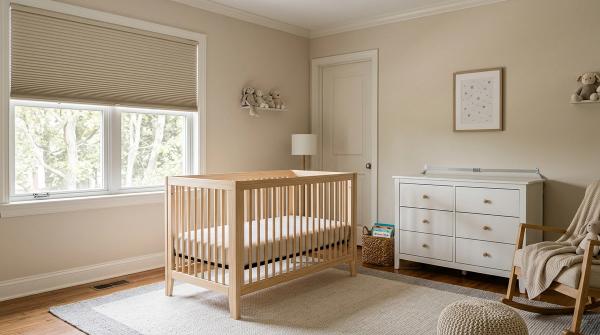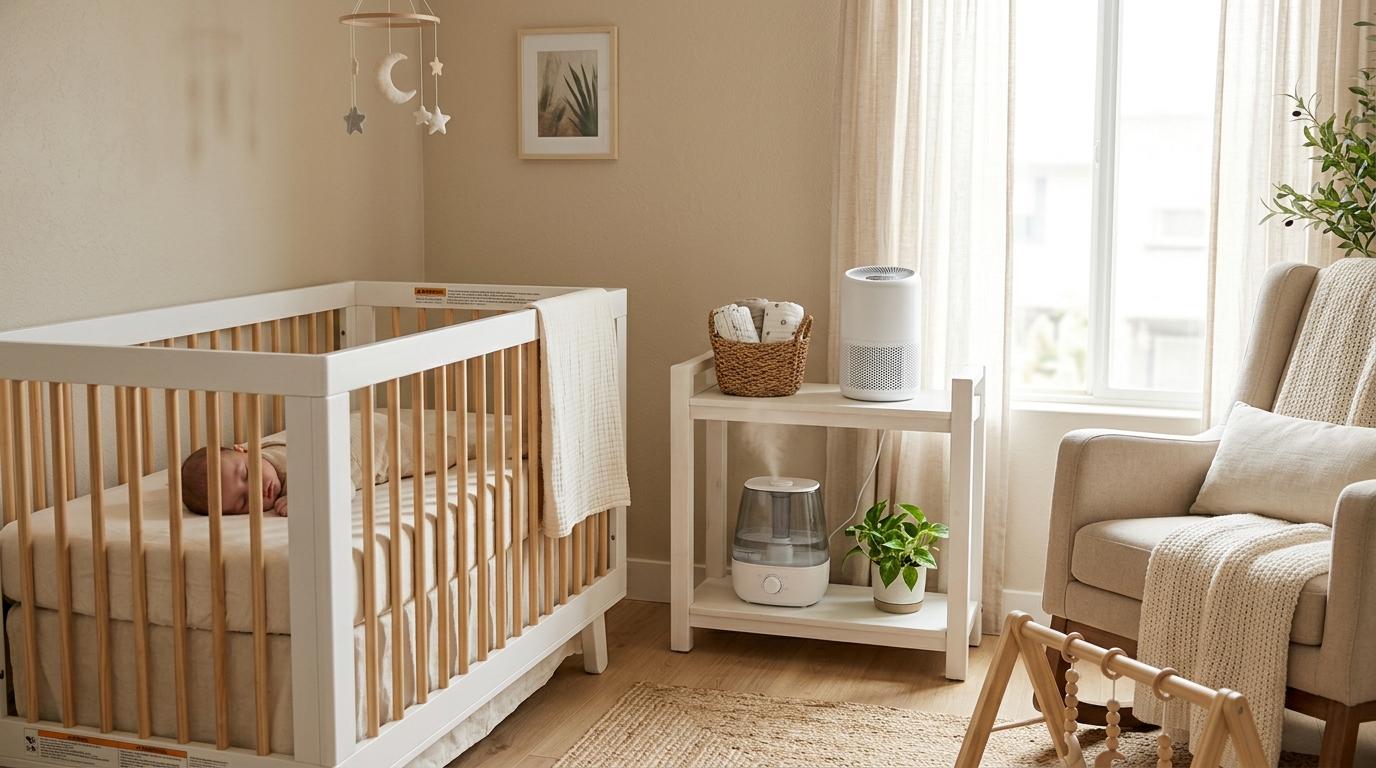
Trying to choose between an air purifier vs humidifier for baby room use? Start with the real question: what is actually bothering the room? If the air feels dry, especially when the AC runs all night, a humidifier may be the better first buy. If the room feels dusty, smoky, polluted, or affected by traffic or construction, an air purifier is probably more useful.
Some homes need both. Some homes need neither. A humidifier and an air purifier do very different jobs. A humidifier adds moisture to dry air. An air purifier filters tiny particles from the air. One does not replace the other, even though baby shopping lists often make it sound like you need both immediately.
This guide is for parents setting up a baby sleep space, especially in apartments, AC rooms, dusty cities, polluted areas, and Indian weather conditions where humidity and air quality can change a lot through the year.
Quick Comparison: Air Purifier vs Humidifier for Baby Room
#What an Air Purifier Does in a Baby Room
#A baby room air purifier pulls air through filters and sends cleaner air back into the room. A good purifier can reduce airborne particles such as dust, smoke, pollen, pet dander, and some pollution particles.
It does not add moisture. It does not cure coughs, colds, asthma, allergies, or breathing problems. But if your baby’s room gets dusty or polluted, it may help reduce some of the irritants floating in the air.
Buy an air purifier first if:
#- You live near a busy road, flyover, construction site, or dusty area.
- Outdoor pollution or seasonal smog is common where you live.
- Your apartment traps cooking smoke or strong food smells.
- You keep windows closed because of heat, noise, mosquitoes, or poor outdoor air.
- You have pets at home.
- Dust settles quickly near the baby’s sleep area.
- You want better indoor air without using sprays, fragrances, or room fresheners.
For a nursery, look for an ozone-free air purifier. A simple filter-based purifier is usually the safer choice for a baby room. Be careful with products that mention ozone, ionizers, “activated oxygen,” or similar terms.
What to check before buying an air purifier for nursery use
#- Room size coverage that matches your baby’s room.
- Proper particle filtration.
- Ozone-free operation.
- Replacement filter cost and availability.
- Noise level on sleep mode.
- Option to turn off display lights.
- Stable design.
- Safe cord placement.
An air purifier for nursery use does not need to be fancy. It should be quiet, safe, properly sized, and easy to maintain. That matters much more than an app you may use twice and then forget about.
What a Humidifier Does in a Baby Room
#A nursery humidifier adds moisture to dry air. This can be helpful when indoor air becomes too dry because of AC, heating, or dry weather.
Dry air can make the nose, lips, throat, and skin feel uncomfortable. Babies have tiny nasal passages, so dryness can feel more noticeable for them, especially while sleeping.
A humidifier does not treat illness. It is not a replacement for medical care. But if the room is genuinely dry, it can make the air feel more comfortable.
Buy a humidifier first if:
#- Your baby sleeps in an AC room for many hours.
- The room feels dry at night.
- Your baby often has dry lips, dry skin, or a dry, crusty nose.
- You live in a dry climate.
- It is a dry winter season.
- A hygrometer shows that indoor humidity is low.
A humidifier for newborn use should be chosen carefully. Cool mist humidifiers are generally preferred for baby rooms because steam or hot water can be a burn risk if the unit tips over, or once your baby starts crawling and grabbing everything in sight.
The important part: measure humidity
#Please do not guess. Use a small digital hygrometer to check nursery humidity. These are usually inexpensive and much more useful than relying on how the room “feels.”
The EPA advises keeping indoor relative humidity below 60%, and ideally between 30% and 50%. If the room is already humid, a humidifier can make things worse. Too much moisture can lead to dampness, mold, and dust mites.
Yes, a humidity meter is boring. But it can stop you from buying the wrong device or running a humidifier when the room does not need one.
When You May Need Both
#You can use both an air purifier and a humidifier in the same baby room if the room has two separate problems: dirty or polluted air, and dry air.
For example:
- You live in a polluted city and use AC all night.
- Your apartment faces traffic dust, but the baby room also feels dry.
- Winter brings smog outside and dryness indoors.
- You keep windows closed, run AC, and notice both dust and dryness.
In this case, each device has its own job. The air purifier filters particles from the air. The humidifier adds moisture.
How to place both safely
#- Keep them on opposite sides of the room if possible.
- Do not let humidifier mist blow directly into the air purifier.
- Keep both away from the crib.
- Keep cords out of reach.
- Follow each appliance manual for placement, cleaning, and clearance.
This matters because moisture going straight into a purifier filter can create hygiene problems and may wear out the filter faster.
When You May Need Neither
#Not every baby room needs a machine.
You may not need an air purifier or humidifier if:
- Your home is well ventilated.
- There is no major dust, smoke, pet dander, or pollution problem indoors.
- The baby sleep area does not feel dry.
- Indoor humidity naturally stays in a comfortable range.
- Basic cleaning and safe ventilation are enough.
This is worth saying because baby shopping can get out of hand very quickly. A purifier or humidifier is useful only if it solves a real issue. Otherwise, it becomes another thing to clean, refill, check, move, and worry about.
India-Aware Notes for Apartments, AC Rooms, Monsoon, Dust, and Smoke
#Many Indian families set up the baby’s sleep space in an apartment bedroom. That can make the decision more complicated because indoor air changes a lot depending on the season, city, ventilation, and AC use.
1. AC rooms can become dry
#In hot weather, many families run split ACs for several hours at night. AC use can make the room feel dry.
If your baby’s room feels dry and a hygrometer confirms low humidity, a nursery humidifier may help. But do not run it blindly. Check the humidity first.
2. Monsoon humidity is different
#During monsoon or rainy months, indoor humidity may already be high. In that situation, a humidifier is usually not needed and may make the room damp or musty.
If the room feels sticky, humid, or smells musty, focus on ventilation, moisture control, and cleaning instead of adding more moisture.
3. Outdoor pollution can make an air purifier the better first buy
#In cities with high pollution, traffic dust, seasonal smog, or nearby construction, an air purifier may be the more useful first purchase.
This is especially true if the baby room faces a main road or if the windows stay closed for long hours. Choose a unit sized for the room. A purifier that is too small may run all night and still not do much.
4. Cooking smoke can travel in apartments
#In many apartment layouts, kitchen smoke and strong cooking smells travel into bedrooms, especially when doors are open or the exhaust is not strong enough.
A purifier with suitable filtration, including odor-focused filtration where available, may help reduce lingering particles and smells. It will not magically erase everything, but it can help.
5. Be careful with mosquito vaporizers
#Mosquito vaporizers and plug-in repellents are common in Indian homes. If you use them, follow the product’s official safety instructions carefully, especially around babies.
Do not assume that an air purifier makes every indoor chemical exposure harmless.
If mosquitoes are a problem, also consider physical barriers such as window screens and mosquito nets, depending on what is practical and safe in your home.
6. Dust builds up fast in cities
#Road dust, construction dust, fabric dust, and fan dust can collect quickly. A purifier can help with airborne particles, but it does not replace cleaning.
Keep the baby sleep area simple, washable, and low-clutter. Less stuff means less dust sitting around and fewer things for tired parents to clean.
Safe Nursery Air Setup Checklist
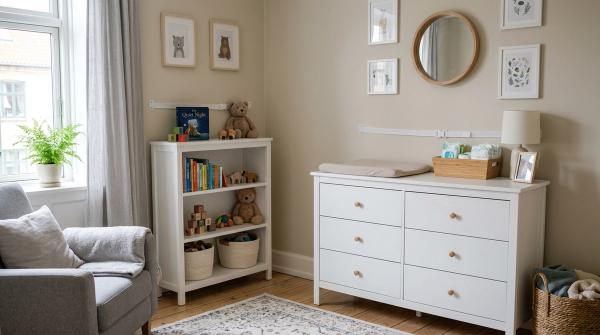
#A safe nursery air setup is not just about buying the right product. It is also about placement, cleaning, humidity, and realistic maintenance.
Before you buy
#- Identify the main issue: dry air, dusty air, smoke, pollution, pet dander, or no real issue.
- Measure humidity with a hygrometer.
- Check the room size and choose a device that matches it.
- For a purifier, choose an ozone-free air purifier.
- For a humidifier, prefer cool mist for baby room use.
- Check the noise level for night use.
- Check whether display lights can be turned off.
- Check filter cost or cleaning requirements before buying.
- Read the manual before first use, even if it feels annoying.
For an air purifier
#- Place it where airflow is not blocked.
- Keep it away from curtains, bedding, and walls as the manual says.
- Do not place it inside or right next to the crib.
- Replace filters as recommended by the manufacturer.
- Avoid ozone-generating air cleaners.
For a humidifier
#- Empty and refill with fresh water daily.
- Dry the tank when it is not in use.
- Clean it regularly as the manual directs.
- Do not let humidity rise above 60%.
- Aim for 30% to 50% indoor relative humidity.
- Do not point mist directly toward the crib, walls, mattress, or purifier.
- Stop using it if the room feels damp or smells musty.
What to Avoid in a Baby Room
#Some products sound helpful but can create risks you really do not need in a nursery.
Avoid ozone-generating air purifiers
#The EPA warns against ozone-generating air cleaners. Ozone can irritate the lungs, and a baby room is not the place to take that risk.
Choose an ozone-free model.
Avoid dirty humidifiers
#The EPA notes that humidifiers can disperse microorganisms and minerals into the air if they are not cleaned properly. This is why humidifier hygiene matters so much.
If you do not have the time or energy to clean a humidifier regularly, it may be better not to use one. That is not failure. That is just being realistic.
Avoid over-humidifying
#More moisture is not always better. Too much humidity can make the room damp and may encourage mold or dust mites. Keep indoor relative humidity below 60%, ideally between 30% and 50%.
Avoid fragrance-based “fresh air” solutions
#Do not use fragrances, essential oils, sprays, or strong scents as a shortcut for cleaner air in a baby room.
A purifier filters air. A humidifier adds moisture. Scents do neither of those things properly.
Also, babies do not need a room that smells like lavender, rose, eucalyptus, or anything else. Clean and safe is enough.
Avoid unsafe placement
#Keep appliances and cords away from the crib and out of reach. Babies become mobile surprisingly fast, so a setup that feels safe today may need to change later.
Simple Decision Guide: What Should You Buy First?
#Here is the practical parent version.
Buy an air purifier first if:
#- Pollution, smoke, dust, or pet dander is the main issue.
- You live near traffic or construction.
- You keep windows closed because outdoor air is poor.
- Cooking smoke or mosquito vaporizer use is a concern.
- The room does not feel dry.
Buy a humidifier first if:
#- The room is dry.
- AC or heating runs for long hours.
- A hygrometer shows low humidity.
- Your baby’s skin, lips, or nose seem dry.
- There is no major dust, smoke, or pollution problem.
Buy both if:
#- The room has polluted or dusty air and dry air.
- You can maintain both properly.
- You have space to place them safely apart.
Buy neither if:
#- The room is clean, comfortable, and not dry.
- Humidity is already in the ideal range.
- There is no clear air quality problem.
- You do not want extra maintenance without a real need.
Safety Note Before You Decide
#This article is for general information only and is not medical advice.
If your baby has breathing trouble, persistent cough, wheezing, fever, allergies, eczema, or any health concern, speak with your pediatrician.
Always follow your pediatrician’s advice, the appliance manual, and official safety guidance. For humidity and humidifier safety, follow reliable public health or environmental guidance such as the EPA where applicable.
Sources and Safety Checks Used
#This guide was checked against current EPA guidance on home humidifier care, indoor humidity and ozone-generating air cleaners, plus safe-sleep guidance from the AAP/CDC and crib-area safety principles from the CPSC. Product-specific limits still depend on each device manual.