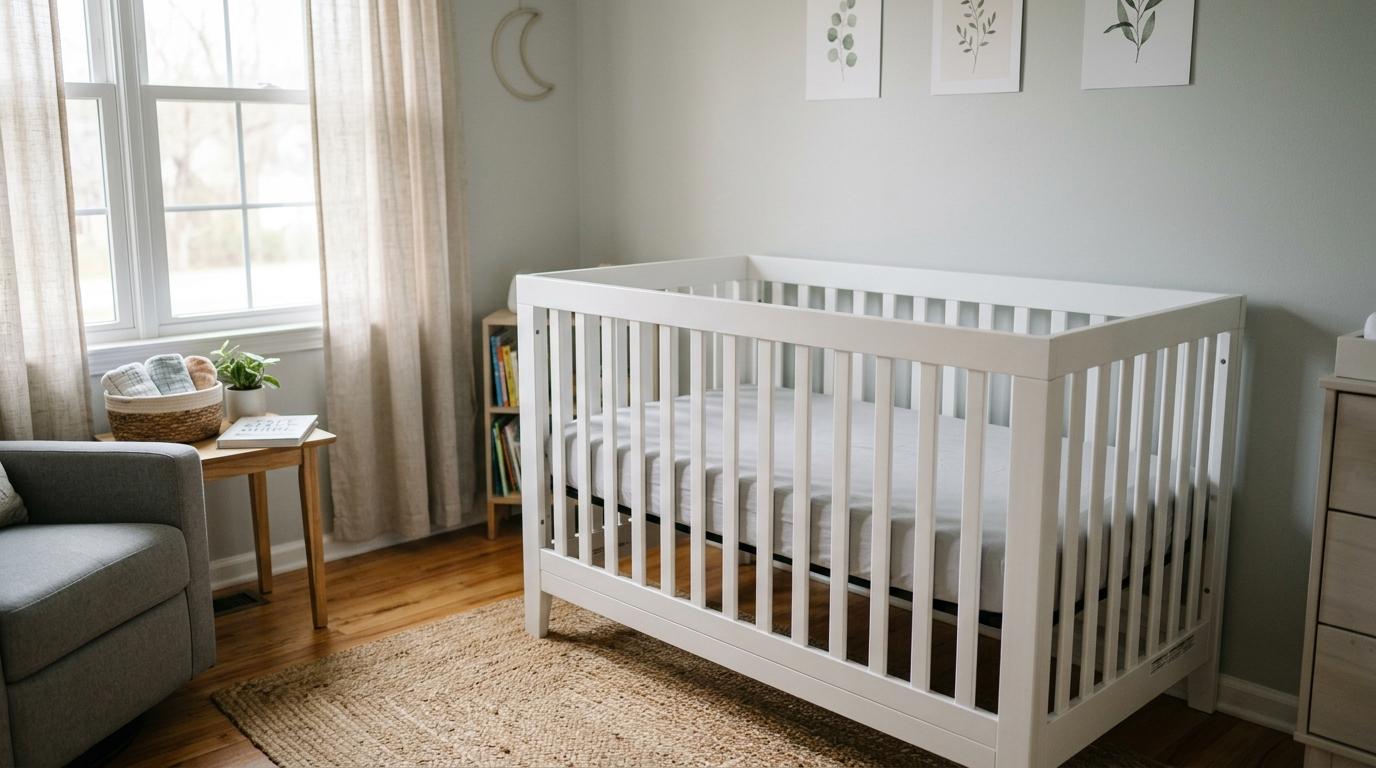
Wondering whether crib bumpers or mesh liners are safe for your baby? The safest answer is simple: skip both. For infant sleep, the safest crib setup is a firm, flat mattress with a tight fitted sheet — and nothing else in the crib. No padded bumpers, no mesh liners, no pillows, no blankets, no toys.
Safety note: This article is for general education only. If you’re unsure about your baby’s crib, mattress, bedding, or sleep setup, please speak with your pediatrician or an official child health support service in your country.
Setting up a nursery can feel surprisingly emotional.
You want the crib to look warm and sweet. You may have saved beautiful nursery photos. A relative may want to gift a full bedding set with matching bumpers, pillows, quilts, and cushions. Maybe the crib just looks a little too “empty” without all the extras.
That feeling is completely understandable.
But a baby’s crib is different from an adult bed.
For babies, especially newborns and younger infants, safe sleep usually looks plain: a firm mattress, a fitted sheet, and a clear space around them. What looks soft and protective to adults can become risky for a baby who cannot always move their head, roll away, or free themselves from fabric.
So when it comes to crib bumpers vs mesh liners vs an empty crib, the safest choice is the empty crib.
Why crib bumper safety matters
#Crib bumpers used to be a normal part of nursery decor. Many parents and grandparents remember seeing them tied around crib rails to stop babies from bumping their heads or getting their arms and legs between the slats.
But safe-sleep advice has changed.
Today, pediatric guidance focuses on keeping the baby’s sleep space clear of anything that could block breathing, trap heat, create gaps, or introduce strings and ties.
The American Academy of Pediatrics advises keeping bumpers and other soft items out of the infant sleep space. The U.S. Consumer Product Safety Commission also says “Bare is Best” for cribs, bassinets and play yards: use a fitted sheet only. Padded crib bumpers are banned for sale in the United States under the Safe Sleep for Babies Act, while mesh liners may still be sold in some places but are not the safest sleep choice.
Still, crib bumpers and mesh liners are easy to find in many places. You may see them online, in baby stores, or included in fancy nursery bedding sets. They may be described as “breathable,” “protective,” “premium,” or “must-have.”
But for sleep, the question is not whether the crib looks cozy.
The question is whether the sleep space is clear and safe.
Quick comparison: padded crib bumper vs mesh liner vs empty crib
#Are padded crib bumpers safe?
#No. Padded crib bumpers are not recommended for infant sleep.
They are usually thick strips of fabric filled with soft material and tied around the inside of the crib. They were designed to keep babies from bumping into the rails or putting their arms and legs through the slats.
The problem is that they add soft fabric, ties, and possible gaps to the place where your baby needs the clearest possible breathing space.
The main risks of padded crib bumpers
#1. SuffocationSoft padding can block a baby’s nose or mouth. If a baby rolls or shifts against the bumper and cannot move away, it can become dangerous.
2. Re-breathingSoft materials around a baby’s face can create pockets of exhaled air. Young babies may not have the strength or coordination to reposition themselves safely.
3. Entrapment or wedgingA baby can become trapped between the bumper and the mattress or between the bumper and the crib side.
4. StrangulationMany bumpers are attached with ribbons, strings, or ties. Anything with loose ties in a baby’s sleep space is a concern.
5. OverheatingExtra fabric can make it harder to keep the sleep area cool, clear, and comfortable.
This is why crib bumper safety advice may sound very different from what many families heard years ago.
Are mesh crib liners safe?
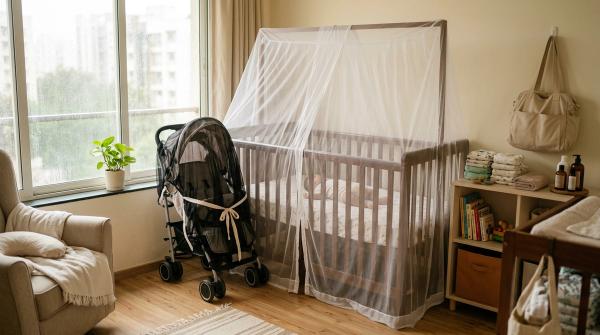
#Mesh crib liners are often sold as a “safer” or “breathable” alternative to padded bumpers.
And it is easy to see why parents consider them. They look lighter. They seem less bulky. Many parents choose them because they worry about little arms or legs slipping through crib slats.
But mesh crib liner safety is still a concern.
Even if mesh allows more airflow than thick padding, it still adds material to the crib. It can loosen, shift, bunch up, or create gaps. It may also have ties or fasteners. Babies can still get wedged, tangled, or trapped.
Why mesh liners are not the safer compromise
#They still create a barrier.A bare crib has open rails and airflow. A mesh liner changes that sleep space.
They can loosen or shift.If the bottom edge lifts or the liner moves out of place, a baby may slip between the liner and the mattress or crib side.
They often use ties or attachments.Ties, strings, and fasteners near a sleeping baby are not ideal.
They may become a climbing aid later.As babies grow and start standing, a liner or bumper-like product may become something they push against or step on.
So in the crib bumper vs mesh liner debate, mesh may look like the gentler option, but it is still not the recommended safe-sleep choice.
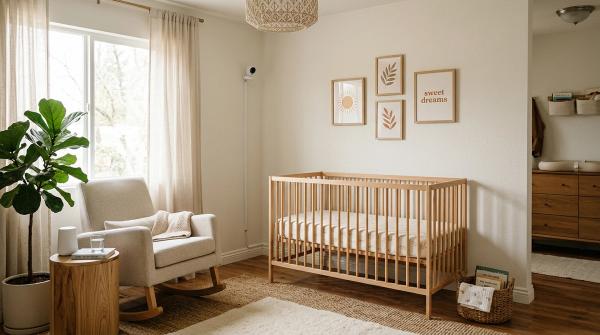
What does a safe empty crib look like?
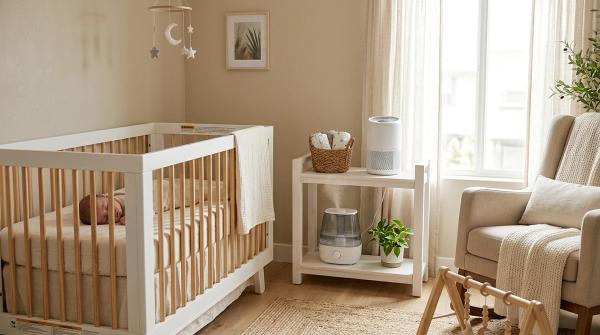
#A safe empty crib setup is beautifully simple:
- A safety-compliant crib
- A firm, flat mattress that fits snugly
- A tight fitted sheet
- No crib bumper
- No mesh liner
- No pillow
- No loose blanket
- No stuffed toy
- No cushion
- No bolster
- No sleep positioner
- No decorative bedding inside the crib
It may not look like a styled nursery photo, and that’s okay.
For sleep, boring is good.
If your baby moves, rolls, or turns during sleep, there is no soft bumper to press into, no loose blanket to pull over their face, no tie to catch around their neck, and no liner to wedge against.
For warmth, use suitable baby sleep clothing or a wearable blanket designed for sleep instead of loose blankets.
But what if my baby hits the crib rails?
#This is one of the most common worries parents have.
You hear a thump, your baby cries, and your first instinct is, “I need to pad the crib.”
That reaction makes sense. Adults associate padding with protection.
But babies moving around in a crib usually do not create the kind of force that requires padded crib bumpers. A bump may be upsetting. It may wake them. It may wake you. But padded bumpers introduce more serious risks than the occasional bump against crib rails.
The safer trade-off is still:
No bumper. No mesh liner. No soft barrier.
What if my baby’s arm or leg gets stuck between the slats?
#This can happen.
A baby’s arm or leg may slip between crib slats, and they may cry until you gently help them out. At 2 a.m., that can feel stressful and frustrating.
But in most cases, a briefly stuck arm or leg is less dangerous than adding soft barriers, ties, or loose fabric to the crib.
When buying a crib, choose one that meets current safety standards in your country. Check that the slats are properly spaced, the crib is sturdy, and the mattress fits snugly with no large gaps around the edges.
If you are shopping in India or buying from international marketplaces, read the product details carefully. Do not rely only on nursery photos, because many styled images show bumpers, pillows, quilts, and cushions that should not be used for infant sleep.
India-aware buying note: don’t let bedding sets decide your crib setup
#In many markets, including India, crib bedding is often sold as a matching set.
You may see a package that includes a fitted sheet, pillow, quilt, bumper, bolsters, and decorative cushions. Some are marketed as luxury nursery essentials or complete baby bedding sets.
But your baby does not need most of those items inside the crib for sleep.
If a set includes bumpers, pillows, quilts, bolsters, loose blankets, or decorative cushions, keep them out of the sleep space. You may use the fitted sheet if it fits the mattress tightly and safely, but the crib itself should stay empty when your baby is sleeping.
This can also help when explaining your choice to grandparents, relatives, or caregivers. You can say:
“It looks lovely, but current safe-sleep advice is to keep the crib empty. We’re using only the firm mattress and fitted sheet.”
Simple. Calm. No blame.
Checklist for a safer crib setup
#Use this checklist when setting up the crib for the first time, after cleaning, after travel, or whenever someone else has prepared the nursery.
- Use a firm, flat mattress. It should not sag, dip, or feel plush.
- Check the mattress fit. It should sit snugly in the crib, with no large gaps at the sides.
- Use only a tight fitted sheet. The sheet should not bunch up, loosen, or pull off easily.
- Remove padded crib bumpers. Do not tie them inside the crib.
- Remove mesh crib liners. Do not use them as a “breathable” compromise.
- Remove pillows, quilts, cushions, bolsters, and loose blankets.
- Remove stuffed toys and decorative items before sleep.
- Use sleep clothing instead of loose bedding. Choose clothing that suits the room temperature.
- Keep cords away. Place the crib away from curtain cords, blind cords, charging cables, electrical wires, and monitor cords.
- Recheck after others help. If grandparents, house help, relatives, or caregivers make the crib, check that nothing extra has been added.
- Follow the crib manual. Use the crib and mattress as instructed by the manufacturer.
- Ask for help if unsure. Contact your pediatrician or an official child health support service for guidance.
Quick recheck before every sleep
#Before naps and bedtime, do a quick 10-second scan:
Firm mattress?Fitted sheet tight?Baby on a clear sleep surface?No bumper, no mesh liner, no pillow, no blanket, no toy?No cords or loose fabric nearby?
If yes, you are closer to the safest setup.
Related AllBlogs reads
#If you are setting up a full nursery, these existing AllBlogs guides pair well with this checklist:
- Crib Mattress vs Bassinet vs Bedside Sleeper
- Sleep Sack vs Swaddle vs Blanket
- Baby Monitor Placement Checklist
Final answer: what should new parents choose?
#Choose the empty crib.
Avoid padded crib bumpers. Avoid mesh crib liners too. The safest everyday sleep setup is a firm, flat mattress with a tight fitted sheet and no extra items in the crib.
It may not look like a magazine nursery, but that is perfectly fine.
A clear, simple crib is safer for your baby’s sleep.