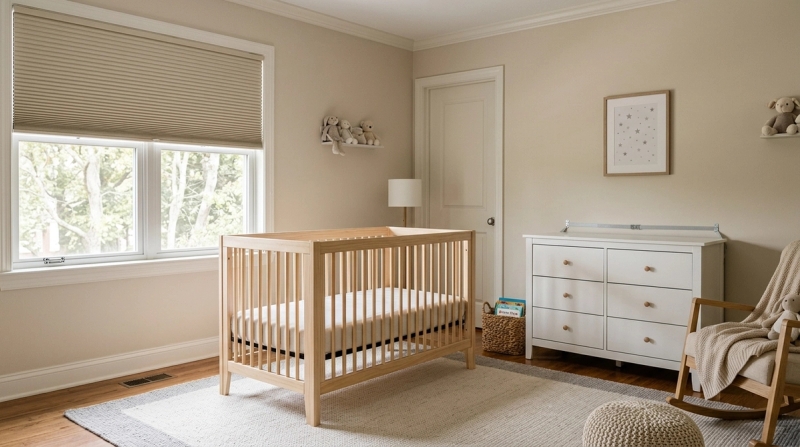
The safest nursery window setup is simple: remove reachable blind cords, stop windows from opening wide enough for a child to fall, never count on a screen for protection, and keep the crib and climbable furniture away from windows. Then keep the crib itself clear: firm, flat mattress, fitted sheet, and no loose items.
Safety note: This article is for general education only. It is not medical advice, a product inspection, or a replacement for guidance from official safety agencies, your pediatrician, your landlord or building management, or local code officials. If you or your child are in immediate danger, call local emergency services.
Setting up a nursery can be sweet, exciting, and honestly a little stressful.
You might be choosing paint colors, measuring for curtains, trying to figure out where the crib looks best, and wondering whether the room gets too much sun in the afternoon. If you rent, there may be another layer of questions: Can you replace the blinds? Can you install a lock? Are you even allowed to drill into the wall?
It is a lot.
The good news is that nursery window safety does not require a perfect designer room. It comes down to a few practical checks: cords, window openings, screens, furniture placement, and safe sleep.
Use this checklist for a nursery, shared bedroom, apartment nursery, grandparent’s house, or any room where your baby sleeps or spends time.
Quick Nursery Window Safety Checklist
#Before you hang curtains, place the crib, or decorate around the window, do this quick walk-through.
- Check every blind, shade, curtain, and tieback for reachable cords.
- Replace corded blinds or shades with cordless window coverings when possible.
- Keep any remaining cords, loops, or chains completely out of reach.
- Install window stops, childproof window locks, or window guards where needed.
- Make sure windows cannot open wide enough for a child to fall through.
- Do not rely on window screens. Screens keep bugs out, not children in.
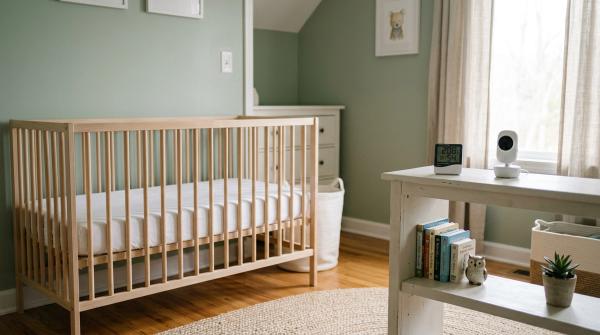
- Place the crib at least 3 feet away from windows.
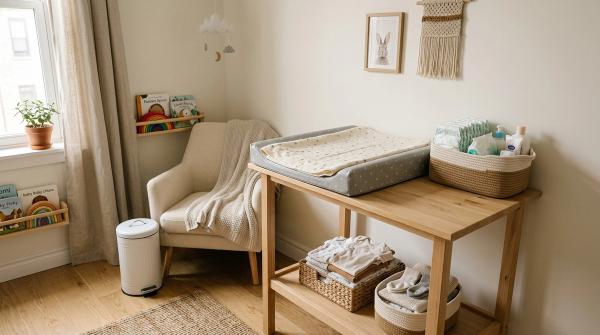
- Keep dressers, changing tables, chairs, toy bins, and bookshelves away from windows.
- Anchor furniture that a child could climb.
- Use a firm, flat crib mattress with a fitted sheet only.
- Keep pillows, blankets, bumpers, stuffed animals, and loose bedding out of the crib.
Now let’s go through each part more carefully.
1. Start With Blinds, Shades, and Cords
#Blind cords are easy to stop noticing.
They hang there every day. You open the blinds, close them, tuck the cord behind the curtain maybe, and move on. But for babies and toddlers, cords can be extremely dangerous.
The U.S. Consumer Product Safety Commission, or CPSC, describes corded window coverings as a hidden child hazard. And it is not just the long pull cord that is easy to see. Continuous cord loops, beaded chains, and some inner cords can also be risky if a child can reach them.
So before you worry about whether the curtains match the rug, check the cords.
What to look for
#Go to each window in the nursery and look for:
- Long pull cords on blinds or shades
- Continuous loop cords or chains
- Beaded chains
- Cords tucked behind curtains
- Inner cords that can be pulled loose
- Cord cleats that are installed but not always used
- Furniture that makes cords easier to reach
- Curtains, tiebacks, or fabric hanging near the crib
A cord that seems “out of reach” for a newborn may not stay that way for long. Babies change quickly. One day they are barely rolling over, and suddenly they are pulling up, reaching, grabbing, and surprising you with what they can get into.
Best choice: cordless blinds or shades
#For a nursery, cordless blinds or cordless shades are the safest choice.
They remove the cord hazard instead of relying on adults to wrap, tie, shorten, or tuck cords every single time. That matters because real life gets busy. People forget. A grandparent may not know your system. A babysitter may open the blinds and leave the cord hanging without realizing it.
If you are buying new window coverings, choose products that operate without accessible cords. This is especially important in bedrooms, playrooms, and anywhere a child may be during naps or quiet time.
Cordless window coverings make the room simpler and safer.
If you cannot replace corded blinds right away
#Not every family can replace blinds immediately. Maybe you rent. Maybe the blinds came with the apartment. Maybe replacing them is not in the budget this month.
If that is where you are, take temporary steps while you work toward a better long-term fix.
- Keep cords high and completely out of reach.
- Use cord cleats or cord wraps if they are already installed.
- Secure cords every time the blinds are opened or closed.
- Move the crib, changing table, chairs, and storage away from the window.
- Ask your landlord or building manager about switching to cordless blinds.
- Treat cord tie-ups as temporary, not a permanent solution.
Cord cleats can help, but only if adults use them correctly every time. Cordless blinds or shades are still the better long-term answer for a child’s room.
2. Use Window Stops, Locks, or Guards
#A window screen can look sturdy. It may even feel tight if you press on it.
But a screen is not designed to stop a child from falling.
The CPSC is clear about this: window screens do not prevent falls. They are there to keep insects out, not to hold a child’s weight.
If a nursery window can open wide enough for a child to fit through, it needs another layer of protection. Usually that means one of these:
- A window stop or childproof window lock that limits how far the window can open
- A properly installed window guard designed for child safety
Window stops and childproof window locks
#Window stops and childproof locks help keep a window from opening too far. A common safety goal is to keep windows from opening more than 4 inches where a child could fall.
These can be useful when you want fresh air but do not want the window open wide enough for a baby or toddler to slip through.
Before using a window stop or lock, make sure:
- It fits your exact window type.
- A child cannot easily remove, push, or open it.
- Adults can still open the window when needed.
- It does not block required emergency escape access.
- It stays secure after normal window use.
Different windows may need different products. A sliding window, double-hung window, and casement window do not all work the same way, so check the product instructions carefully.
Window guards for babies and toddlers
#Window guards are barriers that go across a window opening. They are often made of metal bars or grids and are designed to help prevent falls.
If you use window guards:
- Choose guards made specifically for child safety.
- Follow the manufacturer’s installation instructions.
- Make sure the guard fits the window properly.
- Use hardware-mounted guards when required.
- Check them regularly to make sure they are still secure.
Do not assume decorative bars or security bars are the same as child-safety window guards. They may not be designed, spaced, or installed for fall prevention.
Do not forget fire safety
#Bedroom windows may be needed for emergency escape or rescue. Any guard, stop, or lock used on a bedroom window should still allow an adult to open it quickly in an emergency where required.
If you live in an apartment or rental, check with your landlord, building manager, or local housing authority before installing hardware. The goal is to make the window safer without blocking a required emergency exit.
3. Keep the Crib Away From Windows
#A crib under a window can look beautiful in photos.
In real life, it is usually not the safest spot.
Babies should not be able to reach window-related hazards from the crib, including:
- Blind cords
- Curtains
- Tiebacks
- Window glass
- Window locks
- Window sills
- Drapery rods or hardware
- Strong drafts
- Direct sunlight
A safer rule is to place the crib at least 3 feet away from windows.
That extra space helps keep your baby away from cords, curtains, glass, and hardware. It also makes it harder for an older baby or toddler to climb toward the sill.
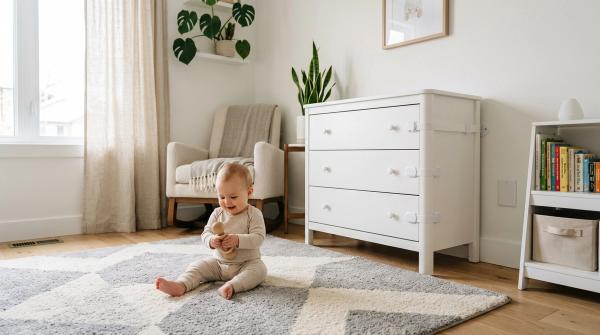
Nursery furniture placement guide
#One helpful trick: get down on your hands and knees and look at the room from your child’s level.
What could they reach? What could they climb? What could they pull? If a chair, dresser, toy bin, or shelf creates a path to the window, move it.
It may not be the layout you first imagined, but safer is better than picture-perfect.
4. Set Up the Crib for Safe Sleep
#Once the crib is away from the window, check what is inside the crib too.
Window safety and safe sleep go together because the crib should be a simple, clear sleep space.
The American Academy of Pediatrics and CDC safe sleep guidance focuses on:
- A firm, flat sleep surface
- A fitted sheet
- No loose items in the sleep area
That means no:
- Pillows
- Loose blankets
- Comforters
- Bumper pads
- Stuffed animals
- Decorative cushions
- Loose bedding
- Unsecured fabric
For warmth, use appropriate baby sleep clothing or a wearable blanket made for infant sleep.
Also look above and around the crib. Mobiles, shelves, picture frames, wall decor, curtain cords, and hanging decorations should be far enough away that your baby cannot grab them now or as they grow.
Babies have a way of learning new skills right when you think you still have time.
5. Window Safety Tips for Apartments and Rentals
#Babyproofing a rental can feel tricky.
You may not be able to replace blinds, drill into window frames, or install permanent hardware without permission. But that does not mean you have no options.
Start by asking in writing
#If your rental has corded blinds or windows that open wide, contact your landlord or building manager. Keep the message simple and specific.
You can ask:
- Can we replace the corded blinds with cordless blinds and store the originals?
- Are childproof window locks available for this building?
- Are window guards allowed or required in units with young children?
- What installation methods are allowed?
- Are there rules about bedroom window emergency access?
- Can we install furniture anchors for child safety?
Put the request in writing. It gives everyone a clear record and helps avoid confusion later.
Look for low-impact options, but choose carefully
#Depending on your lease and your window type, you may be able to use:
- Track-mounted window stops
- Window wedges
- Childproof locks that fit the existing window track
- Cordless tension shades, if appropriate
- Cord cleats or cord wraps as a short-term step
The key is fit. A safety product that does not fit your window well can give you a false sense of security.
If it wiggles loose, pops out, or can be removed by a curious toddler, it is not enough.
Renter-friendly should not mean child-removable
#Some babyproofing products are easy to install, but also easy for children to loosen, push out, or climb around.
That may be fine for a cabinet you check constantly. It is not good enough for a higher-risk window.
If a window is low, opens wide, or is above ground level, ask about properly installed guards, stops, or locks. A light temporary fix may not provide enough protection.
Anchor furniture, even if you rent
#Dressers, bookshelves, and other climbable furniture should be anchored to the wall.
Yes, even in rentals.
If your lease limits wall holes, ask your landlord for written permission to install safety anchors. Small holes can usually be repaired later. An unsecured dresser in a child’s room is a much bigger risk.
Follow the anchor manufacturer’s instructions, and check anchors regularly to make sure they remain tight and secure.
6. Check the Rest of the Home Too
#Your baby may sleep in the nursery, but babies do not stay in one room forever.
Once the nursery is safer, do a quick window check throughout the rest of the home.
Look at:
- Your bedroom, especially if the baby naps or sleeps there
- Living room windows near sofas or chairs
- Dining chairs near windows
- Balcony or patio door coverings
- Play areas
- Grandparent or caregiver rooms
- Rooms with low windows
- Rooms with furniture under windows
- Any place your child spends unsupervised or semi-supervised time
The same basic rules apply everywhere: remove cord hazards, limit window openings, do not rely on screens, and keep climbable furniture away from windows.
7. Simple Safety Reminders From Official Sources
#When everything feels like too much to remember, come back to these basics:
- CPSC on cords: Corded window coverings are a hidden child hazard.
- CPSC on screens: Window screens do not prevent falls.
- AAP and CDC on safe sleep: Use a firm, flat sleep surface with a fitted sheet and keep loose items out of the sleep area.
- Health Canada nursery guidance: A safer nursery includes a safe sleep space and careful attention to room setup and products.
- HealthyChildren.org checklist approach: Every home is different, and checklists can help families spot common hazards.
You do not need a perfect nursery.
You need a safer one.
Start with the hazards that could cause the most harm, then keep improving as your baby grows and your home changes.
Final Nursery Window Safety Checklist
#Use this as one last walk-through before your baby sleeps in the room.
Blinds and cords
#- No reachable blind cords, loops, chains, or beaded cords
- Cordless blinds or shades installed where possible
- Cord cleats or wraps used only as a temporary step
- Crib and furniture moved away from window coverings
- Curtains and tiebacks kept out of reach
Windows
#- Windows cannot open more than 4 inches where a child could fall
- Window stops, locks, or guards installed where needed
- Screens are not treated as fall protection
- Bedroom windows still allow adult emergency access where required
- Locks, stops, and guards are checked regularly
Crib and sleep space
#- Crib is at least 3 feet from windows
- Firm, flat sleep surface
- Fitted sheet only
- No pillows, blankets, bumpers, stuffed animals, or loose bedding
- No reachable cords, curtains, mobiles, shelves, or wall decor
Furniture
#- Dressers anchored to the wall
- Bookshelves anchored to the wall
- Changing table away from windows
- Chairs and gliders away from window sills
- Toy bins and storage cubes not placed under windows
- No furniture creates a climbing path to a window
Rental or apartment setup
#- Landlord contacted about cordless blinds, locks, stops, or guards
- Written approval requested for needed hardware
- Window solution fits the actual window type
- Furniture anchoring plan approved or documented
- Temporary products checked often for looseness or failure