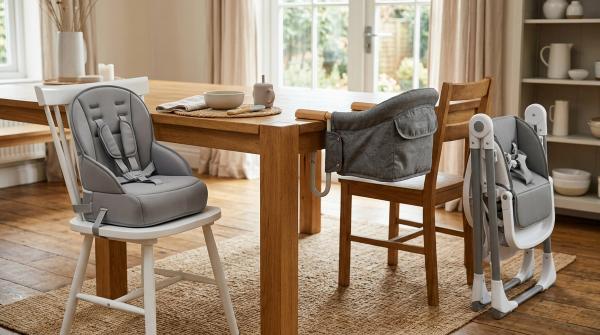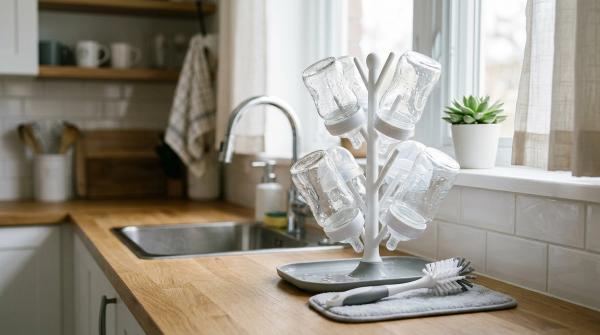
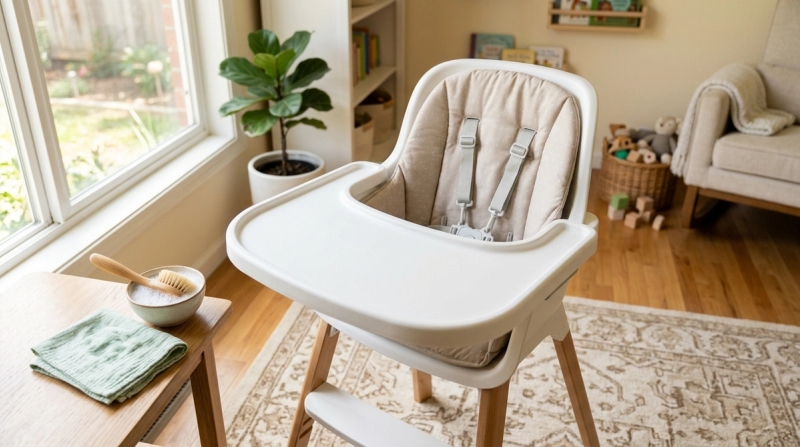
A high chair cleaning checklist does not have to be fancy. Most of the time, it comes down to this: wipe the tray and seat after meals, clean the straps and hidden corners once a week, and do a proper safety check every month.
You do not need a cupboard full of special products either. Warm water, mild dish soap, a microfiber cloth, a soft toothbrush, and a dry towel will handle most high chair messes. If you still have your product manual, keep it nearby. It is genuinely useful, especially before soaking straps, washing covers, using disinfectant, or putting tray parts in the dishwasher.
Because high chairs get messy fast. Banana dries like cement. Yogurt disappears into buckles. Rice, khichdi, toast crumbs, and tiny fruit pieces somehow end up under the tray latch and stay there until you discover them days later.
This guide is for practical baby feeding chair cleaning at home, in small apartments, and even when you are staying with family. It is not a replacement for your high chair manual, CPSC safety information, or advice from your pediatrician.
Why High Chair Hygiene Matters
#Your baby’s high chair tray is basically a plate some days. Babies eat from it, drop food on it, pick food back up from it, touch everything with sticky hands, and sometimes chew the tray edge, straps, or buckle too.
CDC guidance for infant feeding items generally focuses on washing feeding surfaces and items with soap and water, rinsing well, and letting them air-dry on a clean surface. For a high chair, that means the tray, seat, straps, seams, buckle area, and hidden corners all deserve attention, not just the big visible part of the tray.
Cleaning is also a good time for quick high chair maintenance. The U.S. Consumer Product Safety Commission, or CPSC, has safety rules for high chairs that focus on reducing falls and tip-over risks, including restraint systems and stability. At home, you can turn that into a simple habit: while you clean, check that the chair still feels sturdy and the straps still work properly.
Daily, Weekly, and Monthly High Chair Cleaning Checklist
#If your baby is going through a “throw every bite on the floor” phase, you may need to do the weekly clean more often. That is normal. Very annoying, but normal.
What You Need
#Keep your cleaning kit simple:
- Warm water
- Mild dish soap
- Microfiber cloths
- Soft toothbrush or small nylon-bristle brush
- Vacuum with a small attachment, if you have one
- Clean dry towel
- Baby-safe disinfectant, only if it suits the chair material and you follow the label
- Your product manual
Try not to guess with removable parts. Some trays, covers, and straps can be washed in specific ways. Others can warp, weaken, shrink, or trap water if cleaned incorrectly.
How to Clean High Chair Straps
#High chair straps collect everything: milk, fruit puree, dal, yogurt, crumbs, drool, and sticky little handprints. Since they sit close to your baby’s body, clean them gently and dry them well.
1. Check the manual first
#Before removing, soaking, or washing straps, check what your model allows. Some high chair safety straps are removable and washable. Others are fixed to the chair and should only be spot-cleaned.
2. Remove loose crumbs
#Start dry. Use a cloth, soft brush, or vacuum attachment to remove crumbs from the strap webbing and around the buckle. This helps stop food from turning into mush when you add water.
3. Spot-clean with mild soap
#Dip a cloth or soft toothbrush in warm soapy water. Gently scrub along the straps, especially near the buckle, crotch restraint, and folded webbing.
Avoid bleach, harsh cleaners, and rough scrubbing. You want to remove food, not damage the strap fibers.
4. Wipe away soap
#Use a clean damp cloth to remove any soap left behind. Soap residue can irritate your baby’s skin or make the straps feel stiff.
5. Dry completely
#Press the straps with a dry towel, then let them air-dry fully before using the chair again. In humid weather, place the chair under a fan or in a well-ventilated room.
Safety Strap Checks While Cleaning
#When you clean high chair straps, take an extra 30 seconds to check that they are still safe.
Look for:
- Fraying, thinning, or torn stitching
- Buckles that do not click securely
- Food stuck inside buckle openings
- Straps twisted around the seat or frame
- Loose attachment points
- A crotch restraint and waist restraint that sit correctly when your baby is seated
CPSC high chair safety standards include restraint systems because falls are one of the main high chair hazards. Use the restraint system as directed by the manufacturer every time your baby sits in the chair, even if it is just for a quick snack.
If any strap, buckle, or attachment point looks damaged, stop using the chair until you check the manual or contact the manufacturer.
How to Clean a High Chair Tray
#The tray usually gets the most obvious mess, but the underside is often worse. The latch area can hide a surprising amount of old food too.
Daily tray clean
#After every meal:
- Remove leftover food.
- Wash or wipe the tray with warm water and mild dish soap.
- Rinse, or wipe again with a clean damp cloth.
- Dry with a clean towel or let it air-dry.
If your tray has a removable top insert, check the manual before putting it in the dishwasher. Some inserts are dishwasher-safe, but the main tray or latch area may not be.
Weekly tray deep clean
#Once a week, or sooner after a very messy meal:
- Remove the tray from the chair.
- Scrub the underside, edges, and corners.
- Clean around latch buttons and sliding rails.
- Check for food stuck inside seams or grooves.
- Dry the tray before putting it back.
Avoid soaking trays with enclosed latch mechanisms unless the manual says it is safe. Some designs can trap water inside, which can lead to smells or other problems.
Hidden Food Traps Parents Often Miss
#Food does not only land where you can see it. During your weekly clean, check these sneaky spots:
- Under the tray lip
- Inside tray latch grooves
- Around buckle slots
- In strap folds
- Under the seat cushion
- Along seat seams
- Around folding hinges
- Near recline buttons or height-adjustment points
- On the footrest
- Between the legs and lower frame bars
- Around wheel locks, if your chair has wheels
A soft toothbrush is perfect for these areas. For dry crumbs, brush or vacuum first. Then wipe with a damp cloth and a little soapy water if needed.
Frame, Stability, and CPSC-Informed Safety Checks
#Cleaning day is the easiest time to notice if something feels loose, sticky, or not quite right.
CPSC high chair safety rules include requirements related to stability and restraint systems. For everyday home use, add these checks to your monthly routine:
- Place the chair on a flat surface and check if it wobbles.
- Make sure folding locks or height locks are fully engaged.
- If the chair has wheels, check that the wheel locks work.
- Check that the tray attaches securely and does not pop loose.
- Make sure the waist and crotch restraints fasten properly.
- Look for cracked plastic, sharp edges, loose screws, or bent parts.
- Keep the chair away from counters, tables, or walls your child could push against, especially if your manual warns about it.
Do not loosen or remove safety parts just to clean them unless the manual tells you exactly how to reinstall them.
India-Aware Notes: Heat, Humidity, and Monsoon Care
#In many Indian homes, especially during summer and monsoon months, high chair mold can become a real issue. Heat, humidity, damp cushions, and poor airflow can make straps and padded seats stay wet for too long.
A few small habits help:
- Dry straps fully after cleaning, especially during monsoon.
- Do not leave wet cushions folded or stacked.
- Use a fan to dry cleaned parts when sunlight is not available.
- Check under seat pads weekly for dampness or mildew marks.
- Wipe the chair dry after washing the floor around it.
- In small apartments, avoid storing the high chair in a closed balcony corner while it is still damp.
If you see mold on fabric, straps, or padding, check the product manual for cleaning instructions. Do not use strong chemicals on safety straps unless the manufacturer allows it.
Cleaning Mistakes to Avoid
#1. Using harsh cleaners on food-contact areas
#Strong, heavily scented cleaners can leave residue on the tray or seat. For everyday high chair hygiene, warm water and mild dish soap are usually enough. If you use a disinfectant, choose one suitable for baby items and follow the label, including rinse and drying instructions.
2. Soaking straps without checking the manual
#Some straps can be removed and washed. Others should not be soaked or machine-washed. If you are not sure, spot-clean instead.
3. Forgetting to dry everything
#Moisture trapped in straps, cushions, tray latches, and folding joints can lead to smells, stains, or mold. Drying is part of cleaning, not an optional extra.
4. Scrubbing buckles with sharp tools
#Avoid knives, pins, metal skewers, or anything that can damage plastic or fabric. A soft brush or cloth is much safer.
5. Putting every tray in the dishwasher
#Some tray inserts are dishwasher-safe. Some are not. Heat can warp plastic or affect latch parts, so check the manual first.
6. Cleaning but skipping the safety check
#A spotless chair is not enough if the buckle is jammed, the chair wobbles, or the tray does not lock securely. Build quick safety checks into your cleaning routine.
Quick Reset After Each Meal
#When you are tired, keep it basic:
- Remove leftover food.
- Wipe the tray.
- Wipe the seat and footrest.
- Check the buckle area for food.
- Dry wet spots.
- Leave the tray slightly separated to air-dry, if your manual allows.
That tiny routine prevents most sticky buildup. Not all of it, because babies are babies, but most of it.