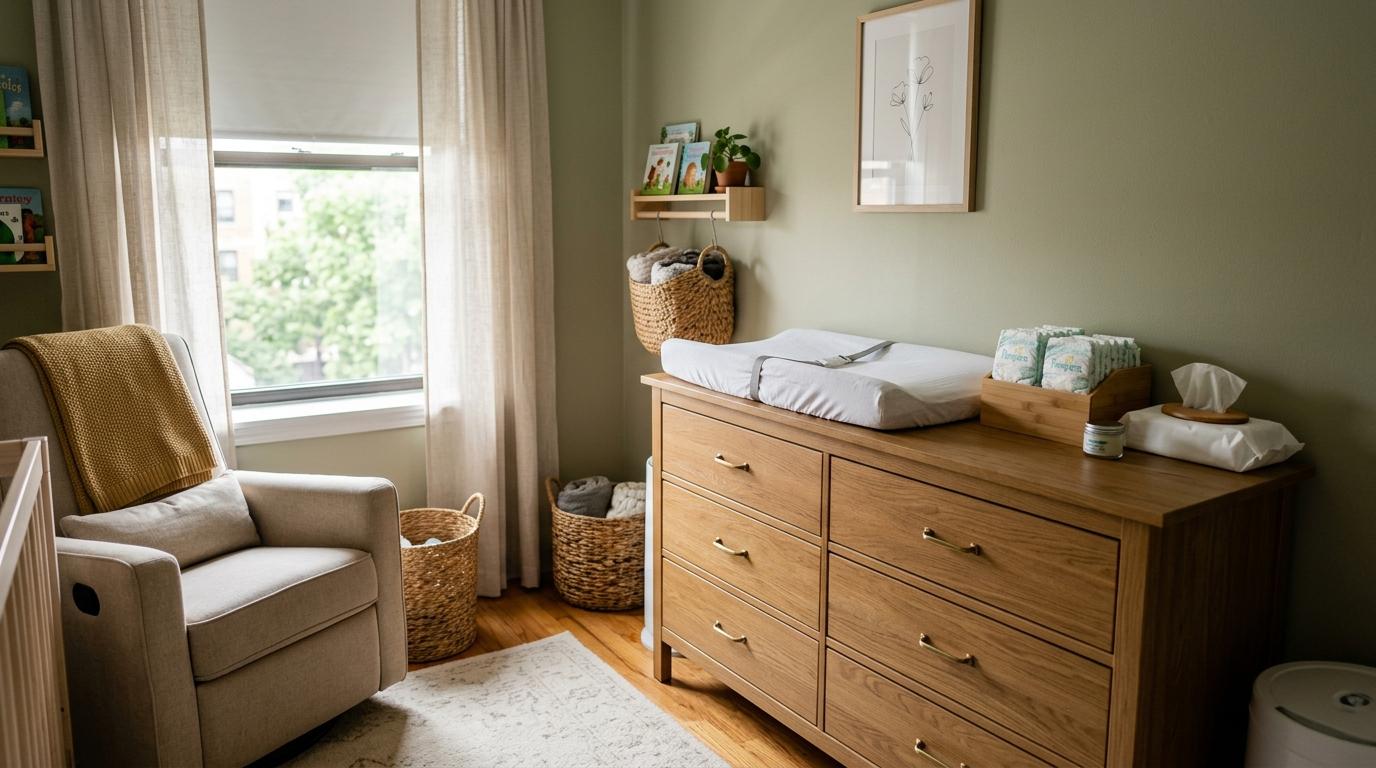
If you’re choosing between a changing table vs changing pad, here’s the short answer: most new parents will be happier with a sturdy dresser and a properly secured changing pad on top. It saves space, usually costs less, and the dresser keeps being useful long after diapers are done. A standalone changing table can still be great if you have the room and really want a dedicated diaper changing station, but the name of the furniture matters less than whether the setup is safe, stable, and easy to use.
The Honest Truth About Diaper Changes
#You’re going to change more diapers than you can currently imagine: morning diapers, night diapers, and rushed changes when you are tired. So the goal is not a catalog-perfect nursery. The goal is a safe, simple and predictable place to change your baby.
For some families, that means a standalone changing table. For many others, especially apartment families, renters, or anyone trying not to buy too much baby gear, it means using a changing pad for dresser setup.
Under CPSC rules, baby changing products are generally intended to support and retain a child up to 30 pounds in a horizontal position during diaper changes. The U.S. safety standard is found in 16 CFR Part 1235, which incorporates ASTM F2388-21 for baby changing products. These standards address risks such as falls, instability, structural failure, entrapment, and suffocation hazards.
In normal parent language: whatever setup you choose should be stable, properly assembled, used exactly as the manufacturer says, and never used as a sleep space.
Changing Table vs Changing Pad: Quick Comparison
#What Is a Standalone Changing Table?
#A standalone changing table is a separate piece of baby furniture made specifically for diaper changes. It usually has a changing surface on top and shelves or drawers underneath.
The big benefit is convenience. Everything has one job. Diapers, wipes, cream, spare clothes, burp cloths and muslins can all live in one place. Some parents love open shelves because they can grab what they need quickly while keeping one hand on the baby.
The downside is that it takes up its own space. In a small bedroom, apartment nursery, or shared room, that extra footprint can start to feel annoying fast. Once your child is out of diapers, a changing table may not have much of a role anymore.
A standalone changing table can make sense if you have enough room, like open shelves, do not already need a dresser, can assemble and anchor it correctly, and are comfortable with its shorter useful life.
One important thing to remember: a changing table is not automatically safer just because it is called a changing table. Safety still depends on stability, correct setup, proper use and supervision every single time.
What Is a Changing Pad for Dresser Use?
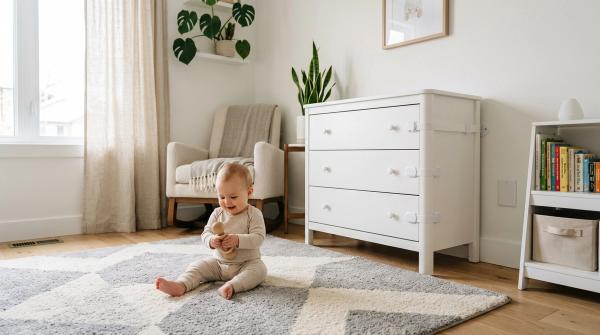
#A changing pad for dresser use is a pad or changing surface placed on top of a dresser. It should be secured according to the manufacturer’s instructions. That may mean straps, hardware, a fitted changing topper, a non-slip approved base, or another recommended attachment method.
For many homes, this is the most practical nursery changing setup. You probably need storage anyway, and a dresser can hold baby clothes, diapers, wipes, blankets, swaddles, creams and the tiny things that somehow take over an entire room.
Then, when the diaper stage ends, you remove the pad and keep using the dresser. That is the beauty of it: one piece of furniture does two jobs.
A changing pad on a dresser can be a good choice if the dresser is sturdy, flat and wide enough for the changing pad; the pad is secured exactly as recommended; the dresser is anchored to reduce tip-over risk; the height feels comfortable; and supplies are easy for you to reach but not easy for the baby to grab.
The key phrase is secured changing pad. A loose pad sitting on top of a smooth dresser is not a safe diaper changing station if it can slide, tip or shift.
So, Which One Should New Parents Buy?
#For most new parents, especially renters and families in smaller homes, the better choice is:
A sturdy dresser with a properly secured changing pad or changing topper.
It saves space, usually saves money, and stays useful after diapers are done. It also helps you avoid overbuying, which is very easy to do before the baby arrives. Baby shopping has a way of convincing you that every single item is essential. Many of them are not.
A standalone changing table makes more sense if you have a roomy nursery, love open storage, and want a dedicated diaper changing station from day one. It can be convenient. It just falls more into the “nice to have” category than the “must have” category.
If you are still unsure, ask yourself one simple question: Will this furniture still be useful when diapers are done? If the answer is no, a changing pad for dresser use is probably the more practical buy.
Baby Changing Table Safety Checklist
#Use this checklist whether you choose a standalone changing table, a dresser with a changing pad, or another approved changing product.
- Check for CPSC and ASTM safety compliance. Look for baby changing products that meet federal safety requirements under 16 CFR Part 1235 and ASTM F2388-21.
- Anchor the furniture. A changing table or dresser should be stable and anchored according to the manufacturer’s instructions.
- Secure the changing pad. Follow instructions for straps, screws, toppers, non-slip bases, or any approved attachment method.
- Keep one hand on your baby. Safety straps and raised sides can help, but they do not replace supervision.
- Keep supplies within reach. Diapers, wipes, cream, a spare outfit and a place for the dirty diaper should be ready before you start.
- Watch for gaps and entrapment hazards. If you use a framed topper or changing tray, the pad should fit properly.
- Respect the weight limit. CPSC guidance describes baby changing products as intended for a child up to 30 pounds, but always follow your product manual.
- Never use a changing surface for sleep. Changing tables, changing pads and dresser-top changing stations are only for diaper changes.
- Avoid damaged or incomplete gear. Do not use products with missing hardware, cracked parts, loose screws, torn straps, unstable legs, or unclear assembly instructions.
Apartment Nursery Ideas: Small-Space Setups That Actually Work
#Small homes need baby gear that earns its space. If you live in an apartment, studio, shared bedroom, or rented flat, a full standalone changing table may feel like too much furniture too soon.
Use a dresser as the main diaper changing station
#This is usually the best small-space solution. Choose a sturdy dresser with a flat top, then add a compatible changing pad or changing topper. Store diapers, wipes, creams and spare clothes in the top drawers.
Everything stays in one footprint, which is exactly what you want when looking for realistic apartment nursery ideas.
Keep a small diaper caddy nearby
#A diaper caddy can hold diapers, wipes, cream and maybe a spare outfit. It makes it easier to reset the station and move supplies between rooms if needed. The caddy is just for organization, though. It is not a substitute for a safe, stable changing surface.
Do not overcrowd the room
#If a changing table blocks wardrobe doors, walking space, or access to the cot, it will become frustrating quickly. In a small room, open floor space matters more than you think. A dresser with a secured changing pad usually gives you more flexibility.
Think about adult height
#You will use this setup many times a day. If the surface is too low, your back may complain. If it is too high, changing the baby can feel awkward or unsafe. Choose a height that lets you stay close without stretching or hunching too much.
India-Aware Tips for Renters and Urban Homes
#Many Indian homes, especially in cities, have compact bedrooms, built-in wardrobes and limited extra floor space. In that kind of setup, a separate changing table can become an obstacle very quickly. A dresser plus a secured changing pad is often the better fit.
If your room already has built-in storage, you may not need a large dresser. In that case, think carefully about whether you have another stable, appropriate surface that can safely hold a changing pad according to the manufacturer’s instructions. Avoid narrow, wobbly, or makeshift furniture.
Open shelves look convenient, and sometimes they are. But they also collect dust. In busy urban homes, closed drawers or covered storage can be easier to keep clean and tidy.
Fabric changing pad covers may need frequent washing. In humid weather or during monsoon season, drying time can be slow. A wipe-clean changing pad can be easier to maintain, as long as it is used according to the manufacturer’s instructions and cleaned regularly.
If you rent, you may not want to drill into the walls. But a dresser or changing table still needs to be stable and used as instructed. Check the product manual, speak to your landlord if needed, and choose furniture that can be secured properly.
When a Standalone Changing Table Is Worth It
#A standalone changing table may be worth buying if you have a spacious nursery, want a separate diaper changing area, like open shelves, prefer its height, can assemble and anchor it correctly, and are fine with the fact that it may have a shorter useful life.
For some parents, the convenience is real. Having everything visible and ready to grab can make changes feel smoother. Just try not to buy one because you think every nursery is “supposed” to have one.
When a Changing Pad on a Dresser Is the Better Buy
#A changing pad on a dresser is usually better if you live in an apartment or smaller home, are renting, want fewer pieces of furniture, already need clothing storage, want the setup to grow with your child, prefer closed drawers, or are trying to avoid overbuying.
This setup works because it turns normal furniture into a temporary diaper changing station. When diaper days are over, you remove the pad and keep the dresser. That means one less thing to sell, store, or regret buying later.
Changing Table Alternatives: What to Be Careful About
#Some families look for changing table alternatives to save money or space. That makes sense. But the same safety rules still apply.
A safe alternative should be stable, flat, used according to product instructions, comfortable for the adult, free of gaps that could create entrapment risks, set up with supplies within reach, used only for diaper changes, and never used as a sleep surface.
Be careful with soft beds, sofas, unstable tables, narrow counters, or loose pads on slippery furniture. They may feel convenient in the moment, but they can increase fall risk or make it harder to manage a squirmy baby.
If you want a very minimal setup, a portable changing mat on the floor can work for some families because there is no high surface to fall from. But it may be uncomfortable for frequent changes, and it still needs to be clean, clear and used only for diaper changing.
The Best Setup for Most Families
#For most families, the best middle-ground option is simple:
A sturdy, anchored dresser with a properly secured changing pad, plus organized supplies within arm’s reach.
That gives you a safer diaper changing station, better use of space, storage that stays useful, less baby gear to deal with later, and a nursery changing setup that works well in apartments and rented homes.
If you have the room and really want a dedicated changing station, a standalone changing table can be convenient. But if you are trying to buy only what you actually need, the changing pad for dresser setup usually wins.