Short answer: If you’re choosing between a baby walker vs activity center, skip the traditional sit-in baby walker. It may look helpful, but it can be risky because babies can move fast, tip over, reach unsafe things, or get near stairs and hot surfaces before you can stop them.
A stationary activity center is usually the safer choice for short, supervised play once your baby can sit well. Later, when your baby is already pulling up and trying to stand, a push walker can be useful for supported walking practice.
Baby gear shopping can feel unnecessarily confusing. Everything says “developmental,” everything has bright toys, and everything promises to help your baby learn faster. But a sit-in walker, an activity center, and a push walker are very different products.
Here’s the simple version:
- Avoid sit-in baby walkers.
- Give your baby lots of floor time.
- Use a stationary activity center only for short supervised breaks.
- Use a push walker later, when your baby is actually ready to stand and step.
Why Sit-In Baby Walkers Are a Problem
#A traditional sit-in baby walker is the one with a wheeled frame and a fabric or padded seat in the middle. Your baby sits inside, touches the floor with their feet, and pushes around the room.
That design is exactly why it can be unsafe.
A baby in a walker can move much faster than you expect. One second they’re near the sofa, and the next they’re close to the kitchen, balcony door, stairs, wires, tablecloth, hot tea, or a low shelf.
And honestly, even a careful adult may not react quickly enough every single time.
Major pediatric safety guidance, including the American Academy of Pediatrics through HealthyChildren.org, warns against baby walkers because of injury risks. Canada has also banned the sale, import and advertising of baby walkers. In India too, many pediatricians and safety-conscious parents recommend avoiding sit-in walkers and choosing safer alternatives.
There’s another thing many parents don’t realise: sit-in walkers don’t actually teach babies to walk.
Walking develops through everyday movement like:
- tummy time
- rolling
- sitting
- reaching
- crawling
- pulling to stand
- cruising along furniture
- squatting
- balancing
- falling safely and trying again
A walker may make a baby look mobile, but it doesn’t build balance and strength in the same natural way.
So if a relative says, “But we used walkers and everyone was fine,” you can keep it calm and simple:
“Yes, they were common earlier. But safety advice has changed, so we’re choosing something safer.”
Sit-In Walker vs Activity Center vs Push Walker
#What Should You Buy First?
#1. Start with a good playmat
#Before buying an activity center or push walker, the most useful thing for most babies is a safe floor setup.
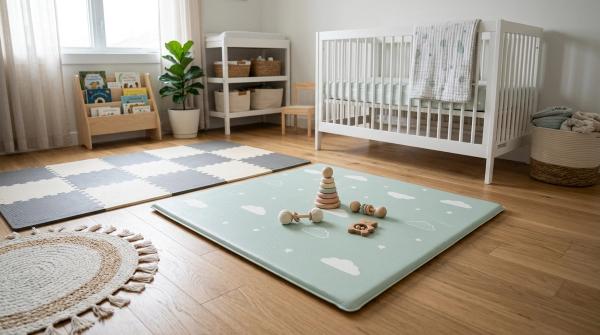
A firm, washable playmat gives your baby room to roll, kick, stretch, reach, turn, crawl and explore movement naturally. It’s simple, but it supports the exact skills babies need before walking.
It’s also apartment-friendly, easy to clean and useful for many months.
If your budget is limited, buy a playmat first.
It may not look as exciting as a big musical toy with lights, but it often gets used more. And it doesn’t take over the entire living room, which is always a win.
2. Use a stationary activity center for short breaks
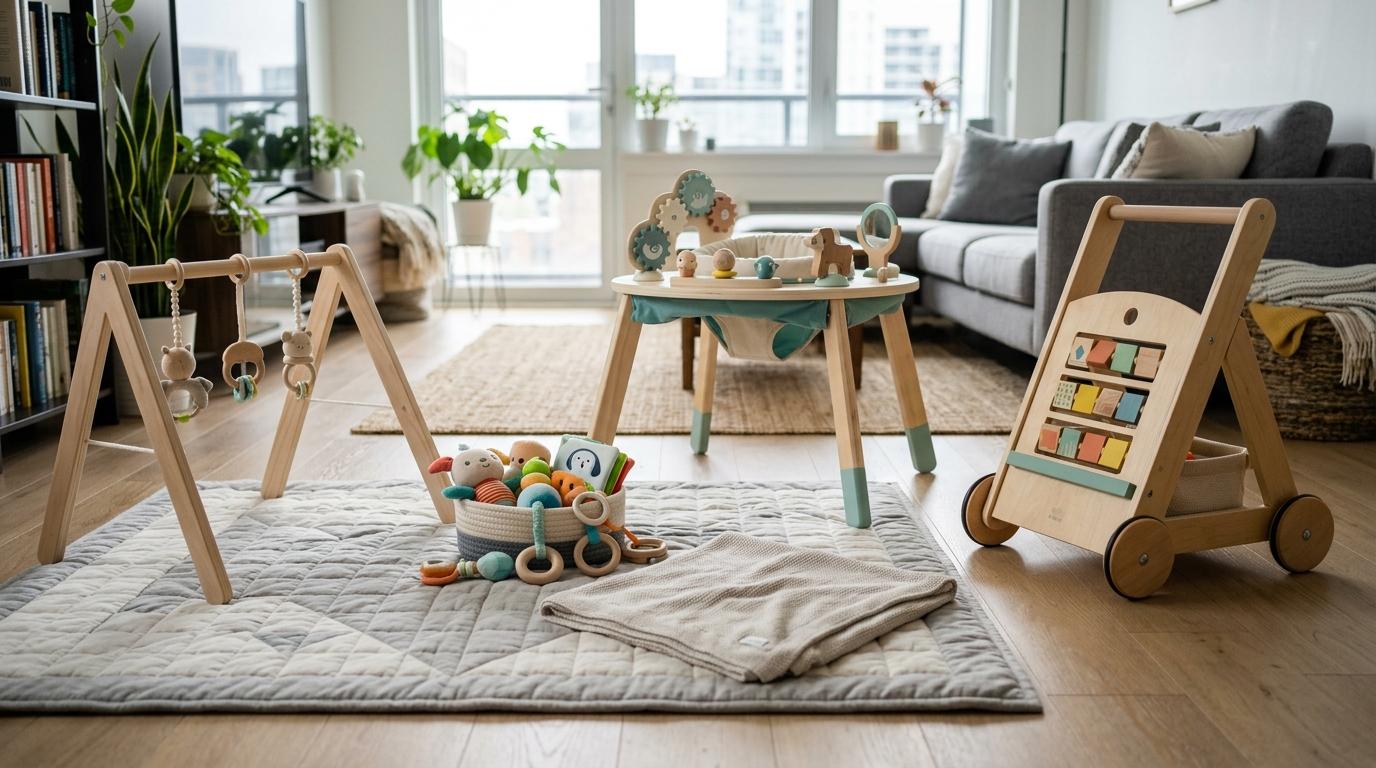
#A stationary activity center is usually a better alternative to a sit-in baby walker because it keeps your baby in one place. It often has a seat, a wide base and toys around the sides.
It can be useful when:
- your baby can sit well
- your baby has good head and neck control
- you need a short supervised break
- you want baby contained for a few minutes
- your home doesn’t have safe space for rolling toys
For example, it can help while you fold laundry, take a quick call or prepare something nearby.
But keep sessions short. An activity center should not become the place where your baby spends half the day. Babies still need plenty of free floor time to move, stretch, roll, crawl and build strength.
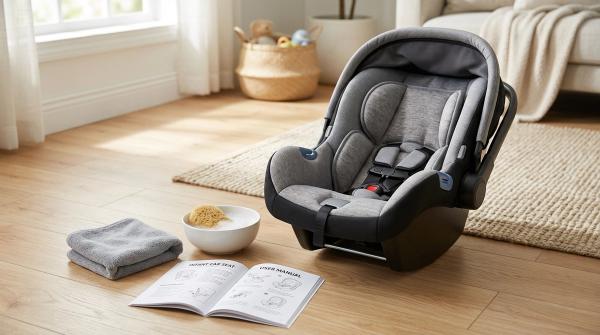
Also, read the manual. Yes, it’s boring. But baby gear limits matter. Check the age, weight, height and developmental guidance. If your baby is too small, too tall, too heavy or trying to climb out, it’s not the right time to use it anymore.
3. Buy a push walker later, not too early
#A push walker is different from a sit-in walker. Your baby does not sit inside it. Instead, they stand behind it, hold the handle and push it forward.
A push walker can be useful when your baby is already:
- pulling up to stand
- cruising along furniture
- trying to take supported steps
- able to bear some weight through their legs
The key word is already.
A push walker is not for a baby who cannot stand with support yet. It is a later-stage toy, not a shortcut to early walking.
Look for a push walker that is:
- sturdy
- not too light
- not too fast
- hard to tip
- easy for baby to grip
- suitable for your floor type
This matters a lot if you have smooth tiles, marble, granite or laminate flooring. Some push walkers have adjustable wheel resistance or rubber-grip wheels, which can help.
A simple test: push it gently on your floor.
If it shoots forward like a race car, it’s not the right walker for your baby right now.
Safety Checklist Before Buying or Using Baby Gear
#Use this checklist for new products, gifts, hand-me-downs and second-hand buys.
1. Check what the product actually is
#Product names can be confusing. Online listings may use words like “learning walker,” “activity walker,” “baby walker,” or “walking trainer.”
Don’t go by the name alone. Look at the design.
- If the baby sits inside and the frame has wheels, it’s a sit-in walker. Avoid it.
- If it stays in one place, it’s a stationary activity center.
- If the baby stands behind it and pushes, it’s a push walker.
2. Read the manual before using it
#Check the manual for:
- minimum age
- maximum age or stage
- weight limit
- height limit
- assembly instructions
- warnings about stairs and uneven floors
- cleaning instructions
- removable or washable parts
If you don’t have the manual, search the brand and model online. If you can’t find reliable information, it’s better not to use the product.
3. Check for recalls and safety notices
#This is especially important for second-hand baby gear.
Search for:
- brand name + model name
- brand name + recall
- product name + safety notice
- product name + manual
If you cannot clearly identify the product model, skip it.
4. Inspect the product properly
#Before placing your baby in or near any gear, check for:
- loose screws
- cracked plastic
- torn fabric
- sharp edges
- exposed staples or metal parts
- broken locks
- weak folding joints
- missing anti-slip pads
- small detachable toys that could become choking hazards
If something feels unstable, wobbly or strange, don’t use it. Trust your instinct.
5. Test it on your actual floor
#This is very important in Indian homes, where floors are often smooth tiles, marble, granite or laminate.
For a push walker:
- check how fast it moves
- see if it slips sideways
- make sure it doesn’t tip when weight is put on the handle
- keep it away from stairs, bathrooms, kitchens, balconies and thresholds
For an activity center:
- place it on a flat surface
- check that it doesn’t rock
- keep it away from cords, curtains, tablecloths, hot drinks, plants and furniture edges
6. Supervise every single time
#No baby gear replaces an adult.
Even safer options need supervision. Babies twist, lean, grab, chew, climb, pull and surprise you in seconds. Usually exactly when you think, “They can’t possibly reach that.”
Notes for Indian Apartments and Everyday Homes
#Most families are not using baby gear in huge, empty rooms. They’re using it in compact flats, rented homes, joint-family homes or grandparents’ houses with furniture, wires, buckets, puja corners, balcony doors and mixed flooring.
So before buying anything, think about your actual home, not just the product photo.
Small spaces
#If your living room already has a sofa, centre table, TV unit, dining chairs, drying stand and toys everywhere, a large baby product may become more stressful than useful.
For small apartments:
- choose a foldable playmat
- pick a compact activity center if needed
- avoid large rolling sit-in walkers
- measure the space before buying
- check where you’ll store it
- avoid anything that blocks walking paths
A product can look perfect online and still be completely impractical at home.
Stairs
#If the home has stairs, avoid sit-in walkers completely. Stair falls are one of the biggest risks with wheeled walkers.
Even push walkers should not be used near stairs. Use safety gates where needed and keep walking practice on one clear, flat level.
Balconies
#Balcony doors and raised balcony tracks are common in Indian apartments. These can catch wheels, trip a toy or create a sudden drop.
Keep all baby movement toys away from balcony doors. If the balcony is open, your baby should not be using a walker, push walker or activity toy nearby.
Tiled floors
#Smooth tiles can make push walkers move too fast. They can also make standing babies slip.
If using a push walker:
- test the wheel speed first
- check wheel grip
- use it only in a dry, clear area
- avoid freshly mopped floors
- check if socks are slippery
Depending on your flooring, bare feet or grip socks may be safer.
Kitchens and hot drinks
#In many homes, hot tea, coffee, pressure cookers, steel utensils, gas stoves and hot water are part of daily life.
Sit-in walkers increase both speed and reach, which makes kitchens especially risky.
Keep babies away from:
- gas stoves
- hot tea and coffee
- electric kettles
- low plug points
- buckets of water
- cleaning liquids
- puja lamps or diyas
- tablecloths
- pressure cookers
- hot utensils
A stationary activity center placed safely outside the kitchen may be better for a short break, but only if you can still see your baby.
Grandparents’ homes and family visits
#Grandparents may have an old walker stored away or may suggest buying one because walkers were common earlier.
You don’t need to turn it into a fight. You can say:
“Walkers were popular before, but safety advice has changed. We’re avoiding sit-in walkers and using a playmat, activity center, or push walker instead.”
If someone wants to gift something useful, suggest:
- a good playmat
- a compact stationary activity center
- a sturdy push walker for the right stage
- baby-proofing items
- washable floor toys
- soft blocks
- board books
Cleaning and Storage Matter Too
#Safety comes first, of course. But daily convenience matters more than you think.
A product that is hard to clean, too noisy, or impossible to store will become annoying very quickly.
For activity centers, check whether:
- the seat cover is removable
- fabric parts are washable
- crumbs get stuck in toy areas
- toys are easy to wipe
- the base fits through your doorways
- it folds for storage
For push walkers, check whether:
- wheels collect hair and dust
- handles are easy to clean
- the toy is too loud for apartment floors
- it can be parked safely
- it tips if baby pulls from the side
For playmats, check whether:
- the surface wipes clean easily
- it dries quickly
- it folds or rolls neatly
- the edges stay flat
- it doesn’t slide around too much
These small things matter a lot once your baby starts drooling, snacking, crawling and throwing everything.
Who Should Skip What?
#Skip the sit-in baby walker if:
#Honestly, almost everyone should skip it.
It is not needed for walking, and the safety risks are the main reason pediatric safety guidance discourages it.
If you already received one as a gift, you can choose not to use it. You don’t have to feel guilty. Pick a safer alternative instead.
Skip the stationary activity center if:
#You may not need an activity center if:
- you have very limited space
- your baby hates being contained
- you want to buy fewer baby products
- you already have a safe floor setup or playpen
- your baby is trying to climb out
- your baby is near the height or weight limit
An activity center can be helpful, but it is not essential.
Skip or delay the push walker if:
#Wait a little longer if:
- your baby is not pulling up yet
- your floors are very slippery
- the wheels move too fast
- your home has no clear walking path
- there are stairs or balcony thresholds nearby
- the walker tips easily
- your baby cannot stand with support yet
A push walker should match your baby’s readiness and your home setup. Age alone is not enough.
Simple Buying Recommendation
#If you want the practical answer, buy in this order:
- Playmat first for daily floor time.
- Stationary activity center if you need short, supervised contained play.
- Push walker later when your baby is pulling up and ready for supported steps.
- Sit-in baby walker — skip it.
That gives your baby useful, safer gear without relying on a product that current safety guidance discourages.