If your curry tastes good but the sauce runs off the spoon, start by checking what is making it thin. Too much added water calls for a different fix from a coconut curry that is meant to be pourable, or a tomato curry whose vegetables have just released liquid. For most curries, the first choice is a gentle uncovered simmer. If the ingredients are already cooked or the seasoning is strong, thicken the sauce separately or use a small amount of a thickener that belongs in that curry.
The goal is a sauce that coats the food and tastes balanced, not the thickest possible gravy. A curry for rice can be looser than one you want to scoop up with flatbread. Decide what you want on the plate before reaching for cornflour, cream or another ingredient.
Check the sauce before you change it
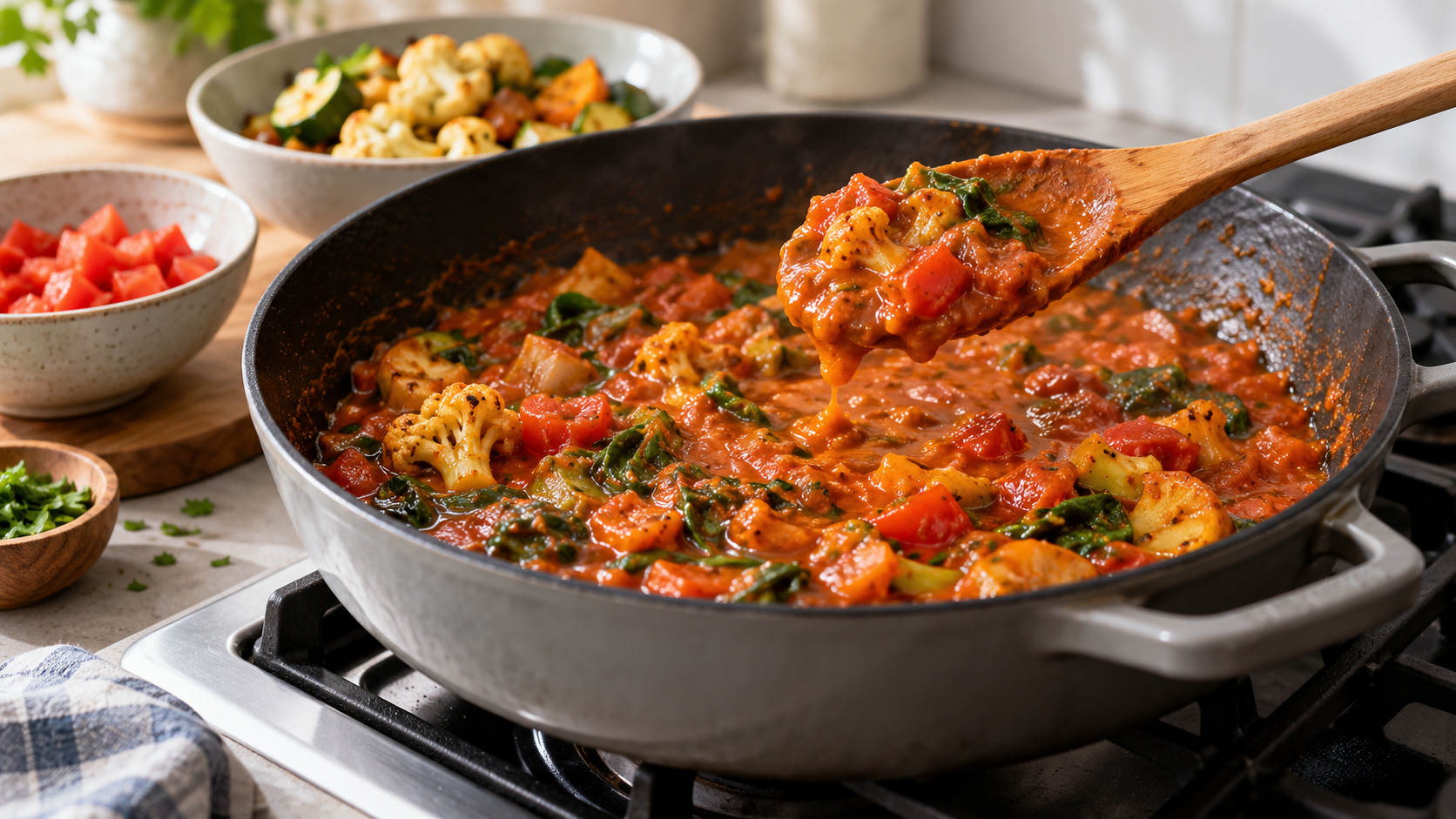
#Stir the pot, then lift a spoonful of sauce without a chunk of vegetable. Does it fall back like water, leave a light coating, or cling in a heavy layer? Taste a cooled spoonful too. A thin sauce can already be salty or spicy. Reducing that sauce will concentrate both. If it tastes weak as well as watery, reduction may improve flavor and texture together.
Now check the solids. Potatoes or firm vegetables that still need cooking can tolerate more time in the pan. Tender vegetables, paneer, cooked beans and delicate seafood may not. You can lift cooked ingredients out with a slotted spoon, work on the sauce, then return them to warm through. Keep the heat moderate and stir along the bottom, especially with tomato, onion or nut-based sauces that can catch.
Finally, identify the base. A tomato-onion curry, a coconut curry and a yogurt curry behave differently. They also taste different after you add cream, nuts or starch. There is no universal tablespoon that rescues every pan.
The simplest fix: reduce it uncovered
#When there is simply too much liquid, uncover the pan and let the sauce simmer so some water evaporates. A wider pan gives the liquid more surface area than a narrow deep pot. Stir now and then and look at the sauce, not only the clock. When a spoon dragged across the pan leaves a brief path and the sauce coats its back, taste again before reducing further.
This is especially useful for a tomato-onion base that tastes dilute. Cooking a base until it has body is a normal part of many curry methods. It can also help a coconut sauce, though coconut curries often stay softer and more flowing than a thick tomato gravy. Stop at the texture the dish calls for.
Reduction has a cost: it concentrates everything that stays in the pan. Salt, chile heat, acidity and sweetness do not disappear with the water. If the curry is already too salty, stop reducing it and correct that problem first. If the spice level is already at your limit, use a method that adds body without removing much more water. A sauce can also burn at the edges while the middle still looks thin, so turn the heat down rather than boiling aggressively.
If the vegetables or protein are cooked, move them to a bowl while the sauce reduces. Return them only long enough to heat through. This avoids turning a rescue into overcooked vegetables or dry meat. If the original recipe has a safety instruction for cooking meat or seafood, finish that cooking as directed; thick sauce alone says nothing about doneness.
Add body from ingredients already in the curry
#For a chunky vegetable curry, blend or mash a small portion of the cooked onion, tomato, beans, lentils or soft vegetables with some sauce, then stir it back in. This thickens with the curry's own ingredients and usually changes its flavor less than adding an unrelated powder. Take care with hot liquid: let it cool enough for your blender's instructions, avoid sealing hot steam inside a container, and blend in small batches if needed. A potato masher in the pan is the simpler option for soft solids.
This approach works best when the ingredients are already tender and the curry can take a less chunky finish. Do not purée every vegetable if you want clear pieces on the plate. A spoonful or two of mashed cooked lentils can make a lentil-rich gravy feel fuller; extra raw lentils are a poor last-minute fix because they need cooking time and liquid of their own. Likewise, adding raw potato to a finished curry is not a quick thickener. It has to cook, and it changes the dish.
For a smooth tomato curry with no useful solids to blend, cook a little tomato paste separately in a pan before adding it. This can deepen a tomato-based sauce and add body, but it also brings tomato concentration and acidity. Use it only when that flavor fits. Dumping raw paste straight into a nearly finished curry may leave a sharp, uncooked taste.
Ground nuts or nut paste can add body to a curry designed around them. They are not neutral thickeners: they add richness, flavor and an allergen. If you use them, blend a small amount smoothly with some of the sauce before stirring it into the pan, and allow the sauce to heat gently. Avoid suggesting nuts for a shared meal unless you know every diner's allergy needs.
Use a small cornflour slurry when time is short
#Cornflour, called cornstarch in some countries, can thicken a sauce that is already fully cooked. Mix a little with cold water until smooth before it touches the hot pan. Stir the slurry again just before adding it, because starch settles. Pour in a small amount while stirring the gently simmering sauce; let it heat and assess the result before adding more.
For a medium pan of curry, you can begin by mixing one teaspoon of cornflour with about one tablespoon of cold water. This is a cautious starting point, not a guaranteed ratio. The amount needed depends on how much sauce you have and how thick you want it. If it still runs after the starch has cooked and the texture has settled, mix a fresh small slurry and repeat. Adding dry powder directly makes lumps; adding several spoonfuls at once can turn a pleasant curry into a glossy, gummy sauce.
A slurry changes mouthfeel as well as thickness. It can make a light coconut or tomato sauce look slightly glossy and feel less like a slowly cooked gravy. That may be fine for a quick meal, but it is not always the best finish for a dish whose texture comes from onions, tomatoes or ground nuts. It also does not fix a sauce that tastes flat. Taste and adjust the finished curry after the texture is right.
If you need a gluten-free meal, check the starch package and every other ingredient rather than assuming the whole curry is safe because cornflour itself is corn based. Flour is another thickener, but adding plain dry flour to a finished sauce often causes lumps and a raw taste. It needs a properly dispersed paste and enough cooking, so a small cornflour slurry is usually the simpler late-stage option.
Match the fix to the curry you made
#| Curry base | Start here | If that is not enough | Watch for |
|---|---|---|---|
| Tomato and onion | Reduce uncovered; blend some cooked base | A little separately cooked tomato paste or a small slurry | Too much acidity or concentrated salt |
| Coconut milk | Reduce gently if the flavor can concentrate | A small slurry, or more body from an ingredient already in the recipe | Thickening it beyond the style of the dish |
| Lentil or bean | Mash or blend a portion of the cooked legumes | Reduce the sauce briefly | Losing all the texture or adding uncooked legumes late |
| Yogurt or dairy | Reduce the base before the dairy goes in | Use a matching thick ingredient carefully | Boiling can split the dairy |
| Vegetable curry with tender pieces | Lift the vegetables out, reduce the sauce, return them | Blend a little of the cooked base | Mushy vegetables from a long rescue simmer |
This table is a starting point, not a substitute for tasting. A coconut curry may be intentionally light and spoonable; a thick restaurant-style tomato gravy is a different target. Match the method to the specific recipe and the way you plan to serve it.
Tomato-onion curry
#If the sauce looks separated into tomato liquid and cooked solids, give the base a gentle uncovered simmer and stir so it does not stick. If the cooked onions are still in visible pieces, mashing a little can help them bind the sauce. If the curry is already strongly acidic, skip extra tomato paste. A little slurry may be the most controlled fix when the vegetables are tender and the sauce cannot simmer much longer.
Coconut curry
#First ask whether it is genuinely watery or simply the intended consistency. A sauce for rice may run freely yet still taste rich. If it is thin because too much water went in, a gentle simmer can remove that water. If reducing would intensify fish sauce, salt or chile too much, lift out delicate ingredients and use a little slurry in the sauce. More coconut cream adds richness but also changes the flavor and fat content; it is not a neutral repair.
Yogurt-based curry
#It is easier to reduce a tomato, onion or spice base before stirring in yogurt. Once yogurt is in the pan, keep the heat gentle and avoid a hard boil, which can make it split. Thick yogurt can make a suitable curry feel creamier, but adding it to an already watery pan increases the total volume and adds tang. If the sauce has already split into watery liquid and grainy curds, simply stirring in more yogurt may not restore a smooth texture. Work on a small sample first and accept that the result may be a different, rustic sauce.
A worked rescue: vegetable curry with too much water
#Imagine a four-serving tomato-onion vegetable curry. The vegetables are tender, the seasoning tastes right, but a pool of thin liquid gathers around the spoon. First, lift the vegetables into a bowl so they do not keep softening. Simmer the sauce uncovered in a wide pan, stirring across the bottom. After it visibly reduces, spoon some onto a plate and let it sit for a moment. If it now coats the vegetables instead of running away, return them to the pan and heat through gently.
If the sauce is still loose but already tastes strongly salted or spiced, stop reducing. Mash a little of its cooked onion and tomato into the liquid. If there is not enough soft base to mash, try a small cornflour slurry: start with one teaspoon of cornflour and about one tablespoon of cold water for the pan, add it in stages, then let the sauce come back to a gentle simmer before judging. Use only as much as the texture needs.
This is an illustrative sequence, not a tested recipe with a fixed pan size or yield. The important decision is to check taste between steps. Reducing, mashing and starching all thicken in different ways; stacking them without tasting can overshoot.
When a thickener will make the curry worse
#If the curry is too salty, a long reduction makes the salt more concentrated. If it is bitter from scorched spices or garlic, thickness will not remove that taste. If it is very sour, more tomato paste is unlikely to help. Fix the flavor problem on its own terms before trying to make the sauce cling.
Be wary of the common suggestion to add raw flour, lots of potato, or a large spoonful of peanut butter to any curry. Flour needs proper dispersal and cooking. Potato needs time and enough liquid to cook. Peanut butter has a distinct taste and may be unsafe for someone with a peanut allergy. Each can belong in a particular dish, but none is a universal rescue.
Adding cream also deserves a pause. It may make a tomato curry richer, yet it can mute spice and change the style of the dish. It does not undo excess water as directly as reduction or a cooked-base purée. A splash of lemon or vinegar brightens flavor but does not thicken the sauce. Rice or bread can catch a loose curry on the plate, but they do not change the sauce in the pan.
Keep the next curry easier to adjust
#Add liquid in stages, especially when vegetables will release moisture or when you are using a covered pan. A lid slows evaporation, so a recipe cooked covered may need an uncovered finish. A pressure cooker and a slow cooker also retain more liquid than an open pan; thicken after cooking when the lid is safely off and the sauce can simmer as the appliance instructions allow.
Cook the onion and tomato base to the texture your recipe describes before adding a large volume of liquid. A hurried base can leave pieces floating in thin liquid. Remember that coconut curries, brothy curries and thick gravies have different intended finishes, so do not judge them against one restaurant-style image.
Hold back some salt until the sauce has reached its final volume. Taste after thickening, since reduction can strengthen seasoning while extra puree, yogurt or coconut cream can soften it. Write down what caused the watery result in this particular recipe: too much water, a lid left on, watery vegetables, or a base that was not cooked down. That note is more useful next time than a universal thickener rule.
The practical order is simple: taste, identify the base, protect the cooked ingredients, then thicken a little at a time. Stop when the sauce suits the meal. A curry that still flows but tastes balanced and coats each bite may already be right.