Use the cocoa powder your recipe names. Natural cocoa retains its acidity; Dutch-process cocoa has been treated with alkali to reduce it. That difference can affect a recipe's rise as well as its flavor and color. In hot cocoa, frosting and brownies without chemical leavening, choosing between them is usually more about the result you enjoy.
The useful question is what the cocoa needs to do in this particular recipe. A powder that makes a lovely drink may still be the wrong choice for a cake built around natural cocoa and baking soda. Before swapping, check the package, the recipe notes and the leavening ingredients together.
What natural and Dutch-process cocoa actually mean
#Cocoa powder comes from processed cacao beans. Grinding the nibs makes a paste containing cocoa solids and cocoa butter; pressing removes part of that butter, leaving material that becomes powder. So cocoa powder still contains some fat. It is different from a chocolate bar, whose fat and, often, sugar are part of its structure.
Natural cocoa keeps the bean's natural acidity. Dutch processing, also called alkalization, reduces that acidity. These are processing descriptions, not grades of quality. Either kind can be appropriate for a good chocolate dessert.
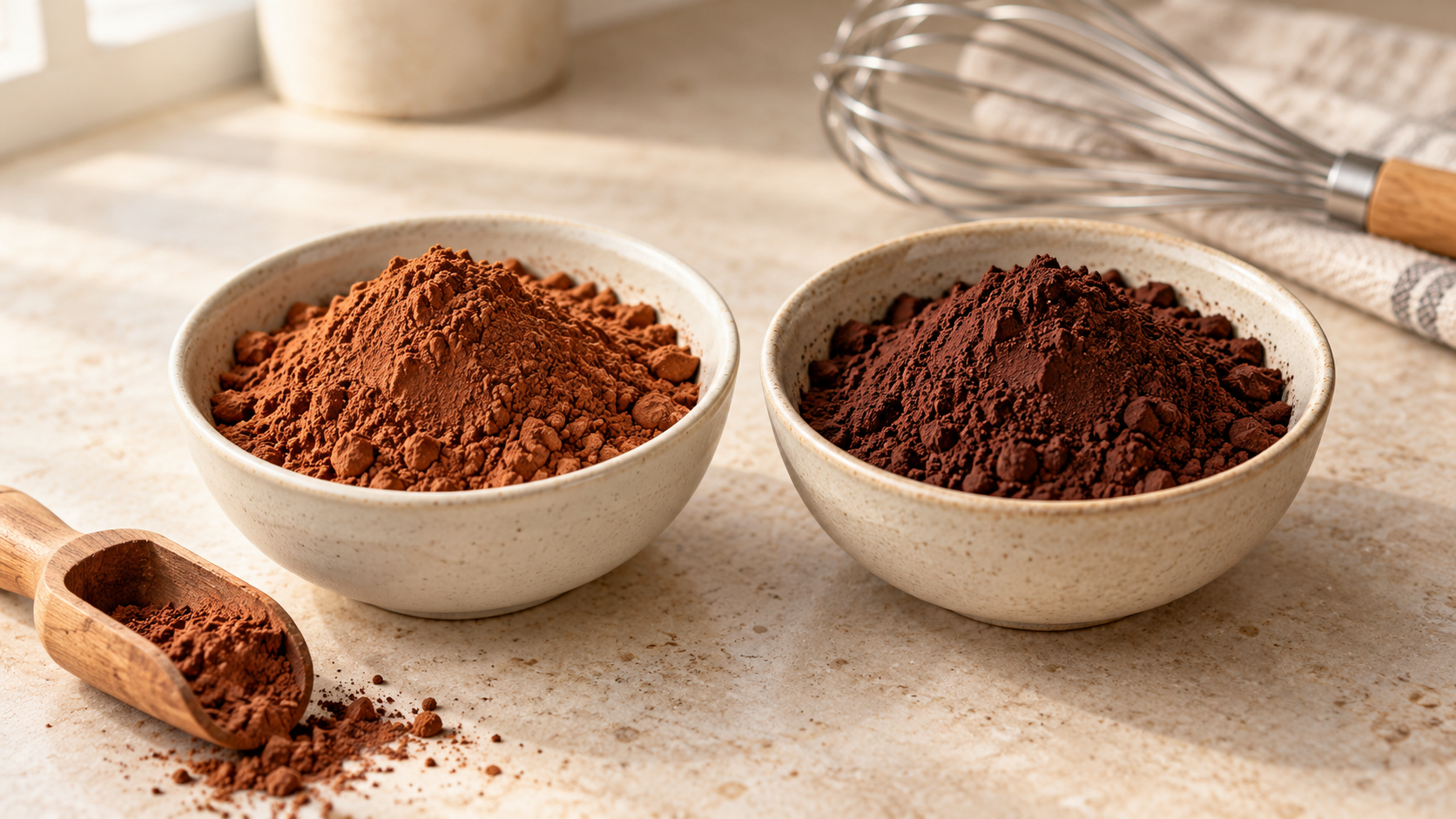
Natural powders often have a lighter, reddish-brown appearance and brighter flavor notes. Dutched powders commonly look darker and taste more mellow. Those are broad patterns, not a promise about every packet. The beans, processing and fat content also matter, and dry powder color does not tell you exactly how a finished cake will look.
| What to check | Natural cocoa | Dutch-process cocoa |
|---|---|---|
| Processing | Retains natural acidity | Treated with alkali to reduce acidity |
| Common flavor direction | Brighter, sometimes fruity or tangy | Mellower, often with deeper roasted notes |
| Common appearance | Lighter or reddish brown | Deeper brown; some powders are very dark |
| Main baking caution | Match the recipe's acid and leavening balance | Do not assume it can replace natural cocoa in a soda-based recipe |
| Useful first choice | Recipes naming natural cocoa | Recipes naming Dutch-process or alkalized cocoa |
Think of the two types as different ingredients you can choose deliberately. Buying the darkest one is no more useful than buying the strongest spice without knowing what you plan to cook.
Read the label before judging the color
#Look for the words natural, Dutch-process, dutched, alkalized or processed with alkali. The last two descriptions identify Dutch processing even when the front of the pack does not use the word Dutch. Potassium carbonate can appear as the acidity regulator on an alkalized product's ingredient list.
Unsweetened describes sugar, not processing. Both natural and Dutched cocoa can be unsweetened, so that word alone does not settle the choice. A large percentage on the front is also less helpful for this decision than a clear processing description.
If the label is vague, check the manufacturer's description of that exact product. Avoid assuming that a brand always sells one type. Save the product name with your recipe notes, particularly if you decant the powder into a kitchen jar. A jar marked only cocoa loses the information you need next time.
For example, imagine two packets marked unsweetened cocoa. One also says processed with alkali; the other specifically says natural. They are both unsweetened, but they are not the same processing type. Your next step is to check which one the recipe asks for, rather than choosing by the darker photograph.
Why baking soda and baking powder change the decision
#Baking soda is sodium bicarbonate. In a recipe it can react with an acid, producing carbon dioxide that helps expand the mixture. Natural cocoa can contribute some of that acidity. Dutch processing changes the cocoa's contribution, which is why switching powders can change the behavior of a carefully balanced batter.
Baking powder contains bicarbonate together with acid ingredients. It supplies its own acid-base system, although the rest of the recipe still affects the finished result. Baking soda and baking powder therefore are not interchangeable spoon for spoon.
A useful starting pattern is that recipes relying on baking soda often specify natural cocoa, while recipes using baking powder often specify Dutch-process. But this pattern is a clue, not permission to redesign the recipe. Some formulas contain both leaveners or other acidic ingredients, and the quantities matter.
You do not need to calculate the chemistry of every cake. You need to recognize when the recipe has already done that work for you. If the author names a cocoa type, follow it. If they explicitly allow either natural or Dutch-process, use that flexibility without adding an extra correction of your own.
Can you substitute one cocoa powder for the other?
#Sometimes. Start with the recipe's own substitution notes because they apply to the actual formula you are making. There are three useful situations to separate.
The recipe explicitly allows either type
#Use either unsweetened powder in the stated quantity, following the recipe's measurement method. Expect a possible change in color or flavor; permission to substitute does not mean the results will look identical.
Keep the other ingredients and method the same for your first attempt. If you change the cocoa, sugar, flour and baking temperature together, your notes will not tell you which change caused the difference. This is especially worth remembering when adapting a familiar recipe for a special occasion.
The recipe names one type and uses chemical leavening
#Use the named type if a reliable result matters. Replacing natural cocoa with Dutched cocoa can reduce the acidity available to react with baking soda. Replacing Dutched cocoa with natural introduces more acidity and may change flavor, even when baking powder provides the lift.
The two directions of substitution are not equivalent. Nor is every recipe using both soda and powder automatically flexible. Look for a tested variation from the recipe author, or choose a different recipe that names the cocoa you have.
Avoid a universal fix involving a splash of vinegar or a guessed amount of extra baking powder. The amount of cocoa, other acids and intended texture vary between recipes. A general conversion chart cannot inspect the rest of your ingredient list.
There is no baking soda or baking powder
#There is usually more freedom to choose by flavor and color. Guittard's cocoa guidance includes beverages, sauces, frostings and brownies without leavening among the applications where either type can work.
Still read the whole method. A recipe without chemical leavening can depend on whipped eggs, a particular mixing process or a precise texture. Changing the cocoa does not remove those requirements. Follow the recipe first, then judge whether you like that powder in that application.
Choose for the dessert you are actually making
#Cakes and cupcakes
#Treat a named cocoa type as part of the recipe, alongside the flour and leavener. For an important birthday cake, buy the specified powder or find a recipe written for your existing one. That is a more controlled decision than altering the acid balance shortly before guests arrive.
If a cake recipe merely says cocoa, read the introduction and notes before assuming either type is intended. Older American recipes can use cocoa to mean natural cocoa, according to King Arthur Baking. A modern recipe's lack of detail is not, by itself, evidence that someone tested both versions.
Brownies and cookies
#Check for leaveners instead of relying on the dish name. Some brownie recipes contain baking powder or soda, while others do not. Cookies also vary. A rule such as Dutch for all brownies or natural for all cookies ignores the formula you are holding.
For a recipe that permits either type, decide which result you want and record what you used. If you love that batch, the useful note is the exact powder and quantity, rather than simply good cocoa. Keep the recipe's own doneness checks; a change in color alone is not a reason to change the baking time.
Frosting, sauces and drinks
#These can be useful places to explore preference when the recipe allows either cocoa. Try the powder you already have before buying another solely because it looks more luxurious. A darker appearance may suit the dessert you have in mind, but it does not guarantee your favorite flavor.
If mixing cocoa into a drink or sauce leaves lumps, Guittard recommends starting with a smooth paste using a little of the liquid, then gradually incorporating the rest. Take that liquid from the recipe's total so you do not accidentally dilute it. Follow any heating instructions in the original method.
Black cocoa is a separate choice
#Black cocoa is an intensely alkalized style with a very dark color and distinctive flavor. It belongs within the broader Dutched family, but that does not make it an automatic replacement for ordinary Dutch-process cocoa in every recipe.
Use it when the recipe calls for it or provides a specific blend. If a cookie formula asks for two cocoa types, preserve the total quantity and their stated proportions. Adding black cocoa on top of the existing amount changes the recipe rather than simply darkening it.
For a first attempt, a recipe developed for black cocoa gives you a clearer starting point than replacing every spoonful in a favorite cake. The result you are aiming for should guide the choice: an almost-black sandwich cookie and a softly flavored chocolate sponge have different needs.
Fat content is a different question from Dutch processing
#Natural versus Dutched tells you about alkalization. It does not, on its own, tell you how much cocoa butter remains in the powder. Guittard explains that pressing controls the remaining fat, while alkalization is a separate processing variable.
This matters when two packets are both Dutch-process but behave or taste differently. Check any fat specification and product notes the recipe author gives. A premium price or a deeper brown color cannot substitute for that information.
If you are comparing brands, first match the processing type your recipe needs. Then compare the other relevant specifications. Do not try to compensate for a different powder by adding oil unless the recipe provides that variation. A label can help you select an ingredient; it does not supply a complete recipe adjustment.
Three everyday decisions, worked through
#These are illustrative situations, not reports of recipe testing.
You have Dutch-process cocoa and a cake recipe naming natural cocoa plus baking soda. Check the author's notes. If there is no approved substitution, keep the Dutched powder for a suitable recipe and obtain natural cocoa for this cake. You have identified a possible chemistry mismatch before spending the rest of the ingredients.
You have natural cocoa and a brownie recipe that says either type is fine. Use the stated amount without changing the leaveners or sugar. Record the packet you used. Your result may have a different shade or flavor from the photograph while still following the recipe correctly.
You want a darker frosting but have not tried your existing cocoa in it. Make the original frosting before making several changes. If the recipe permits either type, a later comparison can change just the powder. Judge the frosting with the cake it will accompany, because that pairing is the decision you actually need to make.
The shared habit is to decide before mixing. Once several ingredients are combined, trying to reverse an uncertain substitution becomes much harder to reason about.
Keep useful notes instead of chasing one perfect cocoa
#For occasional baking, choose cocoa around the recipes you repeat. Look at three favorites and write down which processing type each specifies. If they all use natural cocoa, start there. If you regularly make recipes naming both types, keeping both may save repeated substitution decisions.
When decanting, retain the processing description, original product name and package guidance. Follow the manufacturer's storage instructions for that product; do not borrow a shelf-life claim from a different powder. A simple note on the jar can prevent the next batch from becoming a guessing exercise.
After baking, record only what you actually observed: the cocoa used, whether the recipe was followed and what you would choose next time. Separate preference from diagnosis. A cake that looks lighter than the photograph may be perfectly enjoyable, while a disappointing rise deserves a check of the whole recipe and method.
The most useful cocoa is the one that fits the recipe and gives you a result you like. Read the processing label, respect the formula and make deliberate changes when the recipe allows them.