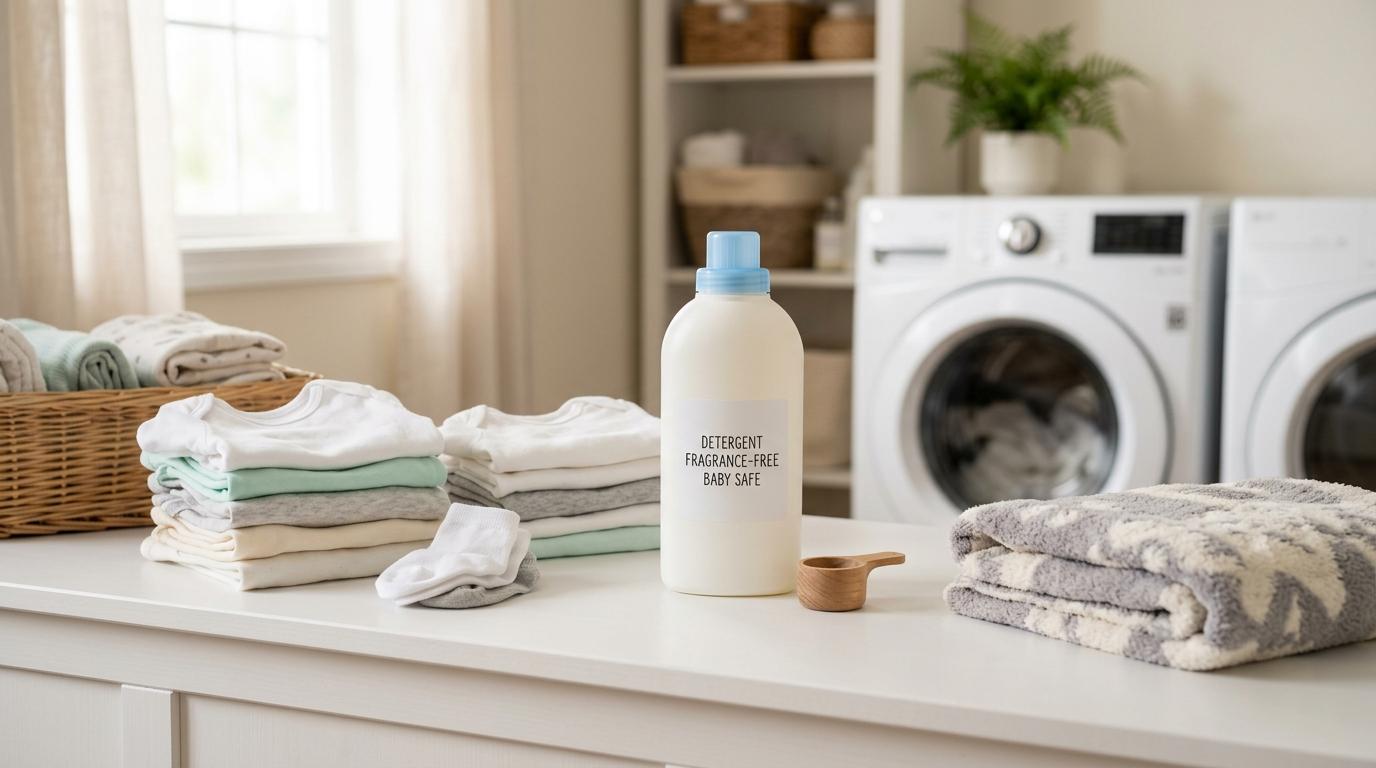
Quick answer: Most families do not need a separate baby laundry detergent. What matters more is choosing something gentle, fragrance-free, dye-free, and easy to rinse out. A baby detergent is totally fine if you like it, but a regular “free and clear” detergent often works just as well for newborn clothes, swaddles, bibs, sheets, blankets, and even the rest of the family’s laundry.
Once a baby comes home, the laundry situation changes almost overnight.
Suddenly there are onesies, burp cloths, bibs, tiny socks, muslin blankets, cot sheets, towels, your T-shirts with spit-up on them, and somehow another pile already waiting before the first one is folded.
So if you are standing in the detergent aisle wondering whether you need a special newborn laundry detergent, take a breath. This does not have to be one more complicated parenting decision.
For baby laundry, the goal is simple: clean clothes, fewer unnecessary additives, good rinsing, proper drying, and detergent stored safely away from little hands.
Baby Laundry Detergent vs Regular Detergent: What’s Actually Different?
#Baby detergents are usually marketed as extra gentle. Some really are simple, fragrance-free, dye-free formulas. Others, though, still have that familiar “baby powder” scent — and that is still fragrance, even if it smells soft and sweet.
Regular detergents vary a lot. Some are heavily scented, brightly colored, packed with optical brighteners, or mixed with fabric softeners. But many regular detergents come in “free and clear” versions, which are often a very practical choice for baby clothes.
In other words, the front label is not the whole story.
A bottle with a cute baby on it is not automatically better. And a regular detergent is not automatically too harsh. What matters is what is actually in it.
If a regular detergent is fragrance-free, dye-free, and rinses well, many families use it for both baby clothes and adult clothes. That can make a lot of sense, because your baby is not only touching their own clothes. They are also pressed against your shirt, your bedsheets, your shoulder, and your lap all day.
Baby Detergent vs Regular Detergent: Simple Comparison
#Simple verdict: You can buy baby detergent if you want to. But you do not have to. A fragrance-free, dye-free regular detergent can be a perfectly sensible choice for washing baby clothes.
Why the Label Matters More Than the Packaging
#Baby clothes sit close to delicate skin all day. Think neck folds, wrists, bellies, cheeks, thighs, and the diaper line. Blankets, towels, bibs, burp cloths, and swaddles also touch your baby’s skin for long stretches.
If detergent residue, fragrance, or fabric softener stays trapped in the fabric, some babies may get itchy, red, or uncomfortable. Not every baby will react, and you do not need to panic over every single ingredient. But it makes sense to avoid extras that are not helping clean the clothes.
A good detergent should do a straightforward job:
- Clean milk, sweat, spit-up, pee leaks, food stains, and everyday dirt
- Rinse out well
- Leave fabric clean without heavy scent or coating
That is really it.
Fragrance-Free and Dye-Free: What to Look For
#When you are choosing a detergent for baby clothes, here are the main things to check.
1. Choose “fragrance-free,” not just “unscented”
#This one catches a lot of people.
Fragrance-free usually means no fragrance has been added.
Unscented can sometimes mean the product includes ingredients that mask the detergent’s natural smell. So if you are trying to keep baby laundry as simple as possible, look for the exact words fragrance-free.
Then turn the bottle around and check for terms like:
- Perfume
- Fragrance
- Parfum
- Essential oils
- Botanical scents
“Natural” fragrance is still fragrance. If your goal is a simple newborn laundry routine, it is best to skip scented formulas, even if the scent comes from plants.
2. Pick dye-free when possible
#Dyes do not make clothes cleaner. They mostly change how the detergent looks.
Look for phrases like:
- Dye-free
- No added dyes
- Free from dyes
Some dye-free detergents are clear or white, but do not rely only on the color. The label is more trustworthy.
3. Don’t trust “hypoallergenic” by itself
#A hypoallergenic baby detergent can be useful, but the word does not mean it will suit every baby.
Usually, “hypoallergenic” means the product is designed to reduce the chance of reactions to common irritants or allergens. That is helpful, but it is not a guarantee.
So still check the label. A detergent can say “hypoallergenic” on the front and still include fragrance or other ingredients you may prefer to avoid.
4. Skip built-in fabric softeners
#Fabric softeners coat fabric fibers so clothes feel smoother. For baby laundry, that coating is usually unnecessary.
It can also reduce absorbency, which is not ideal for towels, bibs, burp cloths, cloth nappies, or anything that needs to soak up liquid. It may also leave more residue behind.
For newborn clothes, blankets, bibs, towels, and sheets, plain detergent is usually the better choice.
New-Parent Buying Checklist
#Before you add a detergent to your cart, do a quick label check.
- Fragrance-free: Not “baby fresh,” lightly scented, or perfume-based
- Dye-free: No added colorants
- No built-in fabric softener: Especially for bibs, towels, and burp cloths
- Clear label: Easy to see what it includes and avoids
- Works for machine or hand wash: Useful if you do both
- Rinses well: Helpful for newborn clothes and blankets
- Works for family laundry too: Since baby skin touches caregiver clothes
- Safe packaging: Easy to close tightly and store away
- Pods only if storage is truly child-safe: Laundry pods need extra caution
Baby Detergent India: Practical Shopping Notes
#If you are shopping for baby detergent in India, the same basic rules apply: choose a fragrance-free, dye-free detergent with no added softener and good rinsing.
A few everyday realities can affect your choice, though.
Hard water
#Many Indian homes have hard water. In hard water, some detergents may not dissolve or rinse as easily.
Liquid detergents often dissolve more easily than powders, especially in cold water or during bucket washing. If you use powder detergent, dissolve it properly before adding baby clothes.
Try not to pour powder directly onto tiny clothes. The grains can get caught in folds, cuffs, seams, or waistbands.
Hand washing and machine washing
#Many households do a mix of machine washing and quick hand washing, especially for bibs, nappies, and clothes with spit-up or leaks.
For hand washing, use less detergent than you think you need. Then rinse well.
Lots of foam does not always mean cleaner clothes. Sometimes it just means there is more detergent left behind.
Monsoon drying
#During monsoon, baby clothes can take longer to dry indoors. They may start smelling damp, especially around seams, waistbands, and thicker fabric.
It is tempting to use a strongly scented detergent to cover the smell, but fragrance does not fix dampness.
Focus on drying better instead:
- Dry clothes in the most ventilated space you have
- Use a fan if sunlight is not available
- Leave space between garments
- Avoid folding clothes when seams or waistbands are still damp
- Wash smaller loads so clothes rinse and dry more easily
For baby clothes, fully dry matters more than nicely scented.
How to Wash Baby Clothes Without Making It Complicated
#You do not need a separate laundry system for every tiny item. Simple is fine, especially when you are tired.
1. Wash new clothes before first use
#New clothes, blankets, towels, and sheets can collect dust or finishing residues during manufacturing, packing, transport, and storage.
Wash them once before they touch your baby’s skin.
2. Sort heavily soiled items
#You can wash baby clothes with family clothes if the whole load uses a fragrance-free, dye-free detergent.
But heavily soiled items should be handled first. Clothes with poop leaks, heavy spit-up, or lots of food should be rinsed or pre-treated before going into the main wash.
3. Use the right amount of detergent
#This is one of the easiest mistakes to make.
More detergent does not mean cleaner clothes. In fact, too much detergent can leave residue and make rinsing harder.
Follow the bottle instructions, and use less for small baby loads.
4. Don’t overload the machine
#Baby clothes are small, but they still need space to move around.
If the machine is packed too tightly, detergent may not spread evenly and the rinse may not work properly.
5. Use an extra rinse if needed
#If your washing machine has an extra rinse option, it can be helpful for newborn laundry, especially if you are not sure the detergent is rinsing out fully.
You may not need it every time, but it is useful when washing blankets, towels, or larger loads.
6. Dry everything completely
#Before folding and storing baby clothes, check the spots that stay damp the longest:
- Cuffs
- Waistbands
- Thick seams
- Towel edges
- Blanket corners
- Sock toes
If something still feels even slightly damp, let it dry longer.
What to Skip in Baby Laundry
#Baby laundry gets easier when you avoid a few common extras.
Try to skip:
- Strongly scented detergents
- Fabric softeners
- Fragranced dryer sheets
- Too much detergent
- Bleach or stain products unless the garment label allows it
- Mixing baby clothes with very dirty household items
- Leaving damp laundry sitting in the machine for hours
The goal is not perfect laundry. It is clean fabric, low residue, proper drying, and safe handling.
Laundry Pods and Child Safety
#Laundry pods and packets are convenient, but they need extra caution in homes with babies or young children.
They can look bright, soft, and interesting to kids. They are also very concentrated. CPSC, AAP, and America’s Poison Centers advise keeping detergent packets and cleaning supplies locked away, out of reach and out of sight.
Pods can harm children if swallowed, or if the contents get into the eyes or onto the skin.
If you use laundry pods:
- Keep them in the original container
- Close the container immediately after every use
- Store them high up and locked away
- Never leave one on the washing machine, in a laundry basket, or near the floor
- Do not let children handle them
- Consider liquid detergent if safe storage is difficult
This applies to all detergents and cleaning products, not just baby laundry products.
Do You Need to Wash Baby Clothes Separately?
#Not always.
If the whole family uses a fragrance-free, dye-free detergent, you can usually wash baby clothes with regular family laundry. Honestly, this can make life much easier when you are already exhausted.
Separate washing may still be useful when:
- Clothes are heavily soiled
- A family member’s clothes have strong perfume, chemicals, or outdoor dirt
- You are trying a new detergent
- Your baby seems uncomfortable in freshly washed clothes and you are trying to figure out why
If you are unsure, start simple. Wash baby clothes and caregiver tops in the same gentle detergent. Those are the fabrics your baby touches most often anyway.
Suggested Related Reading on AllBlogs
#- Diaper Shopping Checklist: What New Parents Actually Need
- Baby Bottle Drying Rack vs Regular Dish Rack: What Should New Parents Use?
- Bottle Sterilizer vs Boiling vs UV: What Should New Parents Use?
Final Takeaway
#For most families, the answer to baby laundry detergent vs regular detergent is simple: choose the gentlest practical formula, not the cutest bottle.
A separate baby detergent is fine, but it is not required. A fragrance-free, dye-free regular detergent can work well for newborn clothes, blankets, bibs, sheets, and family laundry.
Use the right amount, rinse well, dry fully, and store all detergents safely away from children. That is the part that matters most.