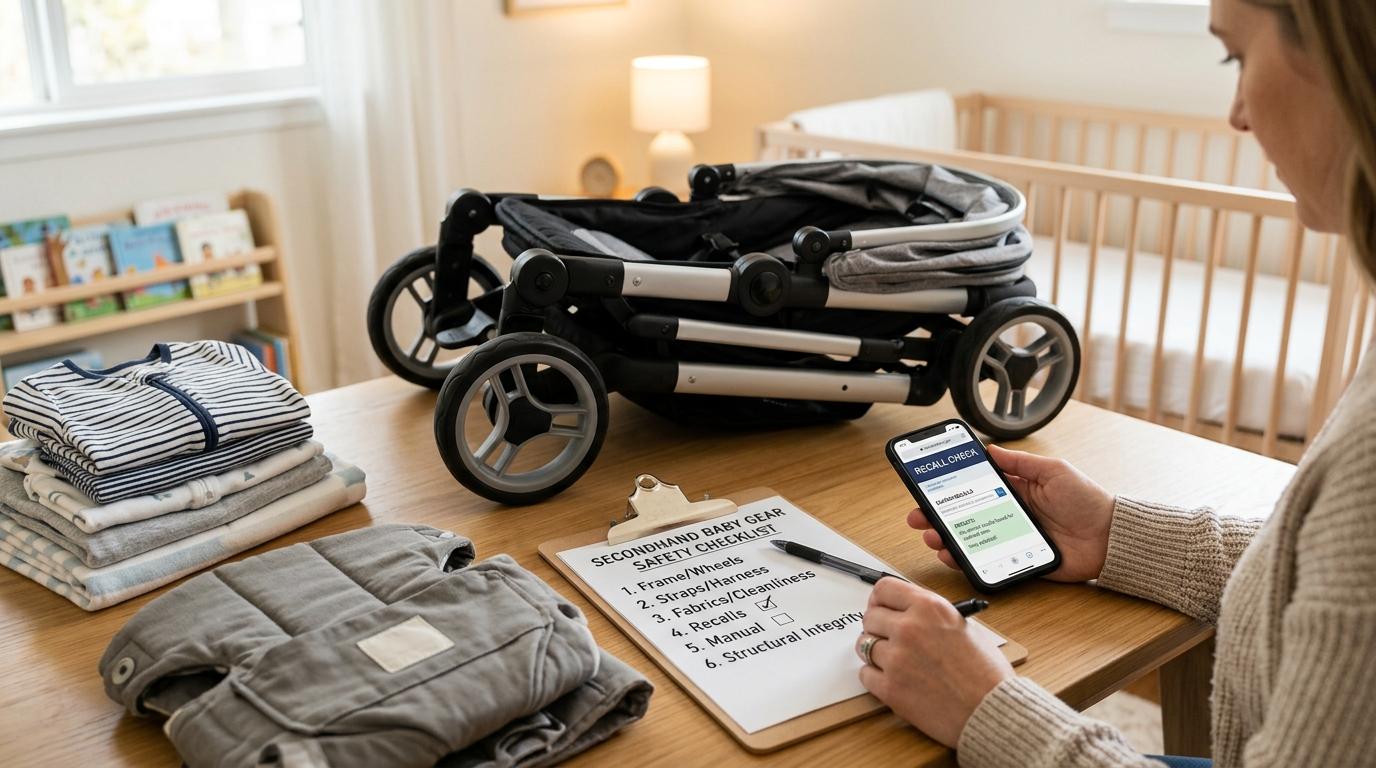
Direct answer: Second-hand baby gear can be a smart buy when you can identify the exact product, check recalls, find the manual, confirm all original parts are present, and inspect it for damage. Clothes, books, simple toys, many strollers, and some baby carriers can be good used buys. Usually skip used car seats with unknown history, crib mattresses, drop-side cribs, pacifiers, bottle nipples, recalled gear without verified fixes, and anything with missing labels or parts.
This guide is for everyday parents buying from marketplaces, accepting family hand-me-downs, or sorting through baby gear stored by relatives. It is general safety education, not a replacement for product manuals, official recall notices, certified car-seat help, or pediatric guidance.
Quick Used Baby Gear Buy-or-Skip Table
#Rule One: If You Cannot Identify It, Do Not Buy It
#Before you think about price, colour, or how “new” something looks, check whether you can identify the product.
Look for a label, tag, sticker, stamp, or plate with:
- Brand name
- Model name or model number
- Date of manufacture
- Batch, serial, or production details where available
This matters because recall checks, manuals, replacement parts and safety instructions depend on exact product details. Similar-looking strollers, cribs, carriers and high chairs can have different instructions or recall status.
For car seats, cribs, strollers, carriers, playards and high chairs, a missing or unreadable label is a strong reason to walk away. Also be careful with anything repainted, repaired with random parts, modified, or described as “fixed up.” Baby gear is designed to work in a specific way; one wrong screw, strap, hinge or buckle can change how it performs.
Used Car Seat Checklist: Why This Is Usually a Skip
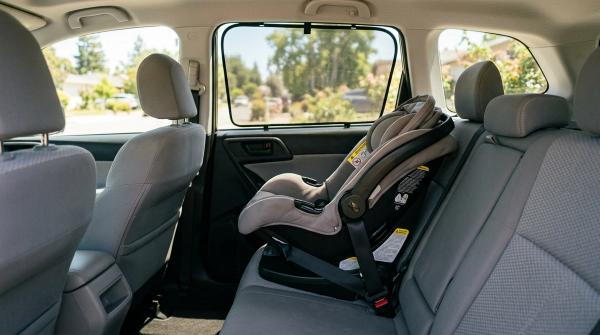
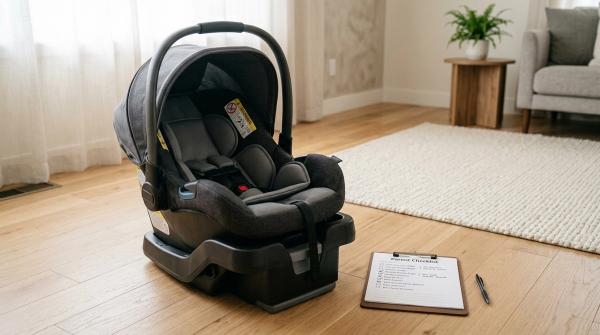
#A used car seat can look clean and still have an unsafe history. It may have been in a crash, cleaned in a way the manual does not allow, expired, recalled, or missing an original insert or part.
For most families, the safer choice is to buy a new car seat.
Only consider a used car seat if all of these are true:
- You know and trust the previous owner.
- They can confirm it has never been in a crash.
- The seat has not expired.
- Original labels are attached and readable.
- You have the exact manual or can download it from the manufacturer.
- All original parts are present.
- The harness has not been replaced with non-original parts.
- The seat has not been cleaned against manual instructions.
- You checked the exact model for recalls.
- The seat fits your child, vehicle and installation method.
If one answer is “I’m not sure,” skip it. Car seats are not the place to guess.
How to check car seat recalls
#- Find the car seat label with brand, model number and manufacture date.
- Check the car seat manufacturer’s recall and manual pages.
- Use NHTSA recall tools when the seat was sold or used in the United States.
- Match the model number and manufacture date carefully.
- If there is a recall, verify the remedy was completed before use.
- If installation, fit or condition is uncertain, consult a Certified Child Passenger Safety Technician where available.
India-aware note: imported car seats and hand-me-down seats from relatives abroad still need labels, expiry details, the correct manual and recall checks for the country where they were sold. If you cannot verify those details, do not use the seat.
Used Crib Safety: Be Very Selective
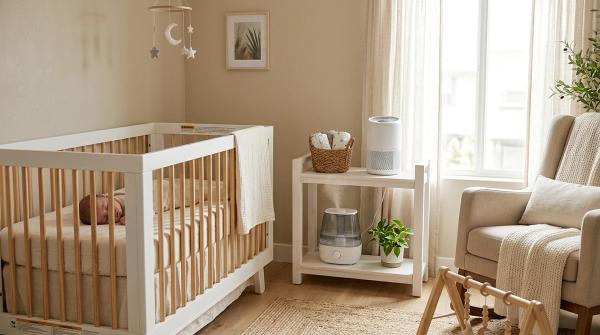
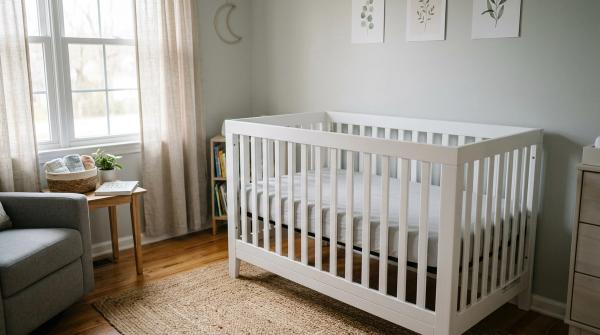
#A baby’s sleep space should be firm, flat, stable and used exactly as instructed. Safe-sleep guidance from AAP and CDC emphasizes a firm, flat surface with a fitted sheet and no pillows, loose blankets, bumpers or extra padding in the baby’s sleep area.
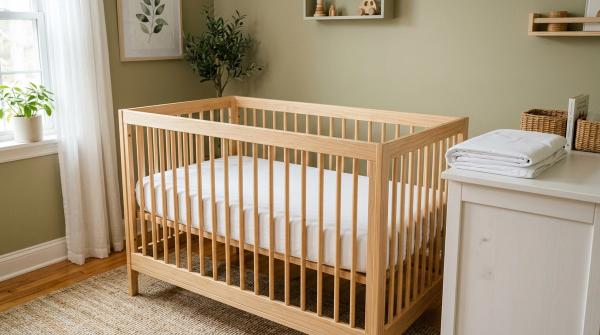
Usually skip a used crib if:
- It is a drop-side crib.
- The model label is missing.
- You cannot check recalls.
- Screws, brackets, slats or support pieces are missing.
- It has been repaired with substitute hardware.
- The frame wobbles or does not assemble tightly.
- Paint is peeling.
- The crib has been modified.
- You cannot find the original manual.
- The mattress does not fit snugly.
Do not improvise crib parts. If original hardware is missing and the manufacturer cannot provide the correct replacement, skip the crib.
What about a used crib mattress?
#A used crib mattress is usually best skipped. A safe sleep surface should be firm, flat, clean and properly fitted. With a second-hand mattress, it can be hard to verify sagging, soft spots, hidden moisture, mould or fit. If you accept a verified used crib from family, a new properly fitting mattress is usually the better choice.
Second-Hand Stroller Checklist
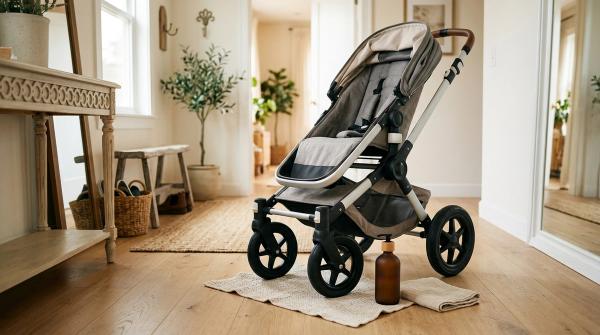
#Strollers are often one of the better second-hand buys because many are sold after light use. Still, they have moving parts that must work correctly.
Before buying a used stroller, inspect:
- Brakes: Lock and unlock them several times.
- Wheels: Look for cracks, wobbling, uneven wear and loose axles.
- Folding mechanism: Open and close it fully and confirm it locks.
- Hinges: Check for loose joints, pinch points, bent parts or missing covers.
- Harness: Look for fraying, chewing, stretching or missing straps.
- Buckles: Click and release them several times.
- Seat recline: Confirm every position locks securely.
- Frame: Look for rust, cracks, bends and sharp edges.
- Manual and labels: Confirm the exact model and instructions.
Then check recalls through the relevant official database or the manufacturer’s website. If a seller says, “It only needs one small repair,” slow down. With baby gear, one missing lock, screw or strap can matter.
Baby Carrier Safety: Check Fabric, Buckles, Fit and Manual
#Used baby carriers and wraps can be useful and budget-friendly, but they directly support your baby’s body. Inspect them carefully.
Check that:
- Buckles click firmly and release only when intended.
- Plastic parts have no cracks, whitening or stress marks.
- Straps are not frayed, stretched, cut or chewed.
- Stitching is tight at weight-bearing points.
- Fabric has no tears, thinning or damaged seams.
- Velcro, rings, snaps and sliders are secure.
- The label is readable.
- The manual is available.
- The carrier fits your baby’s age, weight and stage.
Do not assume every carrier is safe from birth. Some need inserts; others have minimum weight limits or are better for older babies.
High Chairs, Playards and Toys
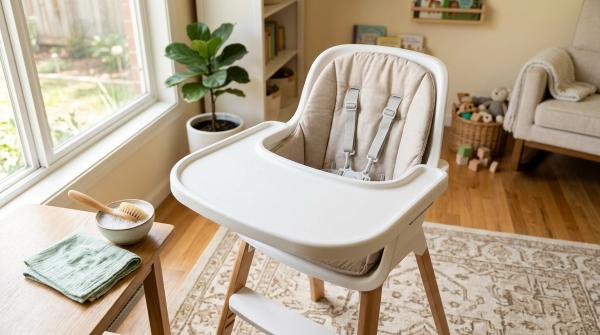
#A used high chair may be fine if it is sturdy, complete, cleanable and not recalled. Check the harness, buckle, tray lock, folding lock, legs, screws, caps and sharp edges.
A used playard needs extra care, especially if it may be used for sleep. Check locking rails, mattress or pad fit, mesh tears, loose stitching, missing parts, frame stability, manual and recall status. Use only the mattress or pad specified by the manufacturer; do not add extra padding unless the manual clearly allows it.
Used toys can be fine when they are simple, cleanable and complete. Avoid toys with loose small parts, unsecured button batteries, magnets, broken plastic, peeling paint, sharp edges, torn seams or unresolved recalls.
How to Check Baby Product Recalls Before You Pay
#Do recall checks before paying or accepting the item.
- Find the product label.
- Write down the brand, model name, model number and manufacture date.
- Check official recall databases such as CPSC for many baby and children’s products sold in the United States.
- Check NHTSA for car-seat recall information when relevant.
- Check the manufacturer’s website for manuals, notices and recall remedies.
- Match the exact model and date range, not just the product name.
- If a remedy exists, confirm it was completed.
- If you cannot verify the fix, skip the item.
- Compare the item with the manual’s parts list.
- Do not rely only on a seller saying “no recalls.”
India-Aware Notes for Family Hand-Me-Downs and Marketplaces
#In India and many global households, baby gear often circulates through cousins, neighbours, siblings and friends. That can be practical and thoughtful, but it should still be inspected.
For family hand-me-downs, ask:
- When was it bought?
- Was it bought new or used?
- Has it ever broken?
- Has it been repaired?
- Are all parts original?
- Is the manual available?
- Is the label still attached?
- Was it stored in a clean, dry place?
- For car seats, has it ever been in a crash?
For marketplace listings, ask for photos of the full product, model label, manufacture date, buckles, brakes, wheels, hinges, straps, damage and manual if available. Inspect in person before paying. If the seller rushes you or says model details do not matter, walk away.
Final Second-Hand Baby Gear Safety Checklist
#Before using any second-hand baby item, ask:
- Can I identify the brand and model?
- Is the label readable?
- Can I find the manual?
- Can I check recalls?
- Are all original parts present?
- Is anything cracked, bent, loose, frayed, rusted or torn?
- Does it lock, buckle, fold, recline or roll correctly?
- Has it been modified or repaired?
- Is it cleanable according to the manual?
- Does it fit my baby’s age, size and stage?
- Do I know enough about its history?
- Would I still trust it if it were not cheap?
That last question helps. A low price can make missing parts or vague history feel less important than they are. If you would not trust it at full price, do not trust it only because it is discounted.
What Baby Items Not to Buy Used
#As a practical rule, skip:
- Used car seats from strangers
- Expired car seats
- Car seats with unknown crash history
- Drop-side cribs
- Cribs with missing labels or hardware
- Used crib mattresses
- Pacifiers
- Bottle nipples
- Worn or damaged teethers
- Recalled products without verified fixes
- Baby gear with missing model information
- Anything modified, poorly repaired or unstable
Second-hand shopping can still be safe and budget-friendly. The key is to reuse the items that are easy to verify, and skip the ones where hidden history, missing parts or sleep and travel risks matter most.