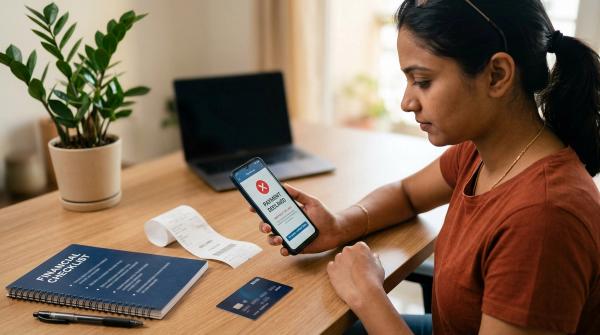

Finding out that your bank account has been frozen after a cyber crime complaint in India can be frightening. One moment you are trying to make a UPI payment, withdraw cash, or pay an EMI, and the next moment the transaction fails.
The most important thing is this: do not panic, do not pay anyone promising a quick unfreeze, and first confirm whether your account has a lien, debit freeze, or full freeze. Ask your bank for the complaint reference, disputed transaction, lien amount if any, and the authority or police station involved. Then collect proof and respond through official channels.
Why your bank account may suddenly stop working
#For most people, this comes as a complete shock.
You may be trying to make a UPI payment, withdraw cash from an ATM, pay rent, transfer money to family, clear an EMI, or use net banking. The balance is visible, but the payment fails.
When you contact the bank, they may only say “cyber complaint,” “lien marked,” “debit freeze,” “compliance hold,” or “cyber cell freeze.”
In many cases, your account gets flagged because someone else has filed a cyber fraud complaint. When a fraud victim reports that money was stolen, the authorities and banks may trace where that money went.
The money may move through several accounts, UPI IDs, wallets, merchants, or individuals before reaching your account. So even if you received the money for a genuine reason, your account can still appear somewhere in the transaction trail.
For example, you may have received money for selling a phone online, freelance work, a shop payment, rent, a business transaction, a refund, service work, or a marketplace sale.
This does not automatically mean you are guilty. It usually means your account has appeared in a money trail connected to a cybercrime complaint.
Important: MHA and I4C do not directly freeze your bank account
#Many people get confused about the role of the Ministry of Home Affairs and I4C.
The official cybercrime ecosystem helps citizens report online financial fraud, but a bank-account lien or freeze is not directly placed by I4C or MHA. It may be placed by an Investigating Officer or law enforcement agency under applicable law, or by bank officials under banking and regulatory processes.
If you are a victim of cyber fraud, use the official National Cyber Crime Reporting Portal or helpline 1930. If your account has been restricted because of someone else’s complaint, your immediate job is to find out who sent the instruction, which transaction is disputed, what restriction was applied, and what documents you need to submit.
Lien vs debit freeze vs full freeze
#Before sending emails, calling police stations, or speaking to a lawyer, first understand the exact restriction on your account.
In simple terms, a lien is usually amount-specific. For example, if your balance is ₹60,000 and the lien amount is ₹10,000, you may still be able to use the remaining amount depending on the bank and instruction received.
A debit freeze is harder in daily life. Your money is visible, but you cannot use it. A full freeze is more serious and may stop both debit and credit transactions depending on what has been applied.
What to do first: step-by-step checklist
#Use this as your immediate action plan.
1. Do not panic or pay an “unfreeze agent”
#Do not pay people on WhatsApp, Telegram, Instagram, YouTube comments, or random websites who claim they can “remove cyber freeze in 24 hours.” Many of them are scammers.
Use only official or reliable channels, such as your bank branch, official bank customer care, the bank’s grievance portal, the official cybercrime portal if you are reporting fraud, the police station or Investigating Officer named by the bank, and a qualified lawyer if required.
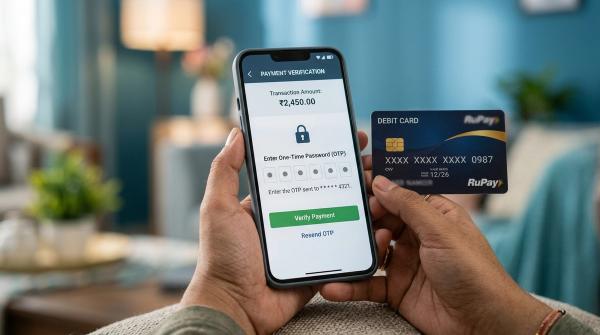
No genuine bank officer or police officer needs your OTP to unfreeze your account. Do not share OTPs, net banking passwords, debit card PINs, full card details, UPI PINs, or screen-sharing access.
2. Visit your home branch and ask for written details
#Calling customer care is often not enough. Visit your home branch and ask for:
- whether it is a lien, debit freeze, or full freeze
- the lien amount, if any
- the date when the restriction was applied
- the transaction that triggered the restriction
- the cybercrime complaint reference number, if available
- the police station, state, or cyber cell involved
- the Investigating Officer’s name or contact details, if available
- whether the bank needs an NOC, release letter, or written instruction to remove it
If the bank cannot give everything immediately, submit your own written request and take an acknowledgement copy.
3. Identify the disputed transaction
#Once the bank gives you the date, amount, or reference number, check your bank statement carefully.
Look for unknown UPI credits, customer payments, freelance payments, marketplace sale payments, refunds, money from unfamiliar names, multiple small credits, or a credit followed by quick withdrawal or transfer.
If you run a shop, match the payment with your sales register, bill book, or POS records. If you are a freelancer, check invoices, emails, WhatsApp chats, payment requests, work delivery proof, and project files.
4. Collect proof showing why you received the money
#You do not need a long emotional explanation. You need documents.
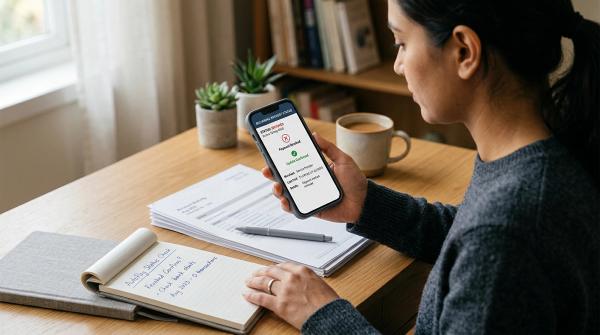
Useful proof may include an invoice, sale receipt, order details, delivery proof, WhatsApp chat, email conversation, payment screenshot, UPI transaction ID, bank statement, customer name and number if available, GST invoice if applicable, freelance work proof, product listing, courier receipt, CCTV footage for in-shop transactions, and a short written explanation.
Keep both printed copies and soft copies. If you email documents, make one clean PDF folder and name files clearly.
5. Contact the Investigating Officer properly
#After the bank gives you the police station or officer details, contact the Investigating Officer calmly and cooperatively.
You can say: “My bank account has been lien-marked or frozen in relation to a cybercrime complaint. I received the amount for a genuine transaction and I want to cooperate. Please tell me how I can submit my documents.”
If an official email ID is available, send your documents by email. If you send physical documents, use Speed Post or another trackable method.
Your written representation should include your name, bank and branch, masked account number, mobile number, disputed transaction date and amount, UPI reference or bank transaction ID, why you received the money, list of documents attached, and a request to remove or limit the lien/freeze if your explanation is accepted.
Do not create fake invoices, backdate documents, or ask someone to lie.
6. If only a small amount is disputed, ask for a limited restriction
#Sometimes the disputed amount is small, but the whole account gets frozen. For example, the disputed credit may be ₹8,000 while your entire account with ₹80,000 is under debit freeze.
In that situation, you can request the bank and the Investigating Officer to limit the restriction to the disputed amount, if permissible. This does not guarantee immediate relief, but it puts your request clearly on record.
7. Keep a record of everything
#Make a simple timeline:
Save emails, acknowledgements, postal receipts, screenshots, complaint numbers, branch letters, and call reference numbers. In these cases, written records matter much more than phone calls.
What not to do
#When a cyber crime complaint bank account freeze happens, people often act out of fear. Avoid these mistakes.
Do not ignore it
#If your account is frozen or lien-marked, ignoring it will not make it go away. The complaint or restriction may remain on record until it is changed, removed, or resolved.
Do not fight with bank staff
#The branch staff may not have authority to remove the freeze. They may need instructions from the authority that sent the request. Be firm, but stay polite.
Do not move suspicious money through other accounts
#Trying to hide transactions or route money through family accounts can create more trouble. If your account is already linked to a cybercrime-related restriction, be extra careful with all further transactions.
Do not depend on random online advice
#Every case is different. Your situation may depend on your bank, the transaction trail, the complaint source, the state police involved, the documents you have, and the type of restriction applied.
Do not share OTPs or passwords
#No officer, bank employee, lawyer, or agent needs your OTP, net banking password, UPI PIN, card PIN, or full debit card details to remove a freeze.
When should you use cybercrime.gov.in?
#Use the National Cyber Crime Reporting Portal when you are the victim of cyber fraud.
For example, use it if money was fraudulently debited from your account, someone tricked you into sending money, your UPI was misused, your banking details were stolen, someone used your identity, or you suffered online financial fraud.
If your account is frozen because of someone else’s complaint, the portal may help you understand the general system. But your practical next step is usually through your bank and the Investigating Officer connected to that complaint.
What if the bank says “cyber cell freeze” but gives no details?
#Ask in writing. Submit a simple letter to the branch:
My account has been restricted. Please provide the type of restriction, date of marking, amount under lien if any, reference number, and the authority or department on whose instruction the restriction was placed. I request this information so I can cooperate and submit documents.
Take an acknowledgement copy. If the branch does not respond, raise a complaint through the bank’s official grievance channel and keep the complaint number.
When should you speak to a lawyer?
#This article is for general information only and is not legal advice.
Consider legal help if your full account remains frozen for a long time, the disputed amount is small but all your funds are blocked, the police station is in another state, you receive a notice or summons, your business is badly affected, the bank and officer are not responding despite written requests, or you need to approach court for release of funds.
Avoid anyone who guarantees unfreezing. Nobody can honestly promise that without following the proper process.
Practical document checklist
#Keep these ready before contacting the Investigating Officer:
- Bank statement showing the disputed credit
- UPI transaction ID or reference number
- Screenshot of payment received
- Invoice, bill, receipt, or sale record
- Chat or email with sender, customer, or client
- Delivery proof, courier receipt, or service proof
- Shop CCTV footage, if relevant and available
- Written explanation of why the money was received
- Copy of ID and business proof, if relevant
- Bank branch acknowledgement
- Email or postal proof of documents sent to the Investigating Officer
Simple format for your written explanation
#Subject: Request for review/removal of lien or freeze on bank account linked to cybercrime complaint
Respected Sir/Madam,
My name is [Name]. I hold a bank account with [Bank and Branch]. My account has been marked with a lien/debit freeze in relation to a cybercrime complaint.
As informed by my bank, the disputed transaction appears to be:
Date:
Amount:
Transaction ID/UPI reference:
Sender name/UPI ID, if known:
I received this amount for [brief reason, such as sale of goods, freelance service, shop payment, refund, etc.]. I was not aware of any fraud connected to this money.
I am attaching the following documents:
1.
2.
3.
I request you to kindly review my documents and, if satisfied, issue necessary instructions to remove the lien/freeze or limit it to the disputed amount, as applicable.
I am willing to cooperate and provide any further information required.
Name:
Mobile:
Email:
Address:
Date:
Final takeaway
#A bank account frozen due to a cyber crime complaint in India is stressful, but your first response should be practical.
Find out whether it is a lien, debit freeze, or full freeze. Get written details from the bank. Identify the disputed UPI or bank transaction. Collect proof. Contact the Investigating Officer through official channels. Avoid agents, shortcuts, and panic decisions.
Most importantly, document everything. In these matters, clear paperwork often works better than long explanations.