
The credit card interest-free period in India is the time you get to repay credit card purchases without paying interest. It depends on your billing cycle, statement date and due date. To keep this benefit, pay the full Total Amount Due on or before the due date. Paying only the Minimum Due, missing the due date, carrying a balance or withdrawing cash can remove the interest-free benefit.
This guide is for general education. Always check your own credit card statement, your issuer’s Most Important Terms and Conditions, and current RBI guidance before making payment decisions.
Quick answer: how the interest-free period works
#A credit card does not give the same number of interest-free days for every transaction.
If you buy something at the start of your billing cycle, you usually get more time to pay. If you buy something near the statement date, you get fewer days.
The rule is simple:
To enjoy the interest-free period, pay the full Total Amount Due by the due date.
Paying only the Minimum Due is not enough. It may help you avoid the account being treated as completely unpaid, but it does not save you from credit card interest on the remaining balance.
Billing cycle, statement date and due date: what they mean
#A simple way to think about it:
- The billing cycle decides which purchases come in your bill.
- The statement date tells you how much you owe.
- The due date tells you the last day to pay.
- The Total Amount Due is the number to focus on if you want to avoid interest.
- The Minimum Due is not full payment.
Is the interest-free period the same as the grace period?
#People often use both terms as if they mean the same thing. In everyday conversation, that is usually fine.
The interest-free period usually means the full time from the purchase date to the payment due date, assuming you pay the full bill on time.
The credit card grace period is often used for the time between your statement date and your due date.
For example, if your statement is generated on 30 July and the due date is 20 August, the period between those two dates is commonly called the grace period.
You do not need to overthink the terminology. The main rule is:
Your purchases remain interest-free only if you pay the full statement amount by the due date.
Example: why some purchases get more interest-free days
#Let’s take a simple example.
- Billing cycle: 1 July to 30 July
- Statement date: 30 July
- Due date: 20 August
Example 1: You buy early in the billing cycle
#Suppose you buy a refrigerator on 2 July.
This purchase will be included in the bill generated on 30 July. The payment for that bill is due on 20 August.
So you get roughly 49 days to pay for that purchase, assuming you pay the full bill on time.
That is why purchases made early in the billing cycle usually get a longer interest-free period.
Example 2: You buy near the statement date
#Now suppose you buy groceries on 29 July.
The statement closes the next day, on 30 July, and the due date is still 20 August.
So you get only around 22 days before payment is due.
The purchase can still be interest-free, but the available time is much shorter.
Practical takeaway
#If you are planning a large purchase and have flexibility, buying just after a new billing cycle starts can give you more time to pay.
But this only helps if you are confident you can pay the Total Amount Due in full by the due date. If you cannot, the extra days will not save you from interest.
When you lose the credit card interest-free period
#The interest-free period is not automatic forever. It depends on how you use the card and how you repay the bill.
1. You pay only the Minimum Due
#This is one of the most common credit card mistakes.
Let’s say your Total Amount Due is ₹50,000 and your Minimum Due is much lower. If you pay only the Minimum Due, the bank may not treat your account as fully unpaid, but the remaining balance can start attracting interest.
In simple words, paying the Minimum Due keeps the account active, but it does not make your bill interest-free.
Also, once you start carrying forward a balance, new purchases may not get the usual interest-free period until the old balance is cleared fully. This surprises many users because they assume new purchases will still get fresh interest-free days.
They may not.
2. You pay less than the Total Amount Due
#Even a small unpaid amount can create problems.
Suppose your Total Amount Due is ₹20,000 and you pay ₹19,950. You may think, “It is only ₹50. What difference will it make?”
But from the bank’s point of view, the full bill has not been paid. That small shortfall can affect your interest-free benefit and may attract charges as per your card terms.
So do not leave small unpaid balances. They are easy to overlook and irritating to deal with later.
3. You miss the due date
#If your payment is not made and credited on time, you may face:
- Credit card interest
- Late payment charges, if applicable
- Loss of the interest-free benefit
- Possible impact on your credit history, depending on reporting rules and issuer process
Do not wait until the last hour to pay. Sometimes payments get delayed because of bank holidays, app issues, failed transactions, server problems or third-party processing time. There are also cases where money is debited from your bank account, but the credit card payment does not reflect immediately.
To avoid this stress, pay a few days before the due date whenever possible.
4. You withdraw cash using your credit card
#This needs a clear warning.
Credit card ATM cash withdrawals usually do not get an interest-free period.
Interest can start from the date you withdraw the cash. A cash advance fee may also apply. GST may apply on relevant charges as per rules.
This is very different from using your credit card for a normal purchase at a shop, restaurant or online website.
A credit card is not the same as a debit card. When you withdraw cash using a debit card, you are using your own bank balance. When you withdraw cash using a credit card, you are borrowing money from the bank.
Avoid using your credit card like an ATM card unless it is an emergency and you have checked the charges properly.
Why the Minimum Due feels safe but can become expensive
#The Minimum Due is tempting because it makes a large bill look manageable.
If your credit card bill is ₹60,000 and the Minimum Due is only a small part of it, paying the smaller number can feel like a relief. But it is not the same as clearing your bill.
The unpaid balance continues. Interest can be charged on it as per your card issuer’s terms. Many credit cards in India have high monthly finance charges. These monthly rates may not look scary at first, but when you think of them on an annual basis, they can become expensive.
A good rule to follow:
Minimum Due is for emergency damage control, not for regular repayment.
If you cannot pay the Total Amount Due, try to stop using the card for new spending until you clear the full balance. Otherwise, the outstanding amount can keep growing and become harder to manage.
Credit card cash withdrawal: not the same as debit card cash
#A debit card cash withdrawal uses money already available in your bank account.
A credit card cash withdrawal is a loan taken from your credit card limit.
With a credit card cash advance, you may have to pay:
- Interest from the withdrawal date
- No normal interest-free period
- Cash advance fee
- GST on applicable charges, as per rules
If your goal is to avoid credit card interest, do not treat your credit card as a backup ATM card.
Use credit card cash withdrawal only when there is no better option, and even then, read the charges first.
How credit card interest is generally calculated
#Once you lose the interest-free period, banks generally calculate interest according to their credit card terms.
You may see words like:
- Monthly interest rate
- Annualised interest rate
- Finance charges
- Revolving credit interest
- Average daily balance
The exact calculation method can vary from one card issuer to another. That is why you should check your card statement and MITC carefully.
The practical point is simple:
Credit card interest is usually expensive, and it can grow quickly if you keep carrying the balance month after month.
This is why it is better to treat your credit card like a payment tool, not like extra income.
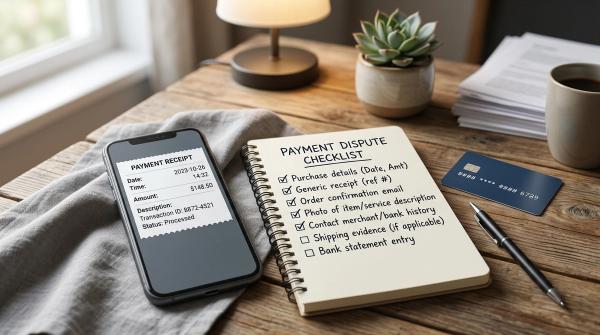
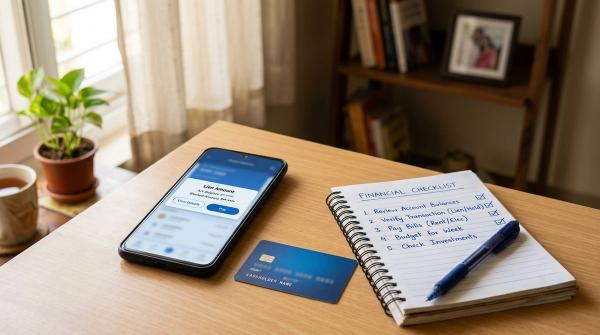
Monthly payment checklist before the due date
#Use this checklist every month.
- Check the statement date and due dateDo not depend only on memory, especially if you have more than one credit card.
- Look for the Total Amount DueThis is the amount you need to pay if you want to avoid interest on purchases.
- Do not confuse it with Minimum DueMinimum Due is not full payment. It does not protect your interest-free period.
- Pay a few days earlyUPI, net banking, IMPS, NEFT and third-party apps may have different settlement timelines. Paying early gives you a safety buffer.
- Confirm that the payment is creditedMoney debited from your bank account is not always the same as successful credit to your card account. Check the card app or internet banking.
- Review all transactionsLook for duplicate charges, failed refunds, subscriptions, cancellations or transactions you do not recognise.
- Keep proof of paymentSave the confirmation message, transaction ID or receipt until the payment reflects properly.
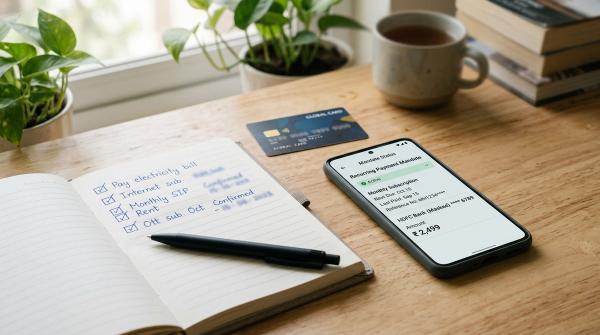
- Use autopay carefullyIf your goal is to avoid interest, choose the Total Amount Due option. Also make sure your bank account has enough balance before the autopay date.
- Avoid new spending if you are carrying a balanceIf you did not pay last month’s full bill, your normal interest-free benefit may not apply to new purchases.
Before making a large purchase on your credit card
#A credit card can be useful for large purchases because you may get rewards, cashback, fraud protection and extra time to pay. But before swiping or clicking “Pay,” ask yourself a few questions.
Which billing cycle will this purchase fall into?
#If your billing cycle has just started, you may get a longer interest-free period. If it is about to close, your payment window may be short.
When is the due date?
#A long interest-free period is useful only if you can actually pay on time.
Can I pay the Total Amount Due in full?
#If the answer is no, the purchase may become expensive because of credit card interest.
Am I already carrying a balance?
#If you have not cleared your previous bill in full, new purchases may not get the normal interest-free benefit.
Is this a purchase or a cash withdrawal?
#Normal purchases and ATM cash withdrawals are treated differently. Cash withdrawals usually attract interest immediately.
Common mistakes that lead to credit card interest
#Most credit card interest is not caused by one big mistake. It usually happens because of small habits that continue for a few months.
Watch out for these:
- Paying only the Minimum Due
- Paying after the due date
- Paying through a third-party app at the last minute
- Forgetting small unpaid amounts
- Using the card for ATM cash withdrawals
- Continuing to spend while already carrying a balance
- Not checking the statement after refunds or cancellations
- Ignoring subscriptions and auto-renewals
- Assuming autopay worked without verifying it
- Looking only at the SMS amount and not the full statement
The easiest habit is this:
Check the bill early, pay the Total Amount Due, and confirm that the payment has been credited.
Do this every month and you will avoid most unnecessary credit card interest.
Source-aware note
#This article follows general credit card billing practices in India and is aligned with RBI credit card consumer guidance that says the interest-free benefit can be lost when the Total Amount Due is not cleared by the payment due date. Your exact dates, charges, interest rate and payment posting rules depend on your card issuer.
Disclaimer: This article is for general educational purposes only. It is not financial, legal, tax, lending or investment advice. Always check your own card statement, issuer terms and official RBI guidance before making payment decisions.