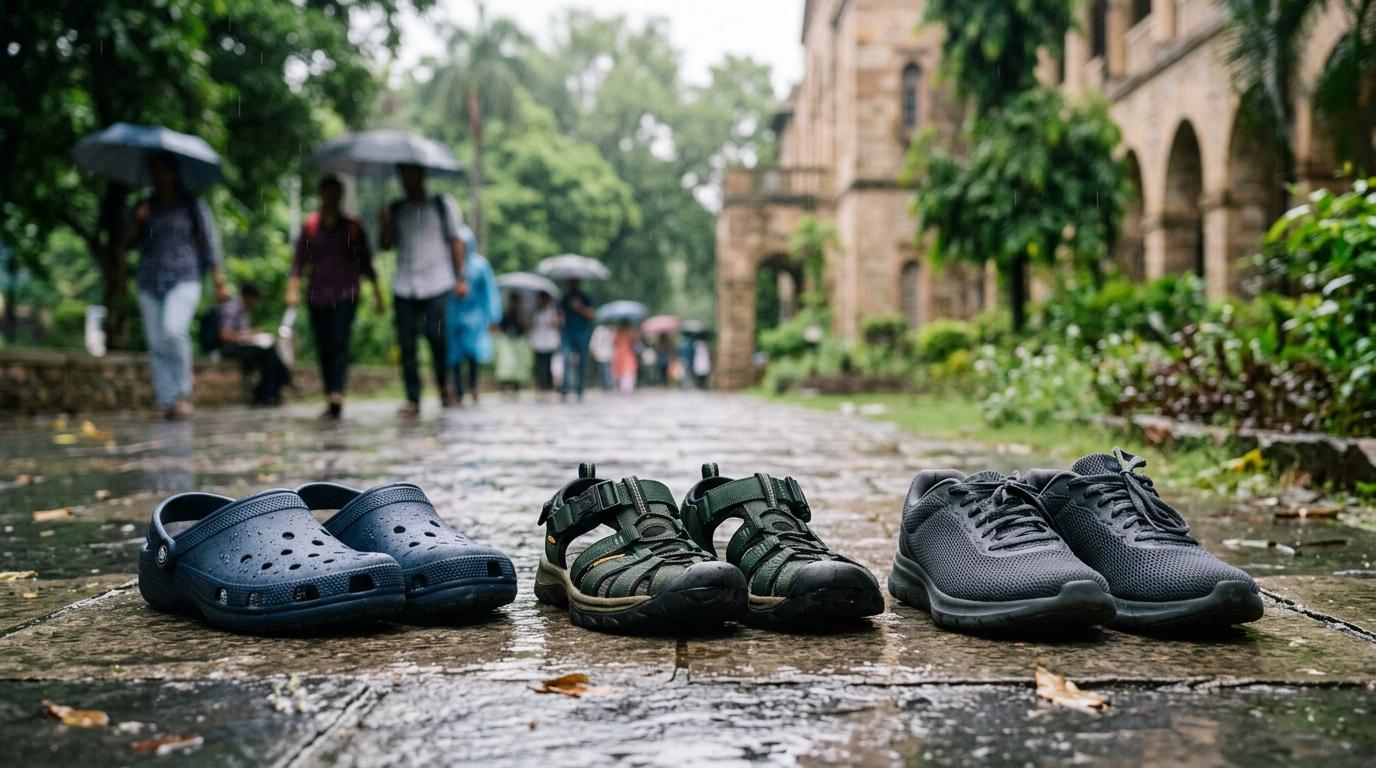
The monsoon looks beautiful when you are watching it from your hostel window.
The campus turns green, the weather finally cools down, and suddenly even regular chai tastes like a reward.
But then you actually have to step out.
Your shortcut is muddy. The staircase is slippery. The corridor outside class is wet for no clear reason. Buses are crowded. Puddles are everywhere. And if you make the wrong footwear choice, your socks stay damp till evening.
That is when you realise monsoon footwear is not just a fashion decision. It is a survival decision.
The good news is that you do not need five different pairs for the rainy season. Most college students can manage with one reliable everyday pair and one backup for hostel, lab, or dress-code days.
This guide breaks down the most common options: sneakers, sports sandals, clogs, slides, and gumboots, and helps you choose what actually works for Indian college life during the monsoon.
Quick Answer: What Should College Students Wear in the Monsoon?
#If you want the short version, here it is:
- For long commutes: choose sports sandals with back straps and strong grip.
- For hostel-to-campus walks: EVA or rubber clogs are usually the easiest option.
- For dress-code days or light rain: quick-dry synthetic sneakers are better than canvas sneakers.
- For hostel bathrooms and corridors: slides are useful, but do not rely on them for outdoor rain.
- For flooded routes: gumboots help, but they are usually too bulky for everyday college use.
The best monsoon footwear for college students is not always the trendiest pair. It is the pair that does four things well:
- Grips wet floors
- Dries quickly
- Stays secure on your foot
- Does not become heavy, smelly, or uncomfortable by afternoon
Sneakers vs Sandals vs Clogs vs Slides vs Gumboots
#Footwear behaves very differently in the rain.
A pair that feels perfect on a dry day can become slippery, heavy, or annoying once it gets soaked. So before buying anything for the rainy season, it helps to know what each option is actually good for.
Let’s compare them one by one.
1. Sneakers: Good Only If You Pick the Right Kind
#Sneakers are the default college shoe for many students. They look neat, go with almost everything, and some colleges, labs, or departments prefer closed footwear.
But during the monsoon, not all sneakers are equal.
What works
#Quick-dry sneakers made with synthetic or mesh uppers can work well in light rain. They are usually lighter than thick fabric shoes, dry faster under a fan, and look more presentable than open footwear.
Sneakers make sense if:
- Your commute is mostly covered.
- You only face light rain or occasional puddles.
- Your college has footwear rules.
- You need closed shoes for labs, presentations, or formal college days.
- You want something that looks clean with jeans, cargos, or casual outfits.
What does not work
#Canvas sneakers are a poor monsoon choice.
They soak up water very quickly, become heavy, and take ages to dry, especially in hostel rooms or PGs where sunlight is limited. Once they stay damp for too long, they can also start smelling bad.
Thick padded sneakers have the same problem. They may feel comfortable on dry days, but in heavy rain, they hold water like a sponge.
Best for
#Light drizzle, covered commutes, classroom days, presentations, and colleges where open footwear is not allowed.
Avoid for
#Heavy rain, muddy roads, waterlogged areas, long walks in the rain, and hostel rooms where drying shoes is difficult.
Verdict: Sneakers can work in the monsoon, but only if they are quick-dry or water-resistant. Avoid canvas and thick fabric sneakers for rainy college days.
2. Sports Sandals: Best for Long Monsoon Commutes
#Sports sandals, trekking sandals, or outdoor-style sandals are one of the most practical choices for college students during the rainy season.
They may not always look as “clean” as sneakers, but when it is raining hard and you have to catch a bus, they make a lot of sense.
Why they work
#Good sports sandals stay attached to your feet.
That sounds basic, but it matters a lot when you are walking through puddles, climbing wet bus steps, crossing a muddy patch, or rushing through a crowded station.
Because your feet are open, water does not get trapped inside the footwear for hours. Yes, your feet may get wet and dirty, but they also dry much faster once you reach college.
Sports sandals are useful if:
- You travel by bus, train, metro, or shared auto.
- You walk a lot before reaching campus.
- Your route has puddles, mud, or uneven roads.
- You need footwear that can be rinsed and worn again.
- You do not want to deal with wet socks all day.
What to check before buying
#Not every sandal is rain-friendly.
Flat fashion sandals with smooth soles can become slippery on wet tiles. Hard straps can also rub badly when wet, especially if the pair is new.
Look for:
- A proper back strap
- Adjustable straps
- A rubber or grippy outsole
- Deep tread or grooves at the bottom
- Soft strap edges that do not cut into the skin
- A secure fit that does not wobble while walking
Best for
#Long commutes, public transport, rainy bus stops, wet campus roads, and students who walk a lot.
Avoid for
#Labs, workshops, or departments where fully closed footwear is compulsory.
Verdict: If your monsoon commute is tiring, unpredictable, or very wet, sports sandals are probably the safest and most practical choice.
3. Clogs: The Easy Everyday Campus Option
#Rubber and EVA clogs have become common on college campuses, and honestly, it is easy to see why.
They are simple, quick to wear, easy to clean, and much better in rain than canvas shoes or flat slippers.
Why they work
#EVA and rubber do not absorb water the way fabric does. If your clogs get muddy, you can rinse them, wipe them, and wear them again without much effort.
Clogs are useful if:
- You live in a hostel.
- Your classroom or department is a short walk away.
- You want something you can slip on quickly.
- You need footwear for rain, mud, canteen runs, and humid weather.
- You want more toe coverage than open sandals.
They are especially convenient for hostel students because they handle daily campus life well: mess, classroom, library, canteen, chai break, repeat.
Use the back strap outside
#A lot of students wear clogs like loose slides. That is fine inside the hostel, but not ideal outdoors during rain.
If you are walking on wet stairs, muddy paths, or uneven roads, pull the strap behind your heel. It makes the clog more stable and reduces the chance of your foot sliding around inside.
What to watch out for
#Some clogs look chunky but have poor grip. Always turn them over before buying. If the sole is too smooth, skip them for the monsoon.
Also, clogs with holes will obviously let water in. So they are not meant to keep your feet completely dry. They are better understood as easy-clean, quick-dry footwear.
Best for
#Hostel-to-campus walks, short commutes, daily campus use, canteen runs, humid days, and light to moderate rain.
Avoid for
#Strict labs, formal dress-code days, very long walks, and slippery areas if the sole has poor grip.
Verdict: Clogs are a great low-maintenance monsoon option, especially for hostel students and short campus commutes.
4. Slides and Flip-Flops: Useful Indoors, Risky Outside
#Slides and flip-flops are part of hostel life. Keep them. Use them. Love them.
Just do not make them your main rainy-day commute footwear.
Why they are not ideal for the rain
#Most budget slides have flat soles and no back strap. That makes them unstable on wet tiles, smooth staircases, muddy roads, and crowded buses.
They can also splash muddy water onto your legs, jeans, and even your bag. Anyone who has walked through a rainy college parking area in slides knows exactly how annoying this is.
Flip-flops are even riskier because they can slip off easily, especially in moving water or mud.
Where they work
#Slides are good for:
- Hostel corridors
- Shared bathrooms
- Mess runs
- Quick indoor movement
- Short walks in mostly dry areas
Where they do not work
#Avoid slides and flip-flops for:
- Wet staircases
- Long walks
- Crowded buses
- Waterlogged roads
- Slippery campus tiles
- Muddy shortcuts
Verdict: Slides are hostel footwear. They are not proper monsoon commute footwear.
5. Gumboots: Useful Only If Your Route Really Floods
#Gumboots offer the most protection from water. They cover your feet and lower legs better than sandals, clogs, or sneakers.
But for regular college life, they can feel like too much.
Why they may not suit everyday campus use
#Gumboots can be hot, bulky, and uncomfortable during long college days. Sitting in class for hours in tall rubber boots is not fun, especially when the weather is humid.
They are useful if:
- Your area gets heavily waterlogged.
- You regularly walk through standing water.
- Normal footwear becomes useless on your route.
- You need serious protection from dirty rainwater.
Best for
#Flood-prone routes, extreme waterlogging, and unavoidable walks through standing water.
Avoid for
#Regular campus days, long classroom hours, dry or semi-wet routes, and students who already manage fine with sandals or clogs.
Verdict: Gumboots are helpful in extreme conditions, but most college students will find sports sandals or clogs more comfortable for daily use.
Best Monsoon Footwear by College Situation
#Buyer’s Checklist for Monsoon Footwear
#Before buying rainy-season footwear, do not just check the colour or brand.
Flip the pair over. Bend it a little. Look at the material. Think about your actual daily route.
Here is what really matters.
1. Grip
#Grip is the most important feature in monsoon footwear.
College campuses often have smooth tiles, polished corridors, granite stairs, and wet entrances. These surfaces can become dangerously slippery in the rain.
Look for soles with:
- Visible grooves
- Deep tread
- Rubber texture
- Channels that can push water out
- A stable base
Avoid:
- Completely flat soles
- Smooth plastic-like bottoms
- Worn-out tread
- Thin fashion soles with no pattern
If the sole looks slippery in the shop, it will definitely feel worse on wet stairs.
2. Sole Thickness
#A slightly thicker sole helps keep your feet above shallow puddles and mud.
This does not mean you need huge platform soles. You just need something firmer than thin bathroom slippers.
Look for:
- Moderate thickness
- Rubber or EVA construction
- A sole that bends but does not fold completely
- A stable base that does not twist too much
Avoid very thin soles if you walk daily in the rain. They offer little protection and wear out quickly.
3. Material
#Material decides what happens after your footwear gets wet.
Good monsoon materials include:
- EVA
- Rubber
- PU
- Synthetic mesh
- Quick-dry uppers
- Water-resistant materials
Avoid in heavy rain:
- Canvas
- Suede
- Thick fabric padding
- Leather-style materials that are difficult to dry
- Shoes with too much foam inside
In Indian monsoon conditions, the goal is not always to keep water out completely. Sometimes that is impossible.
The better goal is to choose footwear that dries quickly and can be cleaned easily.
4. Straps and Fit
#Your footwear should stay on your foot even when the ground is wet, muddy, or crowded.
Choose:
- Back straps
- Adjustable straps
- Secure laces
- A snug but comfortable fit
- Clogs that do not slide around too much
Be careful with:
- Loose slides
- Flip-flops for outdoor walking
- Oversized clogs
- Hard straps that rub when wet
- Sandals that feel unstable from the sides
A secure fit matters most when you are climbing bus steps, walking on wet stairs, or moving through a crowded campus entrance.
5. Drying Time
#Ask yourself one simple question before buying:
If this gets soaked at 9 AM, will it dry by tomorrow morning?
If the answer is no, think twice.
Fast-drying options include:
- EVA clogs
- Rubber sandals
- Sports sandals
- Synthetic mesh sneakers
Slow-drying options include:
- Canvas sneakers
- Thick padded sneakers
- Fabric-heavy shoes
- Shoes with absorbent insoles
Drying time becomes a big deal if you live in a hostel or PG and have only one everyday pair.
Campus Safety Tips for Rainy Days
#Good footwear helps, but your walking habits matter too.
Slow down on wet tiles
#College corridors, staircases, canteen areas, and building entrances can get extremely slippery during the monsoon.
Be careful near:
- Staircases
- Hostel corridors
- Canteen entrances
- Classroom blocks
- Bus steps
- Metro and railway station tiles
- Smooth campus pathways
Do not run to class in wet footwear, even if you are late. A few extra seconds are better than slipping on a staircase.
Check your soles regularly
#Even good footwear becomes unsafe once the tread wears out.
If the bottom has become smooth, do not trust it in the rain. This is especially important for old sneakers, slides, and cheap sandals.
Watch out for blisters
#Wet footwear can rub more than dry footwear.
A strap that feels okay on a normal day may start hurting after a rainy commute. New sandals and clogs can also cause blisters if you wear them for a long walk immediately.
To avoid this:
- Break in new footwear before heavy rain starts.
- Avoid hard plastic edges.
- Choose softer straps when possible.
- Do not wear a brand-new pair for a long commute on day one.
- Stop using a pair if it keeps cutting or rubbing your skin.
If something hurts during a five-minute walk, it will probably feel much worse during a rainy commute.
How to Dry Wet Shoes in a Hostel Room
#The hostel drying struggle is very real.
There is not enough sunlight, the room is already humid, and wet shoes left in a corner can start smelling bad quickly.
If your sneakers get soaked:
- Remove the insoles if possible.
- Loosen the laces fully.
- Keep the shoes under a fan.
- Stuff them with crumpled newspaper.
- Replace the newspaper once it becomes wet.
- Keep the shoes in a ventilated spot, not inside a closed bag.
For rubber sandals or clogs:
- Rinse off mud.
- Wipe with an old cloth if needed.
- Leave them in an airy place.
- Avoid keeping them wet under the bed or inside a cupboard.
Never leave damp footwear sealed inside your backpack. That smell is not worth it.
Budget Guide: What Should You Actually Buy?
#Most college students do not need a full monsoon footwear collection.
You just need to buy according to your routine.
If you live in a hostel
#Buy:
- One pair of EVA or rubber clogs for daily campus use
- One pair of slides for bathroom and indoor use
Optional:
- Quick-dry sneakers if your department has dress-code rules
If you commute daily by bus, train, metro, or walking
#Buy:
- One pair of sports sandals with back straps and good tread
Optional:
- Quick-dry sneakers for dry days, labs, presentations, or formal events
If your route floods often
#Buy:
- Sports sandals for regular rainy days
- Gumboots only if waterlogging is frequent and unavoidable
If your college has a strict dress code
#Buy:
- Quick-dry synthetic sneakers
Optional:
- Sandals or clogs for travel, if you can change after reaching campus
The main point is simple: do not overbuy.
One reliable rainy-day pair is better than three stylish pairs that slip, stay wet, or fall apart after two weeks.
Common Mistakes to Avoid
#Buying only for looks
#A sneaker may look clean and aesthetic, but that does not mean it can survive the monsoon.
Always check the sole, material, grip, and drying time.
Wearing canvas sneakers in heavy rain
#Canvas sneakers absorb water fast and dry slowly. They are fine for dry days, but not for serious monsoon weather.
Using flat slides outdoors
#Slides feel convenient, but they are not stable enough for wet stairs, muddy roads, and crowded commutes.
Ignoring the back strap
#If your sandals or clogs have a back strap, use it outdoors. It makes a big difference on wet surfaces.
Wearing wet sneakers again and again
#If your sneakers do not dry properly, they become uncomfortable and may start smelling. If you do not have a dry backup, choose faster-drying footwear.
Assuming waterproof always means better
#Waterproof footwear can still feel hot, bulky, and sweaty. For college life, quick-dry and easy-clean materials are often more useful than full waterproof protection.
Final Recommendation
#For most Indian college students, the best monsoon footwear is either a sports sandal or an EVA/rubber clog.
Choose sports sandals if you have a long commute, use public transport, walk through wet roads, or deal with muddy routes often.
Choose clogs if you live in a hostel, have a short campus walk, and want something easy to rinse, dry, and wear every day.
Keep quick-dry sneakers for light rain, labs, presentations, or dress-code days.
Keep slides for hostel use.
Consider gumboots only if your route is genuinely waterlogged and regular footwear does not work.
In the end, practical monsoon footwear is not about buying the most expensive pair. It is about grip, material, fit, straps, and drying time.
Get those right, and the rainy season becomes much easier to handle.