If your clothes are starting to look a little tired, it is easy to assume you need one magic tool to fix everything. But a sweater covered in pills and a pair of black trousers covered in cat hair are dealing with two different problems.
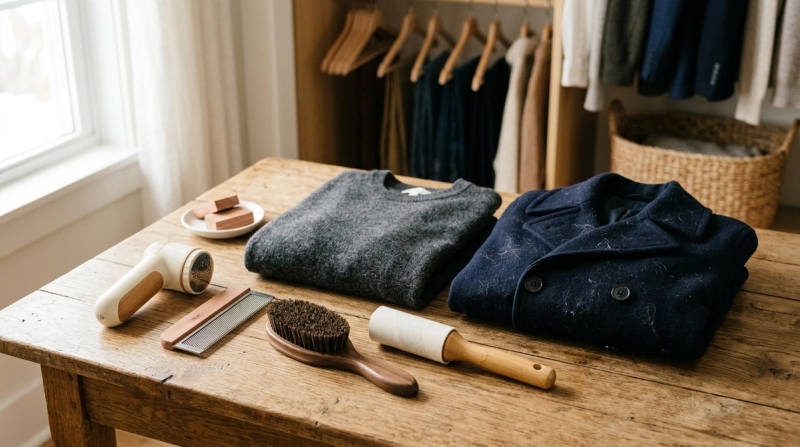
A fabric shaver removes pills and attached fuzz.A lint roller picks up loose stuff, like pet hair, lint, dust, and dandruff.A sweater comb does a similar job to a fabric shaver, but more slowly and gently, which makes it useful for delicate knits.
So the real question is not “fabric shaver vs lint roller.” It is: what are you actually trying to remove?
Short answer
#- For pills and attached fuzz: Use a fabric shaver or sweater comb.
- For pet hair, dust, lint, and dandruff: Use a lint roller or clothing brush.
- For cashmere, fine wool, or loose knits: Start with a sweater comb.
- For sturdy sweaters, coats, and larger areas: A fabric shaver is faster.
- For fewer tools overall: Improve your laundry and storage habits first.
Most people do not need every clothing-care tool out there. But if you deal with both pilling and pet hair, one tool probably will not do it all.
Who this is for
#This guide is for anyone who wants their clothes to look better for longer without buying a drawer full of gadgets.
It will help if you have:
- Sweaters that look old because of pilling
- Coats or work clothes that attract dust and lint
- Black trousers that seem to collect every pet hair in the house
- Travel clothes that need quick touch-ups
- A small wardrobe where each item gets worn often
- Knits you are nervous about damaging
The main thing to understand is this: pills are attached to the fabric. Pet hair, dust, and lint usually sit on the surface. Since they are different problems, they need different tools.
Fabric shaver vs lint roller: what is the real difference?
#A fabric shaver trims off pills and fuzzy surface buildup. It has small rotating blades behind a guard, so it can remove those little balls of fiber that make sweaters, coats, and leggings look worn.
A lint roller is basically sticky paper on a handle. It lifts loose debris from the surface of your clothes. It is great when you are about to leave the house and notice hair, lint, or dust on your outfit.
But a lint roller will not fix pilling. And a fabric shaver is not the right tool for loose cat hair on your trousers.
If your sweater has tiny fiber balls on the sleeves, you need a fabric shaver or sweater comb. If your coat has dust or dog hair on it, you need a lint roller or clothing brush.
The main clothes care tools, explained simply
#1. Fabric shaver
#A fabric shaver, sometimes called an electric lint remover, is made for removing pilling from clothes.
Pilling happens when loose surface fibers rub together and twist into small clumps. You usually see it in high-friction areas, such as:
- Cuffs
- Underarms
- Sides of sweaters
- Inner thighs
- Seat areas
- Places where a bag strap rubs
A fabric shaver works by letting the pills pass through a mesh guard, where small blades trim them away.
Best for:
- Sturdy sweaters
- Wool coats
- Cotton-blend tops
- Leggings and joggers
- Larger pilled areas
- Blankets or upholstery, if the fabric can handle it
Avoid using one if:
- The garment is wet
- The fabric is stretched tight
- The knit has very loose loops
- The item has embroidery, lace, loose threads, or raised details
- You cannot lay the garment flat on a firm surface
A fabric shaver can make a tired-looking sweater look much neater, but it is not something to use carelessly. It removes tiny bits of fiber as it works, so gentle passes are better than aggressive shaving.
2. Lint roller
#A lint roller is the easiest tool for quick clean-ups. It uses sticky sheets to grab loose material from the surface of clothing.
It will not repair fabric, remove pills, or smooth out a fuzzy sweater. But if you are heading out the door and your clothes are covered in pet hair, it is hard to beat.
Best for:
- Pet hair
- Dust
- Dandruff
- Loose lint
- Dark trousers
- Workwear
- Coats
- Fabric bags and car seats, if suitable
Avoid using one if:
- You are trying to remove pilling
- The fabric is very delicate or loosely woven
- The adhesive feels too strong for the material
- You do not want to keep using disposable sticky sheets
A lint roller for pet hair is great to keep near the door, in your bag, or at work. Just remember that it is a surface-cleaning tool, not a fabric pilling remover.
3. Sweater comb
#A sweater comb is a small manual tool for removing pills and fuzz from knitwear. Some have a fine mesh edge, while others have a rougher surface for heavier wool.
The main benefit is control. You can slow down, work carefully, and stop as soon as the fabric looks better.
Best for:
- Cashmere
- Fine merino wool
- Delicate sweaters
- Small pilled areas
- Tight-knit travel clothes
- People who prefer manual tools over blades
Avoid using one if:
- You need to clean a large blanket or sofa
- The garment is heavily pilled all over
- You are in a hurry
- You tend to press too hard
For sweater comb vs fabric shaver, think of it this way: a sweater comb is slower and more controlled. A fabric shaver is faster and better for bigger, sturdier items.
4. Clothing brush
#A clothing brush removes surface dust, lint, and some hair. It is closer to a lint roller than a fabric shaver, but it is reusable and does not rely on sticky sheets.
It will not shave off pills. It is more of a maintenance tool than a rescue tool.
Best for:
- Coats
- Jackets
- Workwear
- Wool-looking outerwear
- Regular light maintenance
- People who want a reusable lint-removal option
Avoid using one if:
- You need to remove attached pills
- Pet hair is deeply embedded
- The fabric is delicate and the brush feels too firm
A clothing brush can be a good everyday option if your main issue is dust or lint, especially on coats and work clothes.
What to check before buying
#Before you buy anything, look at the clothes you actually wear. Are they pilled? Covered in hair? Dusty? Delicate? Sturdy?
That will tell you which tool makes sense.
If buying a fabric shaver
#Look for:
- A guard or spacer to help control blade contact
- A comfortable grip
- A lint chamber that is easy to empty
- A design that works with light pressure
- A head size that suits your clothes
A larger head is useful for coats, blankets, and big sweaters. A smaller head gives you more control around cuffs, seams, and detailed areas.
Do not buy the most powerful-looking one just because it seems stronger. With fabric shavers, control matters more than force.
If buying a lint roller
#Check:
- Whether the sheets tear off cleanly
- Whether the handle feels sturdy
- Whether refills are easy to find
- Whether the adhesive is suitable for your fabrics
If you have pets, a lint roller is one of those things you will probably reach for constantly. But if you hate disposable sheets, consider a reusable clothing brush instead.
If buying a sweater comb
#Check:
- Whether the edge suits your fabric type
- Whether it feels gentle enough for fine knits
- Whether it is comfortable to hold
- Whether it gives you enough control for small areas
Do not use the same pressure on every garment. A thick wool coat and a soft cashmere sweater need very different handling.
If buying a clothing brush
#Check:
- Whether the bristles or surface feel too harsh
- Whether it is comfortable to use on coats and trousers
- Whether it works best in one brushing direction
- Whether it is meant for clothing, not rough household scrubbing
A clothing brush is best for regular upkeep. It will not fix heavy pilling, but it can keep coats and jackets looking fresher between washes or dry cleans.
Best choice by problem
#If your clothes have pills
#Choose a fabric shaver for sturdy garments or a sweater comb for delicate knits.
A lint roller will not solve pilling because the fibers are still attached to the garment.
If your clothes pick up pet hair
#Choose a lint roller for quick removal or a clothing brush if you want something reusable.
If the hair is just sitting on the surface, you do not need a fabric shaver.
If your sweater is delicate
#Start with a sweater comb.
Work slowly, use light pressure, and go in one direction. A fabric shaver may work on some delicate knits, but it is less forgiving if the fabric has loose loops, texture, or raised details.
If your coat looks dusty
#Try a clothing brush or lint roller first.
Only use a fabric shaver if the coat has actual pills or attached fuzz. Dust alone does not need shaving.
If you travel often
#A small lint roller or compact clothing brush is useful for quick touch-ups. A sweater comb can help with small pilling spots on knits.
A fabric shaver is usually better for home use, especially because you need to lay the garment flat on a firm surface.
Mistakes to avoid
#1. Pulling pills off by hand
#It is tempting to pick at pills while watching TV or sitting at your desk, but try not to. Pulling can stretch the yarn and disturb nearby fibers, which can make the area look worse over time.
Use a sweater comb or fabric shaver instead.
2. Using a lint roller as a pilling remover
#A lint roller removes loose debris. It does not cut attached pills.
If you keep rolling over pilled fabric, you may tug at the surface without actually fixing anything.
3. Shaving fabric while it is bunched up
#Always lay the garment flat on a firm surface. Keep the fabric smooth, but do not stretch it hard.
If the fabric folds into the shaver head, the tool can catch and damage it.
4. Pressing too hard
#Whether you use a fabric shaver or sweater comb, pressure is not the answer.
Use gentle passes. If the pills do not come off right away, go slowly rather than forcing the tool through the fabric.
5. Treating every fabric the same way
#A thick coat, a cotton-blend sweatshirt, and a fine wool sweater all need different care.
When you are unsure, test the tool on a hidden area first.
The no-buy habit change: reduce pilling and lint before it starts
#You may not need another tool right away. A few basic clothing-care habits can help reduce pilling, lint, and surface wear.
Try this first:
- Wash clothes inside out
- Use gentle cycles for knits and delicate fabrics
- Use cold water when suitable for the garment
- Avoid overloading the washing machine
- Air-dry sweaters and knits flat
- Store knits folded instead of hanging
- Keep lint-heavy items away from clothes that attract lint
These habits will not remove existing pills, but they can reduce friction and help clothes stay neater for longer.
So, what should you buy?
#If you only have pilling, buy a fabric shaver for sturdy clothes or a sweater comb for delicate knits.
If you only have pet hair, dust, and lint, buy a lint roller or clothing brush.
If you have both problems, do not expect one tool to do everything. A practical setup is:
- Fabric shaver for sturdy pilled garments
- Sweater comb for delicate knits
- Lint roller or clothing brush for surface hair, dust, and lint
If your clothes are only lightly worn, start with better washing, drying, and storage habits before buying anything.