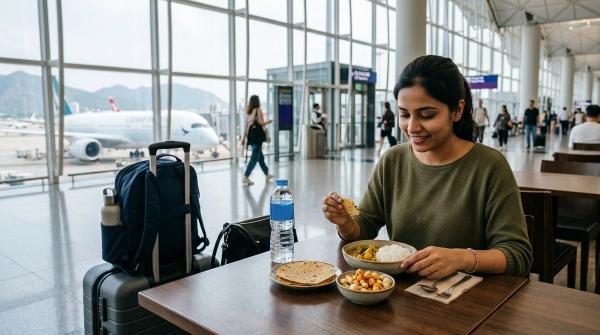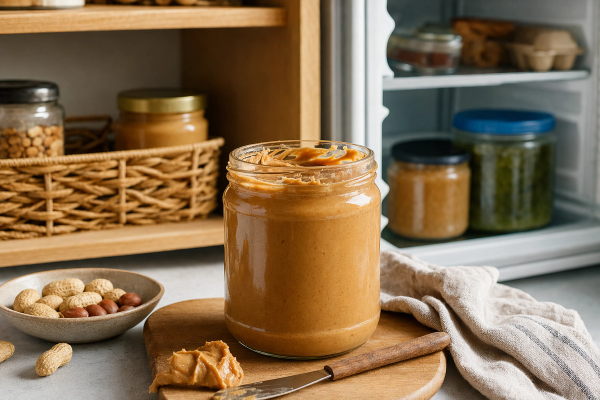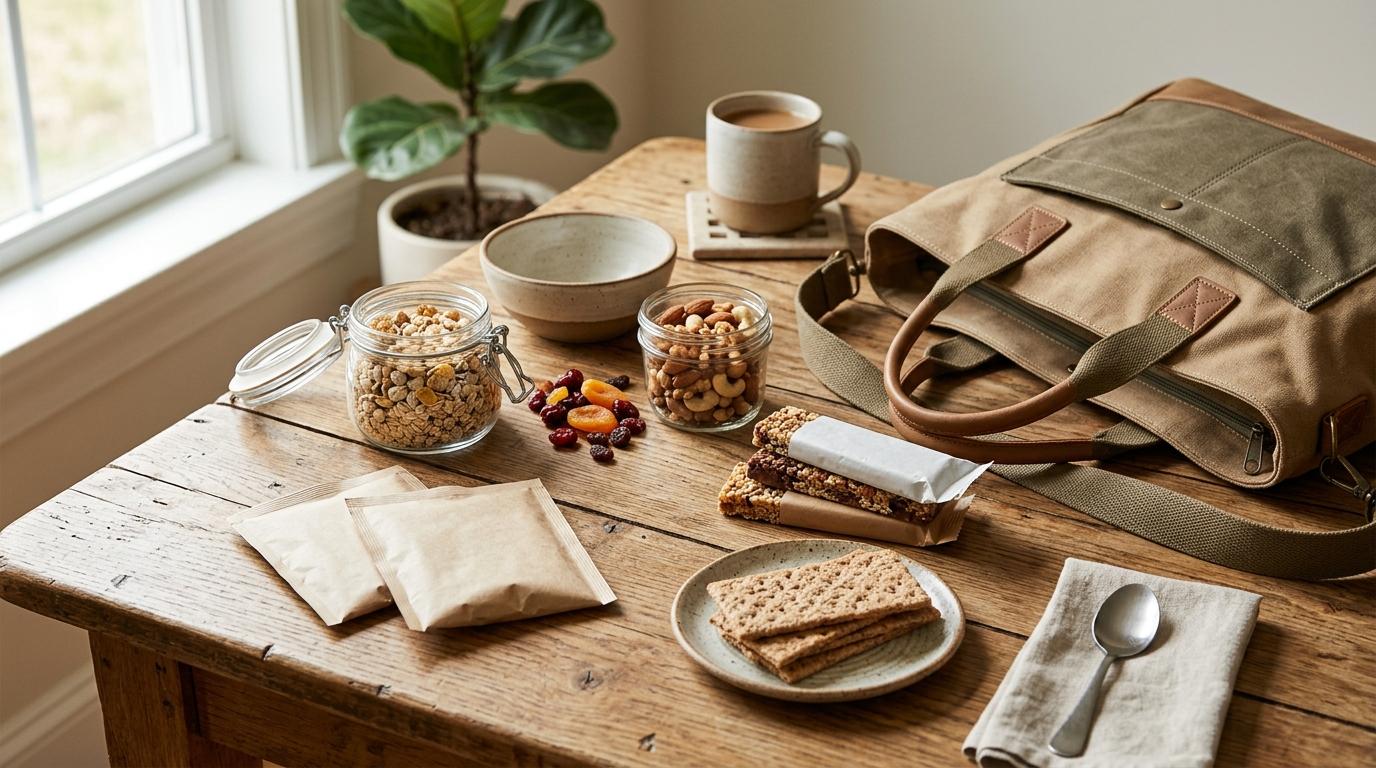
Some mornings are not built for a proper breakfast.
You’re catching a 7 AM flight and leaving the house before your brain is fully online. You’re on a train where the café car is basically coffee, chips, and disappointment. You’re riding a bus for hours with your backpack doing the job of a kitchen. You’re in a hostel and the shared fridge looks like it has seen things. Or maybe you’re just heading to work, knowing breakfast is going to sit in your desk drawer until you finally get five quiet minutes.
The tricky part is that lots of “easy” breakfasts are only easy if you can keep them cold. Yogurt, cream cheese bagels, egg sandwiches, cheese sticks, smoothies, deli meat wraps — they all feel portable. But if they’re going to sit in a warm bag for hours, they’re not great choices.
So what can you actually pack?
Quick answer: the safest no-fridge breakfast foods
#If you want the short version, stick with dry, sealed, shelf-stable foods.
Pack these: instant oatmeal, dry cereal, nuts, seeds, dried fruit, trail mix, sturdy granola or protein bars, crackers, crispbreads, and shelf-stable jerky or cured meat snacks.
Buy and eat right away: coffee, tea, hot water for oatmeal, fresh fruit, plain baked goods without cream fillings, and any refrigerated breakfast item you plan to eat immediately.
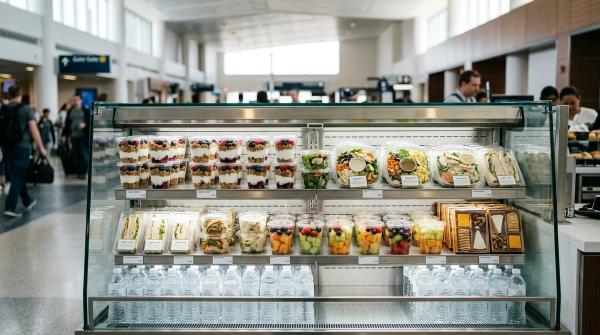
Skip without a cooler: yogurt, milk-based smoothies, cream cheese, cheese sticks, hard-boiled eggs, deli meats, egg sandwiches, breakfast wraps, and refrigerated sandwiches you want to save for later.
A simple rule helps: if it normally lives in the fridge, don’t carry it around for hours unless you have a real cooler.
What makes a good breakfast without refrigeration?
#The best breakfast foods without refrigeration are usually not exciting. And honestly, that’s the point.
You want foods that:
- Stay dry or come sealed
- Don’t contain fresh dairy, eggs, deli meat, or cooked meat
- Can survive a warm backpack, car, hotel room, or desk drawer
- Won’t leak, melt everywhere, or smell suspicious
- Keep you full for more than 20 minutes
That last part matters. A plain sweet pastry may be safe enough at room temperature, but it might not get you very far. A better no-fridge breakfast usually has some mix of carbs, fat, and protein.
Think oatmeal with nuts. Cereal with dried fruit and seeds. Crackers with jerky. Trail mix that is not just chocolate in disguise.
Nothing fancy. Just breakfast that does its job.
Safe no-fridge breakfast foods to pack
#Here are the most useful no-fridge breakfast foods for flights, trains, buses, road trips, hostels, dorm rooms, office drawers, and rushed mornings in general.
1. Instant oatmeal packets or cups
#Instant oatmeal is one of the easiest travel breakfasts if you can get hot water.
Pack a few single-serve packets or oatmeal cups, then add hot water from a coffee shop, office kitchen, airport lounge, train café, hotel lobby, or wherever you can find it. It’s light, cheap, compact, and feels more like a real breakfast than eating random snacks while half-awake.
Good add-ins to pack separately:
- Raisins
- Dried apple
- Dried cranberries
- Nuts
- Seeds
- Cinnamon
- Shelf-stable nut butter packets
If you want something warm and steady on a chaotic morning, oatmeal is hard to beat.
2. Dry cereal
#Dry cereal is one of the simplest breakfast foods that last without a fridge. It’s easy to portion, easy to pack, and you can eat it by the handful if you don’t have a bowl.
For travel, choose sturdier cereals that won’t turn into crumbs the second your bag gets bumped. A hard container helps if your backpack tends to crush everything.
To make cereal more filling, mix it with:
- Almonds
- Walnuts
- Peanuts
- Pumpkin seeds
- Sunflower seeds
- Raisins
- Dried cranberries
- Banana chips
That turns it from a handful of cereal into something closer to breakfast.
3. Nuts and seeds
#Nuts and seeds are small, shelf-stable, and surprisingly useful when breakfast gets delayed. They give you fat, protein, and enough staying power to avoid getting desperately hungry an hour later.
Good options include:
- Almonds
- Peanuts
- Cashews
- Walnuts
- Pumpkin seeds
- Sunflower seeds
Pack them in small portions if you can. A little container or snack bag is much easier than wrestling with a giant bag of almonds on a plane, train, or crowded bus.
4. Trail mix
#Trail mix works because it gives you quick energy plus something more filling. A good breakfast-style trail mix doesn’t need to be complicated.
Try this:
- One part dry cereal
- One part nuts or seeds
- One part dried fruit
That’s it. Crunchy, sweet, portable, and safe without a fridge.
Just be careful with mixes that are mostly candy or chocolate. They taste good, obviously, but they can melt, get sticky, and leave you hungry again pretty quickly.
5. Dried fruit
#Dried fruit is great when fresh fruit is likely to get bruised, squashed, or forgotten at the bottom of your bag.
Good choices include:
- Raisins
- Dried mango
- Dried apricots
- Apple chips
- Dried figs
- Dried cranberries
- Banana chips
Dried fruit is best when paired with nuts, seeds, cereal, or oatmeal. On its own, it’s more of a quick boost than a complete breakfast.
6. Protein bars and granola bars
#Bars are convenient, but some are basically cookies with better marketing.
Look for bars with oats, nuts, seeds, or a decent amount of protein. If you’re traveling somewhere warm, skip thick chocolate coatings unless you enjoy opening a wrapper full of melted regret.
Bars are especially helpful for:
- Early flights
- Morning commutes
- Bus rides
- Train trips
- Long meetings
- Emergency desk breakfasts
It’s smart to keep one or two in your bag. Just don’t rely on the super sugary ones as your only breakfast every time.
7. Crackers or crispbreads
#Crackers may not sound like breakfast, but they’re useful when you want something savory. They give you a base for a no-fridge breakfast, especially with jerky, nuts, or a shelf-stable spread.
Choose sturdy crackers or crispbreads that won’t crumble immediately. If your bag is rough on food, use a small container. Otherwise you’ll end up with cracker dust, which is technically edible but not exactly satisfying.
8. Shelf-stable cured meat snacks
#If you prefer a savory breakfast, shelf-stable cured meat snacks can help. Jerky is the easiest example.
The key is to make sure the product is actually shelf-stable before opening. Some cured meats still need refrigeration, especially if they’re sold from a chilled section or the package says to refrigerate.
Good pairings include:
- Jerky with crackers
- Jerky with nuts
- Jerky with dried fruit
- Jerky with crispbreads
This is a practical way to get protein when you can’t safely carry eggs, cheese, or deli meat.
Breakfast foods that need cooling
#This is where a lot of travel breakfasts go wrong.
Some foods feel portable because they’re individually wrapped or easy to hold. But that does not mean they’re safe to leave unrefrigerated for hours.
If it usually sits in the fridge at home or in the store, assume it needs to stay cold unless the package clearly says otherwise.
Yogurt and yogurt parfaits
#Yogurt is not a good save-for-later breakfast unless you have a cooler.
The same goes for yogurt parfaits with fruit and granola. They’re convenient if you buy one and eat it right away. They’re not a great idea if you plan to toss one in your bag and eat it hours later.
Milk-based smoothies and drinks
#Milk-based smoothies need refrigeration. They’re fine if you buy them cold and drink them soon, but they’re not something to carry around all morning.
This includes bottled smoothies from the refrigerated case, even if the bottle is sealed.
Cream cheese bagels
#A cream cheese bagel feels like the classic grab-and-go breakfast, but it is not a shelf-stable food. Cream cheese is perishable and needs to stay cold.
If you buy one, eat it then. Don’t save it for later in a warm bag, car, or desk drawer.
Cheese sticks and soft cheeses
#Individually wrapped does not mean shelf-stable.
Cheese sticks, soft cheeses, and similar dairy snacks need cooling. Without a cooler, skip them.
Hard-boiled eggs
#Hard-boiled eggs seem like the perfect portable breakfast until you remember they need refrigeration.
They’re not a good choice for long no-fridge travel days. Also, once they warm up, they can make your bag, car, or workspace smell awful. That is not the kind of breakfast memory anyone needs.
Deli meats and deli sandwiches
#Turkey, ham, chicken slices, and similar deli meats need to stay cold.
A deli sandwich packed in the morning is not a safe late-morning or afternoon meal unless it has been kept properly chilled. If you want a deli sandwich, buy it and eat it right away, or bring a cooler.
Egg sandwiches and breakfast wraps
#Egg sandwiches, breakfast burritos, and wraps with meat, cheese, or eggs should not sit around unrefrigerated.
They’re convenient if you eat them right away. They are not safe shelf-stable breakfasts for travel.
Pack, buy, or skip checklist
#Use this quick list when you’re planning breakfast for a morning without refrigeration.
Pack
#These are the safest choices to bring from home:
- Instant oatmeal packets or cups
- Dry cereal
- Nuts
- Seeds
- Trail mix
- Dried fruit
- Sturdy protein bars
- Granola bars with oats, nuts, or seeds
- Crackers
- Crispbreads
- Shelf-stable jerky or cured meat snacks
- Powdered breakfast drinks, if they only need water and the package is shelf-stable
Best for flights, buses, trains, road trips, hostels, dorm rooms, office drawers, and painfully early starts.
Buy and eat right away
#These can work if you eat or drink them soon after buying:
- Coffee
- Tea
- Hot water for oatmeal
- Fresh whole fruit
- Plain baked goods without cream fillings
- Refrigerated breakfast items you plan to eat immediately
Best for mornings when you can stop briefly but can’t safely store food afterward.
Skip without a cooler
#Avoid these if breakfast needs to sit in a bag, car, or drawer:
- Yogurt
- Yogurt parfaits
- Milk-based smoothies
- Cream cheese bagels saved for later
- Cheese sticks
- Soft cheeses
- Hard-boiled eggs
- Deli meat sandwiches
- Egg sandwiches
- Breakfast wraps with eggs, meat, or cheese
- Cream-filled pastries
Best rule: if it contains dairy, eggs, deli meat, or cooked meat, don’t treat it like a shelf-stable breakfast.
Travel-day breakfast examples
#Here’s how to turn the safe list into actual breakfasts instead of a sad pile of emergency snacks.
The early flight breakfast
#Pack:
- Instant oatmeal cup
- Raisins or dried apple
- Nuts or seeds
- One sturdy bar as backup
If you can get hot water, make the oatmeal and stir in the fruit and nuts. If you can’t, eat the bar and save the oatmeal for later.
Why it works: everything is dry, sealed, and safe without refrigeration.
The train or bus breakfast
#Pack:
- Dry cereal trail mix
- Dried fruit
- Nuts or jerky for protein
This is a low-mess breakfast you can eat slowly without utensils. It also avoids carrying dairy, eggs, or deli meat around for hours.
Why it works: it’s compact, shelf-stable, and easy to portion.
The road trip breakfast without a cooler
#Pack:
- Trail mix with cereal, nuts, and dried fruit
- Crackers
- Shelf-stable jerky
- A protein bar
Buy:
- Coffee or tea
- Fresh fruit, if you’ll eat it right away
Skip saving egg sandwiches, cream cheese bagels, or yogurt for later unless you have a cooler.
Why it works: you’re not gambling on perishable food in a warm car.
The hostel breakfast
#Pack:
- Oatmeal packets
- Dried fruit
- Nuts
- Bars
If there’s hot water, oatmeal is the easiest breakfast. If the kitchen situation is questionable, you still have bars, nuts, and dried fruit.
Why it works: you’re not depending on a shared fridge or a kitchen that may or may not be clean.
The office drawer breakfast
#Keep:
- Oatmeal packets
- Dry cereal
- Nuts or seeds
- Dried fruit
- Protein bars
This gives you a few safe backup breakfasts for rushed mornings. Just keep everything sealed so it stays fresh and doesn’t attract crumbs, smells, or office pests.
Why it works: your desk drawer becomes a tiny breakfast station.
A simple no-fridge breakfast formula
#If you don’t want to think too hard, use this:
Base + protein or fat + fruit or flavor
Examples:
- Instant oatmeal + walnuts + raisins
- Dry cereal + almonds + dried cranberries
- Crackers + jerky + dried apple
- Protein bar + nuts + dried fruit
- Trail mix + coffee or tea
This keeps breakfast filling enough to be useful while staying safely in the no-fridge zone.
Food safety tips for no-fridge breakfasts
#A few small habits make shelf-stable breakfasts safer and less annoying:
- Keep dry foods sealed until you eat them.
- Use airtight containers for cereal, crackers, and trail mix.
- Don’t pack foods that usually need refrigeration unless you have a cooler.
- Eat refrigerated foods right after buying them if you can’t keep them cold.
- Don’t leave food on a hot dashboard or in direct sun.
- Check labels on cured meats and packaged foods.
- If a package says “refrigerate after opening,” follow that instruction.
The goal is not to panic about breakfast. It’s just to avoid the obvious mistakes that can make you sick or ruin your morning.
Final take: pack dry, buy fresh, skip risky
#The best breakfast foods without refrigeration are simple: oats, cereal, nuts, seeds, dried fruit, trail mix, bars, crackers, and shelf-stable savory snacks.
Buy fresh or refrigerated items only when you can eat them right away. Skip dairy, eggs, deli meats, cream cheese, and cooked breakfast sandwiches if you don’t have a cooler.
A good no-fridge breakfast does not need to be impressive. It just needs to survive the morning, keep you satisfied, and not cause problems later.
What are the best breakfast foods that last without refrigeration?
#The most reliable options are instant oatmeal, dry cereal, nuts, seeds, dried fruit, trail mix, crackers, sturdy protein bars, and shelf-stable jerky. They’re easy to pack, don’t need a fridge, and work well for travel, hostels, dorm rooms, and office drawers.
Can I keep a cream cheese bagel in my bag for later?
#No. Cream cheese needs refrigeration. If you buy a cream cheese bagel, eat it right away. Don’t save it for later in a backpack, car, or desk drawer unless you have a cooler.
Are granola bars a good shelf-stable breakfast for travel?
#Yes, if you choose the right kind. Look for bars with oats, nuts, seeds, or protein. Bars that are mostly sugar or chocolate may be convenient, but they may not keep you full for long and can get messy in warm weather.
How long can hard-boiled eggs stay out of the fridge?
#Hard-boiled eggs should not be left at room temperature for more than two hours, or one hour if it’s especially hot. If you don’t have a cooler, skip them for long travel days.
Can I pack deli meat for a morning trip?
#Only if you can keep it properly chilled. Deli meats like turkey, ham, and chicken slices need refrigeration. Without a cooler, choose a shelf-stable savory option like jerky instead.