The Lunchbox Question That Has Haunted My Family Kitchen
#So, can boiled potatoes stay outside in an Indian tiffin? Short answer: yes, for a little while. Long answer: not as long as most of us grew up pretending, honestly. If the potatoes are cooked and then packed into a dabba, they should ideally be eaten within about 2 hours if they’re sitting at normal room temperature. If it’s one of those brutal Indian summer days, like 35°C and your bag is basically a mini oven, then I’d be even stricter, around 1 hour. After that, you’re gambling a bit. And I say this as someone who has eaten questionable aloo from steel tiffins on trains, buses, school benches, office desks, and once, very memorably, from the side pocket of a backpack in Jaipur. Not proud. But alive.
I know this sounds dramatic because boiled potatoes feel so harmless, no? They’re humble. They’re soft. They don’t smell scary like old fish or look suspicious like curd gone split. But cooked potatoes are a starchy, moist food, and bacteria absolutely love that kind of cozy setup. Especially when they sit warm-ish for hours. In food safety language, cooked potatoes fall into that category of foods that shouldn’t hang around in the “danger zone” for too long. In regular kitchen-person language: if your aloo has been sitting in a closed tiffin since morning and you’re opening it at 3 pm after it travelled through heat, humidity, and your sweaty commute... please pause before taking that first bite.
My Potato Tiffin Childhood, aka Aloo Was Basically Currency
#I grew up in a house where boiled potatoes were not an ingredient, they were an emergency plan. Mummy would boil them at night, peel them half-asleep, and keep them ready for morning chaos. Aloo paratha filling. Aloo sandwich. Batata bhaji. Masala aloo with poori. Jeera aloo. Even that dry potato-peanut thing we ate during fasts, which I still crave even when I’m not fasting because, well, potatoes don’t ask too many questions.
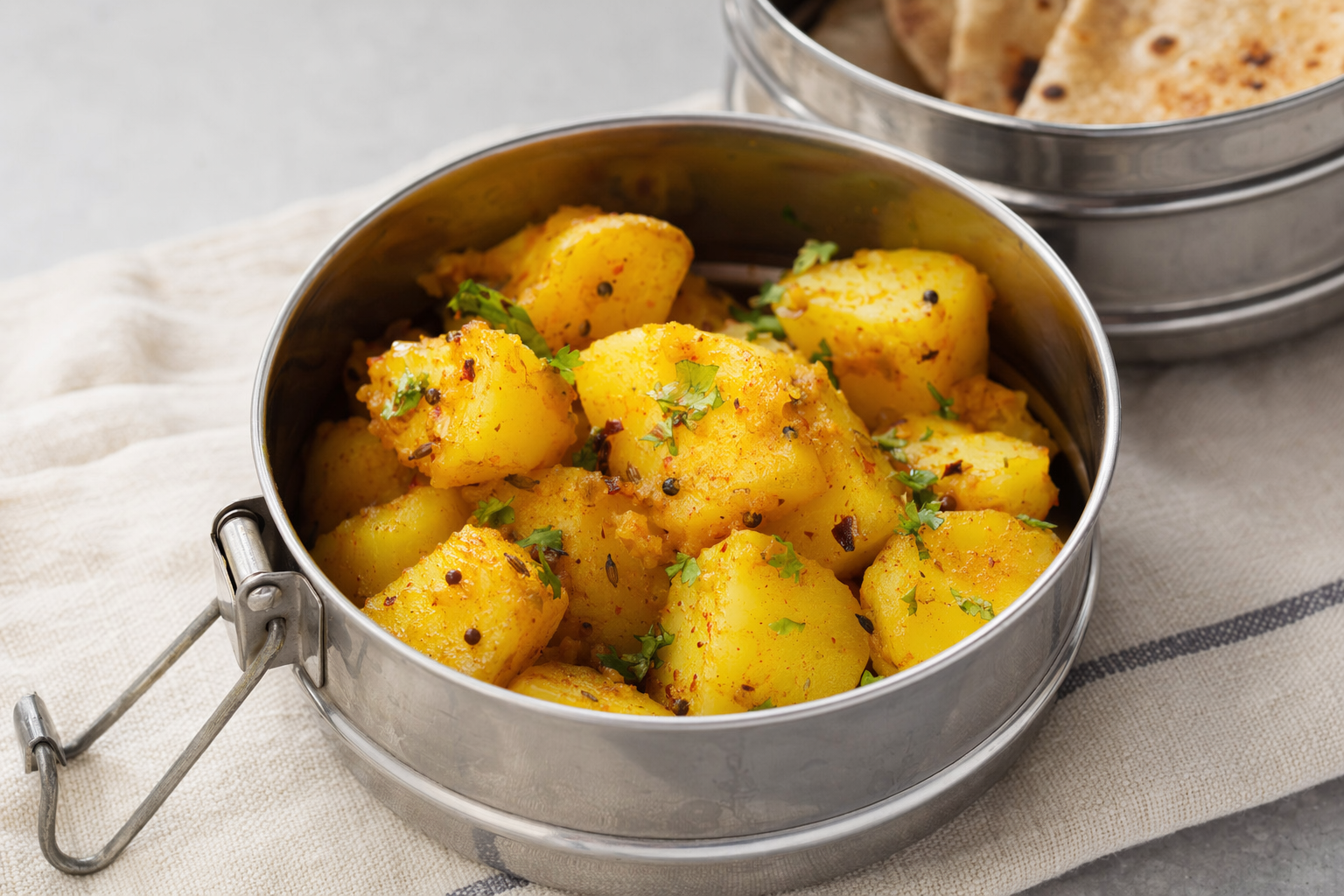
My school tiffin was often a steel box with two compartments, one side stuffed with rotis folded like little blankets, the other side some dry aloo sabzi with turmeric stains that never left the dabba lid. By lunch break, the potatoes would be room temperature, slightly oily, and honestly delicious. Nobody talked about bacteria. Nobody had ice packs. If someone’s mother sent mango pickle, that child became instantly popular. If someone had aloo poori, they had power. Real power.
But I also remember the bad days. That sour smell when you opened the dabba and instantly knew something was off. The potato had gone a bit sticky, like not full slime but that weird tacky surface. Sometimes the curry leaves smelled flat, sometimes the onion in the sabzi had turned mean. We’d still take one bite and say, “hmm maybe okay?” because kids are idiots and hungry kids are even worse. Looking back now, I’m like... why did no adult intervene??
The Real Safety Rule: 2 Hours, Sometimes 1 Hour
#Here’s the practical thing I follow now: if boiled potatoes, potato sabzi, aloo chaat, or mashed potatoes are sitting outside without being kept hot or cold, eat them within 2 hours. If the weather is very hot, above roughly 32°C, cut that down to 1 hour. This is not some fancy chef rule. It’s the standard food-safety advice used for cooked perishable foods because bacteria multiply fast in warm conditions. And Indian tiffins, especially metal ones, don’t magically stop that. They protect the food from dust and flies, sure, but they don’t keep it safe for half a day unless you manage the temperature.
Now I know someone is going to say, “But my father carried aloo sabzi to work for 30 years and nothing happened.” Same. Mine too. But food safety is not only about what happens every time. It’s about reducing the chances of that one bad day, when the potatoes cooled too slowly, the spoon wasn’t clean, the dabba sat in the sun, monsoon humidity was doing full drama, and your stomach decides to file a complaint at midnight.
My personal rule: if the boiled potatoes have been outside for more than 2 hours, I don’t pack them forward into another meal. Eat soon, chill properly, or toss. I hate wasting food, but I hate food poisoning more.
Why Potatoes Are Trickier Than They Look
#Potatoes feel dry-ish when they’re plain, but boiled potatoes actually hold a lot of moisture. Once cooked, they lose that raw protective barrier and become soft, starchy, and easy for microbes to settle into. If you peel them with hands that aren’t clean, mix them with onion, coriander, chutney, curd, mayo, or even just a wet masala, you’ve made them more vulnerable. Not evil. Just more delicate.
Plain boiled potatoes with salt are safer than potato mixed with curd or mayonnaise, but that doesn’t mean they can sit forever. Potato sabzi made dry with oil, mustard seeds, curry leaves, turmeric, and salt tends to hold up better in a tiffin than, say, dahi aloo or aloo chaat with green chutney. But “better” doesn’t mean “all day on a scooter in May.” I wish it did. Truly. My dream life includes hot aloo poori at any hour without consequences.
One thing people forget is cooling. If you boil potatoes at night and leave them covered on the counter till morning, that’s already risky. Warm food cooling slowly is bacteria’s favourite kind of hotel. If you’re cooking ahead, cool them quickly, refrigerate them, and then use them in the morning. Don’t keep a full pot of boiled potatoes sitting around like a decoration. My nani did this, my mother did this, I have done this, and now I try not to because knowledge is annoying but useful.
Indian Tiffin Reality: Office Desk, School Bag, Train Seat, Scooter Dicky
#The thing with Indian lunchboxes is that “outside” can mean wildly different things. A tiffin in an air-conditioned office drawer is not the same as a tiffin in a delivery bag, school backpack, or scooter storage box. A steel dabba inside a cloth bag on a Mumbai local in October is basically living another life compared to an insulated lunch bag with an ice pack in Bengaluru weather.
| Tiffin situation | How I’d treat boiled potatoes | My honest feeling |
|---|---|---|
| AC office, eaten within 2 hours | Usually okay if packed cleanly | Comfortable enough |
| School bag from 7 am to 1 pm | Risky unless kept properly hot/cold | I’d avoid plain boiled potatoes for small kids |
| Hot car or scooter dicky | Not safe for long | Please no, the poor aloo is suffering |
| Monsoon commute, humid weather | Extra caution | Smell and texture can fool you |
| Insulated thermos kept hot | Much better option | This is the adult move |
| Chilled tiffin with ice pack | Good if kept cold | Not glamorous, but smart |
I once packed boiled potato cubes for a train journey, thinking I’d make quick chaat with masala, lemon, and sev. Very cute idea in theory. In reality, the train was late, the compartment was warm, and by the time I opened the box, the potatoes had this dull smell. Not rotten exactly, but tired. Like they had given up on life. I threw them away and ate a packet of banana chips for lunch. Was it balanced? Absolutely not. Was it safer? Probably.
But What About Aloo Sabzi? Isn’t Masala Protective?
#This is where Indian kitchens get emotionally complicated. We all believe masala saves everything. Haldi is antiseptic, salt preserves, oil coats, hing helps digestion, ajwain fixes gas, and somehow in the middle of all this we start thinking our potato sabzi is invincible. I love our home remedies and spice wisdom, but no, masala does not cancel basic food spoilage.
A dry aloo sabzi is usually a better tiffin choice than plain peeled boiled potatoes because it’s cooked again with oil and spices, and there’s less free moisture if you make it properly dry. But if it has onion, tomato, fresh coriander, grated coconut, or is packed while steaming hot into a closed dabba and then left to sweat, it can still spoil. That trapped condensation is sneaky. You open the tiffin and the lid drips back into the sabzi, and suddenly your dry aloo is sitting in its own little humid climate.
- If you’re packing aloo sabzi, cook it dry and let steam escape for a few minutes before closing the lid.
- Use a clean spoon, not the same spoon that touched raw onion chutney or yesterday’s leftovers.
- Avoid adding curd, mayo, or wet chutney directly if it will sit for hours.
- Pack lemon wedges separately if you want that bright chaat flavour later.
- If the tiffin smells sour, fermented, or weirdly sweet, don’t argue with it. Just don’t.
The Monsoon Problem Nobody Talks About Enough
#Monsoon tiffins are their own beast. I love rainy-season food, don’t get me wrong. Hot vada pav, bhutta with lime and chilli, pakoras that burn your tongue because you couldn’t wait two seconds... heaven. But humidity makes packed food spoil faster, or at least feel more suspicious faster. Potatoes, mushrooms, paneer, cooked rice, coconut chutneys, sprouts — all these need more care when the air itself feels like a wet towel.
During monsoon, I’m extra strict with boiled potatoes in tiffins. I don’t pack plain boiled aloo unless it’s going to be eaten quickly. I prefer dry jeera aloo, and even then I keep the portion small. If you’re already worried about rainy-season spoilage, this piece on Can You Eat Mushrooms in Monsoon? Cleaning, Cooking and Spoilage Safety has the same kind of practical thinking I use for tiffins too: moisture, smell, storage, and not trusting “looks okay” too much.
Also, monsoon noses are unreliable. Everything smells damp. The tiffin cloth smells damp, the bag smells damp, your jeans smell damp, the office pantry smells like old tea and wet umbrellas. So if your potato has even a slightly fizzy, sour, or stale smell, don’t do that thing where you ask three coworkers to smell it and vote. We’ve all done it. It’s ridiculous. Toss it.
How I Pack Boiled Potatoes Now Without Being Paranoid
#I’m not a food safety robot. I still pack potatoes. A life without aloo in tiffin is not a life I’m interested in. But I’ve changed how I do it. If I’m boiling potatoes for next day lunch, I cool them, refrigerate them, and in the morning I either turn them into a dry sabzi or pack them cold with a way to keep them cold. If they’re going into paratha stuffing, I cook the stuffing well and don’t leave it wet. If it’s for travel, I avoid boiled potato chaat unless we’ll eat it very soon.
- Boil potatoes until just done, not mushy and waterlogged.
- Drain them properly. Don’t let them sit in hot water because they keep absorbing moisture.
- Cool quickly if saving for later. I spread them on a plate, because a deep bowl holds heat forever.
- Refrigerate within 2 hours, sooner in hot weather.
- In the morning, reheat properly if making sabzi, or keep cold with an ice pack if packing as boiled pieces.
For hot lunches, a proper insulated food jar is honestly underrated. If you want aloo matar, potato stew, sambar with potato, or even mashed potato-ish comfort food, keep it hot rather than letting it drift slowly into lukewarm danger-land. I like the rules in Thermos Lunch Food Safety: What Stays Hot, What to Skip, and the Rules That Really Matter because it explains the whole “hot should stay hot” thing without making lunch feel like a science exam.
The Taste Side: Cold Potato Can Be Amazing, But Only If You Respect It
#Let me be very clear: cold boiled potato is not the enemy. Badly stored boiled potato is. Some of my favourite foods are basically cold or room-temp potato situations. A good aloo chaat with black salt, roasted cumin, lemon, coriander, tamarind chutney, and sev? I can eat that standing at the counter like a raccoon. Potato salad, when done right, is lovely. Even leftover jeera aloo straight from the fridge with a little achar on the side — don’t judge me — has saved many late nights.
But these foods need timing. Chaat should be assembled close to eating. Potato salad with mayo or curd should stay cold. Dry sabzi should not be packed wet and hot and forgotten. There’s a difference between “traditional wisdom” and “we’ve always done this so it must be fine.” I respect both, but my stomach votes for caution.
If you like packing potato for lunch, try this: boil and cube the potatoes the night before, refrigerate them, then in the morning toss them in hot oil with mustard seeds, curry leaves, hing, turmeric, chilli, and salt until the edges dry a bit. Finish with roasted peanuts or sesame. Don’t add lemon until eating. It tastes better, travels better, and doesn’t become that sad sweaty potato mash by lunchtime. I learnt this from a small Udupi-style place near my old office, where their batata bhaji was so simple I almost felt offended. Like, why is this better than mine? The answer was patience and less water. Annoying but true.
Signs Your Tiffin Potatoes Have Gone Bad
#This is the part where I have to be the boring friend at the picnic. You cannot always smell dangerous bacteria. Sometimes food looks fine and still isn’t safe. So time and temperature matter more than sniffing. But still, your senses can catch obvious spoilage, and you should listen to them.
- Sour, fermented, alcoholic, or “fizzy” smell — big no.
- Slimy or sticky surface on boiled pieces — no thank you.
- Greyish, dull, watery masala when it wasn’t like that before — suspicious.
- Bubbles in wet potato curry or chaat — toss it.
- A taste that feels tangy when you didn’t add lemon or amchur — stop eating.
Please don’t taste a full spoon to “check.” I know, I know, we all do the tiny taste test. But if the food has been sitting too long in heat, especially more than 2 hours, the safest answer is already there. This is similar to cooked pasta, rice, and other starchy lunchbox foods. If you pack those often too, How Long Can Cooked Pasta Stay Outside? Safety Rules is worth reading because pasta and potato have that same innocent-but-starchy vibe.
What I’d Pack Instead on Really Hot Days
#On very hot days, I go for foods that are either meant to be eaten quickly, kept hot, or not as risky. The thing is, Indian food has so many tiffin heroes that don’t require us to bully boiled potatoes into unsafe situations. Thepla with pickle. Lemon rice eaten within a sensible time. Dry roasted chana. Parathas with dry filling. Idli with podi instead of wet coconut chutney. Besan chilla. Poha if eaten early. Even plain roti with sukhi bhindi travels better than many potato dishes, though bhindi has its own drama, obviously.
For kids, I’m more conservative. Their tiffins sit in bags, classrooms can get warm, and they may not eat on time. I’d rather send aloo paratha cooked fresh and cooled properly than loose boiled potato cubes. And I’d skip mayo-potato sandwiches unless there’s a cold pack. Actually, mayo sandwiches in Indian school bags make me nervous in general. Maybe that’s my own trauma from one summer picnic where the sandwiches smelled like regret.
So, Can Boiled Potatoes Stay Outside in an Indian Tiffin?
#Yes, but keep the window short. Around 2 hours at room temperature, around 1 hour in high heat. If you need the potatoes to last until lunch after a long commute, don’t just rely on the steel dabba. Keep them hot in an insulated container, or keep them cold with an ice pack, or choose a dry potato preparation that’s cooked well and eaten within a reasonable time. And if it’s monsoon, summer, or the tiffin sat in a hot car, be stricter than your inner food-waste-guilty aunty wants you to be.
I still love boiled potatoes with the kind of loyalty usually reserved for family members and favourite tea stalls. They’re comfort food, emergency food, festival food, train food, fasting food, lazy dinner food. But now I treat them with a little more respect. Not fear. Just respect. Because a good aloo tiffin should make you happy at lunch, not send you home clutching your stomach and blaming the office chai.
Anyway, that’s my very potato-heavy rant for the day. If you’re packing aloo tomorrow, cool it right, keep it hot or cold, and don’t ignore weird smells just because lunch break is short. And if you like these slightly obsessive food-safety-meets-real-kitchen chats, I keep finding nice rabbit holes and everyday food reads on AllBlogs.in — perfect for when you’re eating leftovers and questioning your life choices.