The messy truth I learned standing over a cutting board
#I used to think “clean” and “sanitize” were basically the same thing, which is embarrassing because I’ve spent half my adult life hovering around kitchens, farmers markets, fish counters, noodle shops, and other places where delicious things happen. If the counter looked shiny and didn’t have tomato seeds stuck to it, I called it done. Clean enough. Move on. There’s a pot of ragù simmering and people are hungry, right?
Then one summer I hosted a backyard dinner where I made grilled chicken thighs, a huge herby potato salad, and peach shortcake. Beautiful meal. Like, the kind where you feel smug in the best way. But while I was cleaning up, I realized I had used the same little section of counter for the raw chicken packet, then later for slicing peaches. I had wiped it with a damp sponge, sure, but had I actually made that surface safe? Uh. Maybe not. Nobody got sick, thank goodness, but that little stomach-drop moment stuck with me. Because in the kitchen, “looks clean” and “is safer for food” are cousins, not twins.
Clean means one thing, sanitize means another, and yes it actually matters
#Here’s the plain kitchen version: cleaning removes stuff you can see and some stuff you can’t. Crumbs, grease, raw egg drips, flour dust, onion skins, the sticky ring from a honey jar, that weird film under the blender base. Soap, water, friction. Scrub scrub. That’s cleaning.
Sanitizing is what comes after cleaning when you want to reduce germs on a food-contact surface to safer levels. Not sterilize. We’re not doing surgery on the island, hopefully. But sanitizing knocks down the amount of bacteria and other microbes that can hang around after the visible mess is gone. Public health guidance from groups like the USDA and CDC has said this for years in different ways: clean first, then sanitize if needed, especially where raw meat, poultry, seafood, eggs, or unwashed produce have been hanging out.
My rule now is boring but useful: if food gunk is there, clean it. If raw animal foods or questionable drips were there, clean it and then sanitize it.
Why food people should care, not just neat freaks
#I’m not a spotless-kitchen person. I wish I was. My kitchen during a dinner party looks like a tiny tornado picked up a farmers market and threw it at a Dutch oven. There’s usually parsley on the floor and one spoon I keep losing and finding in increasingly stupid places. But food safety isn’t about having a magazine kitchen. It’s about protecting the good stuff we’re making.
Think about the meals you really love. A Sunday roast chicken with crisp salty skin. Tacos with chopped cilantro and onion. A bowl of leafy greens with a jammy egg. Fresh oysters, if you’re into that brave ocean life. All of those can go sideways if juices, hands, boards, towels, and counters start swapping bacteria like gossip at a family reunion. And the annoying part is you can’t always smell it or see it. Salmonella doesn’t wave a flag. Campylobacter doesn’t politely announce itself. It’s rude like that.
Also, and this is my opinion but I’ll stand by it, a clean workspace makes food taste better because your brain relaxes. When my counter is clear and my knives are washed and my board isn’t slick with mystery oil, I cook better. I season better. I don’t forget the lemon zest. Well, sometimes I still forget the lemon zest, but less.
The order matters: don’t sanitize dirt
#This is where I used to mess up. I’d spray something on a counter, wipe it around, and feel very responsible. But sanitizers don’t work well through grease, crumbs, dried sauce, and chicken juice. They need contact with the surface. If the surface has yesterday’s pancake batter cemented onto it, the sanitizer is basically fighting through a swamp.
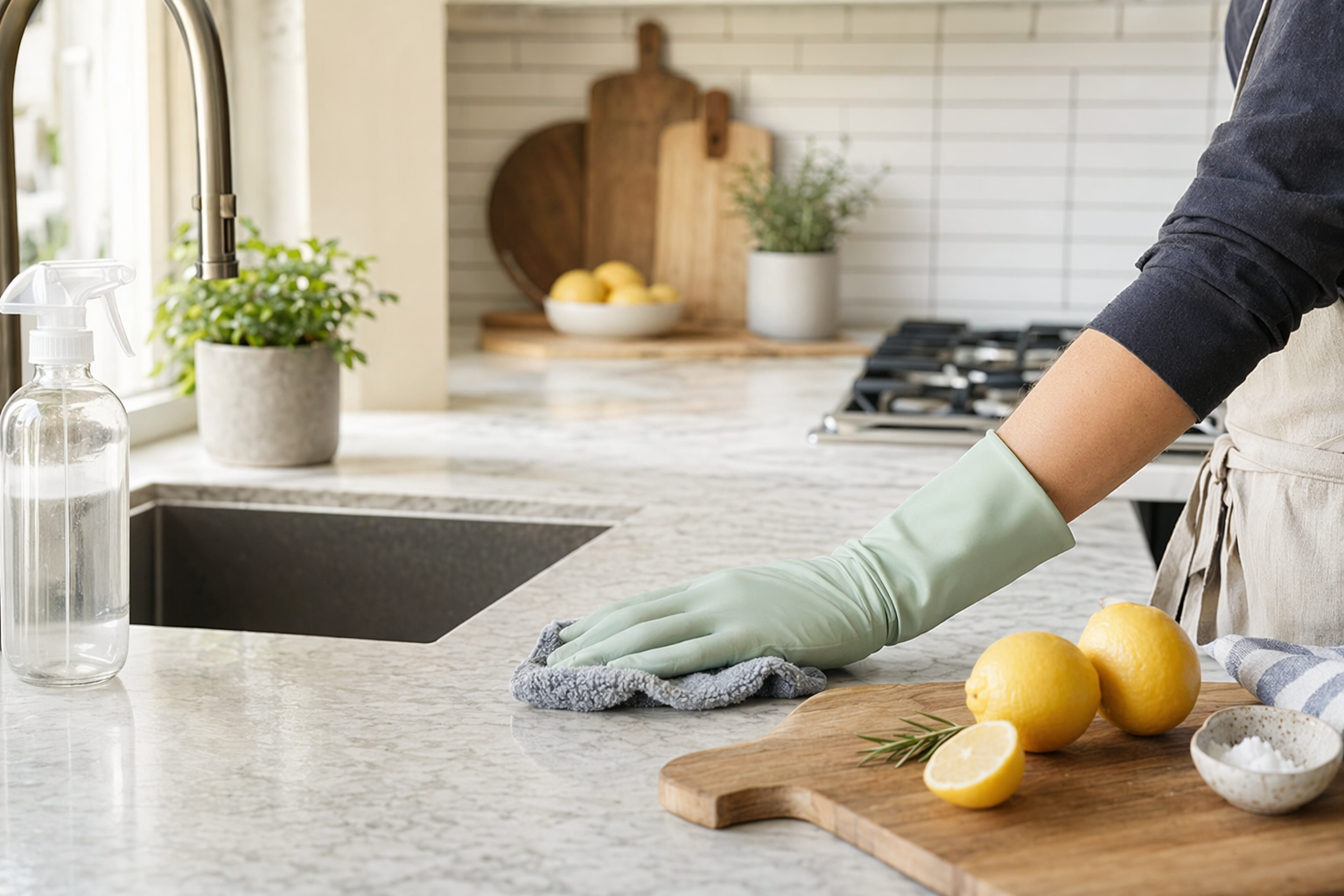
So the order is: remove the mess, wash with hot soapy water, rinse if needed, then sanitize, then air dry. That’s the rhythm. It’s not glamorous. Nobody is putting that on a restaurant menu next to burrata and chili crisp. But it’s the little background ritual that lets the fun food happen without a side of regret.
- Scrape or wipe away food bits first. Don’t make your sponge do the work of a trash can.
- Wash with dish soap and warm or hot water, using some actual friction. A lazy swipe is not the same thing.
- Rinse away soap if you’re using a sanitizer that needs a clean surface, which most do.
- Sanitize with a food-safe method, following the label or standard dilution guidance.
- Let it air dry. I know, I know, waiting is annoying, but wiping with a questionable towel kinda ruins the moment.
About bleach, vinegar, sprays, and all the stuff under the sink
#For home kitchens, a common sanitizing option is a diluted unscented household bleach solution, often given as about 1 tablespoon of unscented liquid chlorine bleach in 1 gallon of water for food-contact surfaces, followed by proper contact time and air drying. But bleach products can vary, so the label is the boss. Always. Don’t mix bleach with vinegar, ammonia, or other cleaners unless you’re trying to create a terrible science experiment, and please don’t do that.
I have friends who want vinegar to solve everything. I get it. Vinegar smells like old-school pickles and virtue. It’s useful for mineral deposits and some cleaning jobs, and I love it for brightening a pot of lentils, but it is not the same as an approved sanitizer for all food safety situations. Same with lemon juice. Beautiful on grilled fish. Not a magic shield against raw chicken germs.
Commercial kitchen sanitizing sprays can be great if they’re labeled for food-contact surfaces and you follow directions. That last part is where many of us fail. Contact time matters. Some products need to sit wet for a certain amount of time. If you spray and instantly wipe it dry, you may not be getting what you paid for. I had to train myself to read the bottle like it was a recipe, not a suggestion.
Cutting boards: my personal battlefield
#I have strong feelings about cutting boards. Maybe too strong. Wood feels nicer under a knife, plastic is easy to run through the dishwasher, and those glass boards are crimes against knives. Sorry, aunties everywhere. I said what I said.
The big thing is separation. I keep one board for raw meat and fish, and another for produce, bread, herbs, cooked food, all the ready-to-eat stuff. Color-coded boards are helpful if your household actually respects the system. Mine mostly does, except one person who shall remain nameless and once chopped strawberries on the raw-meat board because “it looked clean.” We had a talk.
Boards with deep grooves are a problem because food and moisture can hide in those little cuts. If your plastic board looks like it survived a bear attack, replace it. If your wood board smells funky even after washing, give it attention or retire it. I wash boards with hot soapy water, rinse, sanitize when raw meat or fish was involved, and let them dry upright so they don’t sit in a damp puddle like a sad little bacteria hotel.
Raw chicken, the sink, and the splash zone nobody wants to admit exists
#I grew up around people who rinsed chicken. A lot of folks did. It felt like a normal step, like peeling garlic or tasting sauce from the spoon. But food safety agencies have been pretty clear: washing raw poultry can spread bacteria around the sink and nearby surfaces through tiny splashes. Cooking to the proper internal temperature is what makes chicken safe, not giving it a shower.
The first time I stopped rinsing chicken, I felt weirdly rebellious. Like my grandmother’s ghost was watching me with suspicion. But now I just pat it dry with paper towels if I need good browning, season it properly, wash my hands, clean the area, and sanitize anything that got raw juice near it. The chicken gets crispier too, because moisture is the enemy of browning. Food safety and better texture? That’s a rare win-win, honestly.
The sponge situation is... emotionally complicated
#I love a sponge and I distrust it. Both things are true. A sponge is convenient, squishy, always there, and also basically a damp apartment complex for microbes if you treat it badly. I used to keep one until it smelled like low tide, which is disgusting to admit but maybe you’ve done it too. We’re all friends here.
Now I use washable dishcloths for many jobs and change them often, especially after wiping counters. If a sponge touches raw meat juice, it’s done for me. I don’t try to heroically rescue it. Some people sanitize sponges in the dishwasher or microwave, but you have to do it correctly and even then, sponges wear out. The simplest trick is also the least sexy: replace them often, wring them out, and don’t use the same gross sponge to “clean” the whole kitchen.
- Use paper towels for raw meat spills if you can, then toss them.
- Keep dish towels for drying clean hands or dishes, not wiping raw egg off the counter.
- Let brushes, cloths, and sponges dry between uses. Damp forever is bad news.
- If it smells weird, believe the smell. Don’t negotiate with it.
Produce needs common sense, not paranoia
#Fresh produce is my favorite kind of kitchen chaos. Bags of spinach, muddy leeks, herbs wrapped in damp towels, tomatoes on the counter like little jewels. But produce can bring dirt and microbes along for the ride, so washing and prep order matters. I rinse fruits and vegetables under running water, rub firm produce with clean hands or a brush, and dry things well because wet greens turn slimy fast. Soap is not for produce. Please don’t make your strawberries taste like dish detergent.
The cross-contamination part is where people slip. Don’t wash lettuce in a sink that just had raw chicken packaging sitting in it unless that sink has been cleaned and sanitized first. Don’t set clean cucumbers on a counter where raw fish was trimmed ten minutes ago. It sounds obvious until you’re cooking for six and someone asks where the wine opener is and the pasta water is boiling over and suddenly the cucumber is living dangerously.
If you’re trying to keep greens fresh after all that washing and prep, I’ve found it helps to think about cleanliness and storage together. This guide on How to Store Leafy Greens So They Stay Fresh Longer fits right into that rhythm, because safe food that wilts into swamp lettuce by Tuesday is still kinda heartbreaking.
Restaurants taught me a lot, even when I was just eating noodles
#I’m nosy in restaurants. Not rude nosy, I hope, but I watch. I notice if the counter is wiped between tasks, if the person handling money also grabs garnishes, if the open kitchen has that calm clean flow that makes you trust the bowl of ramen arriving in front of you. Some of the best meals I’ve had were in tiny places where the kitchen was cramped but the habits were sharp. Clean towel here, sanitizer bucket there, hands washed at the right times, raw and cooked foods kept apart like exes at a wedding.
There was this little dumpling place I loved years ago, nothing fancy, just steam fogging the windows and chili oil on every table. You could see one cook folding dumplings while another worked the griddle. What impressed me wasn’t that it looked spotless like a showroom. It didn’t. It looked busy and human. But they had systems. Boards got swapped. Surfaces got wiped properly. Tongs didn’t wander from raw to cooked. The dumplings were juicy and gingery and perfect, and I remember thinking, this is what skill looks like when nobody is making a big speech about it.
On the flip side, I’ve walked out of places when the vibes were off. A sticky menu doesn’t automatically mean the kitchen is unsafe, sure, but it does make me wonder. If the condiment bottles are crusted over and the bathroom sink is out of soap, my appetite packs a small bag and leaves.
Leftovers: clean counters are only half the story
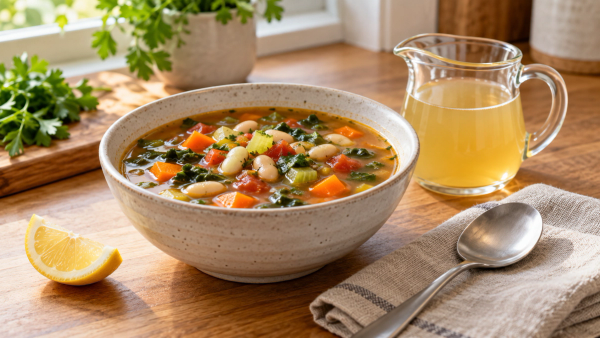
#Here’s where cleaning and sanitizing meet time and temperature. You can have the cleanest counter in the world, but if a pot of soup sits out for half the afternoon because “it’s still warm,” bacteria can grow. I batch cook a lot, especially beans, stews, rice, roasted vegetables, and sauces, and I’ve learned to cool food quickly in shallow containers instead of shoving a giant hot pot into the fridge and hoping for the best.
The general food safety idea is to keep perishable foods out of the danger zone as much as possible, and leftovers should be cooled and refrigerated promptly. If you cook big batches like me, this piece on How to Cool Cooked Food Quickly Before Refrigerating is genuinely useful. Because honestly, nothing is sadder than making a gorgeous chicken stock and then treating it like an afterthought.
Also, label things. I say this as a person who has sniffed a container of mystery sauce and whispered, “when did I make you?” That is not a system. Future you deserves better.
When I sanitize every time, and when I don’t bother
#I don’t sanitize my entire kitchen every time I make toast. That would make me miserable and probably make me cook less, which is not the goal. A kitchen should be alive. Flour on the counter sometimes. Olive oil fingerprints. A spoon rest that has seen things. But I do have certain moments where sanitizing is non-negotiable.
| Kitchen moment | Clean? | Sanitize? | My real-life note |
|---|---|---|---|
| After raw chicken, meat, seafood, or eggs touch a board or counter | Yes | Yes | No debate. Clean first, then sanitize. |
| After kneading bread dough | Yes | Usually no | Unless the surface had raw egg or something risky before. |
| After cutting washed fruit | Yes | Not usually | A good wash is enough for me most days. |
| After a sick person uses the kitchen | Yes | Yes, and maybe disinfect high-touch spots | Handles, faucets, fridge pulls, all the grabby places. |
| After wiping up spilled milk or meat juices in the fridge | Yes | Yes | Fridge shelves get forgotten way too often. |
That table is basically how my brain works now. Not perfect, but practical. I want to spend my energy where it matters most, not burn out sanitizing the spice jars because I made a grilled cheese.
Disinfecting is another word people toss around
#Clean, sanitize, disinfect. The kitchen vocabulary gets crowded. Disinfecting usually means killing more germs than sanitizing, and it’s often used for bathrooms, illness cleanup, and high-touch non-food surfaces. In the kitchen, if you disinfect a food-contact surface, you need to be extra careful that the product is appropriate and that you rinse or follow label instructions before food touches it again.
This is why I keep it simple. Food-contact surfaces get cleaned and, when needed, sanitized with something meant for that job. Cabinet handles, trash can lids, faucet handles, and fridge pulls may get disinfected, especially if someone in the house is sick. But I don’t spray harsh disinfectant all over my cutting board and then roll out pie dough on it five minutes later. That’s not rustic. That’s just bad planning.
My tiny routine before cooking something I really care about
#Before I cook a meal that matters, I reset the kitchen. Not a full deep clean. Just a little ritual. I clear the counter, empty the sink, put a clean towel out, check that the dishwasher has space, and wash my hands properly. It takes maybe ten minutes, unless I get distracted by a jar of olives, which happens.
Then I set up boards by task. Raw proteins on one side, vegetables on the other. If I’m making something like roast salmon with herby potatoes and a crunchy salad, I prep the salad first or keep it totally separate, then deal with the fish. I wash hands between tasks. I change towels if they get messy. I keep the trash bowl nearby because walking across the kitchen with drippy packaging is how chaos begins.
This sounds fussy written out, but in practice it feels calming. Like mise en place, but for safety. And I swear it makes cooking more fun because I’m not constantly thinking, wait, did that spoon touch raw egg?
The handwashing thing is basic, and we still mess it up
#Hands are the original kitchen tool. They mix meatballs, tear basil, rub salt into pork shoulder, squeeze lemons, sneak fries off the tray. So yes, washing them matters. Soap, running water, enough time to actually clean them, including between fingers and under nails if you’ve been digging in the garden or handling dough.
I wash before cooking, after touching raw meat or eggs, after using the bathroom, after taking out trash, after touching my phone, after petting the dog, after cracking eggs, and whenever my hands just feel suspect. Is that a glamorous sentence? No. Is it probably more important than buying the fanciest finishing salt? Also yes, though I do love fancy salt. I contain multitudes.
A few things I wish someone told me earlier
#- A shiny counter can still need sanitizing. Shine is not a safety certificate.
- You can’t sanitize crumbs. Clean the surface first or you’re mostly perfuming the mess.
- Towels are not innocent. They travel from hands to counters to plates unless you give them jobs.
- The sink is not automatically clean because water lives there. Sinks get gross, especially after raw foods.
- Food safety doesn’t mean cooking scared. It means cooking with a little awareness so everyone can relax and eat.
That last one is the heart of it for me. I don’t want people to become terrified of their kitchens. I want the opposite. I want more bubbling pots, more roast vegetables, more kids helping stir pancake batter, more friends leaning against the counter with a glass of wine while garlic hits hot oil. But the boring habits make those cozy moments safer.
The dinner party test: what actually matters when people are coming over
#When I’m feeding guests, I care most about the risky handoffs. Raw to cooked. Dirty to ready-to-eat. Warm food cooling too slowly. Shared utensils. The cheese board sitting out forever because everyone is “still nibbling.” I’m not trying to be the food police at my own table, but I do quietly manage things.
I put raw meat packaging straight into the trash. I clean and sanitize the prep area before dessert assembly. I use a fresh board for bread. I don’t reuse marinade unless it’s boiled properly, and usually I just make extra clean marinade because it’s easier and my brain has only so much bandwidth after 7 p.m. I bring out smaller portions of creamy dips and refill from the fridge instead of letting one giant bowl slowly warm under party lights.
And if someone offers to help, I give them a safe job. Tear herbs. Fill water glasses. Slice lemons on the clean board. Not “please handle this raw chicken while I panic about the risotto.” Know thy guests. Some are wonderful sous-chefs. Some are chaos goblins with good intentions.
So, clean vs sanitize: my final foodie answer
#Cleaning is the everyday love language of a kitchen. It’s wiping the flour, washing the knife, scrubbing the pan, clearing the sticky spot where the jam jar sat. Sanitizing is the extra step that matters when germs are more likely to be hanging around, especially after raw animal foods, messy fridge leaks, illness, or any surface that will touch ready-to-eat food after something risky happened there.
You don’t need to turn your kitchen into a lab. You don’t need fear. You need rhythm. Clean first. Sanitize when it counts. Let things dry. Wash your hands more than you think. Replace the tragic sponge. Stop rinsing chicken. Keep salad away from raw meat juice like it owes you money.
And then cook something beautiful. A big salad with lemony dressing, a pot of chili, dumplings if you’re ambitious, grilled peaches if it’s summer, buttery toast if it’s midnight and that’s all you’ve got. The point of all this cleaning talk is not to kill the romance of food. It’s to protect it. Anyway, if you’re in the mood for more kitchen rambles and practical food stuff, I’ve been poking around AllBlogs.in lately, and it’s a nice little rabbit hole for hungry people like us.