Kyoto kinda broke my brain a little. In a good way. I went there thinking, okay, Japan is going to be hard for vegetarians, and for Indians maybe even harder because we’re not just asking for “no meat” half the time, we’re also trying to avoid fish stock, bonito flakes, hidden dashi, random oyster sauce sneaking into vegetables, all that stuff. And yet... Kyoto turned out to be one of the most rewarding food cities I’ve done in years. Frustrating on some days, magical on others, very Kyoto basically. If you’re an Indian traveler looking for veg food in Kyoto, especially if you care about temple food, local specialties, and not eating plain fries every night, this guide is for you. I’m writing this like I’d tell a friend over chai, not like some perfect tourist board brochure.
Also, quick reality check before we dive in. Kyoto is still one of the best places in Japan for vegetarian eating because of shojin ryori, the Buddhist temple cuisine that has deep roots here. That part is real. But it’s not automatically easy. A dish can look vegetarian and still be made with dashi. A tofu place can still use fish stock in some side dishes. You have to ask, gently and clearly. By 2026 though, things are definitely better than they used to be. More restaurants mark vegan items, QR-code menus often have allergen and ingredient info, and there’s a noticeable increase in plant-based travelers in Japan, especially around Kyoto, Tokyo and Osaka. I felt that shift. Not everywhere, but enough that I didn’t feel doomed.
First thing first: what Indian vegetarians need to know in Kyoto
#My first evening in Kyoto, I was staying near Kawaramachi and got overconfident. Big mistake. I walked into a cute little place with amazing lanterns and thought, wow, grilled vegetables, rice, tofu, sorted. Then I asked one question about broth and the sweet old lady just smiled and said, “fish, little bit.” That “little bit” is the whole issue, isn’t it. So here’s the main thing: if you are strict vegetarian, say you do not eat meat, fish, seafood, fish stock, bonito, oyster sauce, gelatin. If you’re Jain, honestly be even more specific because onion and garlic are very common in modern vegetarian cooking, though some temple meals can be closer to what you want.
- Useful phrase I kept on my phone: “Watashi wa bejitarian desu. Niku, sakana, dashi tabemasen.” Basically: I am vegetarian. I do not eat meat, fish, or dashi.
- If you’re vegan, say “vegan” too, because a lot of staff know that word now in tourist-heavy Kyoto.
- For Jain travelers, I would carry a translated card. Seriously. It saves so much awkward pantomime.
- Convenience stores are better in 2026 for labels, but not always great for strict vegetarian hot meals. Snacks yes, proper meals... eh, mixed bag.
One more thing. Kyoto cuisine is subtle. If you’re used to the punchy masala hit of Indian food, the first couple meals might feel too gentle, too quiet almost. I had this reaction. Then by day two I was suddenly obsessed with sesame tofu, yuba, pickles, miso, mountain vegetables, all those layered but soft flavors. It sneaks up on you.
Where the vegetarian magic actually happens: temple cuisine, tofu, yuba, and tiny specialist shops
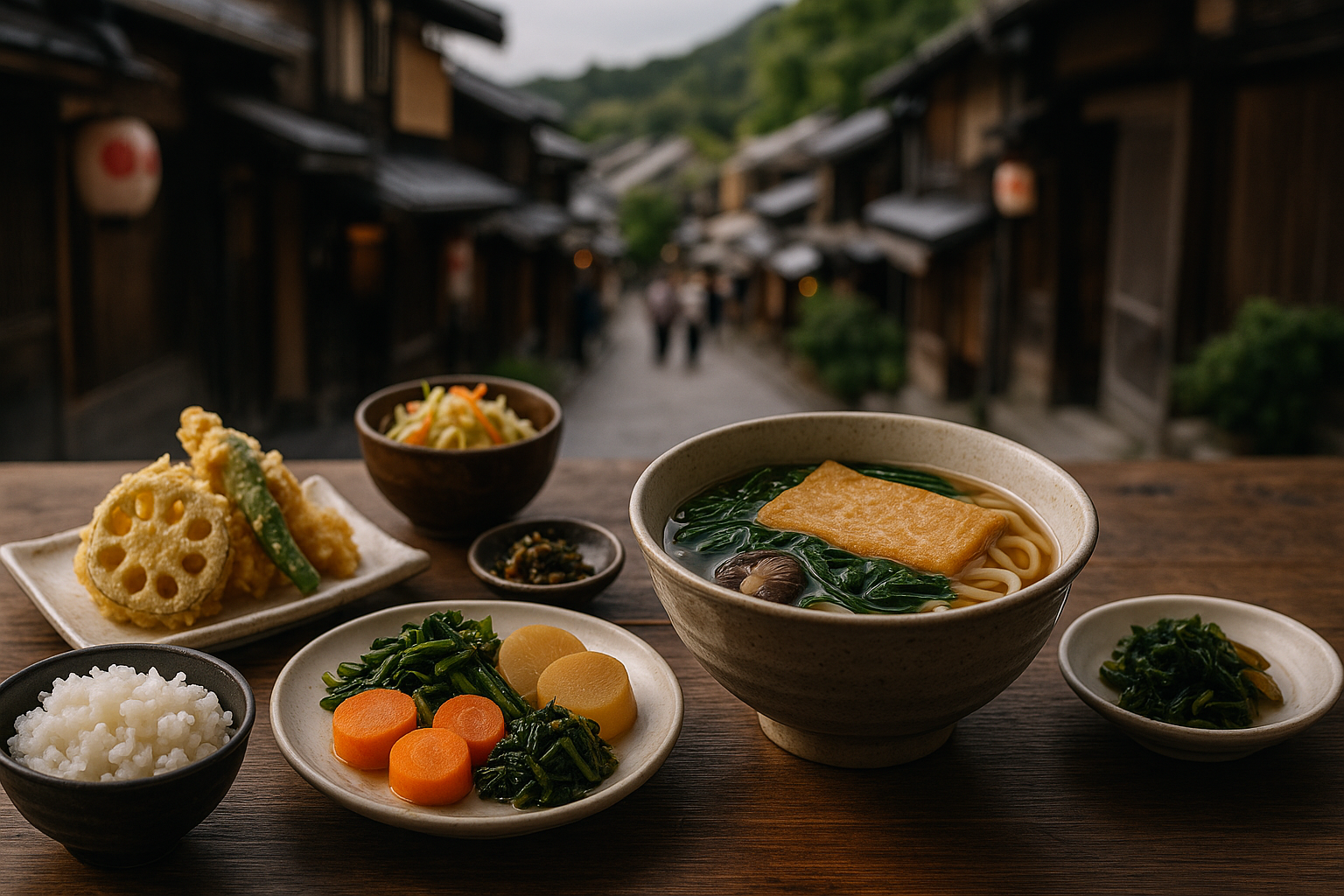
#Kyoto’s vegetarian heart is shojin ryori. This is Buddhist devotional cuisine, traditionally meat-free and built around seasonality, balance, texture, and respect for ingredients. It sounds lofty, and yeah maybe it is, but it also tastes really comforting when done well. Think tofu in different forms, sesame, seasonal mountain veg, simmered dishes, soups, pickles, rice, sometimes fu which is wheat gluten, and the kind of plating that makes you stop talking for a second. I had one shojin meal near a temple area and, no joke, it made me rethink what “simple food” even means.
Then there’s tofu and yuba. Kyoto is famous for both, partly because of its soft water and long culinary traditions. Yuba, if you haven’t had it, is tofu skin, and here it shows up fresh, silky, layered, almost creamy. The first time I tried proper fresh yuba in Kyoto I just sat there like an idiot grinning. It was so delicate I almost felt bad eating it. Almost.
The neighborhoods I’d focus on if food is your priority
#If I only had two days in Kyoto and wanted to eat well as a vegetarian, I’d base myself around Downtown Kyoto/Kawaramachi for convenience, then spend serious time in Higashiyama, Arashiyama, and around temple zones. Downtown has the widest practical choice, including vegan cafes, modern Japanese spots, and places where menus are easier for travelers. Higashiyama gives you that beautiful old-Kyoto walking experience plus access to temple-food style lunches. Arashiyama has some really lovely tofu and yuba-focused dining, though it gets packed, like absurdly packed, especially in spring and autumn. Kyoto in 2026 is still dealing with overtourism in peak spots, so I’m begging you, go early, eat early, book when possible. Your stomach and sanity will thank you.
There’s also Nishiki Market, which everybody mentions and yes, it’s touristy, but I still think it’s worth going with adjusted expectations. Don’t go imagining endless vegetarian street food, because a lot of stalls are seafood-heavy. Go for pickles, sesame things, mochi, soy products, tea snacks, tamagoyaki only if you eat egg, and just the atmosphere. Some shops are more ingredient-focused than meal-focused. It’s less a “fill up entirely here” place for strict vegetarians and more a tasting-and-browsing zone.
Places I actually think are worth your time
#Okay, the useful bit. These are the kinds of spots I’d tell Indian friends to look at first. Menus, hours, and reservation policies can change, because Kyoto loves making life a tiny bit difficult, so always check the latest before going. But these categories and well-known names are a very solid start in 2026.
- Mumokuteki Cafe in central Kyoto. A longtime favorite for vegetarian and vegan travelers. Casual, friendly, not too scary for a first Kyoto meal, and they’ve built a reputation around plant-based comfort food with Japanese influence.
- Ain Soph. Journey Kyoto. Good for vegan travelers who want reliability, clear labeling, and a break from detective-work. I ended up there on a rainy afternoon and inhaled lunch way too fast.
- Shigetsu in Arashiyama, inside Tenryu-ji temple grounds. Famous shojin ryori experience. This is one of those classic Kyoto meals people remember. Book ahead if you can, because everybody and their cousin wants that serene temple lunch.
- Tousuiro, especially if you want a refined tofu meal. Check individual branches and menu details because not every course is automatically strict-veg, but they are very much part of Kyoto’s tofu conversation.
- Veg Out, near the Kamo River. More cafe-ish, more modern, nice if you need a lighter meal, coffee, and a break from intense sightseeing. I liked the vibe, very international but still relaxed.
- Local Buddhist temple lodging or shukubo meals, if available in your itinerary. This can be a really memorable way to try traditional vegetarian cuisine in context, not just in a restaurant.
There are also more Indian and Nepalese restaurants in Kyoto now than older guides used to suggest, especially around central areas. Handy? Yes. But honestly I wouldn’t fly all the way to Kyoto to eat paneer butter masala every day unless I was just really missing home or needed a spice reset. Which, fair enough, I definitely did by day four and ordered something aggressively cumin-forward. No shame.
The meal I still think about, and the one that totally flopped
#Best meal first. Mine was a temple-style lunch after a long morning of walking through mossy gardens and side streets where everything looked like a movie set. We sat on tatami, it was quiet enough to hear chopsticks touch bowls, and the food came out in little dishes that looked almost too pretty. Sesame tofu, seasonal greens, simmered vegetables, rice, miso soup, pickles, yuba, something with miso that I still can’t properly identify. Nothing shouted. And yet every bite had intent, you know? It made me slow down. For someone who usually eats like there’s a train to catch, that was kind of huge.
Kyoto vegetarian food isn’t trying to impress you with excess. It wins by being precise, seasonal, and weirdly calming. That’s the part I didn’t expect.
Now the flop. I once trusted a translated menu that said “vegetable noodle soup.” Reader, the broth was absolutely fishy. Not subtle. Full-on seaside energy. I sent it back politely, the staff were apologetic, and we all survived, but yeah, lesson learnt. Translation apps are better in 2026 than before, and some restaurant tablets even highlight ingredients clearly, but they’re not magic. If dashi matters to you, ask again.
What to eat in Kyoto if you’re veg, beyond the obvious
#A lot of guides stop at tofu and call it a day. That’s lazy. Kyoto has way more for vegetarians if you know what to seek out. Try yudofu, especially in cooler weather, which is hot tofu served simply with dipping sauces and sides. Have fresh yuba if you can, not just packaged supermarket yuba. Look for nama-fu, the chewy wheat gluten that shows up grilled or glazed and is honestly a texture adventure. Kyoto pickles, or tsukemono, can be incredible with rice. Matcha sweets are everywhere of course, but also try warabi mochi, daifuku, sesame desserts, soy milk donuts, and seasonal wagashi from old confectionery shops. Some wagashi are vegan by default, some not, so ask.
I also got mildly addicted to onigiri from places where the fillings were ume, kombu, or plain salted options. Tiny thing, but after temple walks and shrine stairs and me pretending I wasn’t tired, they hit the spot. Department store food halls, depachika, are another useful trick. Go to basements of major department stores in central Kyoto and you’ll often find better-labeling, beautifully packed side dishes, salads, rice items, tofu preparations, and sweets. Not every stall is vegetarian-safe, but the quality is high and the browsing is half the fun.
2026 travel-food trends I noticed in Kyoto, for real not just buzzwords
#A few things felt very current in 2026. One, plant-based tourism is not niche-niche anymore. You can feel businesses responding, especially in Kyoto where wellness travel, mindful travel, and cultural immersion are all colliding in one very photogenic city. Two, reservation-first dining has become even more normal. Some small places prefer online booking, and some premium vegetarian experiences do limited lunch seatings. Three, travelers are caring more about provenance, local producers, sustainability, and low-waste dining. I saw more cafes talking about local vegetables, seasonal sourcing, and reduced plastic packaging than on my last Japan trip. Not every place, but enough that it stood out.
There’s also more tech in the travel-food experience now. QR menus with multilingual info, digital waitlists, Google Maps updates that are actually useful sometimes, and social media reels that make hidden cafes go viral overnight. Which is both helpful and annoying. Helpful because vegetarian travelers can find places easier. Annoying because the “hidden gem” is then full of 27 people filming their lattes. Kyoto’s curse, I guess.
Practical survival tips for Indian travelers, especially families
#- Book at least one proper vegetarian meal in advance, ideally shojin ryori or a known vegan-friendly restaurant. It gives you one guaranteed good memory to anchor the trip.
- Carry snacks. Thepla, khakhra, protein bars, roasted chana, whatever works. I’m serious. Some days sightseeing stretches longer than expected.
- Use hotel breakfasts smartly. Bread, fruit, yogurt if you eat dairy, salad, rice, miso only after checking ingredients, and coffee can buy you time.
- Stay near transport and food hubs if travelling with parents. Kyoto buses can be crowded and tiring, and a central dinner option matters more than people think.
- Don’t assume “Buddhist food” always equals your exact dietary needs. Confirm eggs, dairy, onion-garlic, and broth depending on your preferences.
For families with older parents, I’d say pace the temple-hopping. I know, not very glamorous advice, but Kyoto can become a blur of beautiful gates and sore feet. My own folks would have mutinied if I dragged them to three shrines before lunch. Better plan one major sightseeing block, then a nice meal, then something gentle like tea, a garden, or a river walk. Food tastes better when nobody’s cranky. Revolutionary concept, lol.
Budget, splurge, and that awkward middle ground
#Kyoto can be expensive, especially if you’re doing atmospheric historic districts and sitting-down meals. But vegetarian eating doesn’t have to destroy your wallet. Casual vegan cafes, depachika meals, bakery finds, sweets, and tofu-focused lunches can be manageable. Temple cuisine and refined kaiseki-style vegetarian meals are where costs climb, and honestly, I think one splurge is worth it if food matters to you. Not every day. Just once. Have the beautiful meal, sit in the calm room, admire the maple trees or the garden stones or whatever is outside, and let Kyoto do its thing.
I’ll say something slightly controversial too: not every famous place is worth the line. If the queue is absurd and your blood sugar is dropping, go somewhere else. Kyoto rewards wandering, especially if you’ve done a little research. One of my nicest lunches was at a much less hyped place down a quiet lane, where the owner patiently explained which dishes had dashi and which didn’t. That kindness stayed with me as much as the food did.
So... is Kyoto good for Indian vegetarians or not?
#Yeah. It is. With conditions. If by “good” you mean easy like parts of India, obviously no chance. If you mean rewarding, culturally rich, surprisingly varied, and absolutely capable of giving you memorable vegetarian meals, then yes, big yes. Maybe one of the best cities in Japan for it, honestly. The trick is to come prepared, ask questions, and embrace Kyoto for what it does best rather than chasing the exact food comfort you have at home. Though, again, one emergency biryani or masala chai stop is spiritually acceptable.
What I loved most was that Kyoto never made vegetarian food feel like a compromise when I found the right places. It felt intentional. Historic. Elegant without being showy. Sometimes almost meditative, which is not a word I use often because mostly I’m just hungry. But there it is. If you’re an Indian traveler who cares about food and travel equally, Kyoto can really get under your skin a bit. In the best way. I’m already plotting a return trip, and next time I’m booking more temple meals, less overpacked sightseeing, and maybe an extra suitcase section for tea and snacks. If you’re into more food-and-travel stories like this, have a look at AllBlogs.in.