That wet road smell before the first kachori
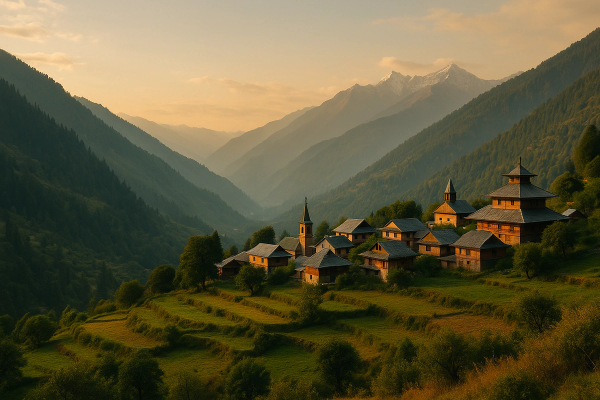
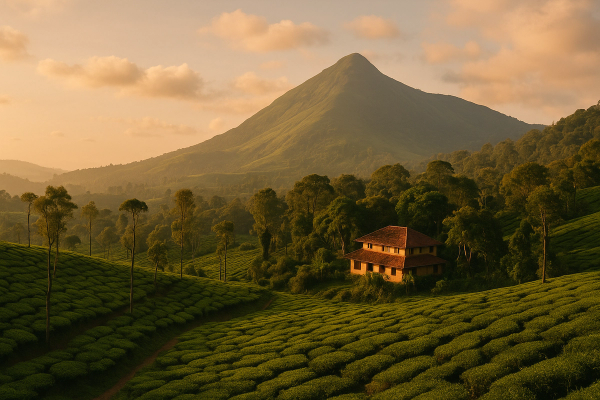
#I have this slightly silly belief that some places only open up properly when it rains. Bundi and Kota are like that for me. In dry weather, yes, they are handsome enough, all blue-ish lanes, palace walls, Chambal views, fort silhouettes and those old stone corners that look like they’ve been keeping secrets for 400 years. But in rain? Arre, totally different mood. The hills around Bundi go a soft dusty green, the drains start gossiping, scooters splash by like they own the road, and suddenly every tea stall looks like a five-star resort if the kettle is hot enough. I went there on one of those undecided monsoon days, where the sky keeps saying maybe, maybe not, and honestly my whole itinerary became kachori, chai, walk, repeat. Not a bad plan. Maybe the best plan.
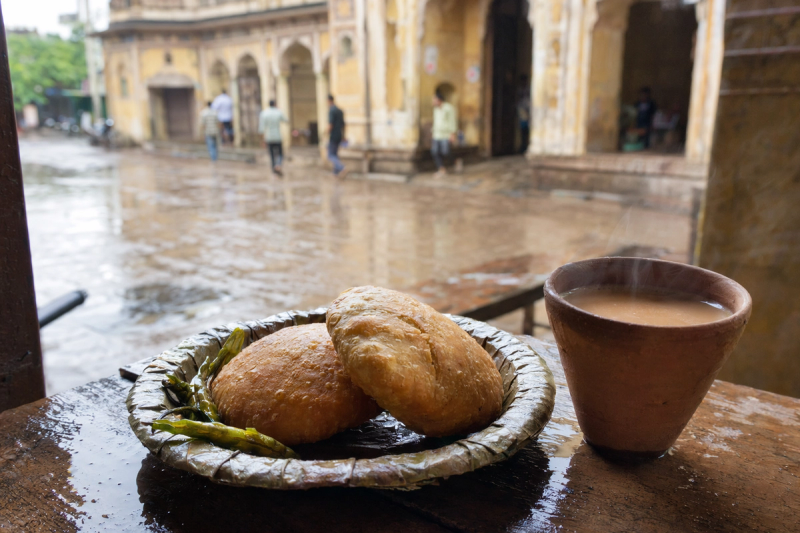
The route between Bundi and Kota is not very long, which is dangerous for a hungry person because you keep telling yourself, “I’ll just stop once,” and then somehow you’ve had three teas before lunch. Bundi is quieter, more old-world, more painted-walls-and-stepwells kind of place. Kota feels busier, wider, practical, with students everywhere and that classic Rajasthan town confidence around snacks. Together they make a rainy-day food trail that doesn’t feel curated or fancy. It feels like real travel. Damp shoes, foggy glasses, paper plates bending under hot kachori, and that tiny burn on your tongue because you could not wait even 20 seconds.
Bundi in the rain is basically a tea invitation
#My first proper rainy stop was in Bundi, near the older bazaar lanes after I had wandered around longer than sensible people do. I’d been walking toward the palace side, then got distracted by blue doors and a wall painting of an elephant, then by a staircase that seemed to lead nowhere, which is very Bundi honestly. Rain started lightly, not dramatic movie rain, just enough to make the stone streets shine. I ducked under a shop awning where a chaiwala was making tea in a dented steel pan, and the smell hit me before I even saw the kachori stack. Ginger, wet dust, frying oil, and that sharp hing-ish snack smell. If you know, you know.
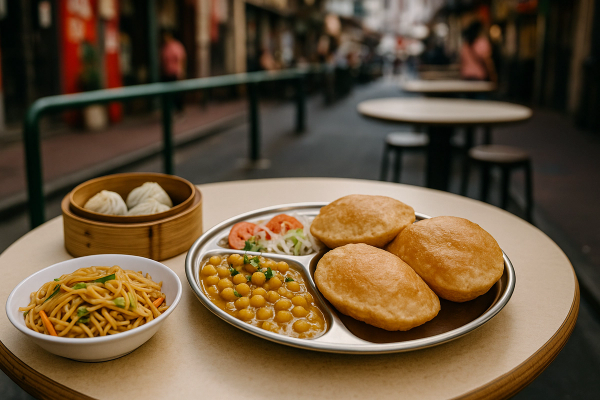
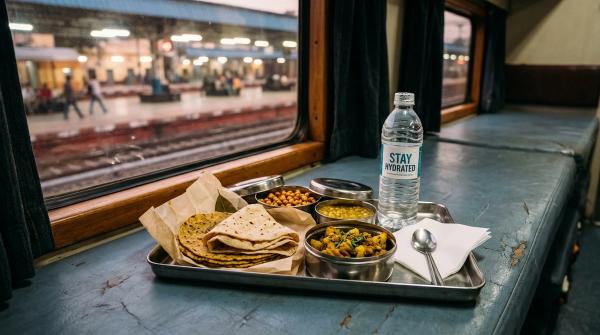
The tea came in a small glass, too hot to hold properly, sweet in that unapologetic North Indian way. I know people argue about sugar levels, and sometimes I also pretend I prefer less sugar, but on a rainy Bundi morning? No. Give me the sweet one. The first kachori was sitting in a steel tray under a cloth, still warm, not freshly pulled from the oil but not sad either. It cracked with that dry crunch, and inside was a spiced dal filling, peppery and slightly sour from masala, the kind that makes you instantly want another sip of tea. I ate it standing sideways because the rain was coming in at an angle. Very elegant, me.
The kachori test: sound, heat, and that tiny oil shine
#Rainy-season fried food is tricky. I love it, but I’m not careless, at least not always. In Bundi and Kota, especially during monsoon, I started doing this little street-food check without making a big drama of it. Is the kachori moving fast? Are locals buying it? Is the oil looking clear-ish and hot, not tired and foamy? Is the chutney being handled with some basic sense? Not microscope-level hygiene, because then you should stay home and eat toast, but enough. I wrote something similar in my notes after reading and comparing kachori habits in Jaipur too, and if you’re planning a bigger Rajasthan snack route, the Jaipur Pyaaz Kachori in Monsoon: Food Walk Guide is actually a useful companion for judging oil freshness and rainy-season timing without becoming paranoid.
- A good rainy kachori should sound crisp when you break it, not bend like it has given up on life.
- If the stall is frying in small batches, I trust it more. Hot food is your friend when the weather is damp.
- Chai should be bubbling properly, not just sitting there looking philosophical.
- Green chutney is lovely, but in heavy rain I go easy unless the place is clearly busy and clean. Tamarind chutney feels safer to me, though maybe that’s just my stomach being dramatic.
Kota kachori has its own attitude
#Kota is famous enough for its kachori that people say “Kota kachori” like it is a category by itself, and after eating my way through two rainy stops there, I get it. The Kota version I tried had a stronger masala punch than the Bundi one, more hing, more dal, more of that back-of-the-throat warmth. Not always onion-heavy like Jaipur pyaaz kachori, not as gentle as some smaller-town kachoris either. It has bite. It feels made for people who are rushing to coaching classes, offices, buses, trains, or maybe just rushing because Kota seems to keep everyone moving. I had one near a busy market stretch, standing under a blue plastic sheet that kept collecting rainwater in one saggy corner. Every five minutes someone poked it with a stick and a waterfall came down. Free entertainment.
The vendor served it with a thin potato sabzi on the side, which I did not expect that morning and then immediately loved. Some people prefer dry kachori with chutney only, and I respect that, but rain changes rules. That sabzi soaked into the cracked edges and made the whole thing messy and soft-crunchy at once. My fingers were orange, my napkin tore, my phone almost slipped, and still I was like, yes, this is exactly why we travel. Not to sit perfectly in a cafe with matching chairs. To stand in a crowd while rainwater threatens your socks and a stranger says, “Bhaiya, thoda mirchi kam,” and the cook ignores him lovingly.
Where I’d actually stop, without pretending there’s one magic shop
#I don’t want to do that thing where bloggers name one “legendary” place and then everyone queues there like pilgrims. Kota has plenty of old snack shops and sweet shops around busy market areas, station-side lanes, and neighbourhood clusters where kachori sells fast in the morning. Bundi’s older bazaar lanes, especially around the palace approach and main market side, are better for slow grazing, chai, pakora, small kachori, maybe a mirchi vada if your stomach is in brave mode. Ask a local auto driver where he eats kachori, not where tourists eat. Then ask one more person, because auto drivers also have cousins with shops, you know how it is.
My loose timing rule: first kachori before 10:30 am, tea whenever clouds get moody, and a second snack around 4 pm if it rains again. In monsoon, food that sits too long goes dull quickly, so I chase turnover. Morning batches are usually happiest. Evening batches can be brilliant too, especially when offices and coaching students spill out. Afternoon is hit-or-miss. I had one afternoon kachori in Kota that tasted like it had seen some things. Not bad exactly, just tired. Like me after climbing too many wet steps in Bundi.
Bundi’s old stones make you hungrier, I swear
#Bundi is unfair to snack discipline because the town makes you walk. You climb toward Taragarh Fort if the weather allows, you drift around the palace, you go hunting for stepwells because Bundi is known for them, especially Raniji ki Baori, and then every lane somehow slopes in a way that makes your calves complain. Rain adds romance but also slipperiness. I remember standing near an old wall, shoes muddy, watching water run down carved stone, and thinking very deeply about architecture for maybe 12 seconds before my brain said: chai. This is my cultural process.
The best Bundi tea stop I had was not special by guidebook standards. A bench, a stove, a man stirring tea like he was annoyed at it, and two older men discussing the rain as if they could negotiate with it. The kachori there was smaller, more homey, with a filling that tasted of crushed coriander, fennel maybe, and red chilli that crept up slowly. I asked if it was fresh, and the shop guy looked offended in a tired way, then pointed to the kadai. Fair. He fried two more and gave me one too hot to eat. I still bit it. Of course I did. Burnt my mouth slightly and pretended I was fine.
Rainy-day food is not just about taste. It’s about shelter, timing, a little hunger, and the kindness of someone handing you a glass of chai when the sky is being dramatic.
Kachori, chai, and the road between the two towns
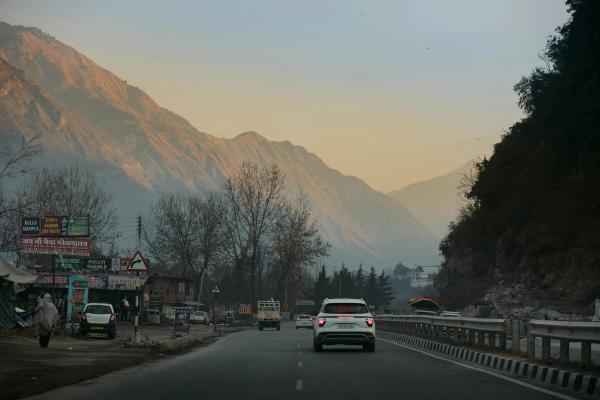
#The Bundi-Kota road is short enough that you can do both in one day, but I’d say don’t rush it unless you have to. This region rewards dawdling. Leave Bundi after a late breakfast, stop for tea if rain starts, reach Kota by lunch or early afternoon, then snack again when the evening crowd wakes up. If you’re traveling by car, keep a towel and extra socks. This sounds like aunty advice, but wet feet can ruin even the best kachori. If you’re on a bike, bless you, you’re braver than me. The rain looks romantic until a truck sprays your entire left side with muddy water.
On the road I kept comparing this trip with other monsoon food routes I’ve loved. Bundi-Kota is lighter than those heavy dal-bafla kind of days in Madhya Pradesh, where you eat once and then need to sit quietly and think about your life choices. If you like that heavier rainy meal mood, I’d pair this with the Mandu Monsoon Food Stops: Dal Bafla, Kees & Tea, because the timing logic is similar: hot breakfast, tea breaks, don’t over-plan, let the weather decide. But Bundi-Kota is more snacky, more stop-start. It suits restless travelers.
Tea is the real map here
#I know the headline food is kachori, but tea is what stitches the day together. In Kota, tea stalls feel functional and fast. Students gulping chai, people checking phones, someone balancing a plate of poha, someone arguing about bus timings. In Bundi, tea feels slower, more scenic, like the glass has permission to sit in your hand while you stare at a wet wall. Both are good. I like strong adrak chai in rain, but I also had one cardamom-heavy cup that tasted almost dessert-like and I didn’t complain. There is also that Rajasthan thing where milk tea can be quite rich, and after two cups you realize you’ve basically had a meal. Then you eat kachori anyway because human beings are not logical.
One small thing: don’t underestimate plain namkeen or mathri with tea. Everyone chases the famous kachori, including me, but some of my happiest bites were side characters. A crisp mathri dipped very quickly into hot chai, a small piece of sev that someone offered me from a paper cone, even a simple toast-biscuit situation at a rain-stuck stall. Travel food memories are weird like that. You think the grand dish will win, then your brain stores the biscuit because the rain was loud and the chai glass warmed your fingers.
What to eat besides kachori, because yes, there is more
#If you’re spending a full rainy day across Bundi and Kota, don’t only do kachori or your stomach may file a complaint. Start with kachori and chai, sure. Then look for poha if you want something softer and lighter, especially in Kota where morning snack culture can be wonderfully practical. Jalebi appears in many North Indian breakfast scenes, and when it is fresh, thin, hot, and syrupy, with rain in the background, it becomes impossible to act mature. Mirchi vada is another temptation, though I treat it like a dare. Some are mild, some are basically green chilli wearing a fried jacket and laughing at you.
For lunch, I usually go simple: dal, roti, seasonal sabzi, maybe kadhi if it’s around. Rajasthan’s food reputation gets stuck on royal thalis and desert survival dishes, but everyday meals are what reset you between snacks. In Kota, you’ll find straightforward thali places around busy commercial areas. In Bundi, small family-run eating places can be slower but charming, and sometimes you get that home-style food that doesn’t photograph dramatically but makes you feel restored. I had a plain dal one afternoon that tasted better than it had any right to, maybe because I was wet, hungry, and slightly cold. Context is masala.
A rainy-day mini plan I’d happily repeat
#- Start in Bundi around 8:30 or 9 am with chai and kachori in the old market side. Walk after eating, don’t jump straight into a car unless you enjoy sleepy digestion.
- Visit a stepwell or palace area if rain is light. Wear shoes with grip. I slipped once and did that fake jog people do when they are trying not to fall. Very graceful, obviously.
- Have another tea before leaving Bundi. Not necessary, but emotionally necessary.
- Reach Kota by afternoon, rest a bit, then go for evening kachori when fresh batches start moving. Watch the crowd, follow the smell, trust the busiest counter if it looks clean enough.
- End with a simple dinner, because after fried snacks all day, even I admit the body needs peace.
The student-city hunger of Kota
#Kota’s food rhythm is shaped a lot by its student population. That’s not some fancy sociological thesis, it’s just visible. Cheap, filling, quick snacks matter here. Tea stalls are meeting rooms, therapy corners, newsrooms, and sometimes probably heartbreak recovery centers. I saw two boys sharing one kachori and one tea, both soaked from rain, laughing at something on a phone. Nearby a man in office clothes ate silently like he had exactly seven minutes before life resumed. Food in Kota has this democratic feel. You don’t need a plan. You need small cash, hunger, and the ability to stand in a crowd without getting irritated.
And because Kota sits on the Chambal, the city has these open views and bridges and damp evening air that can make even a basic tea stop feel cinematic. After my second kachori, I walked near a broader road where the rain had slowed and everything smelled like wet leaves and petrol. Not poetic maybe, but real. My stomach was full in that fried-food way where you’re happy but also aware of consequences. I promised myself I’d skip dinner. Then I ate dal and rice later. Promises made during travel are not legally binding.
Monsoon hygiene without killing the joy
#I get asked about stomach safety more than recommendations, honestly. My answer is boring but useful: eat where food moves fast, prefer hot items, carry water, avoid cut fruit sitting in the open, and don’t be heroic with chutney if the rain has turned everything into splash-zone. Kachori is actually a decent monsoon snack when it’s freshly fried because heat helps, but the sides can be the weak link. I also carry basic meds, ORS, and tissues, because maturity eventually happens to all of us. Sort of.
If you’re doing a wider rainy road trip through central India or Rajasthan, the same checks apply. I used almost the same logic on a very wet breakfast run in Gwalior: hot poha, fresh bedai, busy stalls, chai that’s properly boiled. That’s why the Gwalior Rainy Morning Food Stops: Bedai to Gajak feels like a cousin to this Bundi-Kota trail. Different snacks, same monsoon brain: go early, eat hot, keep moving, and don’t trust lonely chutney bowls just because they look photogenic.
Little moments I keep replaying
#There was one moment in Bundi when the rain stopped so suddenly everyone looked up, like someone had switched off a machine. The chaiwala wiped his counter, a scooter started, a dog shook water all over a man’s trouser leg, and the whole lane went back to business. I was finishing the last corner of my kachori, the part with extra filling trapped in the fold, and it tasted so good I actually slowed down. That’s rare. Usually I eat like someone is going to take the plate away.
In Kota, my favourite moment was less pretty. A crowded shop, loud frying, rainwater dripping from the plastic sheet, and a woman in a bright saree scolding the vendor for giving her kachori that was “not hot enough.” He laughed, dropped two fresh ones into the oil, and gave her those instead. She took one bite and nodded like a judge. I love these tiny negotiations around food. They tell you more about a city than monuments sometimes. Not always, okay, don’t cancel the monuments. But food shows the everyday personality, the impatience, generosity, standards, jokes, all of it.
What I’d tell a friend before they go
#Don’t over-map Bundi-Kota. Keep a rough route, yes, but leave gaps for rain and hunger. In Bundi, walk slowly and snack small. In Kota, follow the busy counters and don’t be shy about asking what just came out hot. Carry a light rain jacket, but also accept that you may get wet. That’s part of it. If you’re photographing food, take the picture quickly and eat before the kachori cools, please. Cold kachori sadness is real. Also, learn to say “garam hai?” with confidence. It opens doors.
Would I go back just for kachori and tea? Absolutely. Maybe that sounds excessive, but food has taken me to stranger places for less reward. Bundi gives you romance, old stone, slow rain, and tea that tastes better because you earned it walking uphill. Kota gives you punchy kachori, student-city energy, and the comfort of snacks that don’t pretend to be delicate. Together they make one of those small, perfect monsoon food trips where nothing huge happens, but you come home remembering every glass of chai. And if you’re collecting more such food-travel ideas, rainy routes, snack stops, all that good stuff, have a lazy browse through AllBlogs.in sometime. Best done with tea, obviously.