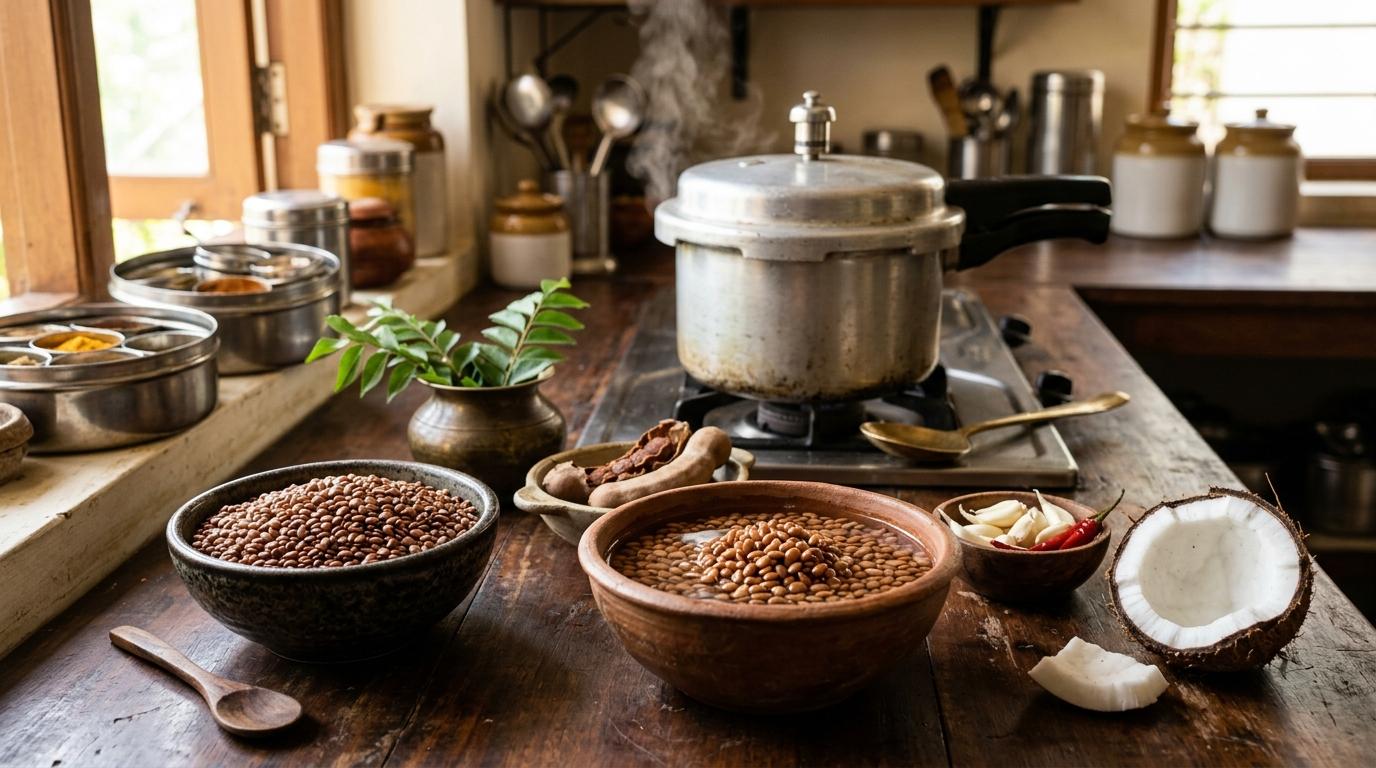
Horse gram, also called kulthi, kollu, hurali, or ulavalu, is a beautiful little legume with a deep, earthy flavor. But let’s be honest: it can also be stubborn.
Unlike moong dal or masoor dal, horse gram does not soften quickly. If you have cooked it before and ended up with hard, chewy, slightly bitter, or overly earthy grains, you are not alone. That happens often, especially when it has not been soaked long enough or when sour ingredients are added too early.
The good news is that horse gram is not difficult once you understand how it behaves. Clean it well, soak it properly, cook it until it is truly soft, and then season it with sourness, spices, fat, and sometimes coconut. That is usually all it needs.
Quick Answer: The Best Way to Cook Horse Gram
#If you just need the basic method, here it is:
- Pick through it: Spread the dry horse gram on a plate and remove stones, grit, husk, or any odd-looking bits.
- Rinse well: Wash it a few times until the water looks much clearer.
- Soak: Soak in plenty of water for 6 to 8 hours, or overnight.
- Pressure cook: Drain the soaking water, add fresh water, and pressure cook until the grains mash easily.
- Season after cooking: Add salt, tamarind, tomato, lemon, coconut, and tempering only after the horse gram is soft.
- Use it: Make dal, rasam, charu, sundal-style stir fry, soup, or curry.
For most kitchens, the pressure cooker method is the easiest and most reliable way to cook horse gram. You can cook it on the stovetop too, but it takes much longer.
Step 1: Clean the Horse Gram Well
#Do not skip this step.
Horse gram often contains tiny stones, dust, bits of husk, and grit. Spread it out on a wide plate, preferably a light-colored one, and look through it carefully. Pick out anything that does not belong.
Then rinse it several times in water. The first rinse may look cloudy or dusty. Keep rinsing until the water looks much cleaner.
It feels like a small job, but it matters. Nobody wants to bite into a tiny stone in the middle of a good bowl of dal or rasam.
Step 2: Soak the Horse Gram
#Soaking is one of the biggest secrets to soft horse gram.
Regular Soaking Time
#Soak the rinsed horse gram in plenty of water for 6 to 8 hours, or overnight.
Use a large bowl because the grains will swell. Add enough water so there are a few inches of water above the horse gram.
After soaking, the grains should look plumper. If you press one between your fingers, the skin should feel a little softer than before.
Before cooking, drain the soaking water and rinse the horse gram once more.
Some people cook horse gram in the soaking water, but I prefer draining it and using fresh water. The flavor is cleaner, especially if you are making kollu rasam, ulavalu charu, or dal.
Quick-Soak Method
#Forgot to soak it overnight? It happens.
Use this hot-water soak instead:
- Clean and rinse the horse gram.
- Put it in a heatproof bowl or pot.
- Pour plenty of boiling water over it.
- Cover and let it sit for 1.5 to 2 hours.
- Drain, rinse, and cook with fresh water.
This will not give exactly the same result as an overnight soak, but it is much better than cooking horse gram completely dry.
Step 3: Cook Horse Gram in a Pressure Cooker
#A pressure cooker is the easiest way to get horse gram soft. It saves time and works especially well if the horse gram is slightly old.
Pressure Cooker Method
#For 1 cup dry horse gram, soaked and drained, use about 3 cups fresh water.
- Add the soaked and drained horse gram to the pressure cooker.
- Add fresh water.
- Add a pinch of turmeric, if you like.
- Add a few drops of oil to reduce frothing.
- Close the cooker.
- Cook on medium heat for about 8 to 10 whistles.
- Let the pressure release naturally.
- Open the cooker and check the texture.
The horse gram should mash easily between your fingers or with the back of a spoon. If it still feels firm, add a little hot water if needed and pressure cook it for a few more whistles.
The exact cooking time depends on your pressure cooker, the age of the horse gram, and how soft you want it. Older horse gram usually needs more time.
Add Salt and Sour Ingredients Later
#For the softest result, cook horse gram plain first.
Add salt, tamarind, tomatoes, lemon juice, or other sour ingredients only after the grains are fully cooked.
This makes a big difference. Sour ingredients can slow down softening, so if you add tamarind or tomatoes too early, the horse gram may stay firm even after a long time. Cook it soft first, then season and simmer again.
Step 4: Cook Horse Gram on the Stovetop
#You can cook horse gram without a pressure cooker, but it takes patience. This method works best if the horse gram has been soaked well.
Stovetop Method
#For 1 cup soaked horse gram, start with about 4 cups water.
- Add the soaked and drained horse gram to a heavy-bottomed pot.
- Add fresh water.
- Bring it to a boil.
- Lower the heat and simmer gently.
- Keep the lid slightly open so it does not boil over.
- Cook for 1.5 to 2 hours, or until fully tender.
- Add more hot water as needed.
Do not let the pot dry out. Horse gram needs both enough water and enough time.
The final texture should not be hard or chalky in the center. If you are making dal, rasam, or charu, cook it a little softer so it mashes easily and gives the dish more body.
How to Fix the Earthy or Bitter Taste of Horse Gram
#Horse gram naturally has a strong, earthy taste. Some batches are mild, while others can taste quite intense. If your cooked horse gram tastes bitter, heavy, or too strong, these simple fixes help a lot.
1. Add Sourness
#Sour ingredients balance horse gram beautifully.
You can use:
- Tamarind water or tamarind paste
- Tomatoes
- Lemon juice, added at the end
Tamarind is especially good in kollu rasam and ulavalu charu. It cuts through the earthy flavor and makes the broth brighter. Tomatoes also help, but tamarind gives that classic tangy South Indian taste.
2. Use a Good Tempering
#A strong tempering can completely change the dish.
Use ghee, coconut oil, sesame oil, or regular cooking oil, and temper with:
- Mustard seeds
- Cumin seeds
- Garlic
- Ginger
- Dry red chillies
- Curry leaves
- Hing, if you use it
Garlic, cumin, chillies, and curry leaves are especially good with horse gram. They add warmth and aroma, so the dish tastes fuller and less plain.
3. Add Coconut
#Fresh grated coconut works very well with horse gram. It adds a gentle sweetness and rounds out the earthy flavor.
This is especially nice in dry curries, sundal-style dishes, and thick dals. Coconut also helps if the horse gram tastes too sharp or intense.
4. Mash or Blend Some of It
#If the cooked horse gram feels too separate or grainy, mash some of it and stir it back into the dish.
For rasam or charu, you can mash a small portion of the cooked gram with the cooking liquid. Some recipes also strain the liquid, depending on the texture you want.
This will not remove the earthy flavor, but it makes the dish feel smoother and more satisfying.
5. Season It Properly
#Horse gram needs proper seasoning. Plain boiled horse gram can somehow taste bland and too strong at the same time.
Once it is soft, add salt, sourness, spices, and tempering. Then let it simmer for a few minutes so the flavors settle in.
Taste before serving. You may need a little more salt, tamarind, lemon, or chilli than you first expected.
Ways to Use Cooked Horse Gram
#Once you have cooked horse gram, you can use it in many ways. It is a good legume to batch-cook and keep in the fridge for the week.
1. Kulthi Dal
#Mash some cooked horse gram and simmer it with onions, tomatoes, turmeric, chilli, cumin, garlic, and a final tempering.
Keep it thick if you are serving it with rice. Add more water if you want a lighter, soup-like dal.
2. Kollu Rasam or Ulavalu Charu
#Do not throw away the cooking water if it tastes clean and good. It has a lot of flavor and makes a great base for kollu rasam or ulavalu charu.
Simmer it with tamarind, pepper, cumin, garlic, curry leaves, and a little jaggery if you like a slight sweet balance. If the liquid tastes too strong, dilute it with water before seasoning.
3. Dry Curry or Sundal-Style Stir Fry
#Drain the cooked horse gram and toss it with a tempering of mustard seeds, curry leaves, dry chillies, hing, and grated coconut.
This makes a simple side dish for rice, kanji, curd rice, chapati, or even a snack. A squeeze of lemon at the end is lovely.
4. Simple Horse Gram Soup
#Simmer cooked horse gram with garlic, pepper, cumin, tomatoes, and a little onion for a rustic soup.
Mash or blend a small portion to thicken it. This is especially comforting on cold days or when you want something filling but simple.
5. Grain Bowls and Salads
#Cooled cooked horse gram can be added to rice bowls, millet bowls, or vegetable salads.
Because horse gram has a strong flavor, pair it with bright ingredients. Lemon juice, onions, herbs, green chilli, salt, and a little oil work well.
Storage and Reheating Tips
#Treat cooked horse gram like any other cooked legume.
Let it cool, but do not leave it at room temperature for too long. Store it in an airtight container in the refrigerator for 3 to 4 days.
For longer storage, freeze it in small portions for up to 3 months. Meal-sized portions are convenient because you can thaw only what you need.
Reheating Tips
#- Reheat only the portion you plan to eat.
- Add a splash of water if it has thickened.
- Bring dal, rasam, soup, or curry to a proper simmer before serving.
- Avoid cooling and reheating the same batch again and again.
- If it smells sour, looks slimy, or tastes odd, throw it away.
Horse gram should be cooked until fully soft. Undercooked dense legumes can feel heavy for some people. Soaking well, cooking thoroughly, and using spices like cumin, ginger, garlic, and hing can make it easier to enjoy.