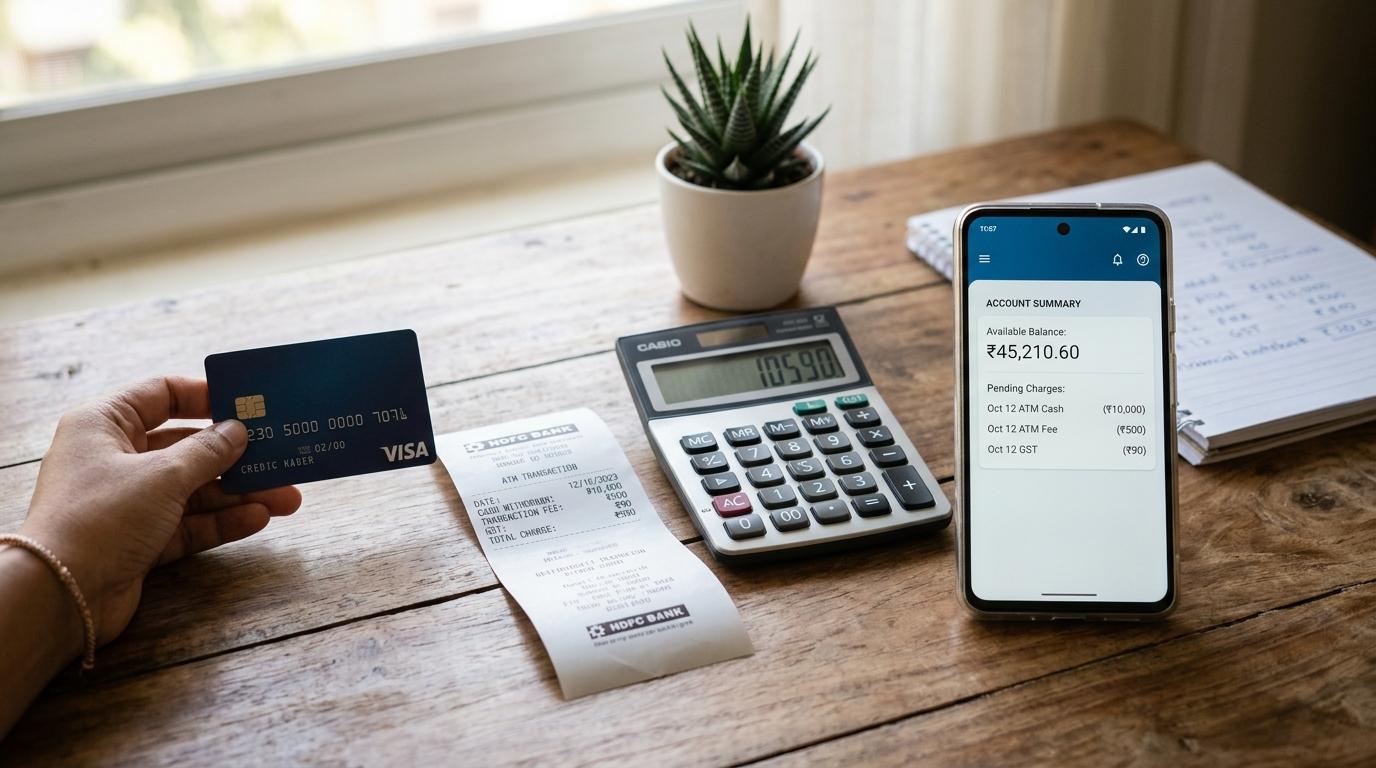
Taking cash out from a credit card can feel like a quick fix, especially when you are stuck and need money immediately. But it is one of those features that looks simple at the ATM and feels painful later on the bill.
Unlike normal credit card spending, cash withdrawal does not usually come with an interest-free period. The moment you withdraw money, the charges begin.
In most cases, you may have to pay:
- A cash advance fee
- 18% GST on applicable charges
- Interest from the withdrawal date
- Possible ATM or other related charges, depending on the bank
So even if the amount you withdraw is small, the total cost can become much higher than expected.
Most people understand how regular credit card purchases work. You swipe or tap the card, the amount appears in your bill, and if you pay the full statement amount by the due date, you usually avoid interest on those purchases.
Credit card cash withdrawal is different.
When you use your credit card at an ATM, the bank treats it as a cash advance. That means fees start immediately, interest starts immediately, and you usually do not earn rewards or cashback.
This guide from allblogs explains credit card cash withdrawal charges in India in simple terms, including cash advance fees, cash limits, interest, GST, MITC details, and what to do if you have already withdrawn cash.
What is a credit card cash withdrawal?
#A credit card cash withdrawal means using your credit card at an ATM to take out physical cash. It is also called a credit card cash advance.
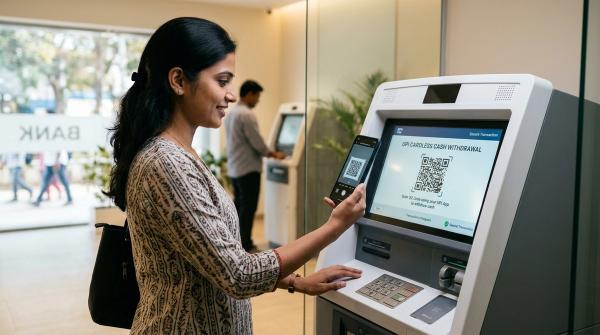
At the ATM, it may feel similar to using a debit card. You insert the card, enter the PIN, choose the amount, and collect cash.
But financially, it is not the same at all.
With a debit card, you are taking money from your own bank account. With a credit card, you are borrowing cash from the bank. And banks charge heavily for this kind of borrowing.
For example, if you withdraw ₹10,000 from your credit card, you do not simply repay ₹10,000 later. You may also pay:
- Cash advance fee
- GST on the fee
- Interest from the date of withdrawal
- GST on finance charges, where applicable
- Other bank-specific charges, if any
That is why credit card cash withdrawal should not be treated like a normal card transaction.
Why credit card cash withdrawal is expensive
#There are three main costs you should know before using a credit card at an ATM.
1. Cash advance fee
#The first charge is the cash advance fee. In India, this is usually charged as a percentage of the amount withdrawn. Many banks charge around 2.5% to 3.5%, though the exact rate depends on your card.
There is also usually a minimum fee.
This minimum fee is where many people get surprised.
For example, your bank may charge:
2.5% of the withdrawn amount or ₹500, whichever is higher.
Now suppose you withdraw only ₹1,000.
Technically, 2.5% of ₹1,000 is just ₹25. But because the minimum fee is ₹500, you may still be charged ₹500 plus GST.
That makes a small withdrawal very expensive.
So before withdrawing cash, always check your card’s MITC, which means Most Important Terms and Conditions. This document tells you the actual fees, interest rates, and rules for your specific credit card.
2. Interest starts from the withdrawal date
#This is the biggest difference between regular credit card spending and credit card cash withdrawal.
For normal purchases, you may get an interest-free period if you pay your full bill on time. But for credit card ATM cash withdrawal, there is generally no interest-free period.
Interest starts from the day you withdraw the cash.
Not from the bill date.Not from the payment due date.From the withdrawal date itself.
Credit card cash withdrawal interest can be high. Many cards charge around 3.5% to 4% per month, depending on the bank and card type.
That monthly figure may not look too scary at first glance, but it adds up quickly if you delay repayment.
3. GST on charges
#In India, GST on credit card charges is generally 18%.
This means you do not pay only the cash advance fee or interest. You also pay GST on applicable charges.
Your credit card statement may show entries such as:
- Cash advance fee
- Finance charges
- Interest charges
- GST
- ATM charges, if applicable
This is why the final amount payable is often more than what people roughly calculate in their head.
Example: Cost of withdrawing ₹10,000 from a credit card
#Let’s take a simple example.
Suppose you withdraw ₹10,000 from an ATM using your credit card. Your bank charges a 2.5% cash advance fee, and the interest rate is 3.5% per month. You repay the amount after 30 days.
So, in this example, withdrawing ₹10,000 can cost around ₹708 extra in just 30 days.
And this is only an estimate. Your actual cost may be higher or lower depending on:
- Your bank
- Your card type
- The cash advance fee
- The minimum fee
- The interest rate
- How many days you take to repay
- Any additional ATM charges
If you delay repayment for 60 or 90 days, the cost will go up further because interest keeps getting added.
Credit limit and credit card cash limit are not the same
#Many people think that if their credit card limit is ₹1,00,000, they can withdraw the entire amount as cash.
Usually, that is not true.
Your credit limit is the total amount you can spend using the card.
Your credit card cash limit is the portion of that credit limit that you are allowed to withdraw as cash from an ATM.
For example:
- Credit limit: ₹1,00,000
- Cash limit: ₹20,000
This means you may be able to spend up to ₹1,00,000 overall, but you can withdraw only up to ₹20,000 as cash.
You can check your credit card cash limit through:
- Monthly credit card statement
- Mobile banking app
- Net banking
- MITC document
- Customer care
- Bank’s credit card support page
Do not guess your cash limit. Check it before trying to withdraw cash. If you try to withdraw more than your allowed cash limit, the ATM transaction may simply get declined.
Check your MITC before withdrawing cash
#Before taking a credit card cash advance, take a few minutes to check your card’s MITC.
Yes, it may look like boring fine print. But this is exactly where the real cost is mentioned.
Look for:
- Cash advance fee
- Minimum cash withdrawal fee
- Monthly interest rate
- Annual interest rate, if mentioned
- Whether interest starts from the withdrawal date
- GST on fees and finance charges
- Credit card cash limit
- ATM usage charges, if any
- Over-limit charges
- Late payment charges
- Payment allocation rules
The last point is important.
Payment allocation rules explain how your payment is adjusted by the bank. For example, if you have purchases, cash withdrawals, fees, and interest all in the same billing cycle, your payment may be adjusted according to the bank’s own rules.
Sometimes people pay part of the bill and assume the cash withdrawal is cleared. But that may not always be the case. Reading the MITC helps you avoid confusion later.
Why there is no interest-free period on cash withdrawal
#This is where many credit card users get caught.
For normal purchases, banks may offer an interest-free period because it is a merchant transaction. You buy something, the bank pays the merchant, and you pay the bank later.
Cash withdrawal is different.
Here, the bank is directly giving you cash. So it is treated like immediate borrowing.
That means:
- You do not get 45 or 50 interest-free days
- Interest does not wait for the statement date
- Interest does not wait for the due date
- Paying by the due date may not remove all interest
- Interest runs from the withdrawal date until repayment
For example, suppose you withdraw cash on the 1st of the month and your statement is generated on the 20th. By the time your bill is generated, interest has already been running for 20 days.
That is why waiting for the statement is usually not a good idea.
When can someone still use credit card cash withdrawal?
#Honestly, credit card cash withdrawal is not a good regular option. It is expensive, and there are usually cheaper ways to arrange money.
But real life is not always perfect. Sometimes you may be in a situation where you urgently need cash and nothing else is working.
You may consider it only in cases like:
- A medical emergency where cash is required
- A travel issue where UPI or debit card is not working
- Urgent cash need during bank holidays
- Temporary shortage in your savings account
- A situation where card payment is not accepted
Even then, withdraw only what you really need. Keep the amount as low as possible and repay it as quickly as you can.
Do not use credit card cash withdrawal for shopping, parties, lifestyle expenses, or anything that can wait. It is too costly for casual spending.
Safer alternatives before using credit card ATM cash withdrawal
#Before you use your credit card at an ATM, pause for a moment and check if there is a cheaper option.
- Use your savings account or debit card first: If you have money in your bank account, use that instead. It avoids cash advance fees and interest.
- Check if UPI is accepted: Sometimes we assume cash is needed, but UPI, debit card, or normal credit card payment may work.
- Ask family or a trusted friend: For a short emergency, borrowing from someone you trust may be cheaper than a credit card cash advance.
- Check your banking app: Some banks may offer short-term loans, EMI options, or other facilities. Compare the total cost before choosing.
- Look at salary account or FD-linked options: If you already have such facilities, compare their interest cost with credit card cash withdrawal.
- Avoid multiple small withdrawals: Each withdrawal may attract a separate minimum cash advance fee.
- Withdraw only the emergency amount: More cash means more fee and more interest.
- Do not use it for non-urgent spending: This feature should be kept for real emergencies.
The point is not that you should never use this feature. The point is that it should be your last option, not your first.
If you already withdrew cash, what should you do?
#If you have already withdrawn cash from your credit card, do not panic. But do not ignore it either.
Your main goal should be to stop interest from building up.
Use this checklist:
- Pay as early as possible: Do not wait for the credit card bill. Interest has already started.
- Pay more than the cash amount: Include the cash advance fee, GST, and estimated interest. If you are unsure, paying a little extra may help.
- Check unbilled transactions: Your banking app may show the withdrawal, fee, GST, and finance charges separately.
- Read the MITC payment rules: Understand how your bank adjusts payments.
- Clear the full outstanding amount if possible: This reduces the chance of any high-interest balance remaining unpaid.
- Check the next statement: There may be small residual interest for the days before repayment.
- Pay residual charges quickly: Even small finance charges should not be ignored.
- Do not pay only the minimum amount due: Minimum due may help you avoid late payment issues, but interest can still continue.
The faster you repay, the less you pay overall. It is that simple.
What to check in your credit card statement
#After a credit card cash advance, your next statement may have several entries. Do not look only at the total amount due. Check the details carefully.
Look for:
- Cash withdrawal amount
- Cash advance fee
- GST on cash advance fee
- Finance charges
- GST on finance charges
- ATM usage charges, if any
- Total amount due
- Minimum amount due
- Payment due date
Also check the withdrawal date. Since interest starts from the date of cash withdrawal, the date matters.
If anything looks incorrect, contact the bank and ask for a charge-wise explanation. It is better to clarify early than deal with a bigger bill later.
Common mistakes people make
#Mistake 1: Thinking it works like a debit card
#A debit card uses your own money. A credit card cash withdrawal is borrowed money. The cost difference can be huge.
Mistake 2: Waiting for the payment due date
#For normal purchases, paying the full bill by the due date can help you avoid interest. For cash withdrawal, interest starts from day one.
Mistake 3: Making many small withdrawals
#If your card has a minimum cash advance fee per transaction, multiple small withdrawals can become very expensive.
For example, three separate withdrawals may mean three separate fees.
Mistake 4: Paying only the minimum amount due
#The minimum amount due is not a money-saving option. It only helps you avoid immediate late payment issues. Interest can still continue on the unpaid balance.
Mistake 5: Forgetting GST
#GST can make the total cost higher than expected. Always check the actual statement entries, not just the cash amount you withdrew.
Mistake 6: Not reading the MITC
#The MITC tells you the actual charges, interest rate, cash limit, and repayment rules. It may be boring, but it can save you money.
Why repaying early matters so much
#Suppose you withdraw ₹10,000 and your card starts charging interest from the same day.
If you repay in 5 days, the interest will be much lower than if you repay after 30 days. If you wait for 60 or 90 days, the cost becomes even higher.
The exact amount depends on your bank’s rate and charges. But the basic rule is clear: every extra day adds cost.
So the best repayment date is not the statement due date. The best repayment date is the earliest day you can arrange the money.
Final word from allblogs
#Credit card cash withdrawal can be useful in an emergency, but it is one of the most expensive credit card features.
The real cost is not just the cash advance fee. It includes the fee, GST, and credit card cash withdrawal interest from the withdrawal date.
If you must use it, withdraw only what you need. Check your card’s MITC, repay quickly, and review the next statement for any leftover interest or GST.
A few minutes of checking can stop a small emergency from turning into a much bigger card bill.