Missing a credit card payment can feel worrying, especially when you do not know what the bank will charge next. In India, a missed credit card payment can usually lead to two separate costs: a late payment fee and credit card interest charges. RBI rules also provide a 3-day buffer before late payment charges and credit bureau reporting, but this buffer should not be treated as an extended due date.
What counts as a late credit card payment?
#Your credit card statement usually shows a few key details:
- Statement date: The date your monthly bill is generated
- Total amount due: The full amount payable for that billing cycle
- Minimum amount due: The minimum amount you must pay to avoid overdue status
- Payment due date: The date by which your payment should reach the card account
A payment becomes late when the required amount is not paid by the due date. But the impact depends on what exactly you paid.
If you pay the total amount due on time, you usually avoid late fees and interest on regular purchases, subject to your card terms.
If you pay only the minimum amount due, you may avoid late payment fees and overdue reporting, but interest can still apply on the unpaid balance.
If you pay less than the minimum due, or pay nothing, then late fees, interest and credit bureau reporting may become relevant.
RBI 3-day rule for credit cards, explained simply
#RBI’s credit card rules provide a small cushion to cardholders.
In simple terms, a card issuer should not levy late payment charges or report the account as past due to Credit Information Companies unless the payment remains unpaid for more than three days after the due date.
This helps in cases where:
- Your payment was made close to the due date but got credited late
- There was a bank holiday
- A UPI, net banking or auto-debit payment got delayed
- A refund or reversal was credited around the due date
- There was a technical or settlement delay
But do not treat this as extra free time. The date printed on your statement is still the real due date. The 3-day rule is a protection against immediate penalty, not an invitation to delay payment every month.
Late fee and interest are not the same thing
#A late fee is a penalty for not paying the required amount on time. Interest is the cost of carrying unpaid credit card dues.
So, even if a late fee is not charged immediately due to the RBI buffer, interest may still apply depending on your card issuer’s terms. Always check your card’s Most Important Terms and Conditions, also called the MITC.
How credit card late payment fees work in India
#A credit card late payment fee is usually shown separately on your statement. It may appear as:
- Late payment fee
- Delay charge
- Payment default charge
- Overdue fee
The exact name can differ from one issuer to another.
RBI guidance says late payment charges should be based on the amount that remains outstanding after the due date, after adjusting eligible payments, refunds and reversals.
For example, suppose your bill is ₹50,000 and you paid ₹40,000 before the due date. The bank should not treat the entire ₹50,000 as unpaid for late-fee calculation.
Similarly, if a refund or reversal has already been credited to your card account, it should be considered while calculating the outstanding amount.
However, the exact late fee is not the same for all cards. It depends on your card issuer’s fee slabs.
You can find this in:
- Your credit card statement
- Your card issuer’s website
- The card’s MITC document
- The mobile banking or credit card app
Do not rely on old fee charts or someone else’s card details. Your card may have different charges.
How credit card interest charges work
#Credit card interest charges are usually called finance charges.
They apply when you do not pay the total amount due as required by your card terms. This is where many people get surprised.
Paying the minimum amount due may help you avoid a late payment fee, but it usually does not make the remaining balance interest-free.
Your issuer’s MITC will explain:
- Monthly and annual interest rate
- How finance charges are calculated
- Whether interest applies from the transaction date or another date
- How payments are adjusted
- What happens to new purchases when old dues remain unpaid
- Charges on cash withdrawals
Credit card interest can become expensive quickly. So, if you cannot pay the full bill, try to clear the remaining balance as soon as possible.
What happens if you pay only the minimum due?
#The minimum amount due is the smallest amount you need to pay to keep the account from being treated as overdue in the normal way.
Paying the minimum due on time can usually help you:
- Avoid late payment fees
- Avoid past-due reporting, subject to RBI timelines and issuer rules
- Keep the account active and not immediately overdue
But it does not mean your bill is settled.
The unpaid amount can still attract interest. You may also lose the interest-free period on new purchases until the previous dues are cleared, depending on your issuer’s terms.
Think of the minimum due as an emergency option, not a repayment strategy.
If you keep paying only the minimum amount every month, the balance can grow because of finance charges.
Do refunds and reversals reduce your credit card dues?
#Yes, but timing matters.
A refund or reversal can reduce your outstanding credit card dues only when it is actually credited to your card account.
For example, if you returned an item and the merchant says the refund has been initiated, that does not always mean your credit card bill is already reduced. The refund must reflect in your card account.
Before assuming that your bill has come down, check:
- Whether the refund is visible in your card account
- The date on which it was credited
- Whether it was credited before or after the due date
- How the issuer adjusted it against your outstanding amount
If the refund is credited before the due date, it should generally reduce your outstanding amount.
If it is credited after the due date, check your next statement carefully. If late fees or interest look incorrect, ask the card issuer for a proper calculation.
A simple example
#Let’s say your statement shows the following:
In this case, ₹15,000 has already been credited to your card account before the due date. So, the remaining amount is ₹5,000.
If the required amount remains unpaid beyond the permitted timeline, late payment charges may apply on the outstanding amount as per your issuer’s MITC and RBI rules.
Interest may also apply if the total amount due is not cleared according to your card terms.
What to check before your credit card due date
#Before the due date, do not just look at the big payable amount and move on. Check the statement properly.
A payment success message from a third-party app is not always enough. What matters is when the amount is credited to your credit card account.
Practical checklist to avoid late payment charges
#Common mistakes that lead to late charges
#Many people do not miss payments intentionally. Late charges often happen because of small assumptions.
For example, someone pays through an app late at night on the due date and assumes the bill is paid. But the amount may be credited to the card account the next day.
Someone else waits for a merchant refund and assumes the bank will automatically reduce the bill. But the refund may come after the due date.
Another person pays only the minimum due and thinks there will be no charges at all. That is not true. Interest can still apply on the remaining balance.
The safest habit is simple: check the total amount due, check actual credited payments and refunds, and pay before the due date.
What if the late fee or interest looks wrong?
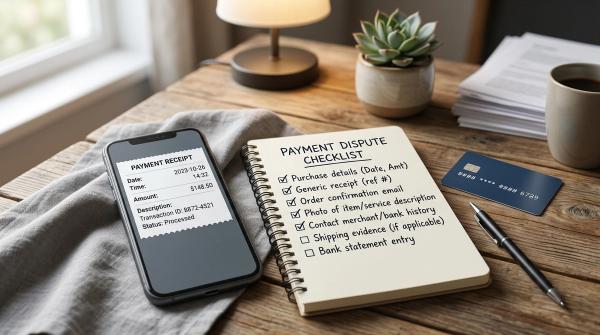
#If you think the bank has charged you incorrectly, do not panic. First, collect the facts.
Check these details:
- Statement date
- Payment due date
- Payment date
- Date on which payment was credited
- Refund or reversal credit date
- Total amount due
- Minimum amount due
- Late payment fee line item
- Finance charge line item
Then compare the charges with your card’s MITC.
If the charge still looks wrong, contact your card issuer and ask for a clear calculation. Specifically ask how the outstanding amount was calculated after adjusting payments, refunds and reversals.
This is especially useful if:
- You paid close to the due date
- A refund came around the due date
- You paid through a third-party app
- Your auto-debit failed
- The fee seems to be based on the original bill amount instead of the remaining outstanding amount
Final note
#Credit card late payment charges in India become easier to understand when you separate the parts.
A late fee is one thing. Interest is another. Days past due is the delay count. Credit bureau reporting is a separate consequence.
The best approach is to pay the total amount due before the credit card due date. If that is not possible, pay at least the minimum due, understand the interest impact, and check whether refunds or reversals have actually been credited.
This article is for general education only and is not financial or legal advice. For account-specific questions, disputed charges or refund adjustments, contact your card issuer and refer to the latest RBI directions, RBI FAQs and your card’s official MITC.