The bag fight nobody talks about until your shoulder is gone
#I used to think a day bag is just… a bag. Put wallet, phone, water bottle, power bank, done. Then I spent one full day walking in Old Delhi with a stuffed backpack, sweating like I had taken bath in my own bad decisions, and later the same month I did Jaipur with a tiny sling that looked stylish but couldn’t even hold a proper water bottle. After that, I became that annoying friend who asks, “Backpack leke ja raha hai ya sling?” before every trip.
For Indian travellers, especially, sightseeing is not just walking from one museum to another like in some polished travel video. It’s metro, auto, bargaining, temple queues, street food, sudden rain, security checks, maybe carrying mummy’s shawl because she said she doesn’t need it and then ofcourse she needs it. Your day bag has to survive all this. So this whole backpack vs sling debate is actually practical, not just travel influencer timepass.
I’ve used both across Indian cities like Delhi, Jaipur, Mumbai, Kochi, Varanasi, Hampi, and also outside India in places like Singapore, Bangkok and Dubai. And honestly, there is no one perfect answer. A backpack can be a blessing on a long sightseeing day. A sling can save your sanity in crowded bazaars. Sometimes I carry both, which sounds extra, but wait, I’ll explain.
First, what kind of sightseeing day are we talking about?
#This is the main thing people ignore. A “day bag” for a slow cafe-and-museum day in Fort Kochi is not the same as a sunrise-to-sunset day in Jaipur where you’re doing Amer Fort, City Palace, Hawa Mahal, shopping in Johari Bazaar, and then dinner somewhere near MI Road. Same city, different energy also matters. Even weather changes the whole bag decision.
For city sightseeing in India, October to March is usually the most comfortable in many plains and heritage cities, like Rajasthan, Delhi, Agra, Varanasi, Ahmedabad. Summer can be brutal, not joking, so water space becomes more important than looking sleek. Hill stations have their own scene — mornings cold, afternoons sunny, evenings again jacket type weather. Monsoon travel is beautiful but your bag better have waterproofing or at least a rain cover, otherwise your power bank and tickets will be doing jal samadhi.
Also, sightseeing now has more security checks than earlier at many attractions, malls, metro stations, museums, airports, religious places. Bags go through scanners, guards may ask you to open pockets, and some places don’t allow large backpacks inside certain areas. Policies keep changing and vary place to place, so I don’t assume anymore. If I’m visiting something like a palace, museum, temple, stadium, or theme park, I check quickly whether lockers or cloakrooms exist. Actually I wrote down similar thoughts when comparing long walking days and rides in Theme Park Locker vs Backpack vs Sling Bag: What Should You Use?, because attractions can be surprisingly strict.
Backpack for sightseeing: the reliable but slightly sweaty friend
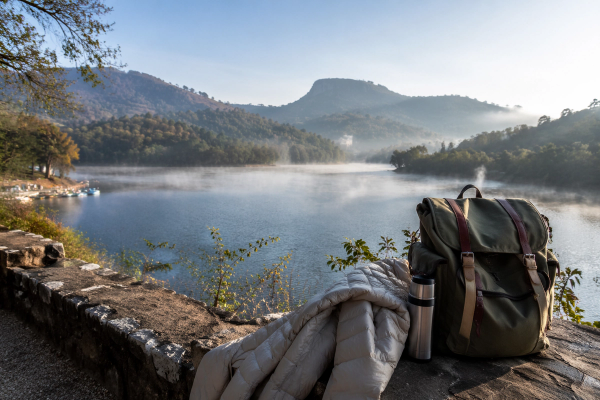
#A backpack is the safe choice when your day is long, hot, and unpredictable. It carries weight better because both shoulders share the load. If you’re carrying a camera, extra shirt, umbrella, medicine pouch, snacks, sunscreen, cap, sunglasses, water bottle, maybe a small souvenir, a backpack just makes sense. I used a 20-litre backpack in Hampi and it was perfect because I had to carry water, ORS sachet, a scarf for sun, and chappals for the temple side. Without that bag, I would’ve been buying overpriced water every hour.
But backpacks have one big problem in India: crowds. In Chandni Chowk, Crawford Market, Charminar lanes, Bapu Bazaar, Varanasi ghats during evening aarti… a backpack behind you feels like you have left your house door open. You don’t know who is touching what. Even if nobody steals anything, you keep turning around like a CCTV camera with anxiety. I’ve learnt to wear my backpack in front in very crowded areas. Looks funny, yes. But better than losing your wallet or passport.
- Best backpack size for sightseeing is usually 15 to 22 litres. Bigger than that and you start packing like you’re leaving home forever.
- Look for two bottle pockets if you travel in hot places. One for water, one for umbrella or small tripod if you use it.
- A hidden back pocket is super useful for passport, extra cash, room key, and train tickets.
- Avoid too many dangling straps. They get stuck in autos, buses, airport trolleys, everything basically.
In terms of price, decent day backpacks in India start around ₹800 to ₹1,500 if you’re buying from regular brands or online sale. Better padded ones with rain cover and laptop sleeve usually fall around ₹2,000 to ₹4,000. Premium travel backpacks can go ₹5,000 to ₹10,000 and more, but honestly for sightseeing you don’t always need fancy unless you carry camera gear or work laptop. I know people who travel with a basic Decathlon-style daypack for years and it’s fine only.
Sling bag for sightseeing: small, fast, and surprisingly addictive
#Now sling bags. I love them for short city walks. Like, genuinely love. When I’m in Mumbai doing Kala Ghoda, Colaba, Marine Drive kind of day, I don’t want a backpack. I want my phone, wallet, sunglasses, lip balm, room key, maybe a tiny power bank and that’s all. A sling sits in front, you can access everything quickly, and in crowded places it feels safer. You can hold it close without looking too paranoid.
The first time I fully appreciated a sling was in Bangkok, but same logic applies to Indian markets. You’re constantly paying small amounts, taking out phone for maps, scanning UPI QR, checking train tickets, buying nimbu soda, clicking photos, then again keeping phone inside. With a backpack, you keep removing it or asking someone to hold it. With a sling, bas zip kholo and done.
But sling bags have limits. If you overload them, one shoulder will start crying. And because the weight is on one side, after 5-6 hours you feel that strange neck pull. I made this mistake in Udaipur. I packed a water bottle, camera, power bank, snacks, small umbrella, and even a paperback book because apparently I thought I’ll read poetically near Lake Pichola. By evening my shoulder was finished. The sling was not the problem, my delusion was.
- A 2 to 4 litre sling is good for minimalist sightseeing — phone, wallet, power bank, tissues, sanitizer, small sunscreen.
- A 5 to 8 litre sling works if you need a compact camera, small water bottle, or light shawl.
- Crossbody style is better than one-shoulder fashion sling, especially when you’re walking a lot.
- Front-facing sling is very useful in metros, local trains, bazaars, and temple queues.
Price-wise, basic slings are available from ₹400 to ₹1,000, and many are honestly good enough for daily sightseeing. Better travel slings with water-resistant fabric, anti-theft zips, RFID pocket and proper strap padding are usually ₹1,500 to ₹4,000. Premium camera or tech slings can go much higher. Don’t buy only because it looks cool on Instagram. Check the strap. Check the zip. Check if your phone fits with cover. Small things, but later they irritate you like anything.
Backpack vs sling: my practical comparison after too many sweaty walks
#| Situation | Backpack feels better | Sling feels better |
|---|---|---|
| Full-day sightseeing | Yes, especially 6+ hours | Only if you pack very light |
| Crowded markets | Okay if worn in front | Usually safer and easier |
| Hot weather | Useful for water, cap, towel | Less sweaty on back but limited space |
| Photography day | Better for camera and lenses | Good only for small camera/phone |
| Temple/museum visits | May need cloakroom if large | Usually easier to carry inside |
| Public transport | Can be bulky during rush | Compact and quick access |
| Shopping day | Can hold small purchases | Gets full very fast |
| Rainy day | Good if rain cover included | Good if water-resistant, but less protection |
If you ask me to simplify it fully: choose backpack when the day is long and uncertain. Choose sling when the day is short, crowded, and you want freedom. But real life is messy. Sometimes I carry a small packable tote inside my sling. Sometimes I carry a backpack to the hotel lobby, dump extra stuff, and go out with only a sling in the evening. This is not overplanning, okay. This is survival.
What I actually carry in my sightseeing day bag
#My packing list has become boring but effective. Earlier I used to pack “just in case” things and then suffer. Now I pack based on weather, walking distance, and whether I’ll return to hotel in between. If I’m staying in a hostel or budget hotel, I also check locker situation. Dorms in Indian tourist cities can be roughly ₹500 to ₹1,500 per bed depending on city and season, budget hotels can be around ₹1,200 to ₹3,000, and mid-range stays often go ₹3,000 to ₹7,000 or more. Prices jump in peak season, festivals, long weekends. Why mention this? Because if your stay has no safe locker, you may end up carrying more valuables during sightseeing, and then sling vs backpack becomes more serious.
For a normal Indian city sightseeing day, my bag has: one water bottle, ORS or electrolyte sachet, tiny medicine strip, sanitizer, tissues, small sunscreen, cap, sunglasses, power bank, charging cable, cash in small notes, ID copy, and one snack like chikki or protein bar. In hot cities, hydration is not optional. We Indians sometimes run on chai and vibes, but walking all day in Jaipur or Hampi heat with only coffee is asking for headache. I liked this reminder in Travel Day Hydration Mistakes: Water, Coffee, Electrolytes, because it’s exactly the mistake many of us make on travel days.
Sun protection also matters more than we admit. A compact cap, sunglasses and sunscreen fit even in a sling. If I’m doing forts, ruins, open markets or beach towns, I prefer a light full-sleeve shirt or UPF-style layer because sunscreen alone gets sweaty and patchy. If you’re confused what to pack for sun, UPF Clothing vs Sunscreen for Travel explains that balance nicely without making you carry your whole bathroom.
- Phone with offline maps downloaded. Network can become weird in old city lanes, hills, and crowded festival areas.
- UPI plus cash. UPI is everywhere now, but small cash helps for autos, temple lockers, public toilets, chai stalls.
- A thin stole or scarf. Useful for sun, dust, temples, cold AC buses, and sudden modest-dress requirements.
- Zip pouch for receipts and tickets. Otherwise they become paper salad at the bottom of the bag.
- One empty space. Very underrated. You will buy something. Pickle, fridge magnet, earrings, prasad, random wooden elephant. It happens.
Safety: where sling wins, where backpack wins
#Let’s be honest. Most Indian tourist places are safe enough if you use common sense, but petty theft can happen in crowded areas. I don’t want to scare anyone, but I also don’t like that “everything is perfectly safe bro” attitude. Crowded metros, railway stations, bus stands, markets, festival gatherings, ghats during aarti, queues outside popular temples — these are places where your bag choice matters.
A sling worn across the chest is easier to watch. Your hand naturally rests on it. You can keep the zip facing inward. For solo travellers, especially women, it feels more in control because you’re not constantly wondering what’s happening behind you. I’ve seen many women travellers use a small sling plus a tote, and it works well for cafe hopping, shopping, museums, short walks.
Backpacks win when you need to carry more safely without killing your body. But please don’t keep wallet in the outer pocket. Don’t keep passport in a side mesh pocket. Don’t hang expensive camera casually. In crowded places, wear backpack in front or use a small lock on main zip. Not a huge lock like you’re securing a warehouse, just a tiny travel lock or carabiner clip can slow down sneaky hands. Also, never keep all cash in one place. Old uncle advice, but correct.
My rule is simple: valuables in front, water and boring things at the back. If someone steals my tissue packet, bhai enjoy.
Weather changes the answer more than style does
#Indian sightseeing is basically a weather management course. In summer, the best day bag is the one that carries water without making your back feel like tandoor. In monsoon, the best bag is the one that doesn’t leak. In winter, the best bag has space for layers because mornings are cold, afternoons are warm, and evenings again you’re searching for that jacket you said you won’t need.
For hot weather destinations like Rajasthan, Hampi, Badami, Aurangabad caves, Delhi in peak summer, or even temple towns where you walk barefoot on hot stone, I prefer a backpack if it has breathable back padding. Yes, back sweat will happen. Accept it. But at least you can carry water, cap, wet wipes, electrolyte, and maybe a small towel. A sling in extreme heat is okay only if your route has easy water access and you’re not out for too long.
For monsoon trips to places like Goa, Kerala, Meghalaya, Mumbai, or Western Ghats, water resistance becomes more important than size. Many bags claim water-resistant, but heavy rain laughs at those claims. I use a rain cover for backpack and a ziplock pouch inside for phone, cash, medicines. With sling, I keep electronics in a small plastic pouch because one sudden baarish and your whole plan becomes repair shop yatra.
Transport days: metro, autos, trains, flights and all that jugaad
#If your sightseeing day involves public transport, think about how often you’ll remove the bag. In Delhi Metro or Mumbai local during busy hours, backpack at the back is annoying for you and for everyone behind you. I turn it around or keep it low near my feet if space allows. Sling is much easier here. In autos and rickshaws, sling stays on body and you don’t forget it. Backpack sometimes gets pushed behind and then you’re doing panic check after getting down.
For domestic flights, a small backpack usually works as cabin personal item depending on airline rules and your main cabin bag, but always check current airline baggage limits because they do change and staff can be strict during busy travel periods. Sling is convenient for documents and phone at the airport, but if it counts as an extra item, you may need to tuck it into your backpack before boarding. I’ve done that awkward gate-side rearranging too many times, standing there with boarding pass in mouth. Not cute.
For train travel, especially if you’re reaching early morning and going sightseeing before check-in, backpack wins. You can keep toiletries, fresh t-shirt, charger, snacks. Many railway stations have cloakrooms but rules, ID requirements and availability vary, so don’t depend blindly. Hotels may allow luggage storage before check-in, but again depends on property. Call and ask. Simple.
Food, culture, and the tiny things your bag should handle
#Sightseeing in India is never separate from food. You go to see a fort and end up eating kachori. You go for a museum and come back with filter coffee powder. You go to a temple and recieve prasad, flowers, maybe a coconut if your family is involved. Your day bag should have some flexibility for these small cultural things, otherwise you’ll carry them in hand and regret it.
In Varanasi, I kept a small cloth bag inside my backpack and it saved me after buying peda and a tiny brass diya set near Godowlia. In Amritsar, after Golden Temple and local food, my sling smelled faintly of kulcha because I packed leftovers badly. Lesson learnt: carry one disposable pouch or reusable food-safe bag. Street food is part of travel, but chutney leakage inside your bag is emotional damage.
If you’re doing religious places, keep space for footwear tokens, scarf, socks, and maybe phone restrictions. Some temples and monuments ask you to deposit cameras or bags, some don’t. Rules can change during festivals or high-security days. A small sling is easier to manage in cloakroom queues. A big backpack may slow you down. But if you’re carrying family stuff, backpack is unavoidable. Indian family sightseeing means one person becomes walking cupboard. Usually me.
So which one should you buy? My no-drama recommendation
#If you’re buying only one bag for sightseeing, buy a good small backpack around 18 to 20 litres. It is more versatile for Indian travel. You can use it for flights, trains, day hikes, city walks, office also if needed. Choose one with padded straps, two compartments, water bottle pocket, hidden pocket, light rain protection, and not too many fancy chains. Keep the colour dark or medium because dust is real. Beige bags look amazing for 12 minutes.
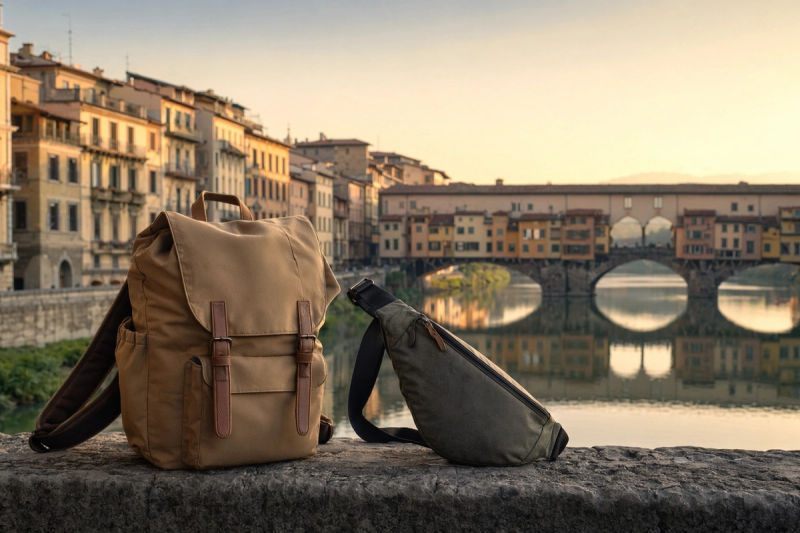
If you already have a backpack, buy a compact sling as your second bag. Not huge, just enough for phone-wallet-powerbank. It becomes your evening bag, market bag, airport document bag, and crowded place safety bag. My current setup is exactly this: one 20L backpack for long days and one 3L sling for short walks. When travelling, I pack the sling flat inside the backpack. This combo has worked for me from Jaipur forts to Singapore MRT to Goa beaches.
For photographers, parents, and people who carry medicines or snacks, backpack is almost always better. For solo travellers who pack light, couples doing cafe/museum days, and anyone exploring crowded old cities, sling feels amazing. For senior travellers, I’d avoid heavy sling because one-side weight can bother neck and shoulder. A light backpack with chest strap is more comfortable. For kids, small backpack is cute but don’t overload it, they will hand it to you after 20 minutes anyway.
A few buying checks before you waste money
#Try the bag with actual stuff inside if possible. Empty bags lie. Put a water bottle, power bank, wallet, maybe camera, and then see how the strap feels. Check if the zip opens smoothly with one hand. Check if the bottle pocket is deep enough. Check if the sling sits comfortably across your chest and doesn’t keep sliding to your neck. If buying online, read reviews with photos, not only star rating. Indian reviewers are very honest when zip quality is bad, bless them.
- For backpacks, avoid very thin straps unless the bag is truly lightweight.
- For slings, strap padding matters more than you think.
- Water-resistant fabric is useful, but still use pouches for electronics.
- Anti-theft pockets are nice, but your habits matter more.
- Don’t buy a bag that is already full when you pack basics. Travel always adds extra things.
Also think about washability. After a week of Indian sightseeing, bags collect dust, sweat, sunscreen marks, snack crumbs, and some mysterious masala smell. A bag that can be wiped clean is better than a delicate one that needs spa treatment. I’m not saying ugly bags are better, but practical bags age better. And travel photos don’t show your shoulder pain.
My final answer after all the trial and error
#For best day bag for sightseeing, backpack vs sling is not a competition where one wins forever. Backpack is the dependable choice for long walking days, hot weather, layers, water, camera, and uncertain plans. Sling is the smart choice for crowded places, short outings, quick access, markets, public transport, and evenings when you don’t want to look like you’re trekking to base camp.
If your trip is mostly forts, museums, day tours, trains, hill viewpoints, or full-day city exploring, take a backpack. If your trip is mostly old markets, cafes, metro hopping, street food walks, temples, or short evening strolls, take a sling. If you can manage both, that’s the sweet spot. Backpack for the heavy lifting, sling for the easy wandering. Simple, slightly boring, but it works.
And honestly, don’t stress too much. We Indians have travelled with school bags, cloth jholas, office laptop bags, and random wedding gift backpacks for years. The “perfect” day bag is the one that keeps your things safe, your shoulders okay, and your mood not ruined by 3 pm. If it can hold water and doesn’t make you curse while climbing stairs, you’re already winning. For more travel stuff written in a normal, useful way, I keep finding nice reads on AllBlogs.in — worth checking before your next trip.