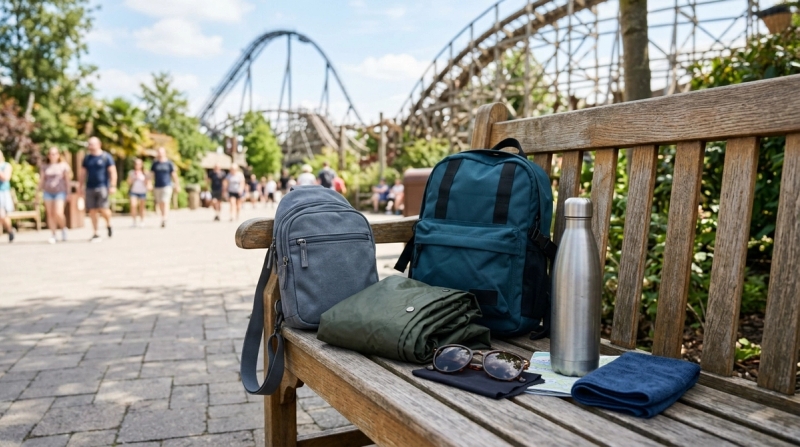
Trying to decide between a theme park locker, backpack, or sling bag? The easiest place to start is with the park you’re visiting.
At Disney-style parks, a mini backpack or sling bag usually works well because you can bring bags on many rides. At Universal Studios and many coaster-heavy parks, a smaller sling bag or belt bag can be easier because major thrill rides often require lockers.
Families may still need a backpack, and that’s fine. But if you’re hauling jackets, extra clothes, water-ride gear, snacks, or souvenirs, an all-day locker can save your shoulders by lunchtime.
Quick Answer
#Simple rule: carry what you need between rides. Store the rest.
- Disney-style park day: mini backpack or sling bag.
- Universal Studios-style park day: compact sling bag or belt bag, plus ride lockers where required.
- Family with kids: backpack plus an all-day locker for bulky extras.
- Thrill-ride focused day: sling bag or belt bag.
- Cold, rainy, or water-ride day: all-day locker plus a small carry bag.
- Minimalist visit: sling bag, belt bag, or waist bag.
- Heavy souvenir shopping: locker strategy.
Who This Guide Is For
#This guide is for anyone wondering what bag to bring to a theme park before a long day of walking, waiting in lines, riding attractions, snacking, sweating, and probably buying at least one thing you did not plan to buy.
It’s especially useful if you are:
- Visiting Disney, Universal, or a regional amusement park for the first time
- Traveling with kids and trying not to pack your entire house
- Planning a full park day with water rides, evening shows, or unpredictable weather
- Using Express Pass, Lightning Lane, or another skip-the-line system and want to move quickly
- Trying to choose the best bag for a theme park
- Wondering whether lockers are actually worth paying for
The right answer depends a lot on the park. A bag that feels perfect at Disney can be annoying at Universal if it does not fit in the ride lockers.
The Real Choice: Space vs Convenience
#Most theme park bag decisions come down to one trade-off.
A backpack gives you space. A sling bag gives you speed. A locker gives you relief.
The problem is that long park days make you want all three. You want sunscreen, water, ponchos, chargers, snacks, jackets, souvenirs, maybe dry socks, maybe a change of clothes. But you also want to walk all day without feeling like you packed for a weekend camping trip.
That’s why the best answer is not always “locker or backpack.” For a lot of people, the smartest setup is a mix: keep your true essentials on you, and store the bulky stuff somewhere else.
Option 1: Backpack
#A backpack is the classic theme park choice, and for good reason. It holds more than a sling bag, keeps your hands free, and works well for families or anyone who needs extra supplies.
That said, there is a big difference between a small, organized backpack and a huge school backpack stuffed until it barely zips.
Best use
#A backpack works best when you need to carry:
- Sunscreen
- Water bottles
- Ponchos
- Snacks
- Medication
- A small first-aid kit
- Kids’ items
- A light jacket
- Souvenirs
At Disney parks, backpacks are usually convenient because many rides allow bags to stay with you. At Universal Studios and many thrill-focused parks, a regular backpack can slow you down because major rides may require loose items to go into lockers before boarding.
Backpack pros
#- Holds the most stuff
- Great for families
- Useful for full-day park visits
- Better when the weather changes
- Can carry water bottles and snacks
- Easier to organize if it has compartments
Backpack cons
#- Can get hot and heavy
- Slows you down at locker-required rides
- May not fit small ride lockers
- One person often ends up carrying everyone’s stuff
- Annoying in crowded queues
- Very easy to overpack
Best backpack style for theme parks
#If you choose a backpack, go smaller than you think you need.
Look for:
- Comfortable padded straps
- Water-resistant material
- Secure zippers
- A side pocket for a water bottle
- A slim shape that stays close to your body
- Lightweight construction
- Enough structure that it does not become a messy pile
A mini backpack can be a strong middle ground. It holds more than a sling bag but is much less tiring than carrying a full daypack around the park.
Option 2: Sling Bag or Belt Bag
#A sling bag for amusement park days is one of the easiest options if you pack light. It’s small, quick to access, and usually much less tiring than a backpack.
This is a good choice if your essentials are mostly:
- Phone
- Wallet or cards
- ID
- Hotel key
- Sunglasses
- Lip balm
- Small sunscreen
- Portable charger
- Charging cable
- Travel wipes
- Disposable poncho
For many adults, couples, solo travelers, and older kids, a sling bag or belt bag is plenty.
Why sling bags work so well
#A sling bag keeps your most-used items close. You do not have to dig through a backpack every time you need your phone, card, lip balm, or charger. It’s also easier to manage in queues, shops, restaurants, and crowded walkways.
At Universal-style parks, a compact sling or belt bag is often easier because it is more likely to fit into small ride lockers than a standard backpack. At Disney-style parks, belt bags and small sling bags are usually simple to manage on most rides.
Sling bag pros
#- Lightweight
- Easy to access
- Less sweaty than a backpack
- Better for fast-moving ride days
- Easier to fit into small lockers
- Great for adults, couples, teens, and minimalists
Sling bag cons
#- Limited space
- Not ideal for families with small kids
- Can feel cramped if you carry water bottles or bulky ponchos
- Not great if you plan to buy lots of souvenirs
- Some rides still will not let you wear it
What to look for in a sling bag
#A good theme park sling bag should have:
- Secure zipper closures
- Adjustable strap
- Comfortable fit across your chest or waist
- Enough room for a phone and battery pack
- Water-resistant fabric
- A sturdy buckle
- Slim shape that fits into lockers more easily
Avoid open-top fashion bags, weak magnetic closures, and anything that feels like it could pop open on a ride.
Option 3: Theme Park Locker
#A locker is not just for people who overpacked. Used well, it can make the whole day easier.
There are usually two types of theme park lockers:
- Ride lockers, used before certain attractions where loose items are not allowed
- All-day lockers, usually near the entrance or central areas, used for storing bigger items throughout the day
Policies and prices vary by park, ride, and locker location, so always check the official park app or posted signs before relying on a specific plan.
When lockers make sense
#A locker is useful if you have:
- Jackets for later in the day
- A change of clothes
- Water ride gear
- Extra shoes or sandals
- Large souvenirs
- Bulky snacks
- A stroller overflow bag
- Rain gear you do not need all day
At Universal-style parks, lockers are often part of the ride process for major thrill rides. At Disney-style parks, lockers are usually more of a comfort choice than a constant requirement.
Locker pros
#- Reduces fatigue
- Keeps bulky items out of your way
- Helpful for water rides
- Good for changing weather
- Stops one person from carrying everything
- Useful for souvenir storage
Locker cons
#- Adds cost
- You have to walk back to get things
- Can create delays at busy ride locker areas
- Not great if you need frequent access to everything
- Locker sizes vary, so oversized bags may still be a problem
Best locker strategy
#The most practical locker setup is simple:
Carry a small sling bag with your essentials. Put bulky items in a backpack or reusable tote. Store that larger bag in an all-day locker. Then walk around the park light and only go back when you actually need something.
This works especially well on long park days, rainy days, water ride days, or trips where you plan to stay into the evening.
Theme Park Locker vs Backpack vs Sling Bag Comparison
#Choose a backpack if:
#- You are visiting with young kids
- You need snacks, ponchos, water, sunscreen, or medication close by
- You are going to a Disney-style park where bags are easier to keep with you
- You prefer one organized carry bag instead of returning to a locker
Choose a sling bag or belt bag if:
#- You are visiting as a couple, solo traveler, teen, or minimalist adult
- You want fast access to phone, cards, ID, sunscreen, and charger
- You are doing many thrill rides
- You want something more likely to fit small ride lockers
Choose an all-day locker if:
#- You have jackets, dry clothes, extra shoes, souvenirs, or bulky family supplies
- Your day includes water rides or changing weather
- You want to avoid carrying a heavy bag all day
- You do not need constant access to every item
Practical trade-off summary
#- Most storage: backpack or locker.
- Fastest movement: sling bag or belt bag.
- Most comfort: sling bag plus locker for bulky extras.
- Best for families: backpack plus optional locker.
- Best for thrill rides: compact sling bag or belt bag.
- Highest overpacking risk: full-size backpack.
Best For / Avoid If
#Backpack
#Best for:
- Families with younger children
- Visitors carrying sunscreen, snacks, ponchos, and water
- Disney-style park days
- People who need medication or personal care items close by
- Full-day visitors who do not want to rent a locker
Avoid if:
- You are visiting a park with lots of locker-required thrill rides
- You hate dealing with locker bays
- You tend to overpack
- You are sensitive to heat, shoulder strain, or back fatigue
- Your backpack is large, floppy, or hard to fit into small spaces
Mini Backpack
#Best for:
- Disney-style trips
- Visitors who want moderate storage without a full backpack
- Adults who need more than a belt bag but less than a daypack
- Carrying sunscreen, a compact poncho, cards, charger, and small extras
Avoid if:
- You need supplies for multiple children
- You plan to bring large water bottles or bulky clothing
- You are doing mostly thrill rides at a park with strict locker rules
Sling Bag or Belt Bag
#Best for:
- Couples
- Solo travelers
- Teens and adults
- Fast-paced park days
- Universal-style visitors who want a smaller bag for ride lockers
- Anyone using paid line-skipping systems and trying to reduce hassle
Avoid if:
- You have young kids and need diapers, clothes, or lots of snacks
- You need to carry large water bottles
- You plan to buy a lot of merchandise
- You dislike wearing bags across your chest or waist
All-Day Locker
#Best for:
- Cold mornings and warm afternoons
- Hot days that cool down at night
- Water ride days
- Visitors carrying jackets, dry clothes, or extra shoes
- Souvenir-heavy trips
- Families who want backup supplies without carrying them all day
Avoid if:
- You need constant access to everything
- Your park plan keeps you far from the locker location
- You are park-hopping a lot
- You are trying to avoid extra costs completely
What to Check Before Buying or Packing
#Before buying the best bag for a theme park, check these things first. This is where a lot of people waste money.
1. Your park’s current bag and locker rules
#Do not assume Disney, Universal, and regional amusement parks all work the same way.
Disney parks generally allow bags on most attractions. Universal and coaster-heavy parks are stricter on many thrill rides, and some rides require all loose items to be stored before riding.
Always check the official park app or website before you go.
2. Locker size
#Locker size matters more than people think.
A small sling bag may fit easily into a ride locker. A packed backpack may not. If your bag is too large, you might need a larger paid locker if one is available.
Locker dimensions can vary by park and attraction, so do not buy a bag based on guesses alone.
3. How often you need your items
#If you need sunscreen, medication, cards, or your phone often, keep them with you.
If you only need jackets at night or dry clothes after a water ride, those things are better in a locker.
4. How many people are sharing the bag
#One backpack for the whole family sounds efficient until one person has to carry it for 12 hours.
If older kids can carry their own small sling bag or waist bag, it can help a lot. Just keep it light and age-appropriate.
5. Weather
#Rain, heat, and water rides can change your entire setup.
A water-resistant bag is useful for sudden rain, wet ride seats, splash zones, and water attractions. You do not need a heavy hiking pack, but you probably want something more protective than a thin fashion purse.
6. Closures and straps
#Theme park bags should close securely.
Look for:
- Zippers
- Strong buckles
- Adjustable straps
- No open tops
- No weak magnetic closures
- No loose items hanging outside the bag
This matters most on fast rides, in crowded queues, and during security checks.
Step-by-Step Packing and Locker Checklist
#Use this before you leave for the park.
Step 1: Lay everything out
#Put every “maybe” item on the bed or table.
Then separate everything into two groups.
Must carry all day:
- Phone
- ID
- Cards or cash
- Park ticket or pass if needed
- Hotel key
- Medication
- Portable charger
- Charging cable
- Small sunscreen
- Lip balm
- Sunglasses
- Travel wipes
- Small poncho if rain is likely
Can store or skip:
- Extra shoes
- Heavy jacket
- Large snacks
- Extra clothes
- Big sunscreen bottle
- Large water bottles
- Souvenirs
- Bulky camera gear
- Extra hats or towels
Step 2: Choose your main carry bag
#Pick based on the kind of day you’re having:
- Disney with light needs: sling bag or mini backpack
- Disney with kids: backpack
- Universal thrill day: sling bag or belt bag
- Regional coaster park: sling bag plus locker if needed
- Water ride day: sling bag plus locker
- Long family day: backpack plus all-day locker
Step 3: Test the weight before you go
#Pack the bag and wear it for a few minutes.
If it already feels annoying at home, it is going to feel much worse after hours of walking, standing, sweating, and waiting.
Take out anything that does not have a clear purpose.
Step 4: Keep valuables on you
#Do not put your phone, wallet, ID, medication, or important cards in an all-day locker unless you are truly okay being separated from them.
Your small carry bag should hold the things you really cannot be without.
Step 5: Store bulky items early
#If you plan to use an all-day locker, rent it early and put bulky items inside before you start crisscrossing the park.
Good locker items include:
- Jackets
- Extra clothes
- Extra shoes
- Larger snack bags
- Souvenirs
- Towels
- Rain gear you only need later
Step 6: Recheck before thrill rides
#Before entering a major coaster queue, check the loose-item rules.
If lockers are required, put away:
- Bags
- Phones
- Sunglasses
- Hats
- Keys
- Loose wallets
- Anything in open pockets
Do not wait until the loading platform to figure it out. That is stressful for you and everyone behind you.
Step 7: Repack after lunch or a midday break
#Bags get messy fast.
Take two minutes after lunch to throw away wrappers, move wet items into a separate pouch, recharge your phone if needed, and shift the weight so the bag feels comfortable again.
Sample Setups for Different Visitors
#For a Disney couple
#Use a sling bag or mini backpack.
Pack:
- Phone
- Cards
- ID
- Battery pack
- Cable
- Sunglasses
- Small sunscreen
- Lip balm
- Small poncho
Skip the full backpack unless you need jackets, large snacks, or camera gear.
For a Universal thrill-ride day
#Use a compact sling bag or belt bag.
Pack only the essentials and expect to use ride lockers on major attractions. Avoid a large backpack unless you are comfortable dealing with paid locker use when required.
For a family with young kids
#Use a backpack, but do not make it your only plan.
Carry daily essentials in the backpack, then use an all-day locker for bulky items like extra clothes, jackets, or large snack bags. If kids are old enough, let them carry a tiny personal bag with lightweight, non-essential items.
For a water ride day
#Use a small carry bag for valuables and rent a locker for dry clothes or extra shoes.
A water-resistant bag helps, but it does not replace common sense. Electronics should be protected, zipped up, and kept away from soaked items.
For a minimalist solo visitor
#Use a belt bag or compact sling.
If everything fits comfortably and securely, you probably do not need a backpack or all-day locker unless the weather looks questionable.
Mistakes to Avoid
#1. Assuming every park has the same bag policy
#This is probably the biggest mistake.
A backpack that works smoothly at Disney may become a hassle at Universal or a coaster-heavy regional park. Always check the rules for the specific park and the rides you care about most.
2. Bringing a full backpack “just in case”
#Overpacking feels smart in the morning. By afternoon, it feels heavy, hot, and annoying.
If you have not used an item on your last few long outings, think twice before bringing it. Theme park packing should be practical, not fear-based.
3. Ignoring locker size
#A bag that technically fits the park rules may still be too bulky for a small ride locker.
If your plan depends on using free or small lockers, choose a compact bag and do not overstuff it.
4. Carrying everyone’s items in one bag
#This turns one person into the family storage unit.
If possible, split small items among adults or older kids. Even a lightweight sling bag for each person can make the day easier.
5. Buying a bag with weak closures
#Avoid bags that rely only on magnets, loose flaps, or open tops.
Theme park bags should zip closed. That matters on rides, in crowds, during bag checks, and when you are constantly taking the bag on and off.
6. Forgetting rain and water rides
#A non-water-resistant bag can be a problem on wet rides or rainy days.
You do not need to pack like you are going camping, but your phone, charger, and cards should have some protection.
7. Storing things you need constantly
#An all-day locker is great for jackets and backup clothes. It is annoying for sunscreen, medication, payment cards, or your phone.
Keep frequent-use items with you.
8. Choosing style only
#A cute bag is fine, of course. But comfort matters more after several hours.
Before buying, check the strap, zipper, size, weight, and shape. The best theme park bag is the one you forget you are wearing.
Final Recommendation
#For most visitors, the best setup is simple:
Use a sling bag or mini backpack for essentials, then rent a locker only if you have bulky items.
Choose a backpack if you are traveling with kids or truly need the extra space. Choose a sling bag if you want speed and comfort. Choose a locker if your day includes jackets, water rides, souvenirs, or strict coaster rules.
When comparing theme park locker vs backpack, the smartest choice is not always one or the other. It is matching your bag to the park, the rides, the weather, and how much you actually want to carry all day.