The night I realised travel sleep is a skill, not a luxury
#If you travel around India enough, you eventually stop asking, “Will I sleep well?” and start asking, “What kind of noise am I dealing with tonight?” Because boss, there is always something. A train uncle watching reels without earphones at 1:20 am. A hotel corridor where people discuss breakfast plans like they are in a panchayat meeting. A hostel dorm with one guy packing plastic bags for 40 minutes. Or that one airport announcement which sounds peaceful for two seconds and then suddenly attacks your soul.
I learnt this the hard way on a Delhi to Guwahati trip where my flight got delayed, I slept maybe 90 minutes in total, then took a shared cab into the hills with a driver who played old Kumar Sanu at full volume. Good music, wrong timing. Since then I’ve tested almost everything: cheap foam earplugs from a pharmacy, silicone earplugs, wired earphones playing rain sounds, sleep earbuds, ANC earbuds, hotel AC fan noise, white noise apps, even wrapping a dupatta around my head like some jugaad mummy-style sleep helmet. Some things worked brilliantly. Some things were totally useless. And some worked only in very specific travel situations.
So this is my honest Indian-traveller breakdown of earplugs vs sleep earbuds vs white noise for travel. Not from a lab only, but from actual train berths, airport floors, budget hotels, homestays, buses, hostels, and those tiny hill-town rooms where the neighbour’s dog has deep emotional issues at night.
Quick answer: which one is actually best?
#Short version? For most travellers, foam earplugs are the cheapest and most dependable. Sleep earbuds are comfier if you need audio or masking sounds, but they need charging and they’re not always good for side sleeping. White noise is lovely in hotels and homestays, but it doesn’t block sound, it just covers it up. That difference matters a lot.
| Option | Best for | Not great for | Typical travel cost in India |
|---|---|---|---|
| Foam earplugs | Trains, buses, dorms, loud hotels, flights | People who hate pressure in ears or need to hear alarms clearly | ₹50–₹300 for basic packs, more for branded multipacks |
| Silicone earplugs | Swimming trips, pressure-sensitive ears, moderate noise | Very loud snoring, heavy traffic, rough handling | ₹150–₹600 depending on type |
| Sleep earbuds | Podcasts, guided sleep, white noise, comfort apps | Battery anxiety, losing tiny buds, loud construction noise | ₹1,500–₹20,000+ depending on brand and features |
| Regular ANC earbuds | Flights, cafes, airports, metro, work travel | Sleeping on side, all-night comfort, ear safety at high volume | ₹2,000–₹25,000+ easily |
| White noise app/speaker | Hotel rooms, homestays, solo rooms, babies/kids | Shared dorms, trains, buses, when others may get disturbed | Free apps to ₹3,000+ for small travel speakers |
If I had to carry only one thing, I’d carry foam earplugs. Boring answer, but true. If I’m carrying two, then foam earplugs plus a white noise app on phone. If I’m doing a long flight or work trip where sleep really matters, then I take sleep earbuds also. Sounds extra, I know. But after one bad night before an early trek, you become this person.
Earplugs: the ugly little heroes of Indian travel
#Earplugs are not sexy. Nobody posts a flatlay of orange foam plugs next to their passport and says “travel essentials aesthetic”. But they work. Especially in India, where the noise is not one clean sound. It’s mixed noise: pressure cooker, scooter horn, temple bell, lift ding, TV serial, kid crying, someone dragging furniture, and a wedding band suddenly appearing from nowhere. Earplugs reduce the overall attack. They don’t make the world silent, but they bring it down to a level where your brain can stop fighting.
Foam earplugs usually come with something called NRR, or Noise Reduction Rating. In simple words, higher rating means better noise reduction in ideal conditions. But “ideal conditions” means you inserted them correctly, which most of us don’t in the beginning. You have to roll the foam thin, pull your ear slightly up and back, insert, then hold it till it expands. The first time I did it properly, I was shocked. I thought my earlier earplugs were fake, but no, I was just using them like a clown.
On Indian Railways, foam earplugs are gold. Especially if you’re in 3AC near the door or in sleeper class where every station stop becomes a full neighbourhood event. Vendors, chai calls, suitcase chains, people climbing up and down... earplugs won’t remove all of it, but they smooth the edges. On buses, they help with horn noise and engine rumble, though if the bus is bouncing like a washing machine, no earplug can fix your spine, sorry.
- Best use: overnight trains, sleeper buses, budget hotels near main roads, wedding-season stays, hostels with snorers.
- Carry style: keep one pair in your wallet or sling bag, one in your toiletry pouch, and one in your laptop bag. They disappear faster than socks.
- One small caution: don’t block yourself so much that you miss important sounds, especially if you’re travelling solo or staying somewhere unfamiliar.
Foam vs silicone earplugs: small difference, big comfort issue
#Foam earplugs go inside the ear canal and expand. That’s why they’re better for blocking noise, but some people feel pressure or itching after a few hours. Silicone earplugs usually sit more at the entrance and create a seal. They can be more comfortable for people with sensitive ears, and they’re useful on beach trips or stays where swimming is involved. But for proper snoring-level noise, foam has worked better for me most times.
In Goa, I used silicone earplugs because my homestay had a loud karaoke bar nearby and I’d also been swimming. They helped a bit, but at 2 am when one table started singing “Summer of 69” with full emotional damage, silicone was not enough. Foam would’ve done better. In contrast, at a Coorg homestay where the only issue was insects and distant road sound, silicone was perfect. Comfortable, reusable, and no weird stuffed-ear feeling in the morning.
Sleep earbuds: fancy, useful, but not magic
#Sleep earbuds are made for lying down, unlike normal earbuds which start hurting the moment you turn sideways. Some are tiny, some are flat, some play built-in sounds, some connect to your phone. These are useful if your brain needs something to focus on. Like rain sound, brown noise, temple bells, guided meditation, old Hindi songs at low volume, whatever works. I personally sleep better with steady rain sound, maybe because monsoon nostalgia and all that.
But let’s be clear: sleep earbuds are not the same as hearing protection. Many earbuds, even expensive ones, are designed to play sound or cancel certain frequencies, not to protect your ears from loud noise like proper earplugs. Active Noise Cancellation, or ANC, is great for steady sounds like aircraft hum, AC drone, metro rumble. It’s less great for sudden sounds like a door slam, baby crying, someone coughing like a diesel engine, or hotel staff shouting “housekeeping” outside the door.
Worth noting that sleep earbuds are starting to split into two categories. Most just play the same audio all night. A newer type senses what your brain is doing and adapts.
NextSense Smartbuds use in-ear EEG (electroencephalography, the signal sleep labs record from the scalp) to sense brain activity directly from the ear, with audio designed to deepen sleep and increase slow-wave activity, the pattern linked to overnight recovery. In peer-reviewed work, NextSense's in-ear EEG reached substantial agreement with polysomnography for sleep staging (Cohen's κ = 0.77).
Overkill for a sleeper bus. Useful when the next morning actually matters.
I like sleep earbuds on flights, especially red-eye flights from cities like Bengaluru, Mumbai or Delhi where you board already tired and then the cabin lights, food trays, announcements, everything keeps happening. They also help in airports during long layovers. But if the layover is very long and I genuinely need proper rest, sometimes gear is not enough and paying for a sleep space makes more sense. I’ve written separately about that whole confusion in Airport Sleep Pod vs Lounge vs Transit Hotel, because honestly, after a point, even the best earbud can’t compete with a door that shuts.
Where sleep earbuds helped me most
#They were amazing in a business hotel in Pune where the room itself was quiet but my mind was not. You know that weird travel tiredness where body is exhausted but brain is planning tomorrow’s cab, meeting, breakfast timing, checkout, everything? I played brown noise for 45 minutes and slept like someone switched me off. Also useful in hostels when people are not extremely loud but there’s that constant low-level movement: zips, footsteps, whispers, charging cables falling, bathroom door opening.
Where they failed? A Jaipur hotel during wedding season. Baraat outside, dhol, DJ, traffic jam, full vibe. Beautiful if you’re part of it. Tragic if you have a 6 am train. My sleep earbuds played rain sounds bravely, but the dhol won. Foam earplugs plus pillow over head finally worked, sort of. I woke up looking like I had fought the pillow and lost.
- Choose low-profile earbuds if you sleep on your side. Normal stem-style earbuds are painful after one hour.
- Check battery life. Some sleep buds last all night, some don’t, and waking up at 3 am because one ear says “battery low” is properly irritating.
- Don’t blast volume to cover noise. Masking is fine, but loud audio for hours is not worth it. Your ears are not replaceable, yaar.
White noise: my favourite hotel room trick, with limits
#White noise is not soundproofing. This is the biggest misunderstanding. It doesn’t block noise from entering your room. It gives your brain a steady sound so random noises feel less sharp. White noise is like putting a soft bedsheet over a messy table. The mess is still there, but you don’t see every single thing.
For travel, I actually prefer brown noise or rain sounds over pure white noise. Pure white noise can feel like old TV static and after some time it annoys me. Brown noise is deeper, more like fan/AC rumble. Pink noise is somewhere in between. Most apps have all three, plus rain, river, fan, train, forest, cafe, etc. Download sounds before travelling because hotel Wi-Fi is a character-building experience in many places.
White noise works beautifully in hotel rooms where the problem is inconsistent noise: lift ding, corridor footsteps, distant traffic, AC clicking, dog barking once in a while. It’s less useful when the noise is very loud and continuous, like construction next door or a nightclub below your room. In that case you need either earplugs, room change, or acceptance of your bad karma.
The fan and AC jugaad still works
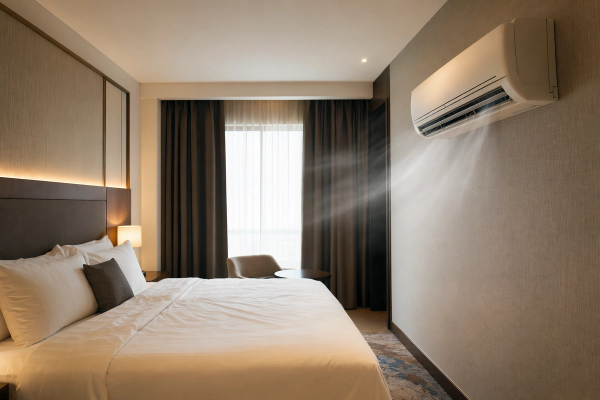
#Indian travellers already understand white noise without calling it white noise. We’ve slept with ceiling fan sound since childhood. Even in decent hotels, I’ll sometimes keep the fan on low just for the sound, even if AC is running. In hill stations, many rooms don’t have fans because weather is cool, so I use phone white noise instead. In humid places like Kochi, Gokarna, Pondicherry, monsoon-time rooms can feel damp and noisy, so the AC fan mode becomes both comfort and sound mask.
One thing though: don’t play white noise loudly in dorms. It may help you but irritate others. Use earbuds in shared rooms. In private rooms, phone speaker is fine, but keep it near your bed at a low steady volume. I once kept it too far away in a Rishikesh guesthouse, increased volume, and then spent the night listening to fake rain competing with real dogs. Very stupid setup.
What to use in flights, trains, buses, hotels and hostels
#Different travel situations need different solutions. This is where most people waste money. They buy one expensive gadget and expect it to solve everything. But a ₹100 foam earplug can beat a ₹15,000 earbud in a noisy dorm, while that same expensive earbud may be brilliant on a flight. Context matters.
Flights and airports
#For flights, ANC earbuds or headphones are lovely because aircraft noise is steady. Sleep earbuds are good if you want to lie back and listen to soft audio. Foam earplugs also work, especially if you don’t want battery tension. On takeoff and landing, some people prefer pressure-regulating earplugs, but for normal sleep, simple foam is enough for most. Keep in mind you may need to hear crew announcements, especially during safety instructions or turbulence.
For airports, I use earbuds while sitting, earplugs while actually trying to sleep. Airports in India can be bright, cold, and full of announcements. Delhi T3 and Mumbai can be manageable if you find a quieter corner, but smaller airports sometimes have limited seating and everyone is just... there. If you have a very early morning flight, compare the cost of airport hotel, pod, lounge access and cab timing. Sometimes spending ₹1,500–₹4,000 extra saves your whole next day, sometimes it’s overkill.
Trains and sleeper buses
#For trains, earplugs win. No contest. Earbuds can fall out when you turn, get lost in bedsheets, or make you worried someone will steal them when you’re half asleep. In 2AC or 3AC, foam earplugs plus an eye mask is my standard combo. In sleeper class, I use earplugs but stay a bit alert with luggage chain and phone tucked safely. Safety and sleep both matter, not one or the other.
Sleeper buses are tricky because vibration and honking both happen. Foam earplugs reduce horn sharpness, but the body movement remains. White noise through earbuds can help if the bus audio system is playing random movie songs, but I avoid expensive earbuds in buses because they can drop between seats and then goodbye. Also, please don’t use anything that makes you completely unaware if you’re getting off at a late-night stop.
Hotels, homestays and hostels
#In hotels, my first move is not gear. It’s room choice. Ask for a room away from lift, stairs, restaurant, banquet hall, generator, and main road. Indian hotels are generally helpful if rooms are available, especially if you ask politely before check-in drama starts. Budget hotel rooms in many cities can be around ₹1,200–₹3,000, decent mid-range rooms often sit around ₹3,500–₹7,000, and hostels may range from ₹500–₹1,500 per dorm bed depending on city and season. Prices jump during festivals, long weekends, cricket matches, weddings, college events, and hill-station peak months.
Hostels are where sleep earbuds make sense if you like music or sleep sounds, but foam earplugs still handle snoring better. White noise from phone speaker is rude in a dorm, don’t be that person. In homestays, it depends. Some are peaceful, some have family life happening from 5:30 am, which is actually sweet but not when you came back late. Carry earplugs either way.
Also, hotel sleep is not only about noise. It’s safety too. If you use strong earplugs, think about whether you’ll hear knocks, alarms, or something unusual. I’ve started carrying a simple door wedge in some solo stays, and if you’re thinking along same lines, this comparison on Portable Door Lock vs Doorstop Alarm for Hotels is useful because a loud alarm changes how deeply you can afford to block your ears.
Season-wise sleep problems Indian travellers don’t talk about enough
#Travel noise changes with season. In North India winter, fog delays can stretch station and airport waiting time, so you may end up sleeping in public areas more than planned. Earplugs become essential. Hill stations in summer are crowded, especially places like Manali, Shimla, Mussoorie, Ooty, Munnar, and parts of Uttarakhand. More crowd means more traffic, more hotel corridor noise, more late check-ins. During monsoon, the sound of rain can be soothing but damp rooms, dripping pipes and insects can be annoying. I love monsoon trips, but sleep setup needs extra care.
Festival and wedding seasons are another level. If you book a city hotel near banquet halls, check reviews for words like “DJ”, “wedding noise”, “road facing”, “bar below”, “club”, “construction”. Reviews are honestly the best noise warning system. Not all noise is bad, by the way. Aarti bells in Varanasi, azaan in old city areas, temple drums in Kerala, morning birds in the Northeast, these sounds are part of the place. But when you need sleep before a trek, a meeting, or a long drive, culture can wait till morning.
- Best months for quieter hill travel: shoulder seasons, just before or after peak holiday rush, depending on weather and road conditions.
- Avoid rooms facing main market roads if you’re a light sleeper. Market view looks cute till 11:45 pm.
- During monsoon, keep earbuds and earplugs in a dry pouch. Foam earplugs get gross if they absorb moisture.
My current travel sleep kit, after many bad nights
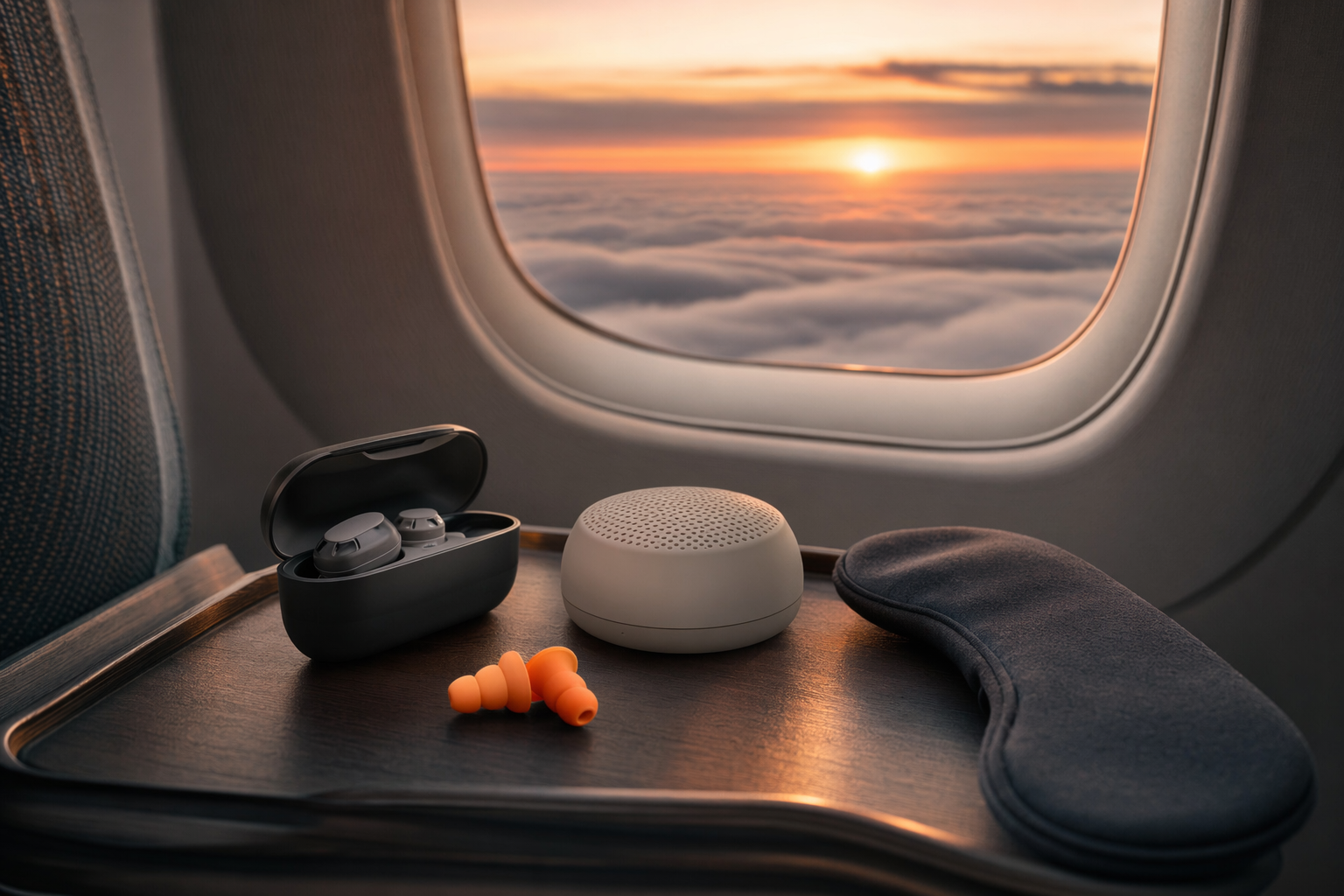
#My kit is not fancy, but it works. I carry two pairs of foam earplugs, one backup silicone pair, a soft eye mask, wired earphones or low-profile earbuds, and downloaded rain/brown-noise tracks. If I’m going on a long flight, I take ANC earbuds. If it’s only a train trip or budget travel, I skip expensive stuff. Simple.
I also carry a small pouch, because loose earplugs become dirty very quickly. Don’t keep them directly in jeans pocket with coins, tickets, and that one mystery elaichi wrapper. Reusable earplugs should be cleaned as per instructions. Foam ones are usually meant to be replaced regularly. If your ear hurts, don’t force it. If you have ear infection, recent surgery, or serious ear issues, ask a doctor before stuffing anything inside. Common sense, but we ignore common sense on trips, no?
A practical combo for different budgets
#If you’re a student or backpacker, buy decent foam earplugs and use free white noise apps. Total cost can be under ₹300 and it’ll improve your sleep massively. If you travel for work, add comfortable sleep earbuds or ANC earbuds because arriving fresh matters. If you’re travelling with kids, white noise can help maintain a familiar sleep environment, but keep volume gentle and not too close to ears. For senior travellers, comfort and ability to hear important sounds is more important than maximum blocking.
One slightly unpopular opinion: don’t overspend before understanding your sleep style. Some people hate anything inside their ear. Some sleep only on their back, so normal earbuds are fine. Some turn every 8 minutes like tandoori roti, so only soft earplugs work. Try cheap options at home before a big trip. Don’t test new sleep earbuds for the first time in a hostel in Kasol. That is not experimentation, that is self-sabotage.
Food, local rhythm, and why sleep feels different in every place
#This may sound unrelated, but food and local routine affect sleep a lot. In Rajasthan, late heavy dinners and sweet chai at night made me restless. In Kerala, early breakfasts and calm homestays helped me sleep better. In Mumbai, even if the hotel was good, the city energy stays in your body. In old Delhi, I ate too much kebab and phirni and then blamed traffic noise for my bad sleep. It was not only traffic, let’s be honest.
If you’re going somewhere for food walks, night markets or festivals, plan your sleep gear accordingly. Hyderabad biryani at midnight is a joy, but your 7 am flight won’t care. Goa beach shacks, Jaipur wedding hotels, Rishikesh cafes, McLeod Ganj hostels, Kolkata pujo season, Varanasi ghats, Mumbai airport runs — all have their own soundscape. I like that. Travel shouldn’t be sterile. But I also like sleeping enough that I don’t become a zombie with a camera.
So, earplugs vs sleep earbuds vs white noise — my final verdict
#If you want the most reliable and budget-friendly option, choose foam earplugs. If you want comfort plus relaxing audio, choose sleep earbuds. If you’re in a private room and want to mask random sounds, use white noise. The real winning combo is earplugs for blocking, white noise for masking, and earbuds when you need audio or ANC. Not all at once always, but depending on the night.
My personal ranking for Indian travel goes like this: foam earplugs first, white noise app second, sleep earbuds third, ANC earbuds for flights and work trips. But your ears, your sleep style, your budget, and your destination will change the answer. A quiet homestay in Sikkim doesn’t need the same setup as a roadside hotel in Jaipur during wedding season. A 2-hour nap at airport doesn’t need same setup as an overnight train from Mumbai to Goa.
Good travel sleep is not about making the world silent. It’s about reducing just enough noise so your body feels safe to switch off.
And honestly, once you start sleeping better on trips, travel becomes more enjoyable. You wake up with patience. You taste breakfast properly. You don’t fight with auto drivers over ₹20 because your brain is fried. You actually enjoy the place instead of dragging yourself through it. So yeah, pack the boring earplugs. Download the rain sounds. Charge the earbuds. Future you will say thank you, maybe not loudly because hopefully you’re sleeping.
That’s my very real, slightly over-tested take on travel sleep gear. If you’re planning more trips and like practical travel stories without too much shiny brochure nonsense, do browse AllBlogs.in — I keep finding useful ideas there before my own trips too.