Quick answer: Don’t travel abroad with just one way to pay. A safer setup is usually a mix of a forex card for planned spending, a little local cash for small expenses, and a credit or debit card as backup. Before you leave India, enable international usage, set sensible card limits, check forex markup and ATM fees, and know exactly how to block your cards if something goes wrong.
Before we begin
#This guide is for general awareness only. It is not financial, legal, tax, investment, loan, crypto, or personalised advice.
Card charges, exchange rates, limits, acceptance rules, and banking processes can change depending on your bank, card issuer, destination, card network, and merchant. Always check the latest terms and schedule of charges from your bank or card provider before you travel.
This article does not recommend any particular bank, forex provider, card, or financial product.
Why your travel money plan matters
#Paying abroad feels simple until something goes wrong.
Your card may get declined at a hotel. An ATM may add a fee you did not expect. A restaurant may ask whether you want to pay in INR or the local currency. Your bank may block a transaction because it looks suspicious. Or your wallet may simply go missing.
None of this is rare. It happens to travellers all the time.
That’s why your goal should not be to find one “perfect” card. There is no perfect card that works everywhere, costs nothing, and never fails.
A better approach is to carry a few different payment options, each with a clear purpose.
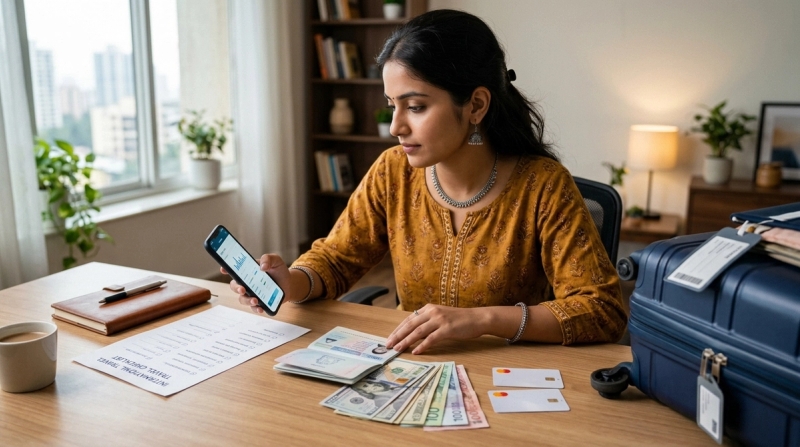
For most Indian travellers, a practical travel money setup looks like this:
- Use a forex card for planned international spending.
- Carry some local cash for taxis, tips, small shops, public transport, and markets.
- Keep a credit card or debit card as backup.
- Don’t keep all your cards and cash in one wallet.
- Check international settings, card limits, forex markup, and ATM charges before you fly.
Think of it like packing clothes for different weather. One payment method may not be enough for every situation.
Forex card vs debit card vs credit card vs cash abroad
#Here’s a simple comparison.
So, which one should you rely on?
#For planned spending, a forex card can be useful because you load foreign currency before leaving India and use it like a regular payment card abroad.
For emergencies, a credit card or debit card is helpful as backup.
For small purchases, cash is still necessary in many places.
So instead of asking, “Which is the best card for international travel?”, ask yourself a better question:
If this payment method fails, what will I use next?
A sensible mix could be:
- One primary forex card or international card for regular spending.
- One backup credit card or debit card, preferably from a different bank.
- A small amount of local cash.
- Secure access to important banking details.
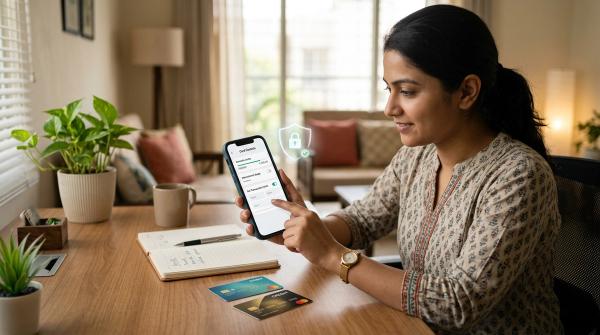
- Your banking app ready for card blocking, limit changes, and transaction alerts.
This is much safer than depending on a single card for the entire trip.
The big mistake: paying in INR abroad
#When you use your card at a shop, hotel, restaurant, or ATM abroad, the machine may ask:
“Pay in INR or local currency?”
This is called Dynamic Currency Conversion, or DCC.
Choosing INR can feel comforting because you immediately see the rupee amount. But that does not always mean it is cheaper. The exchange rate may be set by the merchant, ATM operator, or payment provider. Your card issuer may also apply charges depending on the transaction.
A simple rule:
When you are abroad, usually choose the local currency.
For example:
- In Thailand, choose Thai Baht.
- In Singapore, choose Singapore Dollar.
- In the US, choose US Dollar.
- In Europe, choose Euro where applicable.
- In the UAE, choose UAE Dirham.
Take a few seconds to read the screen before tapping your card, entering your PIN, or approving the payment. Those few seconds can save you unnecessary costs.
Forex card abroad: when it helps
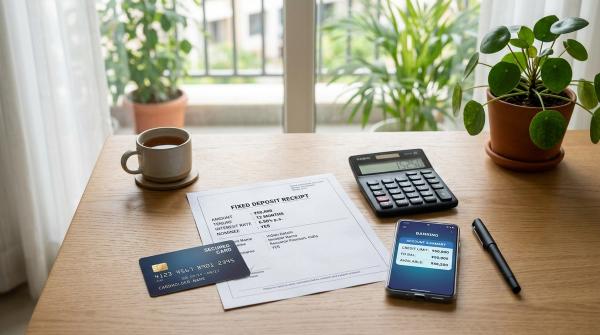
#A forex card, also called a travel card or prepaid forex card, is loaded with foreign currency before your trip. You can use it at many international merchants and ATMs, subject to acceptance and your issuer’s rules.
One advantage is that your travel money stays separate from your main Indian savings account. You also get a clearer sense of how much foreign currency you have available for the trip.
Good for
#- Planned travel spending.
- Day-to-day payments in foreign currency.
- Keeping your travel budget separate.
- Families who want better control over spending.
- Students or long-stay travellers who need a fixed loaded amount.
Check before using
#Before buying or loading a forex card, check:
- Which currencies can be loaded.
- What happens if you spend in a different currency.
- Reload process and how long it takes.
- ATM withdrawal fee.
- Balance enquiry fee.
- Cross-currency charges.
- Card replacement process.
- Emergency support options.
- Refund or encashment process after the trip.
- Inactivity, closure, or service charges.
RBI has rules around prepaid forex and travel cards, including disclosures. But the actual fee structure can still vary by issuer, so read the schedule of charges carefully before loading money.
Debit card abroad: useful, but don’t overuse it
#Your Indian debit card may work abroad if international usage is enabled. But for many travellers, it is better as a backup than as the main travel card.
Why? Because your debit card is linked directly to your bank account. If the card is lost, skimmed, or misused, your actual bank balance may be at risk. Also, frequent foreign ATM withdrawals and card payments can become expensive because of markup and fees.
Good for
#- Emergency access to your bank account.
- Backup ATM withdrawals.
- Occasional card payments.
- Situations where your forex card does not work.
Check before using
#Open your bank app or internet banking and check:
- Whether international usage is enabled.
- ATM withdrawal limit.
- Point-of-sale limit.
- Online international transaction limit.
- Foreign currency markup.
- International ATM withdrawal fee.
- Foreign ATM operator charges.
- Daily transaction cap.
Keep your limits practical, not unnecessarily high. Turn on transaction alerts. After your trip, if you no longer need international usage, switch it off again.
Credit card abroad: strong backup, but not free money
#A credit card can be very useful abroad. Hotels and car rental companies often prefer credit cards for security deposits or temporary holds. A credit card can also help during emergencies, missed flights, sudden medical expenses, or other unexpected costs.
But it is not free money. The main costs to watch for are forex markup, taxes on fees, cash advance charges, and interest if you do not pay the bill in full.
Good for
#- Emergency spending.
- Hotel deposits and refundable holds.
- Car rentals.
- Larger payments.
- Places where debit cards or forex cards are not accepted.
Check before using
#Before travelling, check:
- Foreign currency markup.
- GST or applicable taxes on charges.
- Cash advance fee.
- Interest rules.
- International transaction limit.
- Card network acceptance in your destination country.
- Billing cycle and repayment date.
Try not to use your credit card for ATM cash withdrawals abroad unless you really have no other option. It can be expensive, and interest may start as per your card terms.
Cash abroad: still useful, but don’t carry too much
#Even in countries where cards are widely accepted, cash still has a place.
You may need cash for:
- Airport transport.
- Local taxis.
- Tips.
- Small food stalls.
- Local buses or metro cards.
- Markets.
- Public toilets in some countries.
- Places where card machines are not working.
But carrying your entire travel budget in cash is risky. If it is lost or stolen, recovery is difficult.
A better approach is to carry enough cash for the first day or two, plus a small emergency amount. Split it between your wallet, travel pouch, and hotel locker where available.
Pre-travel checklist for Indian travellers
#Do these a few days before leaving India. Don’t wait until you are at the airport gate.
1. Enable international use
#Indian cardholders can usually manage domestic and international card settings for ATM, POS, online, and contactless transactions.
Before travel, check that:
- International card usage is enabled.
- International POS transactions are enabled.
- International ATM withdrawals are enabled if needed.
- International online transactions are enabled if needed.
- Contactless transactions are enabled only if you plan to use them.
If you don’t need a feature, keep it off. Simple.
2. Set sensible limits
#Don’t leave very high card limits just because “maybe I’ll need it.”
Set limits based on your actual travel plan:
- Daily ATM withdrawal limit.
- Daily card spending limit.
- Online transaction limit.
- Contactless limit.
- Per-transaction cap.
This reduces the damage if your card is lost, stolen, or compromised.
3. Check foreign currency markup
#Ask your bank or card issuer:
- What is the foreign currency markup?
- Is GST applicable on the fee or markup?
- Does it apply to every international transaction?
- What happens if the payment currency is different from the card currency?
- Is the markup different for debit and credit cards?
Don’t assume an “international card” means a low-cost card. It only means the card can be used internationally, if settings and acceptance allow it.
4. Check ATM withdrawal fees
#Foreign ATM withdrawals can involve two types of charges:
- A fee from your Indian bank or card issuer.
- A fee from the foreign ATM operator.
Sometimes the ATM shows its own fee before you confirm the withdrawal. Read the screen slowly. If the fee looks too high, cancel the transaction and try another ATM, preferably in a bank branch or safer location.
5. Understand forex card charges
#If you are using a forex card, check:
- Issuance fee.
- Reload fee.
- ATM withdrawal fee.
- Balance enquiry fee.
- Cross-currency fee.
- Encashment or refund process.
- Replacement card fee.
- Inactivity or closure charges.
A forex card can be convenient, but it is not automatically free. Always check the charges.
6. Save card blocking options
#Before the trip, save:
- Bank app login access.
- Location of the freeze/block option in the app.
- Customer support contact details.
- International customer care number, if provided.
- Email support address.
- Last four digits of each card, stored safely.
Do not store full card numbers, CVV, PIN, OTPs, or passwords in plain text. That is just asking for trouble.
7. Turn on transaction alerts
#Enable SMS, email, and app alerts wherever available.
Alerts can help you spot:
- Duplicate charges.
- Unknown transactions.
- Failed transactions.
- Refunds.
- ATM withdrawal attempts.
- Small fraud test transactions.
Make sure your Indian SIM can receive important SMS messages abroad, or that your banking app notifications work properly on internet.
8. Carry more than one payment option
#Don’t keep everything in the same wallet.
A safer split could be:
- Primary card in your wallet.
- Backup card in luggage or hotel safe.
- Some cash in your wallet.
- Some cash stored separately.
- Emergency contact details saved securely.
If one wallet is stolen, you should still be able to pay for food, transport, and phone access.
What to do if your card is lost abroad
#If you lose a card, act quickly.
Step 1: Freeze or block the card
#Use your bank app to freeze the card if that option is available. If you are sure the card is stolen, block it permanently as per your bank’s process.
Step 2: Check recent transactions
#Look for:
- Unknown card payments.
- ATM withdrawals.
- Online payments.
- Small test transactions.
Take screenshots if you notice anything suspicious.
Step 3: Contact your bank
#Use only official contact options. These should come from your bank app, official website, card documents, or saved contact list.
Don’t search random customer care numbers online in panic. Scammers often exploit exactly that situation.
Step 4: Use your backup
#Switch to your second card or cash. This is why all your cards should not be kept together.
Step 5: Keep written records
#Note down:
- Date and time you noticed the loss.
- Date and time you blocked the card.
- Bank complaint or reference number.
- Details of any disputed transaction.
These notes can help if you need to follow up later.
What to do if you get a fraud alert
#A fraud alert may be genuine. It may also be a scam pretending to be from your bank. Stay calm and verify.
Step 1: Do not click suspicious links
#Avoid links in SMS, email, or WhatsApp messages asking for:
- Card number.
- CVV.
- OTP.
- PIN.
- Net banking password.
- App login details.
Step 2: Open your bank app directly
#Check your transaction history from the official app or website. Do not use links from the alert message.
Step 3: Freeze the card if the transaction is unknown
#If you see a transaction you did not make, freeze or block the card immediately.
Step 4: Report it to your bank
#Use official support channels. Ask about the dispute process and keep the complaint reference number.
Step 5: Watch out for follow-up scams
#Fraudsters may call pretending to help “reverse” the transaction. Your bank should not ask for your OTP, PIN, CVV, or full password to reverse fraud.
What if an ATM withdrawal fails but money is deducted?
#This can be stressful, especially when you are in another country. It may happen because of network issues, ATM errors, or delayed reconciliation.
Step 1: Don’t keep trying again and again
#If one ATM fails, avoid repeated attempts on the same machine. It may create more failed entries or temporary holds.
Step 2: Collect proof
#If possible, keep:
- ATM receipt.
- Photo of the error screen.
- ATM location.
- Bank name on the ATM.
- Date and local time.
- Amount attempted.
- Last four digits of the card used.
Do not take photos if it is unsafe or not allowed.
Step 3: Check if cash was actually dispensed
#Sometimes people walk away too quickly. Confirm that no cash came out, and check your banking app to see how the transaction appears.
Step 4: Contact your card issuer
#Raise a dispute through your bank or card issuer. Failed ATM transactions may be reversed after reconciliation, but you should still report the issue promptly.
Step 5: Use another payment method
#Use your backup card or cash while the issue is being reviewed.
Simple travel money plan by trip type
#Short holiday
#For a short vacation, keep it simple:
- One forex card or international card for planned spending.
- One backup credit or debit card.
- Small local cash for transport and food.
- International usage enabled only on the cards you will actually use.
Family vacation
#For families:
- Split cards between adults.
- Keep some cash with each adult.
- Use spending limits.
- Keep backup payment details accessible to the responsible adult.
- Don’t give children access to high-limit cards.
Business trip
#For work travel:
- Check how your company reimburses expenses.
- Keep receipts.
- Avoid mixing personal and official spending.
- Make sure hotel deposits do not disturb your personal budget.
- Track transactions daily if possible.
Student or long stay
#For longer stays:
- Do not rely only on cash.
- Understand reload options.
- Keep family support channels ready.
- Check if limits can be changed from abroad.
- Keep a backup payment method active.
What to check at the payment counter abroad
#Before approving a card payment:
- Confirm the amount.
- Confirm the currency.
- Choose local currency instead of INR if DCC is offered.
- Check if the merchant has added a card fee.
- Keep the receipt.
- Watch your card while it is being handled.
At restaurants, hotels, and tourist shops, take a few extra seconds before entering your PIN or tapping your card.
What to check at foreign ATMs
#Use ATMs in safer places, such as bank branches, airport banking areas, or well-lit public spaces.
Before confirming a withdrawal:
- Read the ATM fee screen.
- Choose local currency if asked.
- Avoid balance enquiries unless needed.
- Cover the keypad while entering your PIN.
- Cancel if the machine looks tampered with.
- Keep the receipt until the transaction is settled.
If an ATM offers its own conversion rate, be careful. In many cases, choosing local currency is the safer default.
Final recommendation: think in layers
#Don’t make your whole trip depend on one card, one wallet, one app, or one ATM network.
A safer travel money setup has layers:
- Primary spending option: forex card or international card.
- Backup option: credit card or debit card.
- Small cash reserve: enough for immediate local needs.
- Safety controls: limits, alerts, app access, and card blocking.
- Payment awareness: check currency, avoid DCC, and read screens carefully.
That is the practical middle path: not too much cash, not blind trust in cards, and no assumption that one payment method will work everywhere.