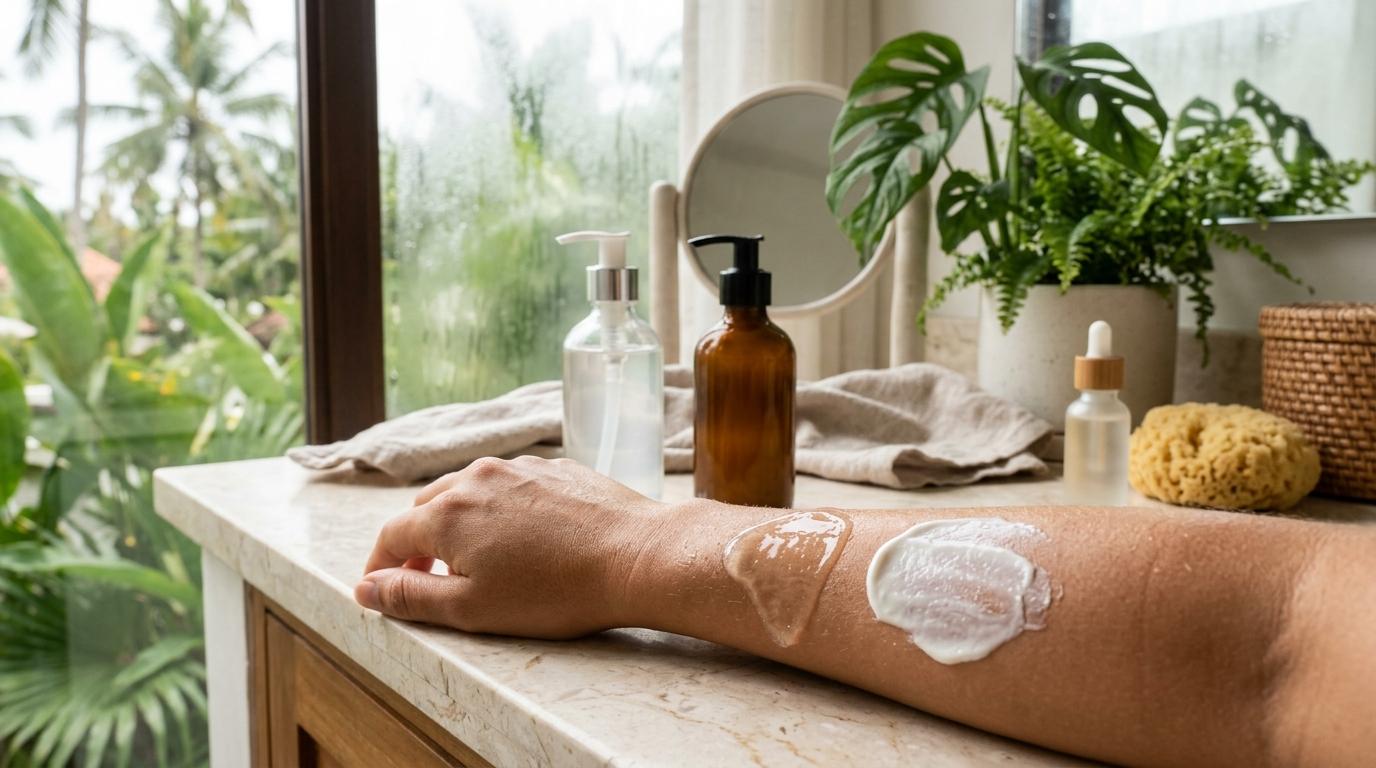
If your skin gets shiny the second the weather turns hot, sticky, or monsoon-like, sunscreen texture matters. For most people with oily skin in humid weather, gel sunscreen is the easier first choice because it usually feels lighter, settles faster, looks less shiny, and is easier to reapply. Cream sunscreen can still be better if your skin feels dry, tight, rough, or flaky.
The real goal is simple: choose a sunscreen you’ll actually use properly. Whichever texture you pick, make sure the label says broad-spectrum SPF 30 or higher.
Quick answer: gel or cream sunscreen for oily skin?
#If you have oily skin and live in humid weather, start with a gel sunscreen. Gel formulas usually feel lighter, look less greasy, and sit better under makeup or over a basic skincare routine. If you avoid sunscreen because it feels sticky or heavy, a gel sunscreen can make daily use much easier.
Choose a cream sunscreen if your skin feels dry, stretched, rough, flaky, or uncomfortable after washing your face. Creams tend to feel more moisturising and comforting.
Basically, the best sunscreen is the one you can apply enough of and reapply without hating the experience.
Gel sunscreen vs cream sunscreen: what’s the actual difference?
#The biggest difference is texture.
A gel sunscreen usually feels light, watery, or silicone-like. It spreads easily, absorbs quickly, and often leaves a matte or semi-matte finish.
A cream sunscreen feels richer, more moisturising, and more like a lotion or face cream. It may leave your skin looking dewy, glowing, or sometimes shiny.
Both can protect your skin well if the label is right. Texture does not decide sun protection on its own. What matters is whether the sunscreen says:
- Broad-spectrum
- SPF 30 or higher
- Water-resistant, if you sweat or spend time outdoors
So yes, texture matters for comfort. But the protection label matters just as much.
What gel sunscreen feels like
#A gel sunscreen is usually loved by people who don’t like heavy skincare.
It often feels:
- Lightweight
- Easy to spread
- Less greasy
- More comfortable in humidity
- Easier to layer during the day
Many gel sunscreens dry down to a soft matte or semi-matte finish. That’s why they’re so popular as a sunscreen for oily skin, especially in summer, monsoon weather, or tropical climates.
Gel textures can also work well under makeup. They usually don’t add too much richness or slip, so foundation may sit better and last longer. If your makeup separates by lunchtime or your face turns shiny quickly, a gel sunscreen may be easier to manage.
One small warning: very matte gel sunscreens can sometimes make dry patches feel tight or look more obvious. So if you have combination skin, pay attention to how your cheeks and mouth area feel.
What cream sunscreen feels like
#A cream sunscreen feels richer and more nourishing. It can be a better option if your skin is dry, rough, flaky, or easily feels tight after cleansing.
It usually feels:
- Moisturising
- Smooth
- Comforting
- More nourishing than gel
- Better for dry or flaky areas
Cream sunscreen is not “bad” for oily skin. Some oily skin types can use it just fine. But in humid weather, it may feel too heavy, especially by midday. If your face already produces a lot of oil, a rich cream can add extra shine and make your skin feel sticky faster.
For dry skin, mature skin, or skin that feels tight after washing, cream sunscreen may actually be easier to wear than gel.
Gel sunscreen vs cream sunscreen: quick comparison
#What should oily skin use in humid weather?
#For oily skin in humid weather, gel sunscreen is usually the most practical first choice.
Humidity slows down sweat evaporation. Instead of drying quickly, sweat, oil, and skincare can sit on your face together. That’s when heavier sunscreens start feeling sticky, greasy, or suffocating.
A good sunscreen for humid weather should feel light, settle well, and not make you want to wash your face five minutes after applying it.
Gel sunscreen helps because it usually adds less richness to the skin. It can feel more breathable during hot commutes, outdoor errands, travel, school runs, or long monsoon days.
But don’t pick sunscreen only because the front label says “matte” or “oil-free.” Always check the protection details too.
Look for:
- Broad-spectrum
- SPF 30 or higher
- Water-resistant, especially if you sweat
- A texture you can apply generously
- A formula you can reapply without discomfort
What about combination skin?
#Combination skin can be tricky because different parts of your face want different things.
You may have:
- An oily T-zone
- Normal cheeks
- Dry patches around the mouth
- Shine in some areas and tightness in others
For combination skin in humid weather, gel sunscreen is still a good place to start. But if your cheeks or mouth area feel dry, don’t force a very matte formula.
Try this:
- Apply a light moisturiser only on dry areas.
- Give it a minute or two to settle.
- Apply gel sunscreen over your whole face.
This way, your oily areas don’t feel overloaded, but your dry patches still get some comfort.
If most of your face feels dry, a cream sunscreen may suit you better.
What if you have oily skin with dry patches?
#This is very common. Your skin can be oily and still have dry, flaky areas, especially if the weather changes or your skincare routine is too harsh.
If you have oily skin with dry patches, don’t automatically choose the most matte sunscreen you can find. Very matte gel formulas can make flakes look worse and make your skin feel tight.
Better options may include:
- A hydrating gel sunscreen
- A lightweight cream sunscreen
- A light moisturiser under gel sunscreen, only on dry areas
Comfort matters. If your sunscreen makes your skin feel tight, patchy, or uncomfortable, you probably won’t apply enough of it. And if you don’t apply enough, you won’t get the protection promised on the label.
Sunscreen for humid weather: what matters most?
#When choosing sunscreen for humid weather, texture matters a lot. But it is not the only thing.
Hot and humid weather usually means more sweat, more oil, and more wiping your face with tissues, towels, scarves, dupattas, handkerchiefs, or your hands. All of that can disturb your sunscreen.
For humid weather, look for:
- A lightweight texture
- A finish you can tolerate
- Water resistance if you sweat
- Easy reapplication
- No “waterproof” claims, because sunscreen is not truly waterproof
Dermatology guidance commonly recommends broad-spectrum sunscreen with SPF 30 or higher and water-resistant sunscreen when swimming or sweating. SPF mainly refers to UVB protection, while broad-spectrum means the sunscreen helps protect against both UVA and UVB rays. Water resistance is tested for either 40 minutes or 80 minutes; after that, reapplication matters.
Does sweating mean you must use gel sunscreen?
#Not always. But gel sunscreen is usually more comfortable if you have sweaty, oily skin.
If you sweat a lot, the more important label is water-resistant. A gel texture may feel better, but water resistance tells you how the sunscreen has been tested.
Look for labels like:
- Water-resistant, 40 minutes
- Water-resistant, 80 minutes
This does not mean one application will last all day. It means the sunscreen has been tested under water or sweating conditions for that amount of time.
After that, you need to reapply.
Also, if you wipe your face with a towel, tissue, scarf, or handkerchief, you may remove some sunscreen. So reapplication becomes even more important.
Gel sunscreen under makeup
#Gel sunscreen often works well under makeup because it feels light and smooth.
For oily skin, this can be a big help. Creamier sunscreens may add extra shine or make foundation move around faster. A gel sunscreen, especially one with a soft matte finish, can create a more settled base.
A simple morning order is:
- Cleanser
- Moisturiser, if needed
- Sunscreen
- Makeup
Give your sunscreen a few minutes to settle before applying makeup. This can reduce pilling, slipping, and patchiness.
If your sunscreen pills, it may not be only the sunscreen’s fault. Pilling can happen when you use too many layers, when products don’t work well together, or when you rub too much instead of gently spreading.
Cream sunscreen under makeup
#Cream sunscreen can work beautifully under makeup if your skin is dry.
The issue usually starts when oily skin meets humid weather. A rich cream sunscreen may leave a dewy layer, and makeup may not grip properly on top. This can lead to shine, creasing, or foundation separating during the day.
If you like cream sunscreen but get oily quickly, keep the rest of your morning routine very light. Avoid layering rich moisturisers, oils, or heavy serums before sunscreen.
And remember, the goal is not a flawless finish every single day. The goal is sunscreen you will actually wear.
Reapplication: gel vs cream
#Reapplication is where gel sunscreen often wins.
In hot weather, your face may already feel oily or sweaty after a few hours. Adding another layer of cream sunscreen on top can feel heavy. Gel sunscreen is usually thinner and lighter, so it may feel easier to reapply.
General reapplication guidance:
- Reapply every two hours when outdoors.
- Reapply after heavy sweating.
- Reapply after swimming.
- Reapply after towel drying or wiping your face.
- Follow the 40-minute or 80-minute water-resistance label if sweating or swimming.
If you wear makeup, sunscreen reapplication can feel annoying. That’s understandable. But if you’re outdoors for a long time, skipping reapplication lowers your protection. Choose a texture and routine that feels realistic for your life.
Label checks before buying sunscreen
#Don’t choose sunscreen by texture alone. A sunscreen can feel amazing and still not be the right choice if the protection label is weak.
Before buying, check these things.
1. Broad-spectrum
#SPF mainly refers to UVB protection. Broad-spectrum sunscreens help protect against both UVA and UVB rays.
So don’t stop at the SPF number. Look for the words broad-spectrum.
2. SPF 30 or higher
#SPF 30 is a practical everyday minimum. Higher SPF options are available, but they still need to be applied properly and reapplied when needed.
3. Water-resistant
#If you sweat, live in humid weather, or spend time outdoors, water resistance is useful.
Water-resistance labels are usually based on testing for:
- 40 minutes
- 80 minutes
No sunscreen is truly waterproof, so don’t assume one application will protect you all day.
4. Texture terms
#For oily skin, you may prefer labels such as:
- Gel sunscreen
- Water-based
- Lightweight
- Matte
- Semi-matte
- Non-greasy
These words describe how the sunscreen may feel. They do not guarantee protection, so still check SPF and broad-spectrum.
5. Non-comedogenic
#If your skin gets clogged easily, you may look for “non-comedogenic.”
This means the product is formulated with the intention of not clogging pores. It is not a 100% guarantee for every person, but it can be a helpful label to consider.
Sunscreen shopping checklist for oily skin in humidity
#Use this quick checklist before choosing between gel and cream sunscreen:
- Is it broad-spectrum?
- Is it SPF 30 or higher?
- Is it water-resistant if you sweat or spend time outdoors?
- Does the texture suit your skin?
- Does it feel comfortable enough to apply generously?
- Can you reapply it without hating the feel?
- Does it sit well under makeup, if you wear makeup?
- Does it avoid looking too greasy by midday?
- If you have dry patches, does it keep them comfortable?
- Have you patch tested cautiously before full-face use?
Best choice by skin type and weather
#Oily skin in humid weather
#Choose gel sunscreen first. It is usually lighter, less greasy, and easier to reapply.
Oily skin with dry patches
#Try a hydrating gel sunscreen. If dry areas still feel tight, use a light moisturiser only on those patches before sunscreen.
Combination skin in monsoon weather
#Gel sunscreen usually works well, especially on the T-zone. Add moisturiser only where your skin feels dry.
Dry skin in humid weather
#A lightweight cream sunscreen may feel better than a very matte gel.
Dry skin in cool or dry weather
#Cream sunscreen is often the better choice because it feels more nourishing.
Makeup users with oily skin
#Gel sunscreen is usually easier under makeup because it feels smoother, lighter, and less slippery.
Final verdict: gel sunscreen vs cream sunscreen
#For oily skin in hot, humid, or monsoon weather, gel sunscreen is usually the better everyday choice. It feels lighter, creates less shine, and is easier to reapply when your skin is sweaty.
But cream sunscreen still has its place. If your skin feels dry, tight, rough, or flaky, a cream texture may feel much more comfortable.
The smartest choice is not just about gel or cream. It is about finding a sunscreen that matches your skin, your weather, and the label basics: broad-spectrum, SPF 30 or higher, and water-resistant when needed.
At AllBlogs, the simple rule is this: choose the sunscreen you will actually use properly, not the one that only sounds good on paper.