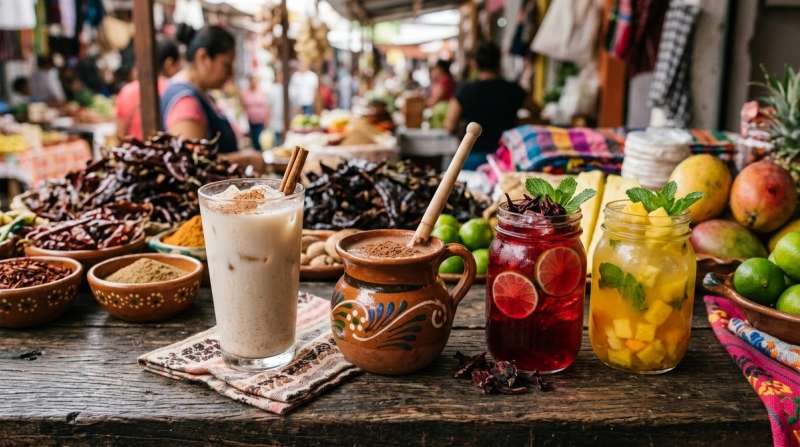
Tequila and mezcal may get most of the attention outside Mexico, but they’re only one small part of the country’s drinking culture. If you’re looking for Mexican dessert drinks without alcohol, you have plenty to choose from: creamy rice drinks, thick chocolate-corn drinks, tart hibiscus coolers, fruity aguas frescas, and warm market drinks that feel like dessert in a cup.
These aren’t really “mocktails,” either. They’re not alcohol-free versions of cocktails. They’re their own thing, with long traditions behind them. And they’re quite different from the chewy, milky, tea-based world of Asian dessert drinks without alcohol. Mexican sweet drinks often lean on corn, rice, cacao, cinnamon, tamarind, hibiscus, fresh fruit, seeds, nuts, and water.
Some are icy and refreshing. Some are rich and cozy. Some are light enough for lunch, while others are filling enough to count as breakfast.
Here’s a practical guide to the Mexican non-alcoholic drinks to know, what they taste like, when to order them, and what to ask if you want something lighter, dairy-free, or a little safer while traveling.
Quick answer
#If you only want the short version, start with these.
- Horchata: A cold, sweet, creamy drink usually made in Mexico with rice, cinnamon, water, and sugar. It tastes a bit like chilled rice pudding, but lighter and easier to drink.
- Champurrado: A warm, thick chocolate drink made with masa, Mexican chocolate, cinnamon, and sweetener. It’s cozy, filling, and often served with tamales or pan dulce.
- Atole: A family of warm, thick masa-based drinks. Champurrado is the chocolate version.
- Aguas frescas: Cold, sweet drinks made with water and fruit, flowers, seeds, grains, or tamarind. Common flavors include jamaica, tamarindo, watermelon, melon, pineapple, and lime with chia.
Best first order? If it’s hot out, try horchata or agua de jamaica. If it’s a cool morning, or you want something more dessert-like and filling, go for champurrado.
What counts as a Mexican dessert drink?
#A Mexican dessert drink doesn’t always arrive after a meal. You might drink one with tacos, pick one up from a market stall in the morning, order one from a big glass jar at a taqueria, or make a pitcher at home for a family meal.
The “dessert” part usually comes from one or more of these things:
- Sweetness from sugar, piloncillo, fruit, or sweetened milk
- Creaminess from rice, corn masa, milk, nuts, or seeds
- Warm spices like cinnamon and vanilla
- Chocolate or cacao
- A thick, filling texture
- A chilled fruit flavor that still feels like a treat
So this category is broader than a milkshake and much more traditional than a generic alcohol-free cocktail. Many of these drinks are everyday drinks, but they can easily satisfy the same craving as dessert.
The easiest way to choose is to ask yourself what you’re in the mood for. Creamy? Tart? Fruity? Warm? Filling? Mexico has a drink for all of those.
Horchata
#Horchata is probably one of the best-known Mexican dessert drinks without alcohol. In Mexico, the most common version is horchata de arroz, made with rice, cinnamon, water, and sugar. Depending on the recipe, it may also include vanilla, almonds, evaporated milk, regular milk, or condensed milk.
The flavor is soft and comforting. Think cold cinnamon rice pudding, but thinner and more refreshing. It’s sweet, creamy, and gentle, which makes it especially good with spicy food. A cold cup of horchata can calm down a fiery salsa without competing with the rest of the meal.
You’ll often see horchata served alongside other aguas frescas in taquerias, markets, lunch spots, and casual restaurants. Sometimes it’s ladled from a big glass jar. Other times it comes from a refrigerated dispenser.
What to expect:
- Taste: Sweet, cinnamon-forward, rice-like, sometimes with vanilla
- Texture: Creamy and smooth when well strained, though sometimes a little grainy
- Best when: You want something cold, sweet, and soothing
- Good pairing: Tacos, spicy salsas, grilled meats, or an afternoon snack
One important note: Mexican horchata is often naturally dairy-free because rice gives it that milky look and body. But many modern versions add evaporated milk, condensed milk, or regular milk to make it richer.
If you avoid dairy, don’t assume. Ask first.
Useful phrase:
¿Lleva leche?Does it contain milk?
If you want to be clearer:
¿La horchata es sin leche?Is the horchata without milk?
Regional versions can vary too. In Oaxaca, for example, you may come across horchata con tuna, often made with prickly pear and sometimes served with fruit or nuts. It feels more layered and dessert-like than a plain horchata, especially if you like a little texture in your drink.
Champurrado and atole
#If horchata is the cold, creamy option, champurrado is the warm, cozy one.
Champurrado belongs to the broader family of atole, a thick drink traditionally made with masa, water or milk, cinnamon, and sweetener. The masa gives it body, so it isn’t thin like hot chocolate. It has a soft, almost porridge-like thickness.
Champurrado is the chocolate version of atole. It usually includes Mexican chocolate, masa, cinnamon, and piloncillo or another sweetener. The chocolate often already contains sugar and cinnamon, so the final drink tastes warm, earthy, chocolatey, and deeply comforting.
This is not a light little drink you sip absentmindedly. Champurrado can feel like breakfast, dessert, and comfort food all in one cup.
What to expect:
- Taste: Chocolate, cinnamon, cooked corn, gentle sweetness
- Texture: Thick, smooth to slightly grainy, depending on how it’s made
- Best when: It’s cool outside, early in the morning, or you want something filling
- Good pairing: Tamales, pan dulce, or a simple breakfast
Atole doesn’t always contain chocolate. You may see versions flavored with vanilla, fruit, cinnamon, or other ingredients. But if you want that warm chocolate dessert-drink feeling, champurrado is the one to order.
Dairy note: atole and champurrado can be made with water or milk. If you need a dairy-free drink, ask before ordering.
Sugar note: champurrado is usually sweet. If you make it at home, you can reduce the sweetener. If you’re buying it from a stall, the sweetness is usually already set.
Caffeine note: because champurrado contains cacao, it may have a small amount of natural caffeine. It’s not like drinking coffee, but it also isn’t completely caffeine-free in the way most fruit aguas frescas are.
Aguas frescas
#Aguas frescas means “fresh waters” or “cool waters.” They’re chilled drinks made by mixing water with fruit, flowers, seeds, grains, tamarind, or other flavoring ingredients, then sweetening everything to taste.
You’ll find them all over the place: markets, street food stalls, taquerias, lunch counters, casual restaurants, and home kitchens. They’re often displayed in large clear jars, lined up in bright colors that are pretty hard to ignore.
For dessert-drink purposes, aguas frescas are the lighter side of the category. They can definitely be sweet and treat-like, but they’re usually more refreshing than creamy.
Popular options include:
- Agua de jamaica: Made from dried hibiscus flowers. Deep red, tart, floral, and refreshing. Pronounced roughly “ha-MY-ca.”
- Agua de tamarindo: Made with tamarind. Tangy, earthy, sweet-sour, and a little more intense than most fruit waters.
- Agua de sandía: Watermelon water. Light, juicy, and very easy to like.
- Agua de melón: Melon water. Soft, sweet, and fragrant.
- Agua de piña: Pineapple water. Bright, tropical, and sweet-tart.
- Limón con chía: Lime with chia seeds. Tart, fresh, and slightly textured from the seeds.
Aguas frescas are sometimes talked about as a healthier choice than soda. They can be, especially when they’re made with real fruit or hibiscus, but they can also contain quite a bit of added sugar. If you want something lighter, pick a tart flavor like jamaica or ask about sweetness.
Useful phrases:
¿Está muy dulce?Is it very sweet?
¿Tiene azúcar?Does it have sugar?
¿Puede ser con poca azúcar?Can it be made with a little sugar?
That last question works best when the drink is being made fresh for you. If it’s already mixed in a big jar, the sweetness is probably fixed.
What to order by mood
#Choosing among Mexican non-alcoholic drinks gets much easier when you start with the feeling you want.
If you want something cold and creamy
#Order horchata.
It’s the safest first pick if you like cinnamon, vanilla, rice pudding, or creamy café-style drinks. It tastes sweet and dessert-like, but it still feels refreshing when served cold over ice.
Best for: hot afternoons, spicy meals, and first-time orders.
If you want something warm and filling
#Order champurrado.
It’s thick, chocolatey, and comforting. This is the drink to choose when you want something closer to a snack or breakfast than a simple beverage.
Best for: cool mornings, markets, tamales, and pan dulce.
If you want something tart and refreshing
#Order agua de jamaica.
Hibiscus is bright, tangy, and palate-cleansing. It cuts through rich food beautifully and is a good choice if horchata feels too creamy.
Best for: lunch, hot weather, fried foods, and heavier meals.
If you want sweet-sour and bold
#Order agua de tamarindo.
Tamarind has a deeper tang than lemon or hibiscus. It’s fruity, earthy, and a little candy-like once sweetened.
Best for: people who like sour candy, tamarind chutney, or sweet-tart flavors.
If you want something simple and fruity
#Order agua de sandía, melón, or piña.
These are easygoing fruit waters. They’re good when you want refreshment more than richness.
Best for: daytime meals, warm weather, and low-risk first tries.
If you want something lighter than dessert
#Choose jamaica, limón con chía, or a fruit agua fresca, and ask about sugar if you can.
Horchata and champurrado are usually more dessert-like. Aguas frescas can be lighter, depending on the flavor, sweetness, and portion size.
Dairy, sugar, and caffeine cautions
#These drinks are alcohol-free, but that doesn’t automatically mean they work for every diet. Here’s what to check.
Dairy
#- Horchata: Often rice-based and naturally dairy-free, but many versions include milk, evaporated milk, or condensed milk.
- Champurrado: Can be made with water or milk.
- Atole: Can be made with water or milk.
- Aguas frescas: Fruit, hibiscus, tamarind, and chia versions are usually dairy-free, but creamy-looking flavors are worth checking.
Ask:
¿Lleva leche?Does it contain milk?
Sugar
#These drinks are often sweet. Even fruit-based aguas frescas may be sweetened after blending or steeping.
If you’re watching sugar, try this:
- Ask for poca azúcar if the drink is made fresh
- Choose tart flavors like jamaica or tamarindo
- Share a serving
- Make a less-sweet version at home
When drinks are already mixed in large jars, the sweetness is usually set.
Caffeine
#Most aguas frescas, horchata, and plain atole are typically caffeine-free.
Champurrado contains chocolate, so it may contain a small amount of caffeine from cacao. If you’re very caffeine-sensitive, choose horchata, jamaica, tamarindo, or a fruit agua fresca instead.
Texture
#Some alcohol-free Mexican dessert drinks have texture.
- Horchata may be smooth or slightly grainy.
- Champurrado is thick because of masa.
- Limón con chía contains chia seeds.
- Some regional horchatas may include fruit, nuts, or other add-ins.
If you prefer smooth drinks, ask before ordering or choose a strained agua fresca.
Traveler food-safety checks
#Sweet drinks are one of the best parts of food travel, but chilled drinks deserve a little extra attention. Horchata and aguas frescas are mixed with water and often served over ice, so water quality matters.
That doesn’t mean you need to avoid them. It just means it’s smart to choose carefully.
Good signs:
- The stall or shop is busy and has steady turnover.
- Drinks are covered or kept in clean dispensers.
- Ice looks commercially made, not chipped from an unknown block.
- The vendor uses purified water, often called agua purificada.
- Cups, ladles, and serving areas look clean.
- The drink looks fresh, not separated, sour-smelling, or left sitting in the sun.
Questions you can ask:
¿Es agua purificada?Is it purified water?
¿El hielo es de agua purificada?Is the ice made from purified water?
In established restaurants and busy stalls, purified water and purified ice are commonly used, but it’s still fine to ask, especially if your stomach is sensitive.
Be more cautious if:
- The drink has been sitting uncovered.
- The container is handled with utensils also used for raw foods.
- The ice source is unclear.
- The drink smells fermented when it shouldn’t.
- You’re recovering from stomach illness or have a sensitive digestive system.
For more practical travel checks, read street dessert safety while traveling and dessert drinks while traveling: buy or skip. If you like comparing non-alcoholic drink cultures across countries, you may also enjoy what to drink in Japan non-alcoholic.
How to make a simple version at home
#If you want the easiest home starting point, make agua de jamaica. You don’t need a blender, masa, or any special technique.
You need dried hibiscus flowers, often sold as flor de jamaica, plus water, sweetener, and lime if you like.
Simple method:
- Bring water to a boil.
- Remove from heat and steep a handful of dried hibiscus flowers for about 10 to 15 minutes.
- Strain out the flowers.
- Dilute the deep red concentrate with cold water.
- Sweeten to taste while it’s still slightly warm, so the sugar dissolves more easily.
- Chill well and serve over ice.
The flavor should be tart, floral, and refreshing. Add lime if you want it sharper.
For a simple horchata-style drink, soak rice with cinnamon, blend it with water, strain it well, then sweeten and chill. Some people add vanilla or milk, but you can keep it dairy-free.
For champurrado, the basic idea is to simmer masa and chocolate into a warm liquid until thick. It takes a little more attention than jamaica because masa can clump if you rush it. Go slowly and whisk steadily.
The best part about making these at home is control. You decide the sweetness, dairy, and texture. If restaurant versions are too sweet or too rich for you, homemade Mexican alcohol-free dessert drinks are easy to adjust.