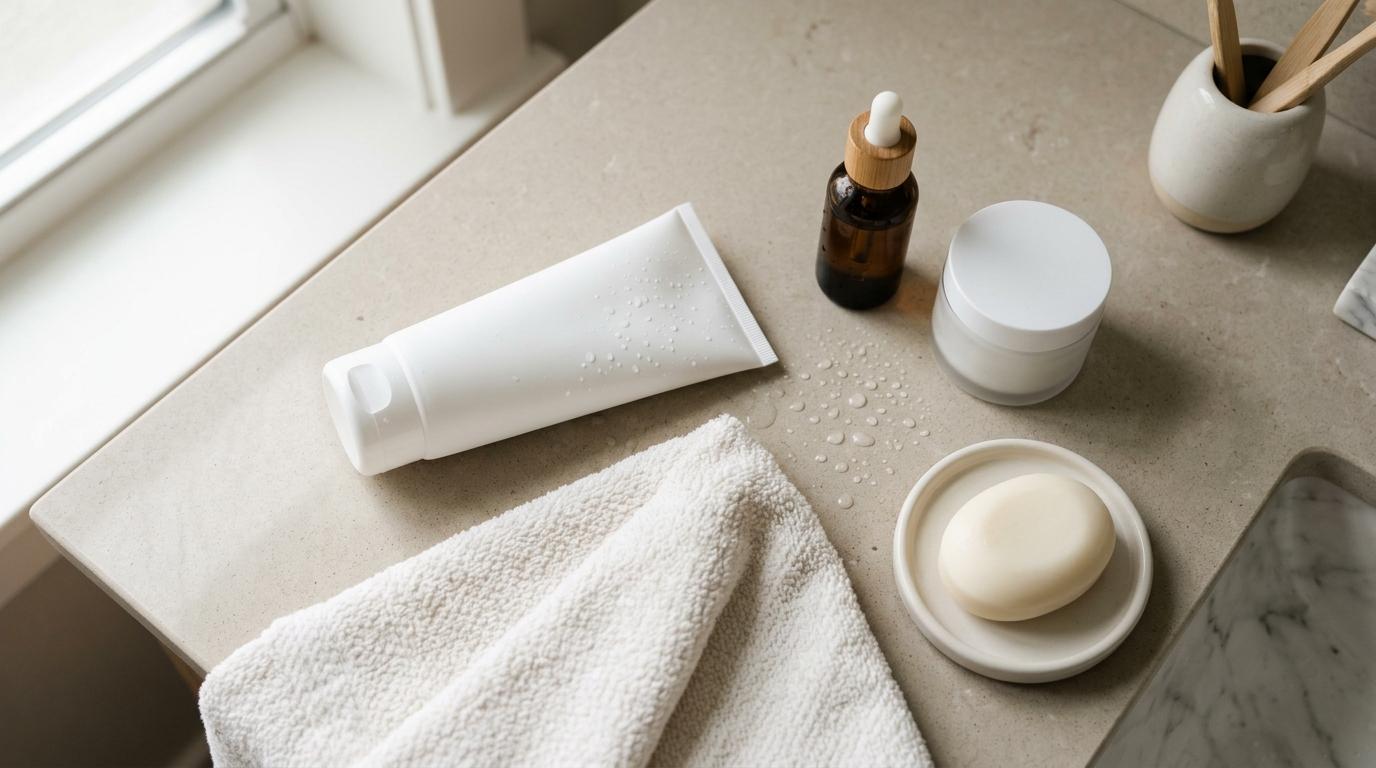
A good sensitive skin face wash should clean sweat, sunscreen, dust and oil without leaving your face tight, hot, itchy, stingy or stripped. Start with a fragrance-free, soap-free cleanser, then check for gentle ingredients like glycerin, ceramides, panthenol or allantoin. Avoid rough scrubs, strong perfume and formulas that give a harsh “squeaky clean” feel.
Buying a sensitive skin face wash should be simple, but skincare shelves are full of claims like “gentle,” “dermatologist tested,” “hypoallergenic,” “soap-free,” “natural,” and “safe for sensitive skin.” Some of those words are useful. Some are vague. And some sound more reassuring than they really are.
If your skin reacts easily, the goal is not to find the most powerful cleanser. The goal is to find one that cleans well while leaving your skin comfortable after rinsing. In hot, humid weather, including Indian summer and monsoon conditions, your cleanser also needs to handle sweat, sunscreen, pollution and oil without becoming harsh.
Start With the Label, Not the Big Claims
#The front of the tube is designed to sell the product. The ingredient list and label terms are where the real clues are.
Fragrance-free
#For sensitive skin, fragrance-free is one of the most useful labels to look for. It means the product is not intended to contain added scent ingredients, including perfume and many natural fragrance ingredients such as essential oils.
If your skin burns, itches or turns red easily, fragrance-free is usually a safer starting point than a strongly scented cleanser.
Unscented
#“Unscented” does not always mean fragrance-free. Some unscented products may use masking fragrance ingredients to hide the natural smell of the formula. If your skin reacts to fragrance, do not treat “unscented” and “fragrance-free” as the same thing.
Hypoallergenic
#A hypoallergenic face wash can sound comforting, but it is not a guarantee that your skin will tolerate it. Treat it as one clue, not a final answer. You still need to read the ingredient list and patch test before using the product all over your face.
Soap-free
#A soap-free face wash is often a better choice for sensitive skin than traditional soap. Traditional soap can leave skin feeling tight, dry or “squeaky clean,” which may mean the skin has been over-cleansed.
Non-comedogenic
#A non-comedogenic cleanser is made to be less likely to clog pores. This can help if your skin is sensitive but also oily, sweaty or congestion-prone in humid weather. It still does not guarantee zero irritation, so patch testing matters.
Ingredient Checklist: What to Look For and What to Avoid
#A good cleanser for sensitive skin does not need a fancy ingredient list. It needs a formula that cleans well and leaves your skin calm after rinsing.
Pick the Right Texture for Your Skin
#There is no single best texture for everyone. Your skin type, sunscreen use, makeup, weather and daily routine all matter.
A simple test: how does your skin feel five minutes after washing? If your face feels tight, shiny, hot or uncomfortable, the cleanser may be too harsh even if the label says “sensitive.”
Humid-Weather Tips for Indian Skin Routines
#In Indian summers, monsoon weather and coastal humidity, your face wash has a tougher job. By evening, sweat, sunscreen, pollution, sebum and dust can sit on the skin together. Your face may feel sticky, greasy or congested.
That does not mean you need the harshest cleanser. Sensitive skin usually needs a smarter cleanse.
For humid weather, look for:
- A lightweight gel or gentle foaming cleanser if your skin gets oily.
- A fragrance-free and soap-free formula.
- A cleanser that removes sweat and sunscreen without leaving your face tight.
- A non-comedogenic label if your pores clog easily.
- A formula that rinses clean but does not make your skin feel stretched.
Do not choose a harsh face wash just because your face gets oily. Oily skin can still be sensitive. If you over-cleanse, your skin may feel fresh for a short time, then become dry, uncomfortable or reactive later.
How to Remove Sunscreen Without Irritating Your Skin
#Daily sunscreen is important, but removing it can be tricky, especially if you use a water-resistant formula or reapply during the day.
If your regular cleanser does not remove sunscreen properly, do not scrub harder. Try a gentler two-step cleanse instead.
- First cleanse: Use fragrance-free micellar water on a soft cotton pad, or a gentle cleansing balm if your skin tolerates balms.
- Use a light hand: Press and wipe gently instead of dragging the cotton pad harshly.
- Second cleanse: Wash with your regular gentle cleanser.
- Use lukewarm water: Hot water can make sensitive skin feel more irritated.
- Pat dry: Use a soft towel and pat your face dry. Do not rub.
If micellar water leaves your skin sticky or uncomfortable, rinse it off and follow with your normal face wash.
Patch-Test Before Using It All Over Your Face
#Even a well-formulated cleanser can irritate some people. Sensitive skin can be unpredictable, and what works for one person may not work for another.
Use this simple patch test skincare habit before committing to a new face wash:
- Choose a small area such as the inside of your forearm, behind your ear or the side of your neck.
- Apply a small amount with water, just as you would on your face.
- Rinse it off after the usual cleansing time.
- Watch the area over the next 24 to 48 hours.
- Stop if you notice redness, itching, burning, stinging, swelling or bumps.
- If the area stays calm, try it once on your face and notice how your skin feels afterward.
If you get a strong reaction or your skin keeps reacting to multiple products, speak with a qualified dermatologist.
Quick Buying Checklist
#Before buying a sensitive skin face wash, ask:
- Is it clearly fragrance-free, not just unscented?
- Is it a soap-free face wash?
- Does it avoid rough scrub particles?
- Does it avoid drying alcohol near the top of the ingredient list?
- Does it include helpful ingredients like glycerin, ceramides, panthenol or allantoin?
- Is the texture right for my skin and climate?
- Will it remove sweat and sunscreen without stripping my skin?
- Have I patch-tested it before using it all over my face?
If most answers are yes, the cleanser is a better candidate. It is not a guarantee, but it is a safer place to start.