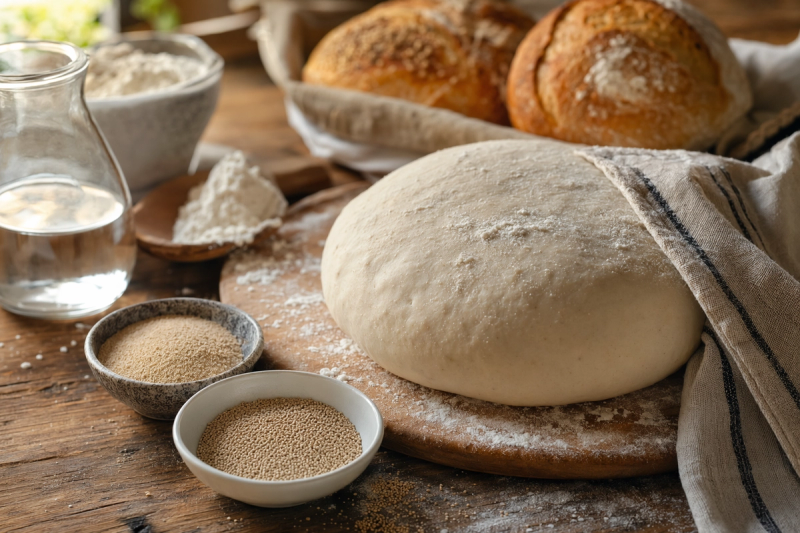
The tiny packet that has ruined, saved, and totally changed my bread life
#I have a weirdly emotional relationship with yeast. Like, I know it’s a beige powder in a packet, not a long-lost relative, but if you’ve ever stood in your kitchen at 9:47 p.m. staring at a bowl of dough that refuses to rise, you get it. Yeast can make you feel like a kitchen genius or a complete fraud in the span of an hour. And the first time I really understood the whole instant yeast vs active dry yeast thing, I was making cinnamon rolls for a Sunday brunch and, um, I had absolutely no business hosting brunch. None. I was wearing flour like face powder, the coffee was bitter, someone brought a very judgy fruit salad, and my dough sat there like a sad lump. Turns out I had used old active dry yeast straight from the back of the cupboard, didn’t proof it, and then blamed the weather. Classic me.
So let’s talk about what to use: instant yeast or active dry yeast. Not in a scary baking-school way. More like the way I wish someone had explained it to me while I was panic-Googling with sticky fingers. Because honestly, both can make gorgeous bread. Both can give you puffy dinner rolls, chewy pizza dough, soft sandwich loaves, focaccia with those beautiful olive oil puddles... oh man. But they behave a little differently, and knowing those differences saves you from wasting flour, time, and your last bit of emotional stability.
Quick answer, because sometimes you just need the bread to happen
#If you’re standing in the grocery aisle right now, holding two packets and wondering which one is less likely to betray you, my vote for most home bakers is instant yeast. It’s easy, dependable, and you can usually mix it right into the flour without waking it up in water first. It’s the one I keep in my freezer in a little jar with a label that is absolutely peeling off and ugly, but it works.
Active dry yeast is still great, though. I use it when a recipe specifically asks for it, when I want to check if my yeast is alive before committing to the whole dough situation, or when I’m making something slower and more old-school feeling. There’s a little ritual to active dry yeast: warm water, a pinch of sugar maybe, wait for foam. It’s kind of sweet. Like giving the yeast a tiny spa day before asking it to lift a loaf.
- Use instant yeast when you want simple, fast-ish, dependable results and don’t want to proof yeast separately.
- Use active dry yeast when your recipe calls for it, or when you want to confirm your yeast is alive before mixing dough.
- For most everyday home baking, you can swap them 1:1 and be fine, but instant yeast often rises a bit faster.
- If you’re baking something fussy or professional, use the yeast type the recipe specifies. I know, boring answer. But true.
So what actually is the difference?
#Both instant yeast and active dry yeast are commercial baker’s yeast, usually Saccharomyces cerevisiae, which sounds like a wizard spell but is basically the little living organism that eats sugars and produces carbon dioxide and flavor compounds. That carbon dioxide gets trapped in your dough’s gluten network and makes it rise. Yeast also gives bread that cozy, bakery smell that makes people wander into the kitchen pretending they “just wanted water.” Sure, buddy.
The difference is mostly in how the yeast is processed and how fast it gets to work. Active dry yeast has larger granules and a protective coating from the drying process. Traditionally, it was dissolved in warm water before mixing into dough because those granules needed hydration. Instant yeast is dried differently into smaller, more porous particles, so it absorbs moisture quickly and can be mixed right into dry ingredients. That’s why recipes often say “add instant yeast to flour” and “dissolve active dry yeast in warm water.”
There are also labels like “rapid rise,” “quick rise,” and “bread machine yeast.” These are usually types of instant yeast, sometimes with additives like enzymes or dough conditioners depending on the brand. They’re designed to work fast, especially in bread machines or recipes with shorter rising times. Are they evil? No. Are they always my favorite for flavor? Also no. A slower rise usually tastes better, at least to me, because the dough has more time to develop flavor. But if rapid-rise yeast is what gets homemade rolls on your table on a Tuesday night, I am not going to be snobby about it.
My first yeast disaster, aka the brick loaf era
#I learned the hard way that yeast is alive but not immortal. Years ago, I made what was supposed to be a rustic no-knead loaf for a dinner with friends. I had this whole vision: crusty bread, salted butter, maybe a little honey, me looking relaxed and charming. Instead, I pulled a dense round object from the oven that could’ve been used as a doorstop. We sliced it anyway because we were broke and stubborn, and my friend said, “It’s... hearty,” which is how you know food is bad but the person loves you.
The culprit was active dry yeast that had been opened months earlier and stored in the cupboard above the stove. Above. The. Stove. Warm, humid, terrible place. I basically created a yeast retirement home and then expected it to perform manual labor. After that, I started testing my active dry yeast before using it, especially if I wasn’t sure how old it was. A little warm water, a tiny spoon of sugar, wait 5 to 10 minutes. If it bubbles and foams, we’re in business. If it looks like dirty puddle water, say goodbye and don’t make bread with it.
Yeast doesn’t care about your dinner plans. It cares about warmth, moisture, food, and whether you stored it like a reasonable person.
How to use active dry yeast without making it weird
#Active dry yeast likes a little warm-up. Most home recipes suggest dissolving it in warm water around 100°F to 110°F. It should feel warm, not hot, like bathwater for someone who doesn’t enjoy suffering. If you don’t use a thermometer, that’s okay, but be honest with yourself. If the water feels like tea you’d sip, it’s probably too hot. Yeast starts getting stressed with too much heat, and around 140°F it can die. Dead yeast will not rise out of politeness.
To proof active dry yeast, stir it into the warm liquid from your recipe, sometimes with a pinch of sugar. Wait a few minutes. You should see foam, bubbles, or at least some creamy activity on top. It doesn’t need to look like a science fair volcano, despite what some dramatic baking videos make it seem like. If it smells yeasty and looks alive, use it.
- Measure your warm liquid from the recipe, not extra liquid, unless the recipe says so.
- Stir in the active dry yeast and, if you want, a tiny pinch of sugar or flour.
- Wait 5 to 10 minutes until it’s foamy or creamy-looking.
- Mix it into the flour and continue with the recipe, pretending you’ve always been this organized.
Some modern active dry yeast is manufactured so well that it can technically be mixed straight into flour too. I’ve done it and it worked. But if I’m using active dry, I usually proof it anyway because it’s a built-in freshness test, and because I’m still emotionally recovering from the brick loaf era.
How to use instant yeast, my weeknight bread hero
#Instant yeast is the reason I make pizza dough on random Wednesdays. You just whisk it into flour with salt, add water, mix, and boom, dough life begins. No little cup of warm water. No waiting around to see if it foams. It’s not glamorous, but it’s efficient, and I respect that.
One tiny caution: don’t dump salt directly on top of yeast in a concentrated little pile and then wander away. Salt can slow yeast activity if it’s sitting right against it. In real dough, once everything is mixed, it’s fine. I usually stir the flour, yeast, and salt together quickly before adding water, or I put them in different sides of the bowl like they’re relatives who don’t get along at Thanksgiving.
Instant yeast is especially good for enriched doughs, at least in my kitchen. Cinnamon rolls, sandwich bread, soft buns, milk bread-style loaves, those buttery dinner rolls that make everyone forget the main dish. Enriched doughs have fat, sugar, eggs, or dairy, which can slow yeast down, and instant yeast tends to be lively enough to keep things moving. If a dough has a lot of sugar, some bakers like osmotolerant instant yeast, which is made for sweet doughs, but for normal home cinnamon rolls I usually use regular instant yeast and it behaves just fine.
Can you substitute instant yeast and active dry yeast?
#Yes, most of the time. And this is where bread people get a little intense, so let me say it carefully: for many everyday recipes, a 1:1 swap works. If a recipe calls for 2 teaspoons active dry yeast and you only have instant, use 2 teaspoons instant and watch the dough, not the clock. It may rise faster. If a recipe calls for instant and you only have active dry, use the same amount, proof it in part of the recipe’s liquid first, and expect the rise to maybe take a bit longer.
The more technical conversion is that instant yeast can be slightly more potent by volume, so some bakers use about 25% less instant yeast when replacing active dry. Like if a recipe calls for 1 teaspoon active dry, you’d use about 3/4 teaspoon instant. That matters more in precise formulas, long ferments, or if you bake a lot and notice flavor changes. But honestly? When I’m making pizza dough after work, I’m not doing yeast fractions with the focus of a chemist. I use close amounts and pay attention to how the dough looks.
| If the recipe says | But you have | What I usually do |
|---|---|---|
| Active dry yeast | Instant yeast | Use the same amount for casual baking, or slightly less instant for precision. Mix into flour. |
| Instant yeast | Active dry yeast | Use the same amount, dissolve in warm liquid first, and give the dough extra time if needed. |
| Rapid-rise yeast | Instant yeast | Usually interchangeable, though rapid-rise recipes may be built for shorter rises. |
| Fresh yeast | Dry yeast | Look up a specific conversion because fresh yeast has much more moisture. Don’t guess if the recipe matters. |
Rise time is not a timer, it’s a mood
#This might be the most annoying and most useful bread advice: don’t trust the clock too much. Dough rises when it rises. Your kitchen temperature, flour, hydration, sugar, salt, yeast age, bowl material, and probably your personal aura all seem to affect it. A recipe might say “let rise 1 hour,” but if your kitchen is chilly, it could take 90 minutes or more. If it’s summer and your kitchen feels like a greenhouse, the dough may puff up in 35 minutes and then overproof while you’re answering one email.
Instant yeast usually moves faster than active dry, especially early on. Active dry may have a slower start because it needs hydration. But once both are active in a happy dough, the difference isn’t always dramatic. This is why bakers say to look for dough that has doubled, or nearly doubled, or is puffy and airy. I poke it gently with a floured finger. If the dent springs back slowly and leaves a little mark, it’s often ready. If it springs back instantly, it may need more time. If it collapses and sighs like it pays rent, you may have overproofed it.
A little rant about “double in size”
#Can we admit that “double in size” is hard to judge? I have stared at bowls like they were magic eye puzzles. Is that double? One and a half? Did I just use a bigger bowl and confuse myself? I started taking a quick photo of the dough before rising, especially for new recipes. It sounds fussy, but it helps. You can also use a straight-sided container and mark the dough level with tape or a rubber band. Very bakery nerd. Very satisfying.
Flavor: faster isn’t always tastier, sorry
#Instant yeast is convenient, but that doesn’t mean the fastest loaf is the best loaf. Bread flavor develops with time. Slow fermentation lets enzymes and yeast do their quiet little work, making the dough more complex and less flat-tasting. That’s why overnight pizza dough in the fridge tastes better than dough rushed in an hour. It’s not just foodie nonsense, I swear. You can taste it.
My favorite pizza dough uses instant yeast, but barely any, and it rests in the fridge overnight. The next day it smells nutty and slightly boozy, in a good way, and bakes up with blistered edges. I once made it for a friend who said it reminded him of a tiny pizza place near a train station in Naples, which was wildly generous because my oven is basically a landlord-special box of uneven heat. Still, slow dough has charm. It makes you feel like you planned your life better than you did.
Active dry yeast can make flavorful bread too. The yeast type is not the whole story. Time, temperature, hydration, flour choice, salt, and technique matter more than the packet label. I’ve had bland bread made with fancy instant yeast and amazing bread made with basic active dry from the supermarket. So don’t let anyone make you feel like you need seven kinds of yeast to bake a decent loaf.
Best yeast for pizza, rolls, focaccia, and other things I care too much about
#For pizza dough, I like instant yeast because I can use a tiny amount and let the dough hang out in the fridge overnight. If I’m making same-day pizza, instant yeast helps get dinner moving. For focaccia, both work, but instant yeast is my usual pick because focaccia dough is wet and lazy in the best way. I want to stir, fold a bit, pour olive oil with reckless joy, and let it bubble.
For cinnamon rolls and dinner rolls, I also lean instant. Enriched dough can be slower, and instant yeast gives it a little push. But if I’m using active dry, I proof it in the warm milk first. Actually, I like that moment: milk, yeast, sugar, the smell of it waking up. It reminds me of my grandmother’s kitchen, even though she measured everything with mugs and vibes and would’ve laughed at me for owning a digital scale.
- Pizza dough: instant yeast, especially for overnight fridge dough or easy weeknight batches.
- Focaccia: instant yeast if you want low-effort bubbling dough, active dry if that’s what’s in the drawer.
- Cinnamon rolls: instant yeast for speed, active dry if you like proofing it in warm milk first.
- No-knead bread: either works, but use less yeast for long room-temp rises so it doesn’t overferment.
- Bread machine recipes: bread machine yeast or instant yeast is usually the safest match.
Storage is where good yeast goes to die, apparently
#Yeast storage sounds boring until you ruin a loaf, then suddenly you become very interested in jars and freezer doors. Unopened yeast packets or jars are usually fine in a cool pantry until the date on the package, assuming your pantry isn’t secretly a sauna. Once opened, yeast should be sealed tightly and stored in the fridge or freezer. I keep instant yeast in the freezer because I buy it in a larger bag, and it lasts ages that way. I scoop what I need straight from frozen. No drama.
If you only bake once in a while, packets are handy because they stay sealed until you need them. If you bake often, a small jar or vacuum-packed brick of instant yeast can be cheaper and less annoying. Just transfer it to an airtight container after opening. Moisture and heat are the enemies. Same general kitchen logic as onions, weirdly enough: knowing what belongs in the pantry, fridge, or freezer prevents so many cooking failures. I’ve got a whole guide I like for that kind of thing here: How to Store Onions: Pantry, Fridge & Freezer Guide. Different ingredient, same “please don’t let it die in the wrong place” energy.
One more thing: expiration dates are helpful but not magical. Yeast can weaken before the date if stored badly, or still work after the date if stored well. If you’re unsure, test it. Especially active dry. Instant yeast can also be tested in warm water if you’re nervous, even though you don’t normally need to proof it. If it foams, great. If nothing happens, don’t try to believe it into rising. I’ve done that. Bread is not manifestation.
The temperature thing people mess up, including me
#Warmth helps yeast work, but too much warmth kills it. This is where a cheap kitchen thermometer is genuinely useful. I avoided buying one for years because I thought it was too serious, like something for people who laminate recipes. Then I bought one and immediately stopped murdering yeast with overheated milk.
For active dry yeast, warm liquid around 100°F to 110°F is the usual sweet spot for proofing. For instant yeast mixed into flour, some recipes use warmer liquid because the flour cools everything down, but I still don’t go wild. If the recipe says 120°F to 130°F for instant yeast, that’s usually because it’s being mixed with dry ingredients right away. But if you pour very hot liquid directly onto yeast, you can damage it. Basically: warm is friendly, hot is rude.
Cold dough isn’t dead, though. It’s just slow. Refrigerator dough rises slowly, which can be fantastic for flavor. I love cold-fermented doughs because they fit real life. Mix at night, bake tomorrow. Or mix before work, bake later. There’s something deeply satisfying about opening the fridge and seeing dough that rose while you were doing literally anything else.
When active dry yeast is actually the better choice
#Even though I reach for instant yeast most often, active dry has its moments. If you’re a nervous baker, active dry gives you visual reassurance before you add flour. That foam is comforting. If you inherited older recipes from family, they probably call for active dry, and using it keeps the method familiar. My aunt’s dinner roll recipe starts with “put yeast in warm water till it looks right,” which is both vague and perfect. I tried rewriting it with exact grams once and she looked offended.
Active dry can also be a nice pace-setter. Because it sometimes starts slower, it gives you a little breathing room. With instant yeast, especially in a warm kitchen, dough can move fast. I’ve overproofed more instant-yeast dough than active dry dough, not because instant is bad, but because I got cocky and went to fold laundry. Bread dough does not respect laundry.
When instant yeast is the one I’d tell my best friend to buy
#If someone texts me from the baking aisle asking what yeast to buy, I say instant. It’s flexible. It works in most recipes. You don’t need to proof it. It stores beautifully in the freezer. It’s easy to measure. It’s good for bread machines, pizza dough, rolls, sandwich bread, and focaccia. It is not romantic, maybe, but it is reliable, and reliability is underrated in baking.
Also, instant yeast plays well with modern recipe habits. A lot of newer bread recipes are written for instant yeast because it simplifies the process: mix dry, add liquid, knead or fold, rise. And if a recipe calls for active dry, you can usually adjust. So if you only want one yeast in your kitchen, instant is my pick. There, I said it. Active dry fans, don’t yell at me.
Troubleshooting: why your dough didn’t rise
#Sometimes the problem isn’t the yeast type. It’s something else sneaky. Old yeast is the obvious one, but there’s also liquid that was too hot, a cold kitchen, too much salt, too much sugar, not enough water, flour that absorbs more than expected, or dough that just needs more time. People panic early. I do too. I’ll check dough after 30 minutes and act personally rejected because it hasn’t doubled yet.
- If dough hasn’t risen at all after a long time, your yeast may be dead or the liquid may have been too hot.
- If dough rises very slowly, your kitchen may be cool, the yeast may be weak, or the dough may be enriched with lots of butter, sugar, or eggs.
- If dough rises too fast and then collapses, it may be overproofed. Bake it anyway if you can. It might still be edible, just flatter.
- If bread tastes bland, try less yeast and a longer rise next time, especially in the fridge.
- If crust is great but inside is gummy, check bake time and internal temperature, not just yeast.
A good trick for a cold kitchen: put the dough in the oven with the oven light on, or near a warm spot, not on direct heat. I’ve also used the microwave as a draft-free box after warming a mug of water inside it. Remove the mug if it’s in the way, put in the dough, close the door. Cozy little dough cave.
My honest recommendation
#If you bake once or twice a year, buy active dry yeast packets if that’s what your favorite recipe calls for, and proof it so you know it’s alive. If you bake monthly or more, buy instant yeast, store it in the freezer, and enjoy how easy it makes everything. If you’re serious-serious about bread, keep both. Not because you must, but because it’s nice to have options.
Here’s the real answer, though: the best yeast is the one that gets you baking. I mean it. Don’t let the packet choice stop you from making bread. Homemade bread is forgiving in ways people don’t tell you. Even imperfect bread is usually still warm bread, and warm bread with butter is one of the few things in life that feels universally correct.
I’ve made lopsided focaccia with too much rosemary, cinnamon rolls that unrolled like tiny sleeping bags, pizza dough that stuck to the peel and became accidental calzone, and one sandwich loaf that looked like a mushroom cloud. We ate most of them. Happily, even. Yeast taught me that cooking is alive, literally in this case, and that you can’t control every part of the process. You can just learn the signs, adjust, and keep flouring the counter.
Final crumb-covered thoughts
#Instant yeast vs active dry yeast isn’t really a battle. It’s more like choosing between two slightly different kitchen friends. Instant yeast is the efficient friend who shows up early and brings snacks. Active dry yeast is the nostalgic friend who wants to sit and chat before getting started. Both can help you make beautiful bread. Both can fail if you store them badly or drown them in hot liquid. Both deserve a little respect.
My pantry, if we’re being nosy, has instant yeast in the freezer and a couple active dry packets tucked away for old family recipes. That setup has saved me more than once. So pick the yeast that fits your baking style, watch the dough instead of the clock, and please don’t store opened yeast over the stove like younger me did. Truly, she was trying her best but she was wrong.
Now I’m craving focaccia with crispy edges and too much olive oil, so that’s probably my sign to go make dough. If you’re into these kinds of cozy kitchen deep-dives and food stories, have a wander through AllBlogs.in sometime. It’s the sort of place I’d browse with coffee while pretending I’m not planning my next snack.