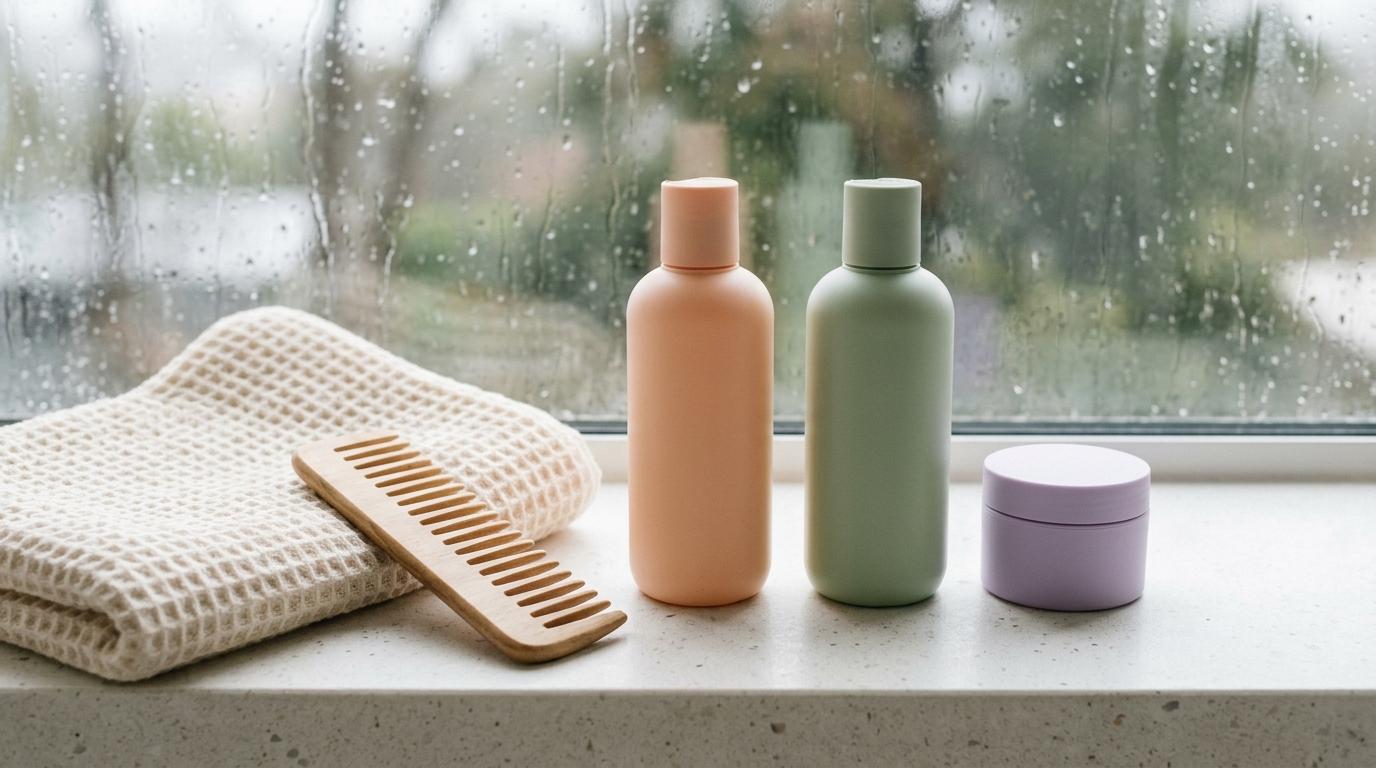
Humid weather can make hair feel like it has a mind of its own. Your scalp gets sweaty, your roots turn oily faster, your ends puff up, and even freshly washed hair can start feeling sticky sooner than usual.
The good news? You usually do not need a complicated routine. You just need to know what each product is actually meant to do.
Here is the simple version:
- Shampoo cleans your scalp.
- Conditioner softens and smooths your hair after washing.
- Hair mask gives extra care when your hair feels dry, rough, or very frizzy.
In humid weather, the trick is not to use more products. It is to use the right product in the right place.
Why Hair Feels So Difficult in Humidity
#Humidity means there is more moisture in the air. Hair, especially dry, damaged, colored, curly, or wavy hair, can absorb some of that moisture. When that happens, the hair shaft may swell slightly and the outer layer of the hair, called the cuticle, may not sit as smoothly.
That is when hair starts looking:
- Frizzy
- Puffy
- Rough
- Shapeless
- Limp
- Sticky
- Hard to manage
At the same time, your scalp may sweat more and produce oil faster. So you end up with a very annoying situation: greasy roots and dry-looking ends.
That is why humid weather haircare feels confusing. You may want to shampoo more often, but then your ends feel worse. Or you may skip conditioner because the weather already feels sticky, but then your hair gets even frizzier.
The better approach is to treat your scalp and your hair lengths differently.
- If your scalp feels oily or sweaty, use shampoo.
- If your lengths feel frizzy or tangled, use conditioner.
- If your ends feel rough, dry, or extra puffy, use a hair mask once in a while.
Simple, but it works.
Shampoo vs Conditioner vs Hair Mask: Quick Comparison
#Shampoo: For Your Scalp, Not Your Entire Hair Length
#Shampoo is your cleanser. Its main job is to clean your scalp.
In humid weather, sweat, sebum, pollution, dust, and styling products can build up quickly. This can make your roots feel greasy, flat, itchy, or heavy. Shampoo helps remove that buildup.
But shampoo does not need to be scrubbed through your full hair length every time. Your ends usually do not need aggressive cleansing. They need care.
How to Use Shampoo in Humid Weather
#- Wet your hair properly.
- Apply shampoo mainly to your scalp.
- Massage gently with your fingertips, not your nails.
- Do not pile all your hair on top of your head and scrub.
- Let the shampoo rinse through the lengths naturally.
- Rinse very well.
The goal is a clean scalp, not hair that feels squeaky, dry, or rough.
Who May Need Shampoo More Often?
#You may need to shampoo more often in humidity if:
- Your scalp gets oily quickly
- You sweat a lot
- You work out often
- You use styling products
- Your roots feel sticky or flat
- You are exposed to dust, pollution, or rainwater
Shampoo is not bad for hair. The problem is usually over-washing, harsh scrubbing, or using shampoo all over the lengths too often.
Conditioner: Your Everyday Frizz Helper
#Conditioner is not only for dry weather. In fact, conditioner can be very useful in humid weather because it helps smooth the hair and reduce frizz.
After shampooing, your hair may feel slightly rough because cleansing removes oil and buildup. Conditioner adds softness, slip, and manageability. It helps your hair feel smoother and easier to detangle.
But placement matters a lot.
Conditioner should usually go on the mid-lengths and ends, not the scalp. This is especially important if your scalp gets oily or sweaty in humid weather.
How to Use Conditioner in Humidity
#- After shampooing, gently squeeze out extra water.
- Apply conditioner from the mid-lengths to the ends.
- Use very little near the roots, or skip the root area completely.
- Leave it on for the time mentioned on the product.
- Rinse properly.
If your hair feels flat or greasy after conditioner, you may be using too much, applying it too close to the scalp, or using a formula that is too heavy for your hair type.
Should You Use Conditioner After Every Shampoo?
#For most people, yes.
If you shampoo your hair, conditioner helps bring back softness and reduces tangles. If your hair is very fine or gets limp easily, use a smaller amount only on the ends.
Skipping conditioner because the weather feels sticky can actually make frizz worse. Use less if needed, but do not automatically skip it.
Hair Mask: Extra Care, Not an Everyday Step
#A hair mask is richer than conditioner. Think of it as a deeper treatment for days when your hair needs more help.
Use a hair mask when your hair feels:
- Very dry
- Rough
- Frizzy
- Puffy
- Hard to detangle
- Dull or overworked
The biggest confusion is hair mask vs conditioner. They are not the same thing.
Conditioner is your regular after-shampoo product. A hair mask is something you use occasionally when your hair needs extra conditioning.
In humid weather, using a hair mask too often can make hair feel heavy, flat, greasy, coated, or stringy. This is especially common if you have fine hair, short hair, or an oily scalp.
How Often Should You Use a Hair Mask in Humid Weather?
#A simple guide:
- Dry, thick, curly, or wavy hair: about once a week
- Fine or oily hair: every other week, or only when needed
- Very limp hair: rarely, and only on the ends
- Healthy, soft hair: you may not need a regular mask at all
On a hair mask day, you can usually use the mask instead of conditioner. Most people do not need conditioner and a mask in the same wash unless their hair is extremely dry.
Hair Mask vs Conditioner: The Easy Difference
#Here is the easiest way to remember it:
- Conditioner = regular care
- Hair mask = extra care
Conditioner is lighter and made for frequent use. It helps with softness, detangling, and everyday frizz control.
A hair mask is usually thicker and richer. It stays on longer and gives more conditioning. It is useful when conditioner alone is not enough.
If your hair feels good with conditioner, you do not need to add a mask just because it is monsoon season. But if your ends still feel dry, rough, or puffy after conditioning, a hair mask once a week or once every other week can help.
Budget tip: if you are choosing only one after-wash product, start with conditioner. You will use it more often. Add a hair mask later only if your hair really needs it.
A Simple Humid Weather Haircare Routine
#You do not need a complicated monsoon haircare routine. Start with this.
Step 1: Check Your Scalp
#Before washing, ask yourself:
- Does my scalp feel oily?
- Did I sweat a lot today?
- Do my roots feel sticky or flat?
- Is there product buildup?
- Is my scalp clean, but my hair lengths are frizzy?
If only your lengths are frizzy, shampoo may not be the answer. Your hair may need conditioner, gentler drying, or less heat styling.
Step 2: Shampoo the Scalp
#Use shampoo when your scalp needs cleansing. Apply it mainly to the roots and massage gently.
Avoid rough scrubbing. Wet hair is fragile, and aggressive washing can make frizz worse.
Step 3: Rinse Properly
#Do not rush this step. Leftover shampoo can make your scalp feel itchy and your hair feel dull or coated.
Rinse well, especially if you have thick, curly, or dense hair.
Step 4: Use Conditioner or Hair Mask
#Choose based on what your hair needs that day.
Regular wash day:Use conditioner on the mid-lengths and ends.
Dry or extra-frizzy day:Use a hair mask on the mid-lengths and ends, usually once a week or less.
Step 5: Rinse Well Again
#Do not leave rinse-out conditioner or rinse-out hair mask in your hair unless the product clearly says it can be left in.
In humid weather, leftover heavy product can make hair feel sticky, limp, or greasy.
Step 6: Dry Gently
#Use a soft towel, microfiber towel, or cotton T-shirt. Press and squeeze the hair instead of rubbing it.
Rough towel drying creates friction and can make frizz show up faster.
Step 7: Go Easy on Heat
#Try to reduce frequent heat styling during humid weather. Heat can make hair feel drier, and dry hair often becomes more frizz-prone in humidity.
If you do use heat, use a moderate setting and avoid going over the same section again and again.
If You Have an Oily Scalp
#An oily scalp in humid weather can feel very frustrating. Your roots look greasy, but your ends still look frizzy.
The key is to keep your scalp routine light and your ends protected.
Best Approach
#- Shampoo when your scalp feels oily, sweaty, or heavy.
- Apply shampoo mainly to the scalp.
- Use a lightweight conditioner only on the lengths and ends.
- Keep hair masks away from the roots.
- Rinse everything thoroughly.
A shampoo for oily scalp should clean well without making your hair feel stripped. You do not need to use a harsh shampoo every day just because the weather is humid. Wash based on your scalp’s actual oiliness and your lifestyle.
Avoid This
#Do not apply conditioner or hair mask to your scalp to smooth the top of your hair. It can make your roots look flatter and oilier.
If the top layer of your hair is frizzy, use a small amount of product on the lengths instead of loading product near the scalp.
If You Have Dry Ends
#Dry ends can become extra dramatic in humidity. They absorb moisture unevenly, puff up, tangle, and look rough even when your scalp is clean.
Your routine should clean the scalp without drying out the lengths.
Best Approach
#- Shampoo only your scalp.
- Use conditioner after every wash.
- Apply conditioner from the mid-lengths to the ends.
- Use a hair mask once a week if your ends feel rough or brittle.
- Detangle gently while conditioner is in your hair, if that works for you.
- Dry with a soft towel or T-shirt.
If you are on a budget, buy a good conditioner first. Add a hair mask only if conditioner is not enough.
Avoid This
#Do not shampoo the full length of your hair every time just to make it feel “fresh.” This can make your ends drier, rougher, and more frizzy.
If You Have Curly or Wavy Hair
#Curly and wavy hair often reacts strongly to humidity. Frizz shows up quickly, curl shape can change, and the ends may feel dry while the scalp feels sweaty.
Your routine should focus on gentle cleansing and enough conditioning.
Best Approach
#- Shampoo the scalp when it feels oily, sweaty, dirty, or heavy.
- Use conditioner after washing for slip and frizz control.
- Use a hair mask occasionally if curls or waves feel dry, rough, or undefined.
- Avoid rough towel drying.
- Do not brush aggressively when dry if it makes your hair puff up.
Some curly or wavy routines include co-washing, which means washing with conditioner instead of shampoo on some days. This can work for some people, but it is not ideal for everyone. If your scalp feels greasy, sweaty, or coated, use shampoo.
Avoid This
#Do not skip cleansing for too long just to avoid frizz. A sweaty or oily scalp still needs cleaning when it feels dirty.
If Your Hair Gets Limp in Humidity
#Humidity does not always create big frizz. Sometimes it makes hair look flat, soft, and lifeless.
This is common if your hair is fine, straight, low-volume, or easily weighed down.
Best Approach
#- Shampoo based on scalp oil.
- Use a small amount of conditioner only on the ends.
- Use hair masks rarely.
- Choose lighter formulas when possible.
- Rinse very well.
For limp hair, the amount of product matters more than the number of products. A small amount in the right place works much better than a lot of product everywhere.
Common Mistakes to Avoid in Humid Weather
#1. Washing Every Time Your Hair Gets Frizzy
#Frizz does not always mean your hair is dirty. Sometimes it means your lengths need conditioning, gentler drying, or less heat.
If your scalp is clean, shampooing again may only make your ends drier.
2. Skipping Conditioner Because the Weather Feels Sticky
#This is very common, but it often backfires. Shampoo without conditioner can leave hair rough, which makes frizz more noticeable.
Use less conditioner if needed, but do not skip it automatically.
3. Applying Conditioner or Hair Mask to the Scalp
#In humidity, this can make roots greasy, flat, and coated. Keep richer products on the mid-lengths and ends.
4. Using a Hair Mask Too Often
#A hair mask is not just a stronger conditioner for daily use. Too much masking can make hair heavy, especially in humid weather.
5. Shampooing the Full Length Every Wash
#Your scalp needs cleansing. Your ends usually need care. Focus shampoo on the scalp and let the rinse water clean the lengths gently.
6. Not Rinsing Properly
#Leftover product can make hair feel sticky, dull, or heavy. Rinse well after shampoo, conditioner, and especially hair masks.
7. Rough Towel Drying
#Rubbing wet hair with a towel creates friction. This can make frizz worse. Press, squeeze, and be gentle.
8. Overusing Heat Styling
#Frequent high heat can make hair feel dry. In humid weather, dry hair usually becomes harder to manage.
Signs You Are Doing Too Much
#Your routine may be too heavy if:
- Your roots look oily soon after washing
- Your hair feels coated or waxy
- Your ends look stringy
- Your waves or curls lose bounce
- Your hair looks flat even when clean
- Your scalp feels uncomfortable after using products
Your routine may be too harsh if:
- Your hair feels rough after every wash
- Your ends tangle more than usual
- Your scalp feels tight after shampooing
- Your hair looks puffy but not soft
- You feel like you need a hair mask every wash just to manage your hair
Usually, the fix is not adding more products. Start by adjusting how often you wash, how much product you use, and where you apply it.
Simple Product Decision Guide
#Use Shampoo When:
#- Your scalp feels oily
- Your scalp feels sweaty
- Your roots are flat or sticky
- You used styling products
- Your scalp feels heavy from buildup
Use Conditioner When:
#- You shampooed your hair
- Your hair feels tangled
- Your lengths look frizzy
- Your ends feel dry or rough
- You want your hair to feel softer and easier to manage
Use a Hair Mask When:
#- Conditioner is not enough
- Your ends feel very dry or rough
- Your hair is thick, curly, wavy, or very frizz-prone
- Your hair feels dull, puffy, or hard to detangle
- You have not used a mask recently and your hair clearly needs extra care
Skip the Hair Mask When:
#- Your hair already feels soft
- Your scalp is very oily
- Your hair gets limp easily
- You used a rich conditioner and your hair feels fine
- Your hair feels coated or heavy
Budget-Friendly Humid Weather Haircare
#You do not need a shelf full of products for monsoon haircare.
If you are buying only the basics, choose:
- A shampoo that suits your scalp
- A conditioner that suits your hair lengths
- A hair mask only if your hair often feels dry, rough, or frizzy even after conditioner
For many people, shampoo and conditioner are enough. A hair mask is helpful, but it is not mandatory for every hair type.
Also, use less product than you think. In humid weather, too much product can make hair feel sticky and heavy very quickly.
Related AllBlogs Reads
#If you are building a simple humid-weather routine, you may also find these AllBlogs guides useful:
- Leave-In Conditioner vs Hair Serum vs Hair Oil for frizz control after washing
- Dry Shampoo vs Hair Perfume vs Scalp Mist for sweaty hair days
- How Often Should You Wash Hair in Humid Weather? for wash-day timing
Safety Note
#This article is for everyday cosmetic haircare, not medical advice.
If you have persistent scalp itching, redness, burning, swelling, painful bumps, unusual flaking, or a reaction after using a product, stop using the product and speak to a dermatologist. If scalp symptoms keep coming back, it is better to get proper guidance instead of trying random products.