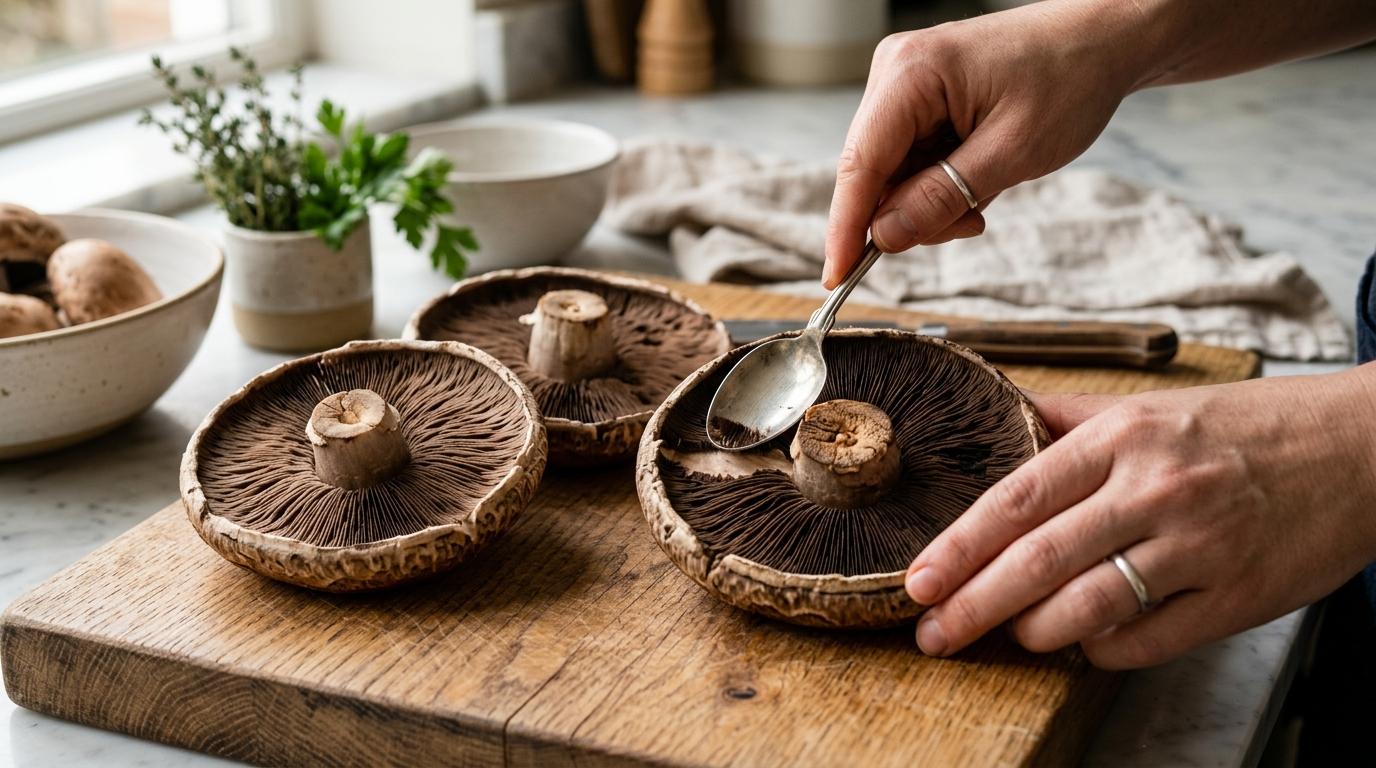
If you’ve ever flipped over a big portobello mushroom and stared at those dark, feathery lines underneath, you’ve probably had the same thought most of us have at some point:
Am I supposed to remove these?
The short answer: usually, no.
Mushroom gills are edible. They’re not dangerous, and for most everyday cooking, you can leave them right where they are. That said, there are a few times when scraping them out makes sense, especially with large portobello mushrooms.
Think of it less as a food safety rule and more as a cooking choice. Sometimes the gills add flavor. Sometimes they make a dish look darker, wetter, or a little messier than you want.
Here’s how to know the difference.
Quick Answer
#You usually do not need to remove mushroom gills before cooking. The gills on common grocery store mushrooms like white button, cremini, portobello, and oyster mushrooms are edible as long as the mushrooms are fresh.
The main mushroom where gills become a real decision is the portobello. Mature portobello mushroom gills are dark, loose, and much more noticeable than the tiny gills on button or cremini mushrooms.
You may want to scrape them out if you’re making:
- Stuffed portobello mushrooms
- Creamy pasta
- Risotto
- Pizza or flatbread
- Light-colored sauces
- Any dish where you want less moisture or a neater look
You can leave them in for:
- Sautéed mushrooms
- Grilled portobellos
- Roasted mushrooms
- Soups and stews
- Mushroom gravy
- Dark sauces
- Everyday cooking where appearance is not a big deal
In other words, if the dish is rustic, dark, or hearty, don’t stress about the gills. If the dish is pale, creamy, delicate, or stuffed, scraping them can help.
What Are Mushroom Gills?
#Mushroom gills, also called lamellae, are the thin ribs underneath the cap of some mushrooms.
Despite the name, they’re not like fish gills. Mushrooms don’t use them to breathe. Their job is to hold and release spores, which is why the gills on mature mushrooms can look dark, dusty, or almost black.
That dark color is the main reason cooks sometimes remove them. The gills themselves are not bad. They can just affect the final dish by:
- Darkening sauces
- Releasing moisture
- Adding a stronger earthy flavor
- Making stuffed mushrooms a little crowded
- Giving some dishes a muddier look
This is most noticeable with big portobello mushrooms.
Portobello vs. Button vs. Cremini Mushrooms
#Here’s where things get interesting: white button mushrooms, cremini mushrooms, and portobello mushrooms are all the same species, Agaricus bisporus. They’re just harvested at different stages.
That’s why their gills look so different.
White Button Mushrooms
#White button mushrooms are picked young. Their caps are usually closed or only slightly open, so the gills are hidden, pale, and tight.
You almost never need to remove the gills from button mushrooms. Honestly, it would be more trouble than it’s worth. You’d probably damage the mushroom before you improved anything.
Just clean them, slice or quarter them, and cook.
Cremini Mushrooms
#Cremini mushrooms, also called baby bellas, are a little more mature than white button mushrooms. Their caps are brown, and the gills may be slightly visible.
For most recipes, leave them alone. Cremini gills are small, edible, and usually not dark enough to cause problems.
Portobello Mushrooms
#Portobellos are the mature version. Their caps are large and open, and the gills are fully exposed.
This is the one where removing the gills can actually make a difference. Portobello gills are darker, softer, and more likely to release color and moisture into your food.
You don’t have to scrape them, but it’s often worth doing depending on the recipe.
Oyster Mushrooms
#Oyster mushrooms have soft gills that run from the cap down toward the stem. They’re tender and completely edible.
There’s really no reason to remove oyster mushroom gills. Just trim any tough stem ends if needed.
When to Keep Mushroom Gills
#Most of the time, keeping the gills is the easiest and best choice. It saves time, reduces waste, and keeps more mushroom flavor in your dish.
Here’s when to leave them alone.
1. You’re Cooking Button or Cremini Mushrooms
#For button and cremini mushrooms, the gills are small and mild. They don’t usually affect the look or texture of the dish in any major way.
Slice them, quarter them, or cook them whole. No scraping needed.
2. You’re Making a Dark or Hearty Dish
#If the dish is already dark, rich, or rustic, the color from mushroom gills usually won’t matter.
Keep the gills for dishes like:
- Mushroom gravy
- Beef stew
- Vegetable stew
- Dark soups
- Braised dishes
- Brown sauces
- Sautéed mushrooms
- Roasted mushroom sides
In these recipes, the gills blend right in and add that deep, earthy mushroom flavor.
3. You’re Grilling or Roasting Portobello Caps
#If you’re grilling a portobello for a sandwich, burger, or simple side dish, you can absolutely leave the gills in place.
They soften as the mushroom cooks and add a rich, savory flavor. Some people really like the stronger taste.
That said, if you prefer a cleaner flavor or don’t love the dark color, scrape them out. Grilled portobellos work either way.
4. You Don’t Want to Waste Food
#If you’re cooking a simple weeknight meal, the gills probably aren’t worth worrying about.
Unless they’re going to make your dish watery, dark, or crowded, leaving them in is perfectly fine.
For more on cleaning mushrooms without making them soggy, see our guide on how to clean mushrooms before cooking.
When to Scrape or Remove Mushroom Gills
#There are definitely times when removing the gills is helpful. This is mostly true for large portobello mushrooms, not smaller mushrooms.
Here’s when scraping makes sense.
1. Remove Gills for Light-Colored Sauces
#This is one of the biggest reasons to scrape portobello gills.
Dark gills can turn pale sauces gray or muddy-looking. The dish may still taste good, but it might not look very appetizing.
Scrape the gills if you’re making:
- Creamy pasta
- Risotto
- White wine sauce
- Alfredo-style dishes
- Light broths
- Cream soups where you want a pale color
If appearance matters, remove the gills first.
2. Scrape Gills for Stuffed Portobellos
#If you’re making stuffed portobello mushrooms, scraping the gills gives you more room for the filling.
It also helps with texture. Portobellos release moisture as they cook, and the gill area can hold onto some of that liquid. Removing the gills makes the cap feel cleaner and less crowded.
You’ll usually get a neater, better-filled mushroom.
3. Remove Gills for Pizza or Flatbread
#Portobellos can give off a lot of moisture in the oven. On pizza or flatbread, that can lead to a softer crust or watery toppings.
Scraping out the gills can help, especially if the portobello is large, dark, or thickly sliced.
It won’t remove all the moisture, but it can make a difference.
4. Scrape Gills for a Milder Flavor
#Portobello gills have a stronger, earthier flavor than the cap. Some people love that. Others find it a bit too intense or even slightly bitter.
If you want a milder mushroom flavor, scrape them out.
How to Remove Mushroom Gills With a Spoon
#You don’t need any special tools. A regular spoon works better than a knife because it’s gentle and less likely to cut through the mushroom cap.
Here’s how to scrape mushroom gills:
- Clean the mushroom first. Wipe away dirt with a damp towel or clean it the way you normally do.
- Remove the stem. Hold the portobello cap in one hand and gently twist the stem until it comes loose. If the stem is firm and fresh, save it for stock, soup, or stuffing.
- Hold the cap gently. Place the mushroom in your palm with the gills facing up. Try not to press it hard against a cutting board, since large caps can crack.
- Use a small spoon. A teaspoon usually works well. Avoid using a knife if you can, since it can slip or cut too deeply.
- Scrape from the center outward. Start near the center where the stem was attached. Gently drag the edge of the spoon toward the outer edge.
- Rotate as you go. Turn the mushroom and keep scraping until most of the dark gills are gone.
- Don’t overdo it. You only need to remove the loose, dark gill layer. You’re not trying to carve out the whole underside of the mushroom.
The gills should come off in soft, papery bits. If the cap starts tearing, use a lighter touch.
Food Safety: Are Mushroom Gills Safe to Eat?
#Yes, mushroom gills are safe to eat as long as the mushroom itself is fresh.
Dark gills do not automatically mean a mushroom has gone bad. With portobellos, dark brown gills are completely normal. They just mean the mushroom is mature.
What matters more is the overall condition of the mushroom.
Throw mushrooms away if you notice:
- Slimy or sticky gills
- Mushy texture
- Sour, fishy, or ammonia-like smell
- Wet or collapsed spots
- Strange discoloration
- Mold
Fresh mushrooms should smell mild and earthy. If they smell sharp, sour, rotten, or just “off,” don’t try to save them by scraping the gills. Toss them.
Removing the gills does not make a spoiled mushroom safe. It only changes the look, texture, and flavor of a fresh mushroom.
If you’re wondering about uncooked mushrooms, read our guide on can you eat raw mushrooms safely.
Zero-Waste Uses for Mushroom Gills and Stems
#If you scrape out portobello gills or remove the stems, you don’t always have to throw them away.
As long as the mushroom is fresh, those scraps can still add flavor to dishes where the dark color doesn’t matter.
Mushroom Stock
#Save scraped gills and firm stems in a freezer bag. When you have enough, simmer them into mushroom stock or vegetable stock.
This is one of the best uses because the dark color is actually a good thing in stock.
Gravy or Brown Sauce
#Finely chop the stems and gills, then cook them down before adding them to gravy or a brown sauce.
They bring extra mushroom flavor without making the dish look odd.
Soup Base
#Use mushroom scraps in blended mushroom soup or dark vegetable soup. Since everything cooks down or gets blended, the uneven texture won’t matter much.
Stuffing or Filling
#Firm mushroom stems can be chopped and added to fillings. Scraped gills can work too, but they’re best in darker fillings where their color and soft texture won’t stand out.
Simple Mushroom Prep Guide by Dish
#Still not sure what to do? Here’s the quick version.
For Sautéed Mushrooms
#Keep the gills. Slice and cook as usual.
For Creamy Pasta or Risotto
#Scrape large portobello gills if you want the sauce to stay light. Leave button and cremini gills alone.
For Stuffed Portobellos
#Scrape the gills. You’ll get more space for filling and a cleaner texture.
For Grilled Portobellos
#Either option is fine. Keep the gills for a stronger, earthier flavor. Scrape them for a milder taste and cleaner look.
For Pizza or Flatbread
#Scrape portobello gills, especially if the mushroom is large and dark. Keep the gills on smaller mushrooms.
For Oyster Mushrooms
#Do not scrape them. Just trim any tough ends.
Final Takeaway
#So, should you remove mushroom gills? Most of the time, no.
Leave them on button, cremini, and oyster mushrooms. Leave them on portobellos when you’re grilling, roasting, sautéing, or making something dark and hearty.
Scrape the gills from large portobellos when you want a cleaner look, less moisture, more room for filling, or a milder flavor.
It’s not a safety rule. It’s just a prep choice. Once you know what the gills do, it becomes easy to decide when they matter and when they really don’t.