The first night in a hotel is weirdly fragile
#Hotel sleep can be lovely in theory: fresh sheets, no laundry staring at you, maybe room service, maybe a city view. And then reality walks in wearing hard shoes at 1:17 a.m. The hallway door slams, the tiny fridge starts humming like it has a personal grudge, the curtains leak a blade of streetlight right across your face, and the thermostat seems to believe “Arctic conference room” is a personality. If you travel often, you already know this. If you don’t, it can feel surprisingly upsetting because sleep is not just comfort, it’s health support. Adults generally need around 7 or more hours of sleep, according to public health guidance from groups like the CDC, and even one rough night can affect mood, alertness, appetite cues, and how patient you feel with the world the next morning.
This checklist is not about chasing perfect sleep. Perfect is a bit unrealistic in a room you’ve never seen before, next to strangers, with an air conditioner you need a small engineering degree to understand. The goal is more practical: reduce the obvious sleep disruptors before they become a 3 a.m. problem. Noise, light, and temperature are the big three, but food timing, stress, medications, alcohol, jet lag, pain, allergies, sleep apnea, and anxiety can matter too. If poor sleep is severe, keeps happening, feels unusual for you, or comes with symptoms like breathing pauses, chest discomfort, confusion, severe mood changes, or extreme daytime sleepiness, it’s worth asking a qualified healthcare professional for personal advice.
A quick room scan before you unpack
#Before the suitcase explodes across the floor, take two minutes to inspect the room like a sleepy detective. This sounds fussy, but it saves effort later when your brain is foggy and you’re half annoyed. Stand quietly near the bed. Listen. Look for light leaks. Feel the air. Check whether the thermostat actually responds. Notice whether the room faces a busy road, elevator bank, pool deck, event space, ice machine, bar, loading dock, or a door that bangs shut. Hotels are full of tiny sleep traps, and most are easier to handle before bedtime.
- Check the door gap. A surprising amount of hallway light and noise comes from that skinny space under the door.
- Look at the curtains from the bed, not from the window. Streetlights and sunrise often sneak in at odd angles.
- Listen for mechanical noise: mini-fridge buzzing, HVAC clicking, bathroom fan rattling, elevator rumble, or plumbing sounds from nearby rooms.
- Test the thermostat early. Some hotel systems need 20 to 30 minutes before you can tell what they’re doing.
- Confirm basic safety first: smoke detector visible, exits understood, no cords or towels placed where they could become a fire or trip risk.
If something is clearly wrong, call the front desk early and politely. A room change at 7 p.m. is usually less painful than a room change after midnight. Ask for specifics rather than making a vague complaint: “Is there a room away from the elevator and ice machine?” works better than “this room is bad.” If you’re sensitive to noise, a higher floor can help with street noise, though not always with rooftop equipment. If you’re sensitive to heat or cold, ask whether the hotel has central climate control or individual room control. Some older buildings have limits that are not obvious until you’re already in pajamas.
Noise fixes that don’t make the room unsafe
#Noise is one of the most common hotel sleep complaints, and it’s not just “being picky.” Environmental noise can cause brief awakenings and lighter sleep even when you don’t fully remember waking up. The World Health Organization has long treated nighttime noise as a public health concern, especially when exposure is repeated. In hotel terms, that means traffic, music, luggage wheels, elevators, housekeeping carts, air systems, and the mysterious person who must discuss breakfast plans very loudly outside your door.
Pack a tiny sound kit
#A simple sound kit can be small enough to live in your toiletries pouch. Soft foam earplugs are cheap and effective for many people, but they need to be inserted properly and they aren’t ideal for everyone. People with ear infections, ear pain, certain ear conditions, or ear tubes should ask a clinician before using them. Noise reduction ratings on earplugs are measured in lab conditions, so real-life results vary. Still, even partial muffling can take the sharp edge off hallway bangs and traffic.
A white noise app, fan sound, or small travel sound machine may help cover irregular noises. Keep the volume moderate. Louder is not always better, and blasting sound near your head all night is not a wellness win. If you use a phone app, put the phone across the room or face-down, and use airplane mode if you can. For families, be extra careful with sound machine volume around babies and young children. Pediatric guidance has warned that some devices can be too loud when placed close to a child’s head, so distance and volume matter.
Use the room itself as a buffer
#Move what you can, within reason. A rolled towel at the bottom of the door can reduce light and a little sound, as long as it does not block airflow needed for safety or create a tripping hazard. Soft items absorb some noise, so closing the bathroom door, closet door, and heavy curtains can help. If the mini-fridge is the villain, ask the front desk if it can be swapped, serviced, or unplugged. Do not unplug it if you’re storing medication, breast milk, or food that needs refrigeration. Also, don’t mess with smoke detectors, sprinklers, or electrical panels. No night of sleep is worth making the room unsafe.
If your hotel night routine includes food delivery, plan it so it doesn’t sabotage your wind-down. Lobby calls, driver confusion, reheating smells, leftovers, and packaging trash can keep your room feeling busy when your body needs boring. This guide on Food Delivery to Hotels: Safety, Lobby Handoffs & Leftovers fits nicely into that practical side of sleep prep, because a calm handoff and safe leftover plan can prevent a lot of late-night faff.
Light fixes: make the room boringly dark
#Light is a powerful sleep cue. Evening light, especially bright light, can delay the body’s natural sleep timing by affecting melatonin release and circadian rhythm. You don’t need to become afraid of every LED dot, but a hotel room often has more sneaky lights than a normal bedroom: thermostat screen, TV standby light, microwave clock, smoke detector blink, hallway light, bathroom nightlight, alarm clock, charging bricks, city signs, and curtain gaps. The fix is not glamorous. It’s mostly covering, turning, clipping, and choosing the least annoying option.
The curtain gap problem
#Hotel blackout curtains are famous for almost doing their job. The center gap is the classic issue. A trouser hanger with clips from the closet can pinch curtains together. So can a couple of binder clips if you travel with them. If the light leaks from the side, pull a chair or spare pillow gently against the curtain edge, but avoid placing anything on heaters, vents, lamps, or electronics. Heat plus fabric is a bad combination. If you wake easily at dawn, an eye mask may be the simplest fix. Look for one that doesn’t press hard on the eyes, especially if you have eye conditions, recent eye surgery, or migraines that are triggered by pressure.
Device light and the “just one email” trap
#The room can be perfectly dark and still lose to a phone screen. Travel tends to create little excuses: checking the next day’s booking, answering one message, scrolling because the room feels unfamiliar. Completely normal, but not helpful. Sleep medicine groups commonly recommend a wind-down period and reducing bright screens before bed. If you need your phone for alarms, set it early, dim the screen, turn on night mode, and place it out of arm’s reach. If anxiety about missing an alarm keeps you awake, ask for a hotel wake-up call as backup. Old-school, yes. Useful, also yes.
Cover tiny LEDs with a sticky note, a piece of removable tape, or a towel placed safely away from heat sources. Do not cover smoke detectors or emergency lighting. Also, don’t remove batteries from hotel clocks or safety devices unless staff tells you to. If an alarm clock is glowing like a spaceship, turn it away from the bed or unplug it only if it’s a normal clock and not part of a hotel system. When in doubt, ask.
Temperature: the hotel thermostat is not always telling the truth
#Temperature may be the most underrated hotel sleep issue. A room can look peaceful but feel subtly wrong all night. Sleep researchers often describe a cooler bedroom as more sleep-friendly, and many sleep health resources suggest a rough range around 60 to 67°F, or about 16 to 19°C, for adults. That is not a rule for every body. Older adults, babies, people with certain medical conditions, and people taking medications that affect temperature regulation may need a different range. The safer idea is this: aim for comfortably cool, not shivering, not sweaty, and adjust based on your own health needs.
| Problem | Quick hotel-room fix | Safety note |
|---|---|---|
| Room feels too warm | Lower thermostat early, close curtains against sun, use lighter bedding, ask for a fan if available | Avoid sleeping directly in a strong cold draft if it irritates your throat, skin, or breathing |
| Room feels too cold | Raise thermostat early, add blanket, wear socks or layers, ask for extra bedding | Do not use unsafe heating devices or place fabric over heaters |
| Air feels dry | Sip water, use saline spray if you already tolerate it, keep room not overly hot | A hot shower for steam may help comfort briefly, but avoid slippery floors and very hot water |
| HVAC is loud | Try fan-only mode, auto mode, or ask staff if another room is quieter | Do not block vents completely, especially with bedding or clothing |
| Temperature swings | Set a moderate point and wait, then adjust slowly | Big thermostat changes can overshoot in some systems |
One annoying thing: hotel thermostats can be decorative liars. Some are motion-controlled, some are centrally limited, some reset when you leave the room, and some blast cold air for ten minutes then do nothing. If you’re traveling for an early meeting, medical appointment, exam, or long drive, don’t wait until bedtime to discover the system. Test it while you shower, unpack, or answer messages. If it doesn’t work, call the desk and be clear: “The room is staying at 25°C even though the thermostat is set lower. Could someone check it, or is another room available?”
The pre-trip sleep kit, because future-you deserves mercy
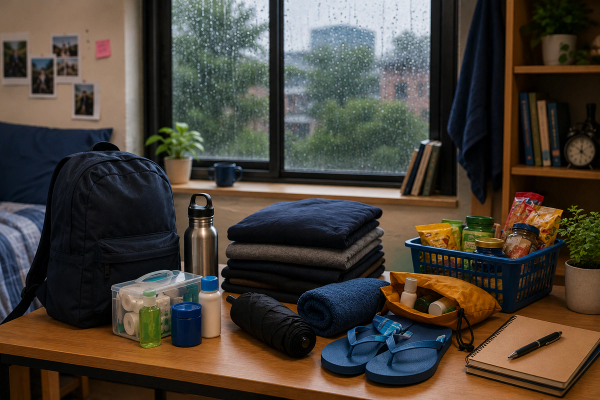
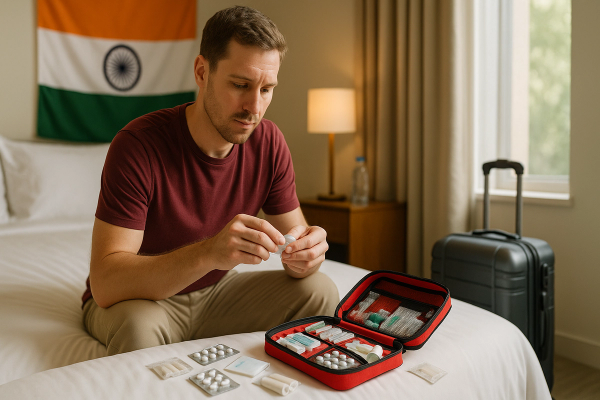
#A small kit can make hotel sleep less dramatic. It does not need to be fancy or expensive. Think of it like a first-aid kit for comfort, not medical treatment. If you already pack medications, glasses, chargers, travel insurance papers, and basic health supplies, add the sleep items beside them. Travelers planning bigger trips may also find it useful to think about sleep tools as part of a broader health-prep list, alongside practical planning like India Travel Insurance vs Medical Kit: What to Prepare, especially when crossing time zones or visiting places where replacement items may not be easy to find.
- Earplugs in a small case, plus a backup pair because they vanish into carpets like magic.
- A comfortable eye mask, ideally one you’ve tried at home before the trip.
- Two binder clips or a lightweight curtain clip for blackout curtain gaps.
- A charging cable long enough to keep the phone away from the pillow.
- Any prescribed sleep or breathing equipment you use, such as CPAP supplies, packed with adapters if needed.
- A simple layer: socks, light hoodie, or breathable sleepwear, because hotel bedding is either cloud heaven or plastic-wrapped chaos.
Be cautious with sleep supplements or medications when traveling. Melatonin may help some people with certain circadian timing issues, such as jet lag, but dose, timing, side effects, and interactions matter. Sedating antihistamines, alcohol, cannabis products, or prescription sleep medicines can impair alertness, increase fall risk, worsen breathing problems in some people, or interact with other medications. If you have sleep apnea, are pregnant, are older, have liver or kidney disease, take other medicines, or care for a child, ask a qualified healthcare professional before using sleep aids. Natural does not automatically mean safe.
Your hotel-night routine matters more than you think
#Noise, light, and temperature get most of the blame, but the body is not a machine with three buttons. The evening routine matters too. Heavy meals, late caffeine, alcohol, intense work calls, stressful messages, and rushing straight from bright lobby to bed can all keep the nervous system switched on. Caffeine can affect sleep for hours, and people vary a lot in how quickly they metabolize it. Alcohol may feel sedating at first, but it can fragment sleep later in the night and worsen snoring or breathing issues for some people.
Food is another sneaky one. If someone has reflux, acidity, or a sensitive stomach, a heavy late dinner can feel like “bad hotel sleep” when the real trigger is digestion. Warm destinations and late travel schedules can make this more likely. For Indian travelers, or anyone who enjoys Indian food but wants a lighter night meal, Best Indian Dinners for Acidity in Summer: Light Night Meal Ideas is a useful read before blaming only the pillow or AC. General advice often includes leaving some time between dinner and lying down, choosing lighter portions at night, and getting medical guidance if reflux is frequent, severe, or worsening.
A realistic 30-minute wind-down
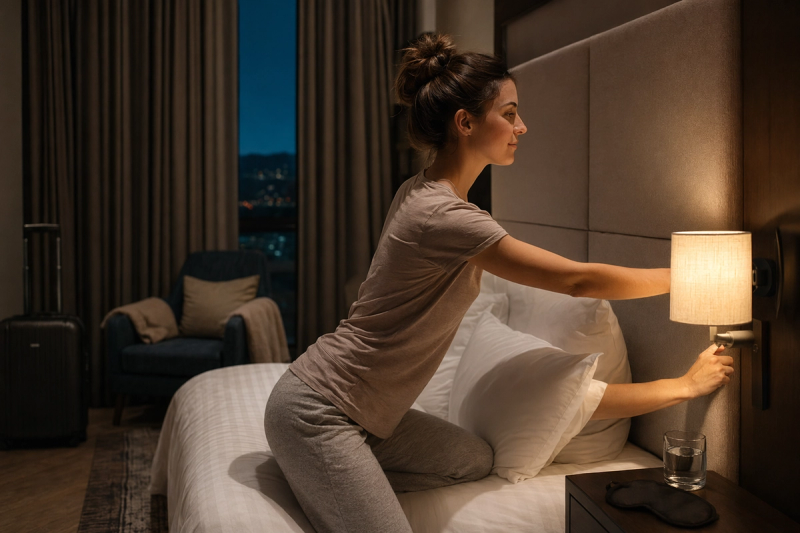
#Try a wind-down that is almost boring. That’s the point. Set tomorrow’s clothes out. Put documents, keys, wallet, medication, and water in one predictable place. Adjust the thermostat. Close curtains. Place the towel by the door gap if needed. Set alarms. Plug in devices away from the bed. Brush teeth. Then do something low-stimulation: read a few pages, stretch gently if that is safe for your body, breathe slowly, or listen to calm audio at a low volume. If you are wide awake after a while, sleep specialists often suggest getting out of bed briefly and doing a quiet activity in dim light until sleepy, rather than turning the bed into a frustration zone.
Special situations: kids, older adults, shift workers, and medical needs
#Not everyone is trying to sleep under the same conditions. Babies and young children need safe sleep setups that follow pediatric guidance, not improvised hotel hacks. Avoid loose bedding for infants, keep sleep surfaces appropriate, and ask the hotel ahead of time about cribs or pack-and-plays. Older adults may be more sensitive to unfamiliar rooms, nighttime bathroom trips, temperature changes, and fall risks. A dark room is good, but not so dark that someone trips. A small bathroom light with the door mostly closed, or a safe low nightlight, may be better than total darkness for some travelers.
People using CPAP machines or other medical devices should check outlet access before bedtime and keep equipment clean and positioned safely. If you rely on refrigerated medication, confirm fridge function early and consider a thermometer if temperature stability is important. If allergies or asthma are an issue, ask about hypoallergenic bedding, fragrance-free rooms when available, and whether windows open. Hotel air fresheners, dust, mold, and pet dander can bother some people. Severe breathing symptoms, wheezing that does not improve as expected, swelling, or signs of an allergic reaction need prompt medical attention.
Shift workers and jet-lagged travelers may need more deliberate light timing. Morning light can help anchor the body clock for many people, while bright light late at night may push sleep later. But circadian strategies can get complicated, especially for people with bipolar disorder, significant insomnia, or complex medical histories. If sleep timing is a recurring health or work problem, a clinician or sleep specialist can provide safer, more personal guidance than random internet rules.
When the room is bad and you need to advocate for yourself
#Sometimes the right answer is not another hack. It’s asking for help. If a room is next to a wedding party, smells strongly of smoke or chemicals, has broken climate control, visible mold, unsafe wiring, bedbugs, or a door that doesn’t lock properly, contact the front desk. Calm, specific language helps. Take photos if there is a safety or cleanliness issue. Ask what options exist: repair, room change, refund, or relocation. If you have a disability or medical need, explain the functional issue rather than over-sharing private health details. For example: “I need a quieter room away from elevator noise because I have a health-related sleep need” may be enough.
A hotel sleep checklist should reduce stress, not add a new perfection project. Fix what you can, ask for help when needed, and don’t blame yourself for being affected by a difficult sleep environment.
The actual checklist: noise, light, temperature, then body cues
#Here’s the simple version to run through before bed. First, noise: earplugs ready, white noise at a safe moderate volume if using it, doors closed, fridge checked, front desk contacted if the room is clearly unreasonable. Second, light: curtains clipped, screens dimmed, LEDs covered safely, eye mask nearby, bathroom light plan sorted if you need nighttime visibility. Third, temperature: thermostat tested, bedding adjusted, socks or lighter layers chosen, vents unblocked, extra blanket or fan requested early. Fourth, body cues: caffeine cut off at a sensible time for you, alcohol kept modest or avoided if it disrupts your sleep, dinner not painfully heavy, medications taken only as directed, and tomorrow’s essentials placed where you won’t hunt for them at midnight.
And finally, give yourself some grace. A hotel is unfamiliar, and the first night effect is real enough that sleep researchers have studied how people may sleep differently in new environments. You may not get your best sleep, but you can often get better sleep with a few practical fixes. If poor sleep becomes persistent, if you’re regularly exhausted despite enough time in bed, or if someone notices loud snoring, choking, or pauses in breathing, seek medical advice. For the ordinary hotel night, though, start with the basics: quieter, darker, cooler, calmer. That’s usually the best checklist. For more travel-health and wellness guides with a practical angle, have a browse around AllBlogs.in.