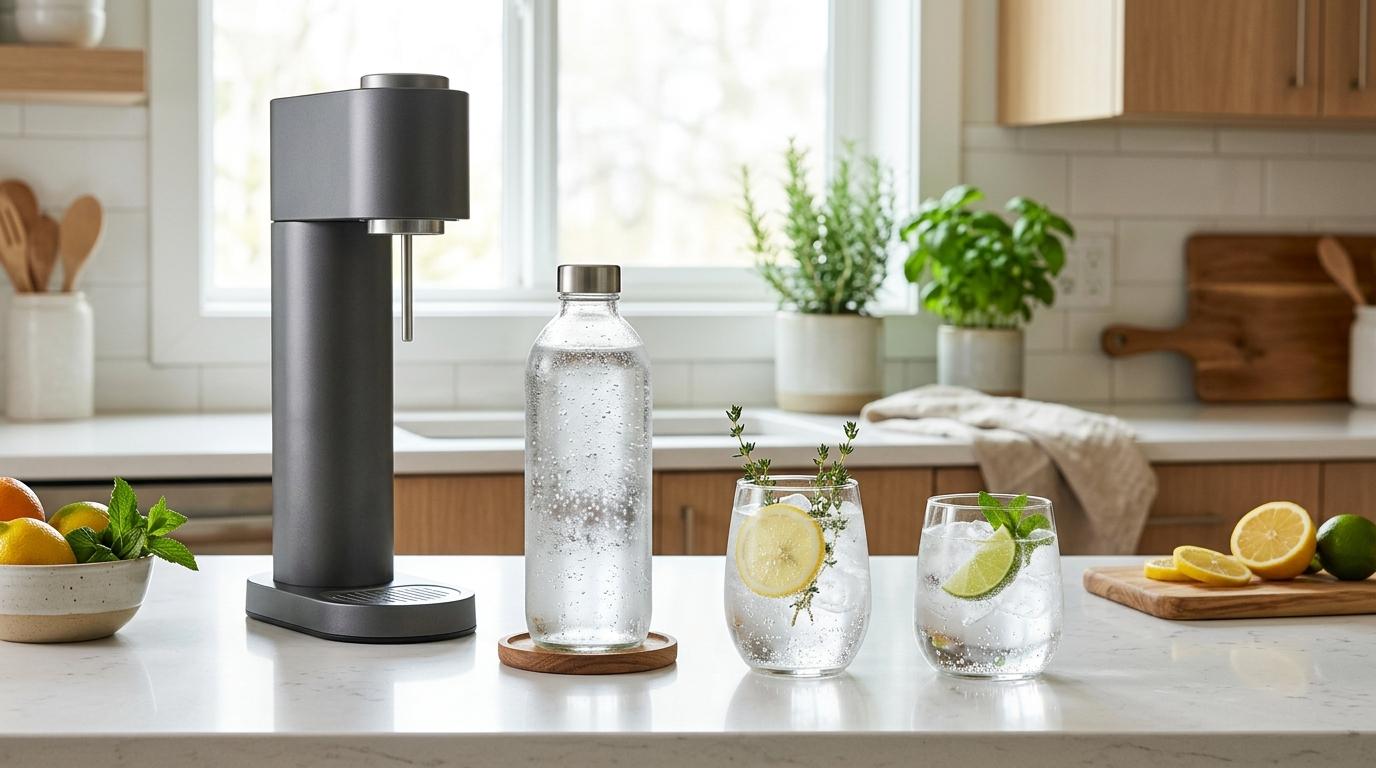
If you make mocktails, spritzes, or fizzy drinks a few times a week, a soda maker is probably worth it. You get bubbles whenever you want them, you can make the fizz as gentle or as punchy as you like, and you do not have to keep hauling bottles home from the store.
But if sparkling water is more of an occasional thing for you, like for a dinner, a weekend drink, or a small get-together, bottled sparkling water or club soda is the easier choice. There is no machine to buy, no setup, no CO2 refills to remember, and nothing permanent taking up space in your kitchen.
Quick Summary
#- Soda maker: best for regular mocktail makers, daily sparkling water drinkers and frequent hosts. The main advantage is fresh fizz on demand with adjustable carbonation. The main drawback is the upfront cost, CO2 refill routine and counter or cabinet space.
- Bottled sparkling water: best for occasional drinkers, mineral water fans and one-off hosting. The main advantage is zero equipment and predictable taste. The main drawback is storage, carrying weight and repeat packaging.
- Club soda: best for quick mocktails, simple mixers and casual home bars. The main advantage is a crisp mixer-style taste with no setup. The main drawback is that it is not customizable and can feel wasteful if you use it constantly.
Who This Is For
#This guide is for anyone building a simple home mocktail setup and wondering whether fizzy water deserves its own machine. It is especially useful if you make non-alcoholic mojitos, spritz-style drinks, citrus coolers, dessert drinks, or party pitchers often enough to think about buying dedicated gear.
Why the Fizz Matters in Mocktails
#A good mocktail needs more than juice, syrup, and a pretty garnish. It needs lift.
In cocktails, alcohol adds heat, bite, and body. In non-alcoholic drinks, carbonation often does a lot of that work instead. It wakes up citrus, makes herbs taste fresher, cuts through sweetness, and gives the whole drink a more finished, grown-up feel.
That is why the soda maker vs bottled sparkling water question actually matters if you are building a home mocktail bar. You are not just choosing fizzy water. You are deciding how often you want bubbles available, how much control you want over your drinks, and how much kitchen clutter you are willing to put up with.
Soda Maker vs Bottled Sparkling Water: The Main Comparison
#1. Cost Over Time
#Bottled sparkling water is very easy at first. You buy it, chill it, open it, and pour. If you only need it once in a while, that convenience is hard to beat.
But if you drink sparkling water every day, or you make mocktails often, the cost can start to sneak up on you. A soda maker costs more upfront, then you pay for CO2 cylinder refills or exchanges. Many standard CO2 cylinders are designed to carbonate around 60 liters of water, although the real number depends on how bubbly you like your drinks.
A simple way to think about it:
- Occasional use: bottled sparkling water or club soda usually makes more sense.
- Frequent use: a soda maker can save money over time.
- Heavy use: a soda maker is usually the more practical long-term choice.
That said, a soda maker is not automatically cheaper for everyone. If you buy one and it ends up sitting in a cabinet after two weeks, it was not a bargain.
2. Convenience
#This is where the difference really shows up.
With bottled sparkling water, you have to remember to buy it. Then you have to carry it home, find somewhere to store it, chill it, and deal with the empty bottles or cans. If you are hosting, you also have to guess how much you will need. Buy too little and you run out. Buy too much and half your fridge is taken over by leftover bottles.
With a sparkling water maker, you need space for the machine and at least one CO2 cylinder. But once it is set up, you can make sparkling water whenever you want. That is especially useful when someone asks for another lime soda, a non-alcoholic mojito, or a quick spritz-style drink.
Neither option is perfect. Bottles are simple. Machines become convenient once they are part of your routine.
3. Fizz Control for Mocktails
#This is one of the best reasons to use a soda maker for mocktails.
Not every drink wants the same level of bubbles.
A light citrus cooler may taste best with soft, gentle carbonation. A mint and lime drink might need stronger fizz to push through the syrup and muddled herbs. A creamy or dessert-style mocktail may only need a little sparkle, otherwise it can start to taste sharp or awkward.
Bottled sparkling water gives you whatever carbonation is already in the bottle. Club soda has that classic bar-mixer feel, which is useful, but it is still not adjustable. A soda maker lets you dial the carbonation up or down, depending on the model.
If you like experimenting with drinks, that control is genuinely helpful.
4. Taste
#A soda maker carbonates the water you put into it. So if your tap water tastes good, your sparkling water will probably taste good. If your tap water tastes like chlorine, metal, or old pipes, carbonation will not magically fix it.
For the best flavor, use cold filtered water.
Bottled sparkling water can taste different because of its source, mineral content, and carbonation style. Some people love that. Club soda usually has added minerals, which give it a slightly salty, sharper taste that works really well in mocktails.
So if you love a particular bottled mineral water, a soda maker may not replace it exactly. It is better at making fresh seltzer than recreating a specific mineral water.
5. Storage and Kitchen Space
#This is easy to forget until you are staring at a case of sparkling water on the floor.
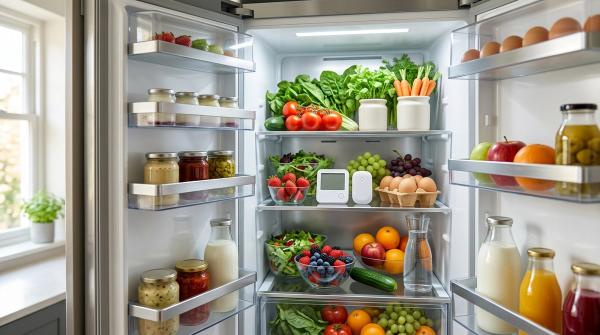
Bottled sparkling water takes up pantry, fridge, or garage space. Multipacks are bulky. Glass bottles look nice, but they are heavy and annoying to move around.
A soda maker takes up space too. It usually lives on the counter or in a cabinet, and you also need room for reusable bottles and CO2 cylinders.
If your kitchen is small, ask yourself which would bother you less: seeing a machine every day, or constantly finding space for bottles.
6. Waste and Packaging
#A soda maker can cut down on single-use bottles and cans, especially if sparkling water is something you drink often. One CO2 cylinder can replace a lot of individual bottles, depending on how fizzy you make your water.
Bottled sparkling water and club soda create packaging every time you buy them. Some of it may be recyclable where you live, but it still has to be made, shipped, collected, and processed.
If reducing packaging matters to you, a soda maker has a clear advantage for regular use.
Who Should Buy a Soda Maker?
#A soda maker is worth considering if any of these sound like you.
You Drink Sparkling Water Often
#If sparkling water is part of your daily routine, a machine makes sense. You will probably use it enough to justify the cost and the space.
You Make Mocktails Regularly
#If your home mocktail bar actually gets used, a soda maker gives you more flexibility. You can make fresh sparkling water for citrus drinks, herb drinks, fruit coolers, non-alcoholic spritzes, and lighter dessert drinks.
You Like Controlling the Fizz
#Some people like soft bubbles. Other people want carbonation that almost bites back. If that matters to you, bottled sparkling water can feel limiting.
You Want Fewer Bottles at Home
#If you are tired of carrying bottles home, storing them, and recycling them, a soda maker can remove a lot of that hassle.
You Host Often
#If people come over regularly, being able to make sparkling water on demand is handy. You do not have to guess how many bottles to buy every time.
Who Should Skip a Soda Maker?
#A soda maker is not the right choice for everyone.
You Only Need Fizz Occasionally
#If you make mocktails a few times a year, bottled sparkling water or club soda is probably the better option. You avoid the machine cost, the CO2 refill system, and the extra storage.
You Have Very Limited Kitchen Space
#If every inch of counter or cabinet space already matters, another appliance may get annoying fast.
You Love a Specific Bottled Mineral Water
#A soda maker will not recreate the exact mineral profile of your favorite bottled sparkling water. It carbonates the water you give it, and that is pretty much it.
You Do Not Want to Deal With CO2 Refills
#A soda maker only works if you have gas. If exchanging or ordering cylinders sounds like something you will forget, bottled sparkling water may be a better fit.
You Want to Carbonate Juice, Tea, or Finished Mocktails
#Most standard soda makers are made for water only. If you want to carbonate other liquids, you need a model that is specifically designed for that.
What About Club Soda?
#Club soda is the quiet middle option.
It is not customizable like a soda maker, and it still comes in bottles or cans. But for mocktails, it works really well. The added minerals give it a crisp, slightly savory edge that feels very cocktail-friendly.
Choose club soda if:
- You want a reliable mixer for mocktails.
- You do not drink sparkling water every day.
- You are hosting soon and want the easiest option.
- You like a sharper, classic bar-style finish.
- You do not want another appliance.
For many casual home entertainers, club soda is enough. You do not need a whole fizzy drink station if you only make mocktails now and then.
What to Check Before Buying a Soda Maker
#If you are leaning toward a machine, use this quick soda maker buying guide before you buy.
1. CO2 Cylinder Availability
#Check how easy it is to get refills or exchanges near you. Some brands use widely available cylinders, while others use more specific systems.
A soda maker is only convenient if replacing the gas is easy.
2. Cylinder Type
#Some soda makers use screw-in cylinders. Others use quick-connect cylinders. Quick-connect systems can be easier to load, but compatibility matters.
Before buying, make sure you know what kind of cylinder the machine requires.
3. Bottle Material
#Many soda makers use reusable plastic bottles. These are light and practical, but they may have expiration dates because they are used under pressure.
Some models use glass bottles or carafes. They look nicer on a table or home bar, but they often cost more and may only work with certain machines.
4. Dishwasher Safety
#Do not assume every bottle can go in the dishwasher. Check the instructions first, especially if easy cleaning is important to you.
5. Carbonation Rules
#This is important: most soda makers are for water only.
If you add juice, syrup, tea, fruit puree, herbs, or a finished mocktail before carbonating, it can foam over and make a huge mess. It may also damage the machine.
For standard machines, the safe method is simple: carbonate cold water first, then add it to your drink.
6. Size and Storage
#Look at the machine height, bottle size, and whether it needs power. Some models are compact and manual. Others are larger or electric.
Choose one that fits your actual kitchen, not the imaginary kitchen where every counter is empty and spotless.
7. Your Real Usage
#Be honest with yourself. Are you going to use it three or four times a week, or is it going to become another countertop decoration?
If you are not sure, start with bottled sparkling water or club soda for a few weeks. See how often you actually reach for it.
Mistakes to Avoid
#Mistake 1: Carbonating Warm Water
#Cold water holds carbonation better than warm water. If you want sharper bubbles, chill your water before carbonating.
A good habit is to keep one bottle of water in the fridge so it is ready when you want to make drinks.
Mistake 2: Adding Syrup Before Carbonating
#For standard soda makers, do not add syrups, juices, fruit powders, herbs, or teas before carbonation. Carbonate plain water first, then mix your drink.
This keeps the machine cleaner and helps you avoid foam exploding all over the counter.
Mistake 3: Forgetting a Backup CO2 Cylinder
#If you host often, keep a spare cylinder if you have the space. Running out of gas halfway through making drinks is extremely annoying.
Mistake 4: Assuming Homemade Sparkling Water Will Taste Like Mineral Water
#A soda maker adds bubbles. It does not add the same minerals found in bottled mineral water.
If flavor is the main reason you buy sparkling water, compare carefully before assuming a machine will replace your favorite bottle.
Mistake 5: Buying More Machine Than You Need
#You do not need the fanciest model just to make lime soda or simple mocktails. Match the machine to your real habits: how often you will use it, how much space you have, what bottles you prefer, and how easy refills are.
Best Choice by Buyer Type
#Best for Daily Sparkling Water Drinkers
#Choose a soda maker. You will probably use it enough to make the setup worthwhile.
Best for a Home Mocktail Bar
#Choose a soda maker if you make drinks often and want control over carbonation. Choose club soda if you mostly make quick, classic-style mocktails.
Best for Occasional Hosting
#Choose bottled sparkling water or club soda. It is simple, easy to buy, and you do not have to invest in equipment for rare use.
Best for Small Kitchens
#Choose bottled sparkling water or club soda, unless you can easily store a compact soda maker.
Best for People Who Hate Bottle Waste
#Choose a soda maker, especially if fizzy drinks are a regular habit in your home.
Best for Mineral Water Fans
#Choose bottled sparkling mineral water if you care about a specific taste, source, or mineral profile.
Related AllBlogs Reads
#- Mocktail Bar Essentials: Home Kit List & Top NA Spirits
- 7 Japanese Mocktail Recipes with Matcha, Yuzu & Sakura
- Low Sugar Mocktails: 12 Guilt-Free Recipes with Natural Sweeteners
- Zero-Proof Cocktail Flight: Host a 4-Drink Mocktail Tasting at Home
Final Takeaway
#The soda maker vs bottled sparkling water choice mostly comes down to how often you want bubbles.
If fizzy drinks are part of your weekly routine, especially if you are building a home mocktail bar, a soda maker is practical, flexible, and easy to keep stocked once you get used to the CO2 refills.
If you only need fizz once in a while, do not overthink it. Buy bottled sparkling water or club soda, chill it well, and put your energy into making the drink taste good.