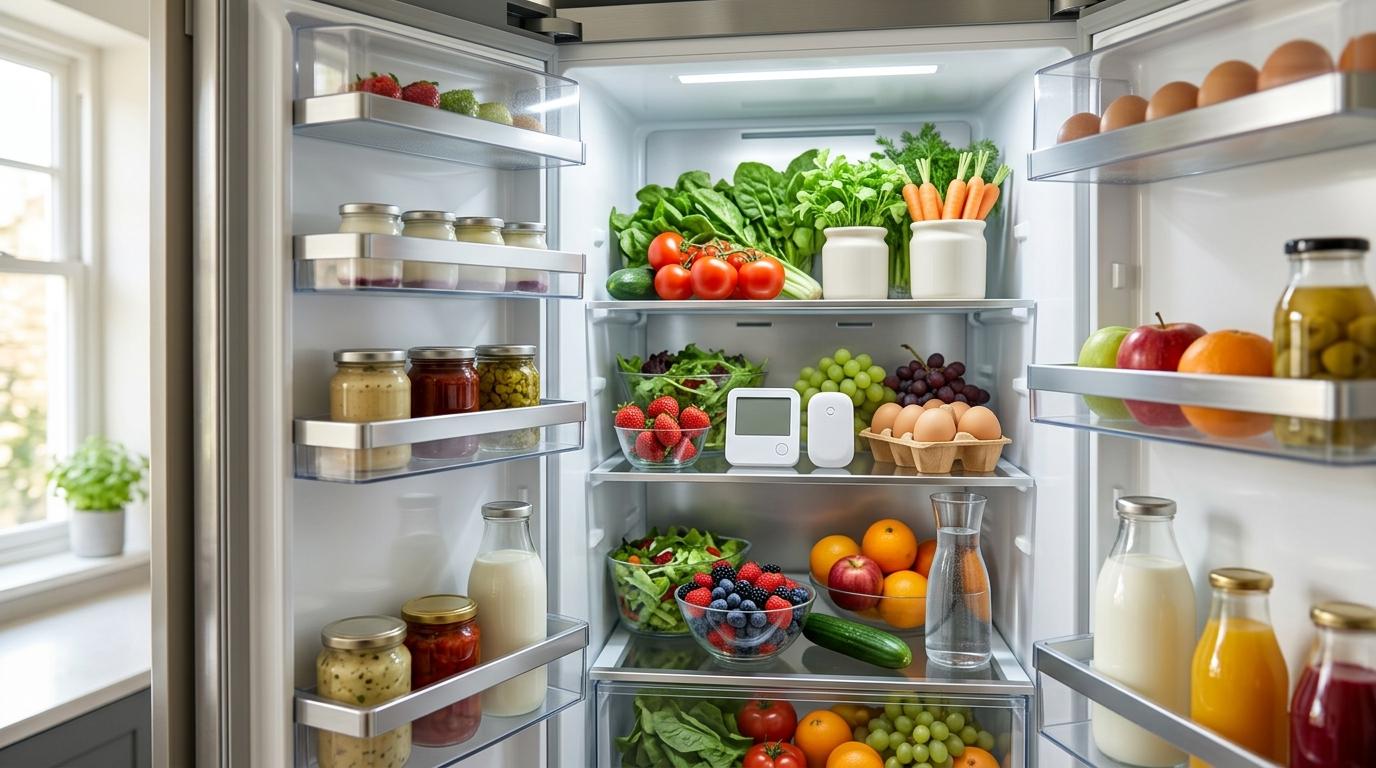
If you’re trying to choose between a fridge thermometer and a smart temperature sensor, here’s the short version:
A basic fridge thermometer is perfect if you just want a cheap, simple way to check that your fridge is cold enough. A digital fridge temperature alarm is better if you worry about power cuts, doors being left open, or food warming up overnight. And a smart temperature sensor is worth paying for if you want phone alerts or temperature history when you’re away from home.
Food safety note: This guide is for general information only. Always follow your local food safety advice. If food has been warm for too long, smells off, looks questionable, or you simply aren’t sure, don’t taste it to check. When in doubt, throw it out.
Quick Answer
#Buy a basic fridge thermometer if:
- You want the cheapest and simplest option.
- Your power supply is usually reliable.
- You don’t mind opening the fridge to check the temperature yourself.
Buy a digital fridge temperature alarm if:
- You sometimes have power cuts.
- You want a loud warning if the fridge or freezer gets too warm.
- You want Min/Max memory so you can see how warm it got while you were asleep or out.
Buy a smart temperature sensor if:
- You travel often or spend a lot of time away from home.
- You store expensive groceries, meal prep, breast milk, or other temperature-sensitive items.
- You want alerts on your phone and a record of temperature changes.
Best choice for most homes: A digital refrigerator and freezer thermometer with an alarm and Min/Max memory is usually the sweet spot. It gives you useful protection without needing apps, Wi-Fi, or a complicated setup.
Why the Fridge Dial Isn’t Enough
#Most fridges have a dial that says something like “1 to 5,” “cold,” or “coldest.” The problem is that this dial doesn’t tell you the actual temperature inside the fridge. It only controls how hard the fridge tries to cool.
That’s a big difference.
Food safety depends on the real temperature, not on whether the dial looks like it’s set to a cold-enough number.
Major food safety authorities, including the FDA, USDA, and CDC, recommend keeping your refrigerator at 40°F / 4°C or below and your freezer at 0°F / -18°C. These temperatures help slow bacterial growth and reduce the risk of food spoiling.
If you’ve ever wondered whether cooked dal, paneer, leftovers, cut fruit, dairy, meat, lunch boxes, or freezer food stayed safe after a power cut, a separate thermometer is not really a luxury gadget. It’s a basic food safety tool.
The only question is how much warning and tracking you need.
Option 1: Basic Refrigerator Thermometer
#A basic refrigerator thermometer is the simplest option. It might be analog, liquid-filled, or digital. You place it inside the fridge or freezer, then check it when you open the door.
How it works
#It sits or hangs inside the appliance and shows the current temperature.
For many homes, that’s enough. If you open the fridge and the thermometer reads around 40°F / 4°C or below, you know the fridge is cold enough at that moment.
Pros
#- Very easy to use.
- Usually inexpensive.
- Analog models don’t need batteries.
- Good for renters and shared homes.
- Works without apps, Wi-Fi, or setup.
- Useful as a quick backup check.
Cons
#- You have to open the fridge to read it.
- It only shows the temperature right now.
- It won’t tell you if the fridge got too warm overnight.
- It can’t warn you during a power cut.
- It won’t alert you if the door is left open.
Who should buy it
#Buy a basic refrigerator thermometer if you want a low-cost, low-effort way to stop guessing.
It’s also a good idea if you live in a rental, use an older fridge, or share a fridge with other people. Sometimes just having a visible thermometer inside the fridge is enough to remind everyone that temperature matters.
Who should avoid relying on only this
#A basic thermometer may not be enough if:
- Your area has frequent power cuts.
- The fridge door is often left open.
- You meal prep several days of food at once.
- You store expensive freezer items.
- You need to know what happened when you weren’t home.
In those cases, you’ll probably want an alarm or temperature history.
Option 2: Freezer Thermometer
#A freezer thermometer is similar to a fridge thermometer, but it’s made to measure freezer temperatures.
Your freezer should stay at 0°F / -18°C. This is especially important if you store meat, frozen meals, ice cream, frozen vegetables, batch-cooked food, or breast milk.
Why a separate freezer thermometer helps
#Your fridge and freezer don’t always behave the same way. One section can seem fine while the other is too warm.
A freezer thermometer helps you catch problems before food quality drops or before you lose an entire freezer full of food.
Who should buy it
#Buy a freezer thermometer if:
- You store a lot of frozen food.
- You buy groceries in bulk.
- You batch cook and freeze meals.
- Your freezer is older or unreliable.
- You want a simple freezer safety check.
Who should avoid buying only this
#Don’t buy only a freezer thermometer if your main concern is fridge food like leftovers, dairy, paneer, cooked dal, cut fruit, cooked rice, or ready-to-eat meals.
For most homes, the best basic setup is one thermometer in the fridge and one in the freezer.
Option 3: Digital Fridge Temperature Alarm
#A digital fridge temperature alarm is the practical middle ground between a basic thermometer and a smart sensor.
Many models have a probe that goes inside the fridge or freezer and a display that stays outside. Some show the current temperature, the highest and lowest temperature reached, and beep if the temperature rises above your chosen limit.
How it works
#The probe sits inside the fridge or freezer. The display stays outside, often attached to the door. That means you can check the temperature without opening the appliance.
The most useful feature to look for is Min/Max memory. This records the highest and lowest temperatures since the last reset.
That matters a lot after power cuts. If the power goes out overnight and comes back before morning, a basic thermometer may look normal again by the time you check it. A Min/Max thermometer can show whether the fridge became too warm while you were asleep.
Pros
#- Lets you check the temperature without opening the door.
- Can warn you with an audible alarm.
- Min/Max memory helps after power cuts.
- Some models monitor both fridge and freezer.
- No app or Wi-Fi required.
- More useful than a basic thermometer for real-life problems.
Cons
#- Usually needs batteries.
- Probe wires need careful placement around the door seal.
- The alarm only helps if someone is home to hear it.
- Setup takes a little more effort than a basic thermometer.
Who should buy it
#Buy a digital fridge temperature alarm if you want practical food safety protection without going fully smart.
It’s a strong choice for:
- Families.
- Meal-preppers.
- Shared houses.
- People in hot climates.
- Homes with occasional power cuts.
- Anyone who stores cooked leftovers for later.
Who should avoid it
#Skip this option if you mainly want alerts while you’re traveling or away from home. A regular alarm thermometer can beep, but it can’t notify your phone from another location.
For that, you’ll want a smart temperature sensor.
Option 4: Smart Temperature Sensor
#A smart temperature sensor, sometimes called a smart fridge sensor, tracks temperature and sends the information to an app. Depending on the model, it may use Wi-Fi, Bluetooth, or a hub.
This is the most advanced option, but that doesn’t automatically make it the best choice for everyone.
How it works
#A small battery-powered sensor sits inside your fridge or freezer. It records the temperature and sends readings to an app on your phone.
Some smart sensors show temperature history, graphs, and alerts when the fridge or freezer gets too warm.
Pros
#- Can show temperature history.
- Can send alerts to your phone.
- Useful when you’re away from home.
- Good for frequent travelers.
- Helpful if you store expensive or temperature-sensitive items.
- Can give peace of mind during power cuts, depending on the setup.
Cons
#- More setup than a basic thermometer.
- Needs batteries.
- Requires an app.
- Depends on connection quality.
- Alerts can become annoying if they’re too frequent.
- More expensive than basic or alarm thermometers.
- Not necessary for every household.
Who should buy it
#Buy a smart temperature sensor if you genuinely need remote monitoring.
It makes sense if:
- You travel often.
- You leave food in the fridge while you’re away.
- You store expensive groceries or bulk freezer items.
- You worry about power cuts when nobody is home.
- You want a temperature log, not just a single reading.
Who should avoid it
#Avoid a smart fridge sensor if you dislike apps, forget to change batteries, have unreliable Wi-Fi near the kitchen, or just want something simple that works without setup.
For many people, a digital alarm thermometer is easier and still gives plenty of protection.
Fridge Thermometer vs Smart Temperature Sensor: Comparison
#- Basic refrigerator thermometer: Best for simple fridge checks, works without Wi-Fi, and is easiest for budget users.
- Freezer thermometer: Best for bulk freezer users who want to confirm the freezer stays around 0°F / -18°C.
- Digital fridge temperature alarm: Best for most safety-conscious homes because it can show current temperature, warn with an alarm, and often record Min/Max readings.
- Smart temperature sensor: Best for travelers or remote monitoring users who want phone alerts and temperature history.
If you only want a quick check, buy basic. If you want practical protection against power cuts and open doors, buy an alarm thermometer. If you need alerts while away from home, choose smart.
What to Check Before Buying
#Before buying a refrigerator thermometer, freezer thermometer, fridge temperature alarm, or smart fridge sensor, check these features.
1. Temperature range
#Make sure it can clearly read fridge and freezer temperatures.
The important food safety targets are:
- Fridge: 40°F / 4°C or below
- Freezer: 0°F / -18°C
2. Easy-to-read display
#A thermometer only helps if people actually read it.
Look for clear numbers, large markings, or a simple display. If several people use the fridge, choose something obvious and easy to understand.
3. Min/Max memory
#This is one of the most useful features you can get.
Min/Max memory tells you the highest and lowest temperatures reached since the last reset. After a power cut, it can help you understand whether the fridge or freezer warmed up too much.
4. Alarm function
#A fridge temperature alarm can warn you when the temperature rises above your chosen limit.
This is helpful if:
- A child leaves the door open.
- A shared-house fridge is opened constantly.
- The freezer door doesn’t close properly.
- The fridge struggles during hot weather.
- Someone accidentally blocks a vent inside the fridge.
5. Two probes or two sensors
#If you want to monitor both the fridge and freezer, check whether the device supports two readings.
One probe for the fridge and one for the freezer is much more useful than monitoring one compartment and guessing about the other.
6. Battery access
#Digital and smart devices need batteries. Make sure they’re easy to replace.
A dead smart sensor is just a small plastic box sitting in your fridge doing nothing.
7. App and connection type
#For smart temperature sensors, check whether the device uses Wi-Fi, Bluetooth, or another system.
The important question is simple: will it alert you the way you expect?
If you want alerts while you’re away from home, make sure the device actually supports remote notifications. Some Bluetooth-only sensors may only work when your phone is nearby.
Common Mistakes to Avoid
#Mistake 1: Putting the thermometer in the fridge door
#The fridge door is usually one of the warmest and most changeable areas because it gets opened so often.
Place the thermometer closer to the middle of the fridge, away from the door, walls, and direct cold-air vents.
Mistake 2: Checking once and forgetting about it
#A thermometer is not a one-time tool.
Check it regularly, especially during summer, after loading groceries, after power cuts, or whenever the fridge doesn’t feel as cold as usual.
Mistake 3: Ignoring the freezer
#A lot of people check the fridge but forget the freezer.
If you store frozen food, use a freezer thermometer too. Your freezer should stay at 0°F / -18°C.
Mistake 4: Buying smart when simple would do
#Smart sensors can be genuinely useful, especially if you travel. But they aren’t always necessary.
If you’re usually home, don’t want another app, and just need to know whether your fridge is cold enough, a basic thermometer or digital alarm thermometer may be the better buy.
Mistake 5: Ignoring accuracy checks
#Thermometers can become less accurate over time.
One common check is the ice-point method: use mostly ice with a little water. The thermometer should read close to 32°F / 0°C. If it’s far off, replace it or follow the product instructions for adjustment.
Mistake 6: Assuming food is safe because it looks fine
#Food can look and smell normal even after being held at unsafe temperatures.
If perishable food has been above safe refrigerator temperature for too long, appearance and smell are not reliable safety checks.
So, What Should You Buy?
#Here’s the practical advice.
If you’re on a tight budget
#Buy a basic refrigerator thermometer. If you use your freezer often, buy a freezer thermometer too.
It’s cheap, simple, and much better than guessing.
If you worry about leftovers and summer food safety
#Buy a digital fridge temperature alarm with Min/Max memory.
This is especially useful for cooked dal, paneer, dairy, cut fruit, cooked rice, leftovers, lunch prep, and ready-to-eat food.
If power cuts are common
#Choose a digital alarm thermometer or a smart temperature sensor.
A basic thermometer won’t tell you what happened while the power was out and then came back on.
If you travel often
#Buy a smart temperature sensor.
Remote alerts and temperature history are the main reasons to pay extra for smart monitoring.
If you live in a shared house
#A digital alarm thermometer is usually the most practical choice.
It can warn people when the door is left open or when the fridge gets too warm, without requiring everyone to install an app.
Final Verdict
#For most homes, the best choice is a digital refrigerator and freezer thermometer with an alarm and Min/Max memory.
A basic thermometer is still a great low-cost option if you just want a simple safety check. A smart temperature sensor is worth it if you travel, worry about power cuts when you’re away, or want alerts on your phone.
The main thing is this: don’t rely only on the fridge dial. Whether you choose a basic refrigerator thermometer, freezer thermometer, fridge temperature alarm, or smart fridge sensor, measuring the real temperature helps you protect your food, reduce waste, and make better decisions after power cuts.